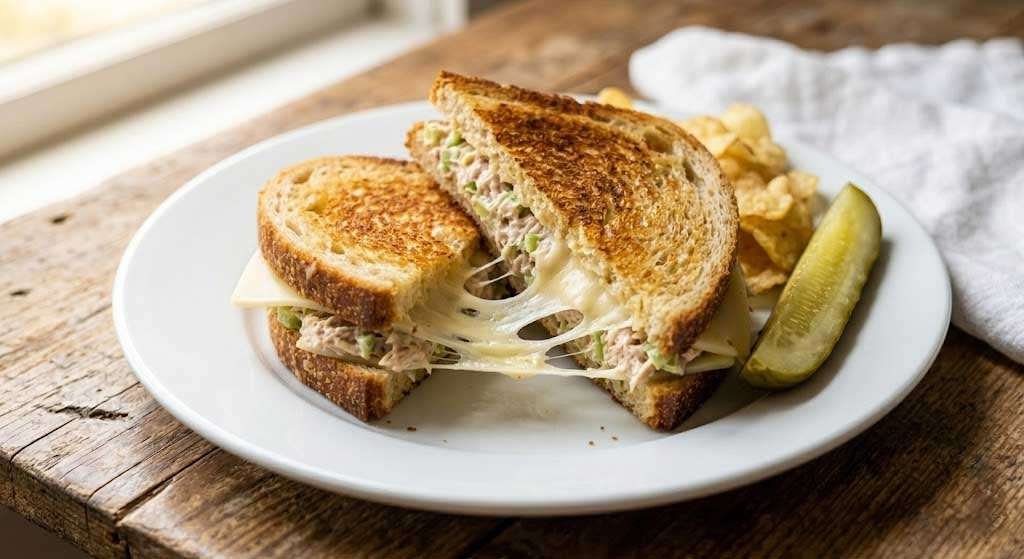
A griddled tuna melt done right is one of those things that sounds simple until you try to nail it — creamy, well-seasoned tuna salad, a thick slice of melted Swiss pulling away from toasted sourdough with just enough butter on the crust to make it crackle. This is the diner classic at its best: ready in under 15 minutes, built on ingredients you already have, and deeply satisfying in that unfussy way only comfort food can be.
Prep Time: 10 minutes Cook Time: 5 minutes Total Time: 15 minutes Servings: 2 Difficulty: Easy
Key Ingredients
Canned tuna — Use solid white albacore packed in water, drained thoroughly. The texture holds better than chunk light and the flavor is cleaner. Drain it twice if you can — excess moisture will make the bread soggy before it hits the griddle.
Bread — Thick-sliced sourdough is the right call here. The tangy crumb and sturdy crust hold up to the griddle and give the sandwich structural integrity. If you’re sourcing bread locally, The Heritage Diner’s slow-fermented sourdough loaves are baked fresh daily and cut specifically for diner applications like this one.
Cheese — Swiss is the traditional choice and for good reason: it melts evenly, doesn’t overpower the tuna, and delivers that mild nuttiness that plays well with the acidity of the mayo and celery. American cheese works too — it melts faster and gives a creamier pull, but loses some of the depth.
Mayonnaise — Full-fat only. The emulsion is doing real work here, binding the tuna and carrying flavor. Low-fat substitutes break down under heat and make the filling watery.
Celery — Finely diced. It gives the tuna salad its crunch and freshness, which balances the richness of the cheese and butter.
How to Make a Heritage Diner Griddled Tuna Melt
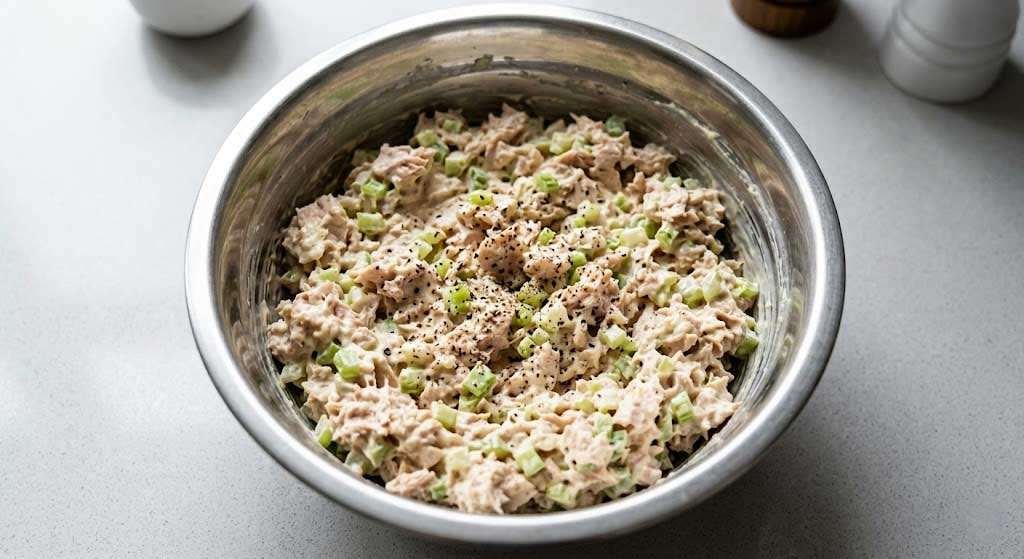
Start with the tuna salad. Drain the canned albacore thoroughly — press it firmly with the back of a spoon against the can lid to pull out as much liquid as possible. Transfer to a bowl and flake it apart with a fork until the texture is even, with no large chunks remaining.
Add the mayonnaise, finely diced celery, a small squeeze of fresh lemon juice, a pinch of salt, and cracked black pepper. Mix until fully combined. Taste it at this stage — the tuna salad should be well-seasoned on its own before it goes near the bread. A bland filling cannot be fixed by the griddle.
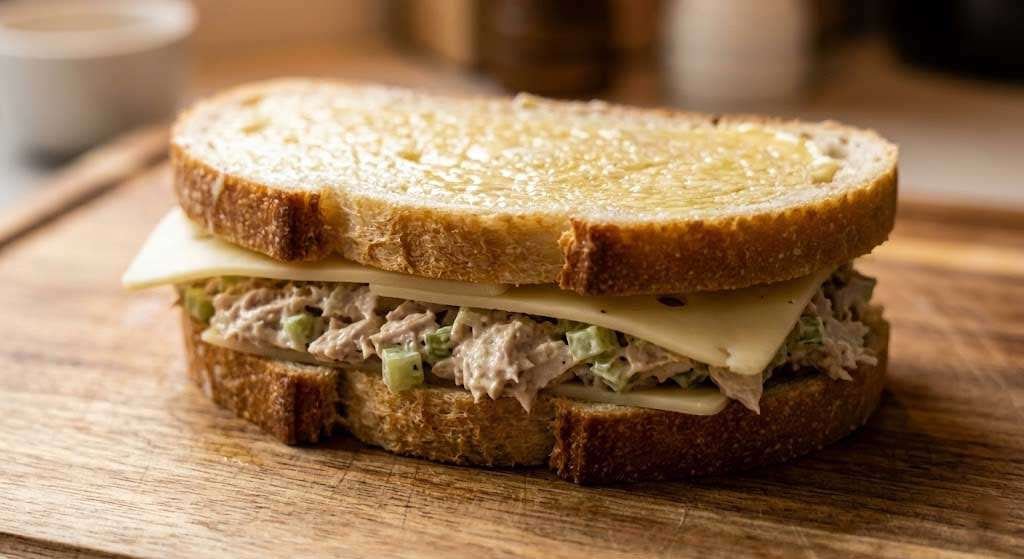
Lay out your sourdough slices and spread the tuna salad generously on one side of each sandwich. You want a full, even layer — thin tuna melts are the saddest version of this dish. Lay one or two slices of Swiss over the tuna on each sandwich and close it.
Butter the exterior of each slice of bread — both top and bottom — with softened butter. This step matters more than most people realize. The butter is not just for flavor; it conducts heat evenly across the surface of the bread and creates that golden, lightly crisped crust that defines a good diner melt.
Place the sandwiches on a preheated griddle or cast-iron skillet over medium heat. You want medium — not high. Too much heat crisps the bread before the cheese has a chance to melt, and you’ll end up with raw cold tuna filling inside a burnt exterior. Press the sandwich lightly with a spatula but don’t flatten it. Cook for 2 to 3 minutes per side, until the bread is deep golden-brown and the cheese has fully melted.
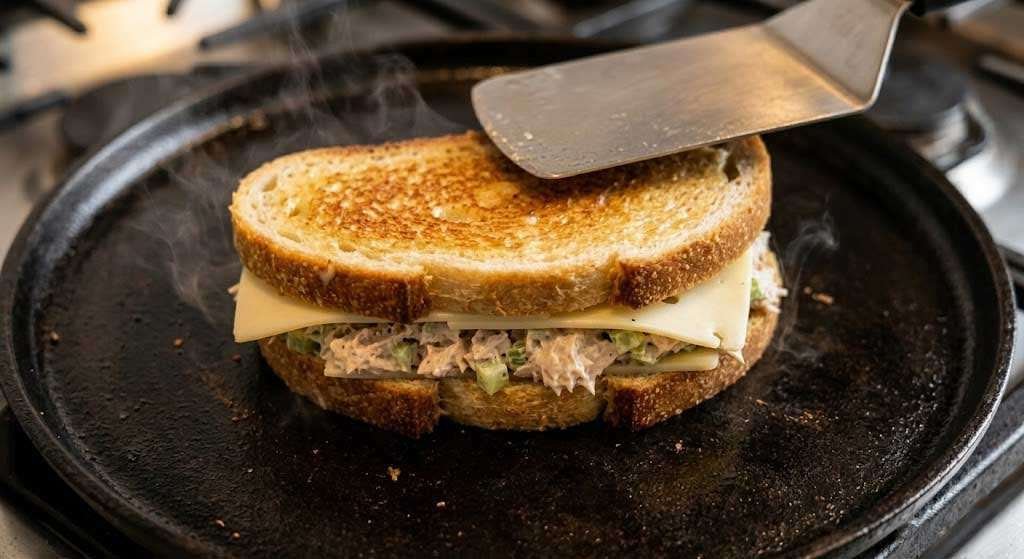
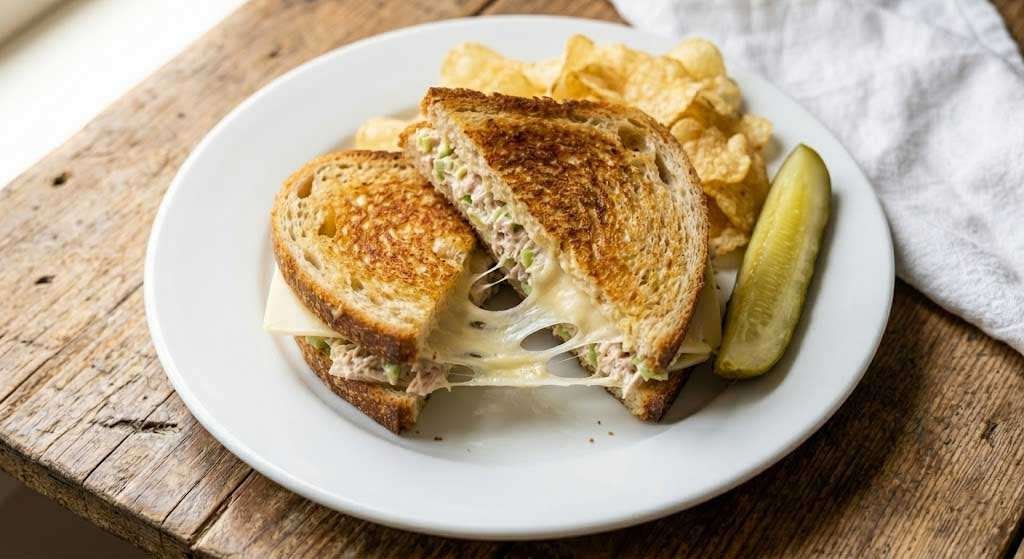
Pull it off the griddle and let it rest for 60 seconds before cutting. The filling is hot and will redistribute slightly. Cut diagonally — always diagonally — and serve immediately.
Pro Tips
Double-drain the tuna. Moisture is the enemy of a crispy exterior. Press out as much liquid as possible before mixing the salad. Wet tuna will steam the bread from the inside and prevent the crust from forming properly.
Use a lid to trap heat. Once you flip the sandwich, place a pan lid loosely over the griddle for the last 60 to 90 seconds of cooking. The trapped steam accelerates the cheese melt without requiring more direct heat on the bread.
Room temperature butter on the exterior. Cold butter tears the bread and applies unevenly. Let it soften first, then spread it in a thin, even layer all the way to the edges. The crust should be uniformly golden — not patchy.
Season the tuna aggressively. The cheese and bread will absorb some of the flavor, so the tuna salad needs to be slightly more seasoned than you’d eat it cold. Taste before assembling.
Medium heat only. A cast-iron skillet at medium is the ideal cooking surface for this sandwich. It holds heat evenly and delivers consistent color on the crust. If the bread is browning in under 90 seconds, the heat is too high.
Storage & Make-Ahead
The tuna salad itself keeps well in an airtight container in the refrigerator for up to 2 days. Make it ahead if you’re prepping for a group.
Assembled and griddled tuna melts do not hold well — the crust softens quickly and the filling can make the bread soggy within 20 minutes. This is a cook-to-order situation. Assemble and cook just before serving.
Leftover tuna salad should not be frozen.
Frequently Asked Questions
Can I use American cheese instead of Swiss?
Yes. American cheese melts faster and has a creamier pull, which some people prefer. It has a milder, saltier flavor that pairs well with albacore. Swiss delivers more depth and a slightly firmer melt — either works, it comes down to personal preference.
What bread works best if I don’t have sourdough?
Thick-cut white sandwich bread or a sturdy rye are both solid substitutions. Avoid thin or soft sandwich bread — it won’t hold up to the griddle or the moisture from the tuna filling. The bread needs to have some structural density.
Can I add anything else to the tuna salad?
Finely diced red onion is a natural addition and sharpens the flavor. A small amount of Dijon mustard adds depth. Some people add sweet pickle relish for a classic diner-style tuna salad. Keep additions small so the tuna stays the primary flavor.
How do I know when the cheese is fully melted?
When you press the sandwich lightly with a spatula and feel no resistance from the cheese — the filling will give slightly. You can also lift one corner of the bread carefully to check that the cheese has slumped and melded into the tuna layer. Using a pan lid to trap steam during the last 60 seconds makes this reliable every time.
Can I make this in a panini press instead of a griddle?
Yes, though the result will be slightly different — a panini press applies heat from both sides simultaneously and compresses the sandwich, which gives you a denser, crispier result. A griddle allows for more control over browning and produces a more traditional diner-style melt with a softer interior.
Recipe: Heritage Diner Griddled Tuna Melt with Melted Swiss on Sourdough
Prep Time: 10 minutes Cook Time: 5 minutes Total Time: 15 minutes Servings: 2 Difficulty: Easy
Ingredients
For the Tuna Salad:
- 2 cans (5 oz each) solid white albacore tuna in water, thoroughly drained
- 3 tablespoons full-fat mayonnaise
- 2 stalks celery, finely diced
- 1 teaspoon fresh lemon juice
- ¼ teaspoon kosher salt
- ¼ teaspoon cracked black pepper
For the Sandwich:
- 4 thick slices sourdough bread
- 4 slices Swiss cheese (or American)
- 2 tablespoons softened unsalted butter
Instructions
- Drain tuna thoroughly, pressing firmly against the can to remove as much liquid as possible. Transfer to a mixing bowl and flake apart with a fork.
- Add mayonnaise, diced celery, lemon juice, salt, and pepper. Mix until fully combined. Taste and adjust seasoning as needed.
- Lay out sourdough slices. Divide tuna salad evenly across two slices, spreading in a full, even layer.
- Lay two slices of Swiss cheese over the tuna on each sandwich and close with the remaining bread.
- Spread softened butter evenly on both exterior sides of each sandwich, edge to edge.
- Preheat a griddle or cast-iron skillet over medium heat. Place sandwiches on the surface and cook for 2 to 3 minutes until the bottom crust is deep golden-brown.
- Flip carefully with a spatula. Place a lid loosely over the pan and cook for an additional 2 to 3 minutes until the second side is golden and cheese is fully melted.
- Remove from heat, rest for 60 seconds, cut diagonally, and serve immediately.
Notes
- Do not use high heat — the bread will brown before the cheese melts.
- Softened butter is essential for even coverage; cold butter tears the bread.
- Tuna salad can be made up to 2 days in advance and stored refrigerated in an airtight container.