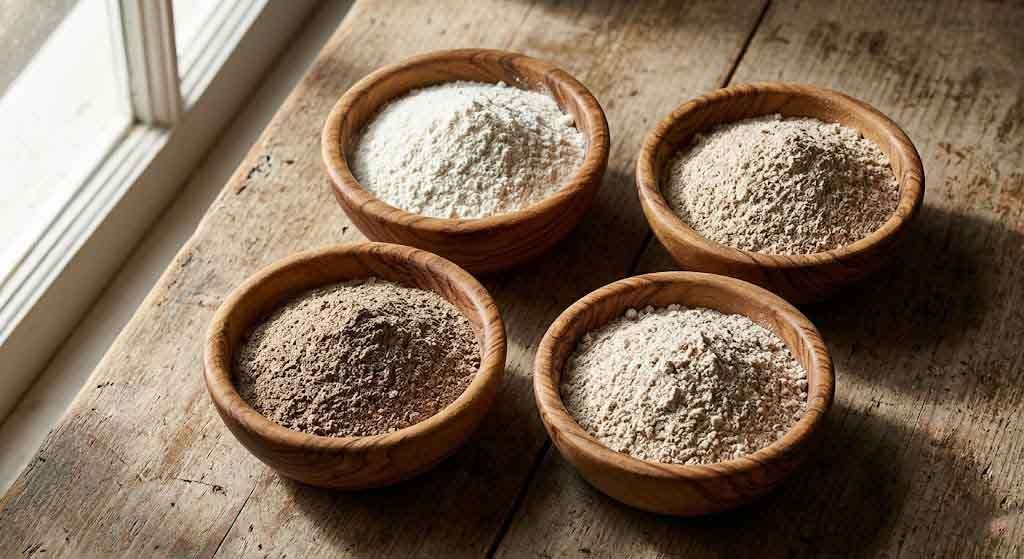
Flour does not get the attention it deserves. Most conversations about sourdough begin with the starter — the living culture, the feeding schedule, the rise and fall of the levain — and stop there. But the starter is only as good as what you feed it. And the loaf is only as good as the flour you build it with. Before the first fold, before the score, before the Dutch oven, the outcome of your bread is already largely decided. It was decided at the mill.
Understanding flour is not a technical detour. It is the foundation.
Why Protein Content Is the First Thing to Know
Every bag of flour carries a protein percentage. Most home bakers glance past it. They shouldn’t.
In bread making, protein is what makes gluten possible. When flour meets water, two proteins — glutenin and gliadin — combine and form gluten strands. Those strands create the elastic web that gives dough its structure and allows it to hold the gas produced during fermentation. No gluten network, no rise. No rise, no open crumb. No open crumb, and you’re not eating sourdough — you’re eating a dense, sour brick.
For sourdough specifically, you want flour with a protein content of at least 11.5%, though most serious bakers work with 12% or higher. The long fermentation times that define slow sourdough — 8, 12, even 24 hours — put the gluten network under sustained pressure. Weaker flour will not hold up. The dough will slack, spread, and lose the structure you’ve spent hours building.
The higher the protein, the stronger the gluten network, and the better the bread handles hydration, shaping, and oven spring.
Bread Flour: The Workhorse
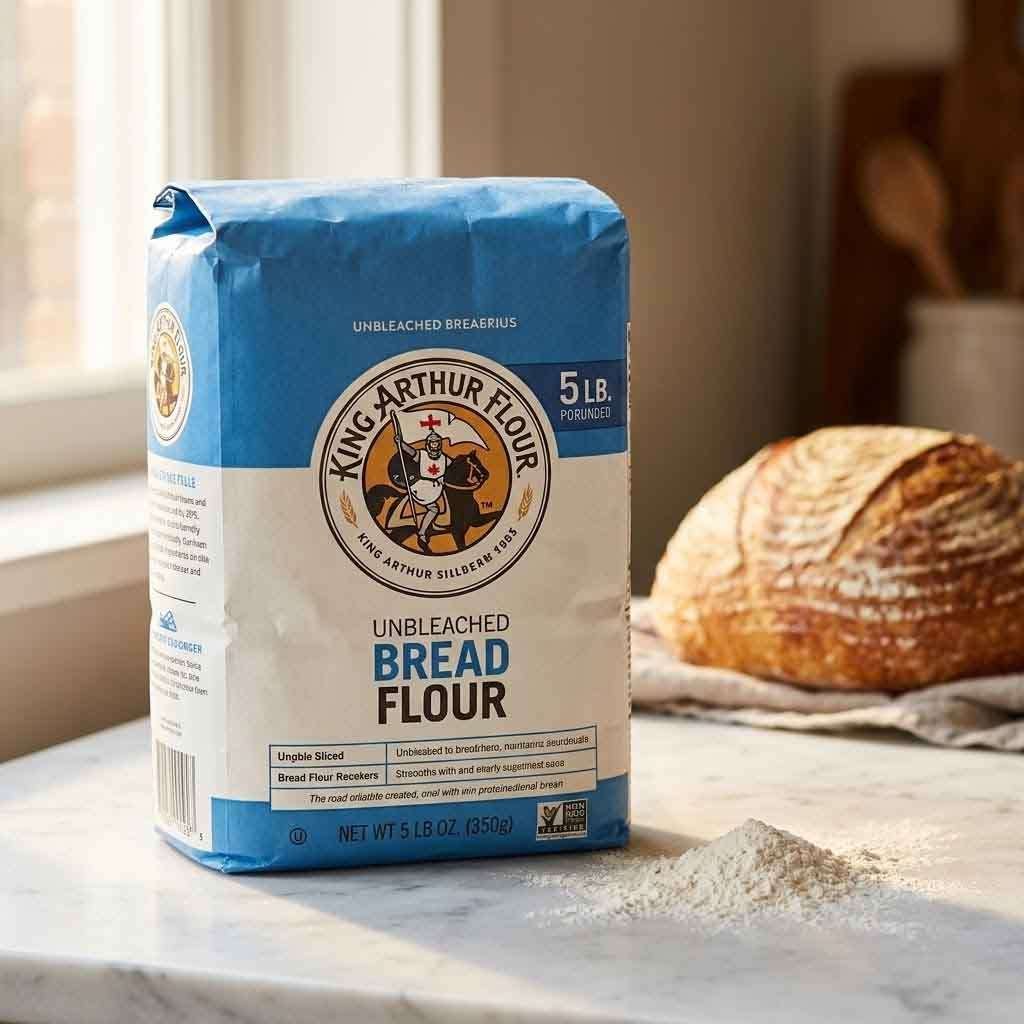
Bread flour sits between 12% and 14% protein, and it is the most reliable choice for sourdough. It gives you the gluten strength needed for a tall, open loaf with a crackling crust. It handles high-hydration doughs without collapsing. It ferments predictably. It shapes well.
King Arthur Bread Flour sits at 12.7% protein and is widely regarded as one of the most consistent bread flours available to home bakers. Consistency matters more than people realize — if your flour’s protein level shifts from bag to bag, your results will shift with it. For a sourdough baked on a live culture that is already subject to temperature variables, humidity, and the moods of the starter, you want the flour to be the one constant you can count on.
If you are newer to sourdough, start here. Master bread flour first. The results are forgiving enough to teach you without punishing every mistake.
All-Purpose Flour: Capable, With Limits
All-purpose flour runs roughly 10% to 12% protein depending on the brand. It will produce sourdough. It will not produce the best sourdough.
You can bake a perfectly edible loaf with all-purpose flour, and many home bakers do. The dough is generally easier to handle — less tension, more slack — which can make shaping feel more accessible early on. But the trade-off is a slightly lower rise, a less dramatic oven spring, and a tighter crumb. The bread will lack the open, airy interior that makes a good sourdough worth the effort.
Where all-purpose flour does shine is in discard recipes — pancakes, crackers, flatbreads, waffles — where the structure demands are lower and the goal is more about flavor than architecture.
Whole Wheat Flour: Nutrition and Complexity, Used Wisely
Whole wheat flour includes all three parts of the wheat berry — the bran, the germ, and the endosperm. That makes it more nutritious than white flour and more flavorful. It also makes it more complicated to bake with.
The bran, when ground, has sharp edges. Those edges cut gluten strands, weakening the network that holds the dough together. A 100% whole wheat sourdough will be denser, more compact, and harder to get a good rise out of — especially for a baker who is still learning.
The standard approach is to blend. Most bakers incorporate 20% to 30% whole wheat alongside a strong bread flour. That ratio adds depth and a mild earthiness to the crumb without undermining the loaf’s structure. It also speeds up fermentation — the extra nutrients in whole wheat feed the wild yeast and bacteria more aggressively, which means your bulk fermentation may move faster than expected.
Learn more about the sourdough program at Heritage Diner here, and explore related posts under Food History on the blog.
Rye Flour: The Flavor Accelerant
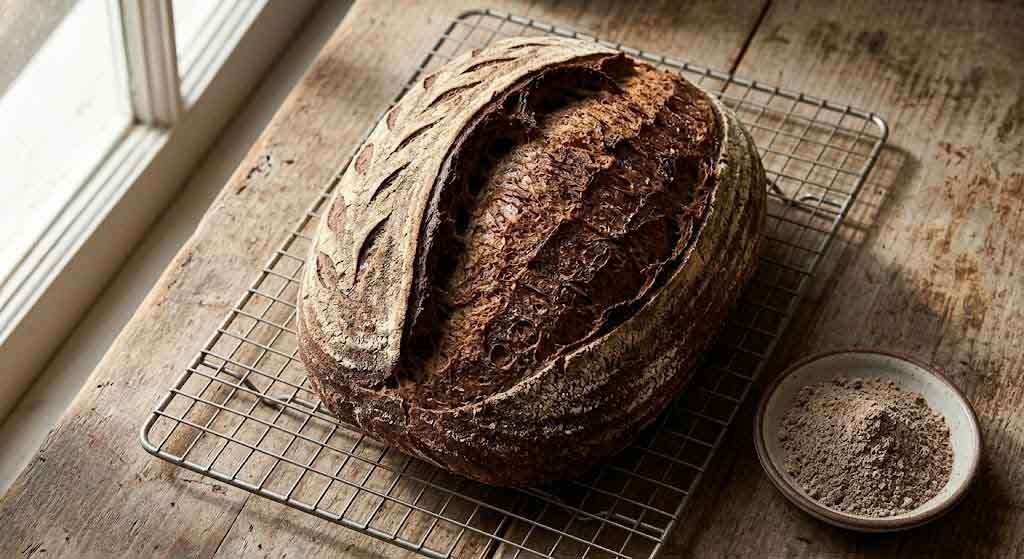
Rye is, in practical terms, rocket fuel for a sourdough starter. It is loaded with wild yeasts and bacteria, and when introduced to a starter — even in small amounts — it dramatically increases fermentation activity. This is why many experienced bakers use a small percentage of rye to feed their starter: it makes the culture more vigorous, more responsive, more alive.
As an ingredient in the loaf itself, rye brings complex, slightly fruity notes that lift the flavor considerably. Its protein content is similar to whole wheat, but rye’s proteins don’t form gluten the way wheat proteins do — meaning rye on its own produces a dense, almost sticky dough that cannot be shaped into a freestanding loaf without collapsing.
The solution is restraint. Incorporating 10% to 20% rye into a bread flour base gives you the flavor and fermentation benefits without sacrificing structure. It is not a flour to be avoided. It is a flour to be understood.
Ancient Grains: Spelt, Einkorn, and Khorasan
The revival of ancient grains in artisan baking reflects a broader turn toward ingredients with provenance — things grown in specific places, in specific ways, over centuries rather than decades. Spelt, einkorn, and khorasan (sold under the trademarked name Kamut®) each bring distinct characteristics to sourdough.
Spelt has a mellow, slightly sweet flavor and a fine texture. Its gluten is weaker than commercial wheat, which means a pure spelt loaf will spread rather than rise unless baked in a tin. As a blend — typically 50% spelt to 50% bread flour — it produces a softer crumb with genuine flavor complexity.
Einkorn is the oldest cultivated wheat in human history, and one of the more forgiving ancient grains for home bakers. It has a nutty, buttery flavor and behaves reasonably well in sourdough when used alongside a high-protein bread flour. It also tends to be easier on digestion than modern wheat for some people.
Khorasan is higher in protein and mineral content than most commercial flours. It has a mild, buttery richness and makes excellent bread when blended at about 20% with a strong bread flour. It absorbs more water than standard flour, so expect to adjust your hydration when working with it.
What to Avoid
Two categories of flour have no place in serious sourdough.
Bleached flour has been chemically treated to speed whitening and extend shelf life. The process damages some of the proteins needed for good gluten development and strips out nutrients that wild yeast and bacteria depend on. Your starter will be less active. Your loaf will be less flavorful. Use unbleached flour.
Self-rising flour already contains baking powder and salt. It has no business in a sourdough dough, which relies entirely on fermentation — not chemical leavening.
Organic Flour and Why It Matters More in Sourdough Than in Other Baking
The argument for organic flour is not purely ideological. It is functional.
Organic wheat is grown without synthetic pesticides and fertilizers. The residue from those chemicals, when present in conventionally grown flour, can interfere with the microbial activity that makes sourdough work. A sourdough starter is a living ecosystem of wild yeast and lactic acid bacteria — it is sensitive to its environment. Organic flour, free of chemical residue, tends to produce more vigorous, more reliable starters and more flavorful bread.
For a loaf baked with a 24-hour fermentation and nothing but flour, water, salt, and a live culture, the quality of every ingredient is magnified. There is nowhere to hide. Organic flour is simply the better foundation.
The Blending Approach: What Most Good Loaves Actually Use
The cleanest summary of flour selection for sourdough is this: most great loaves are blends.
A base of 70% to 80% high-protein bread flour, combined with 20% to 30% whole wheat or rye, gives you the structure of a strong loaf and the flavor complexity of whole grains. Adding a smaller percentage of an ancient grain — 10% to 15% spelt or khorasan — introduces another layer without destabilizing the dough.
Blending also lets you work toward your own loaf. Every bakery worth visiting has a house flour blend. It is how you make a bread that is distinctly yours.
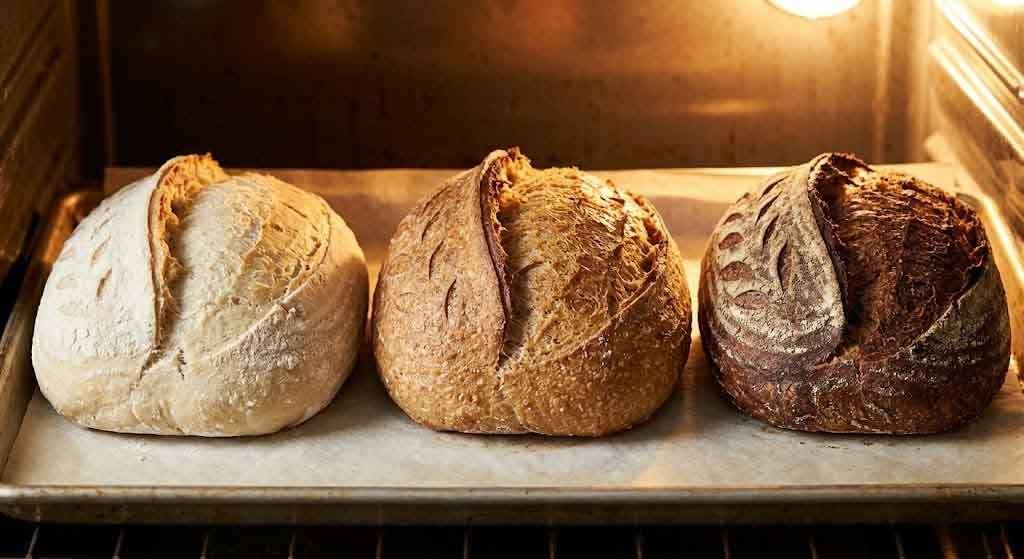
Flour is not just an ingredient. It is the first decision you make — and everything that follows, the fermentation time, the hydration, the shape, the bake, is downstream of that choice. Get the flour right, and the bread has a chance to become something worth making.