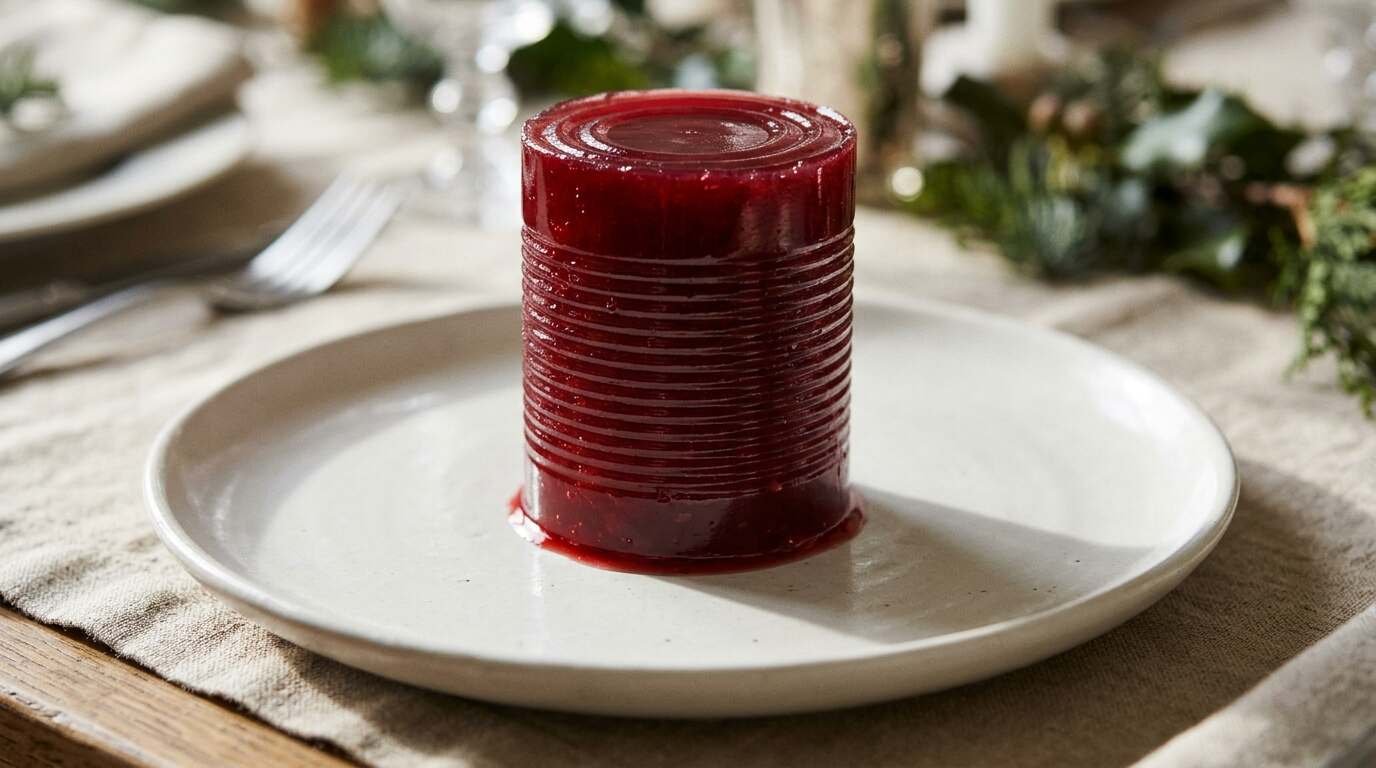
The cylinder that slides onto a Thanksgiving plate with the rings of a steel can still pressed into its sides began as a solution to a farmer’s problem: cranberries were ready for a few weeks in autumn and then, for the rest of the year, they were not. Marcus L. Urann, a lawyer who had left the profession around 1900 to buy a cranberry bog, started canning the fruit in 1912, and the product that grew out of that decision now sits on holiday tables as an object nobody quite thinks to improve.
How Ocean Spray jellied cranberry sauce is made, from the TODAY channel on YouTube.
The history has gaps and a few disagreements, and they are worth keeping in view. The 1912 date is solid across sources. What Urann canned that year, and when the familiar ridged log appeared, depends on which account is read.
A lawyer with a bog and a short season
Fresh fruit, one window a year
Urann’s own stated motive was regional. He said, “I felt I could do something for New England,” according to the Smithsonian. The cranberry business he entered had been built by earlier hands. Encyclopedia.com’s history of Ocean Spray traces cultivation to Captain Henry Hall of East Dennis, Massachusetts, who found early in the 19th century that spreading sand from nearby dunes over the vines produced larger, juicier berries. Growers in New Jersey followed, then Wisconsin in the 1850s, and Washington and Oregon about three decades after that.
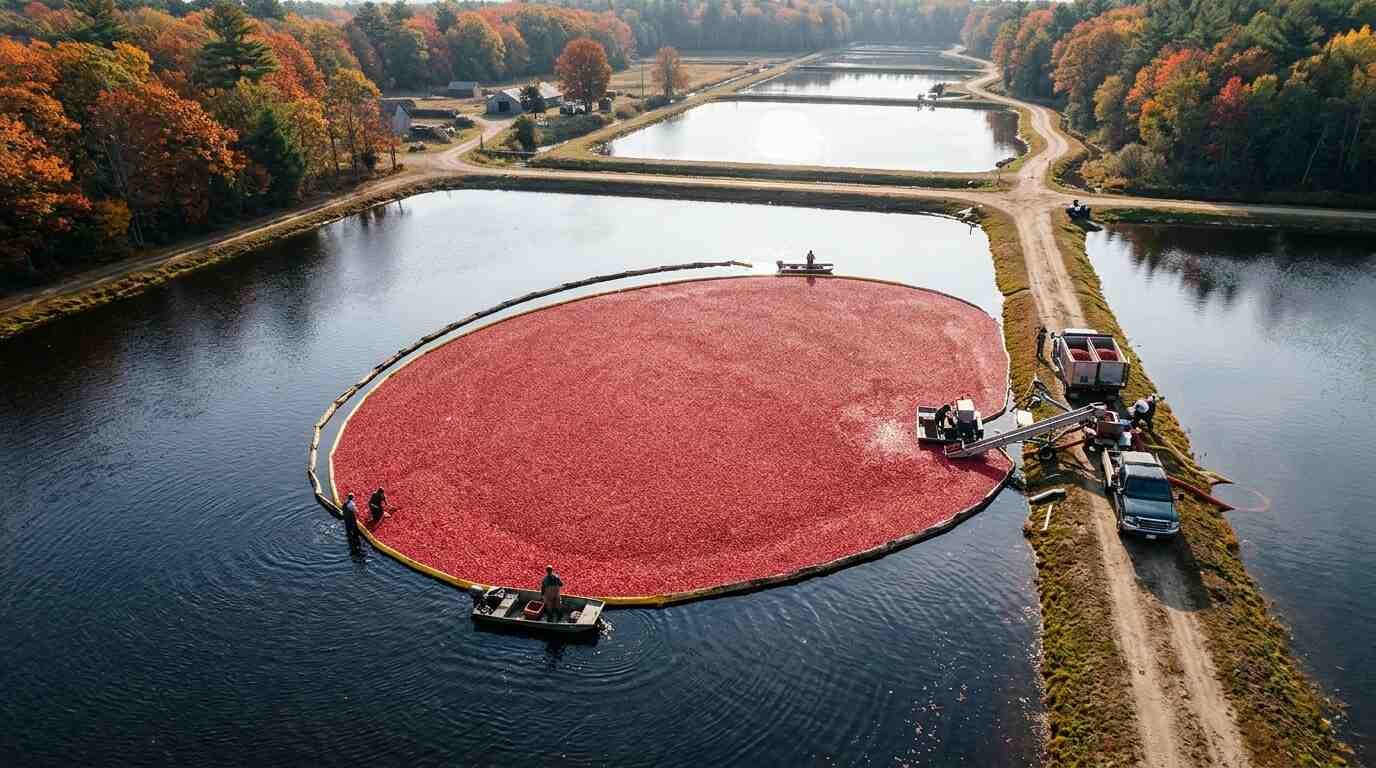
Fresh cranberries kept that business tied to the calendar. Harvest ran roughly September through November, when bogs are flooded with about 18 inches of water so the berries float free, as Tasting Table describes it, and the market for the fruit was largely the holiday table. Canning broke that arrangement. By Smithsonian’s account, it let the fruit be sold year-round rather than only during the harvest.
A second motive appears in a law library blog post: Urann disliked watching surplus cranberries go to waste after the holidays. The Farmers’ Almanac adds that the sauce was cooked from damaged bog berries, and credits both Urann and a fellow grower, Elizabeth Lee, with the work. Neither point is confirmed by the Smithsonian account, which names Lee only later, as a co-founder of the cooperative.
What was actually in the 1912 tin
A date everyone agrees on, and a product they do not
Smithsonian says Urann set up cooking facilities at a packinghouse in Hanson, Massachusetts, in 1912. The Bangor Daily News places the same operation at his bog in Hanson and says he is generally credited with pioneering commercially canned cranberry sauce. Wikipedia’s entry on cranberry sauce says he first offered it to consumers that year, selling locally in the Massachusetts market.
Whether that first sauce was the jellied kind is where accounts split. The law library blog says that in 1912 Urann developed a recipe for jellied cranberry sauce that could be preserved in tins. Smithsonian is more specific about sequence: canning began in 1912, cranberry juice cocktail followed in 1933, a mixed-drink syrup in 1939, and the jellied “log” became available nationwide in 1941. Read together, the sources support a 1912 start for canned cranberry sauce and a 1941 date for the national jellied log, with the intervening form of the product left undocumented in anything fetched for this piece.
The brand name is also tangled. Encyclopedia.com says Urann packaged cranberry sauce in tins under the Ocean Spray brand as early as 1912, and he headed the Ocean Spray Preserving Co. of South Hanson. Smithsonian says he initially borrowed the Ocean Spray name and a breaking-wave image from a Washington State fish company and bought the rights later. Encyclopedia.com adds that a delay in transferring the trademark briefly jeopardized the 1930 merger. The law library blog credits him with coining the phrase “ocean spray,” which does not square easily with the fish-company account.
Three rivals become one cooperative
The 1930 merger and a legal shelter
By 1930 the cranberry trade had competing packers, and Urann’s answer was to merge them. Smithsonian reports that he persuaded two competing growers, John C. Makepeace and Elizabeth F. Lee, to form the Cranberry Canners cooperative that year. Encyclopedia.com lists the rivals it was meant to absorb as the Makepeace Preserving Co. of Wareham, Massachusetts, and the Enoch F. Bills Co. of New Egypt, New Jersey, and says the group was formed to gain more marketing clout.
The structure leaned on a law, not a patent. The cooperative relied on the antitrust exemption that the Capper-Volstead Act of 1922 gave agricultural cooperatives, according to Smithsonian. A lawyer who had bought a bog was, in effect, using his first profession to protect his second. Urann described the purpose in a phrase that reads like a mission statement: “grower control (which) means ‘self control’ to maintain the lowest possible price to consumers.”
The cooperative changed names twice. It became the National Cranberry Association in 1946 and Ocean Spray in 1957, and Smithsonian puts its membership today at about 600 independent growers. Urann served as president and general manager and retired in 1955, per Encyclopedia.com.
The log goes national in 1941
Year-round sauce reaches every state
The 1941 date turns up repeatedly. Smithsonian says the jellied log was available nationwide that year, the Bangor Daily News says the company’s canned sauce was distributed nationally, and Wikipedia records that the cooperative first marketed canned cranberry sauce across the United States in 1941. The Farmers’ Almanac says that by then canned sauce had become a Thanksgiving staple across the country, though that claim rests on the Almanac alone.
What the log offered was simple. Wikipedia describes the jellied form as one that can be “slipped out of a can onto a dish” and served sliced or whole. No whisking, no simmering, no hunt for fresh berries after the first frost.
Current volume figures vary by source, and none carries a date. A 2022 Takeout article quotes an Ocean Spray marketing head, Dan Hamilton, putting sales at about 77 million cans of jellied sauce a year. The Farmers’ Almanac says about 79 million, with 85 percent sold around Thanksgiving and Christmas. An Adweek excerpt says over 67 million cans between Thanksgiving and Christmas. The range is a reasonable sketch of scale and nothing more precise.
Why the ridges stay
The can is the mold
Cranberries do not grow in cylinders, a point Tasting Table makes in passing. The log gets its shape, and its rings, from the container. Bitter Grounds says the cans act as molds and the jelly takes their shape as it cools. The Farmers’ Almanac agrees that the ridges match the inside of the can.
Why a can has rings at all is a separate matter. Chowhound says the ribbed edges mainly make cans stronger, reduce dents, and let the can expand and contract during heating for sterilization. That is a statement about metal cans in general. No source fetched for this piece shows Ocean Spray stating that the ridges are kept on purpose for the sauce, so the ridges’ survival is best described as a consequence of the packaging, reinforced by habit.
The habit is considerable. The Bitter Grounds author imagines “a mutiny in Cranberry Land” if the cans ever changed. And the legal record backs a related point: Ocean Spray’s U.S. Patent 3,142,577, “Process for forming a jellied cranberry sauce,” was filed December 27, 1960, and granted July 28, 1964, to inventors Edward E. Anderson, William F. Hampton and Arthur W. Anti. It covers a method of making the sauce from whole berries, skins and seeds included, puréed, heated with sugar and water to about 180 to 218°F, and cooled to a gel. Its background notes that sieving skins and seeds out had wasted roughly 10 percent of the berries. The ridges are not the subject of the patent.
Production has moved since. Tasting Table describes the current process as puréeing the berries and sifting out seeds and skins, then blending in a high-pectin purée made from previously processed skins and seeds. The jellied sauce is heated, poured into cans, sealed with steam, and cooled in a water bath.
The upside-down label and the air pocket
How a solid log leaves a steel can
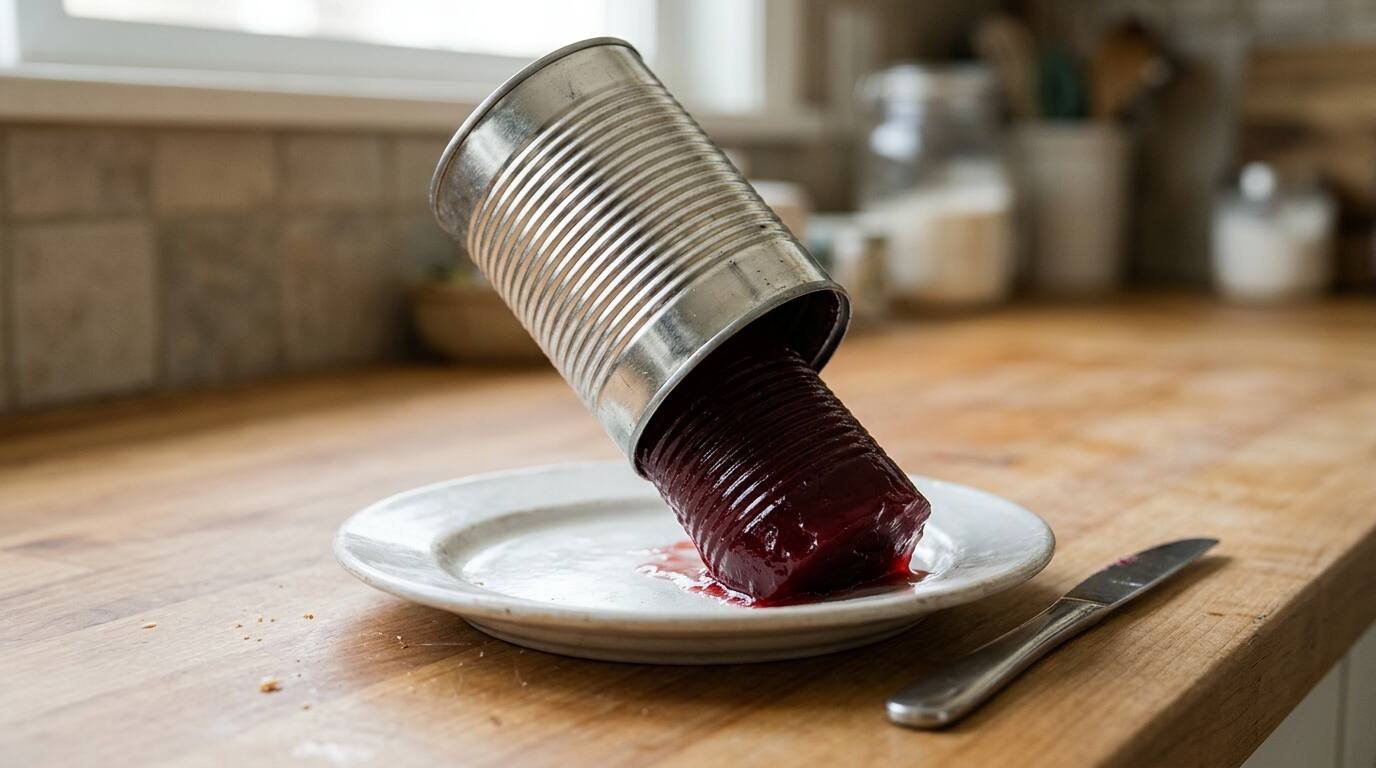
A can of jellied sauce is labeled upside down, and the explanation sits in the same mechanics. Mental Floss reports that the end that looks like the bottom, with the lipped rim, is the one to open, and that part of the can is left empty so an air bubble forms there. That lets the jelly “slide out smoothly without breaking apart.” Tasting Table gives the same account and attributes the label orientation to that air pocket. A 11Alive video on the question is titled “Why does Ocean Spray put the label upside down.”
The bubble breaks the seal between sauce and metal. Running a knife around the edge lets the log drop in one piece, ridges included, per Mental Floss.
Serving the log
Slices, ridges up
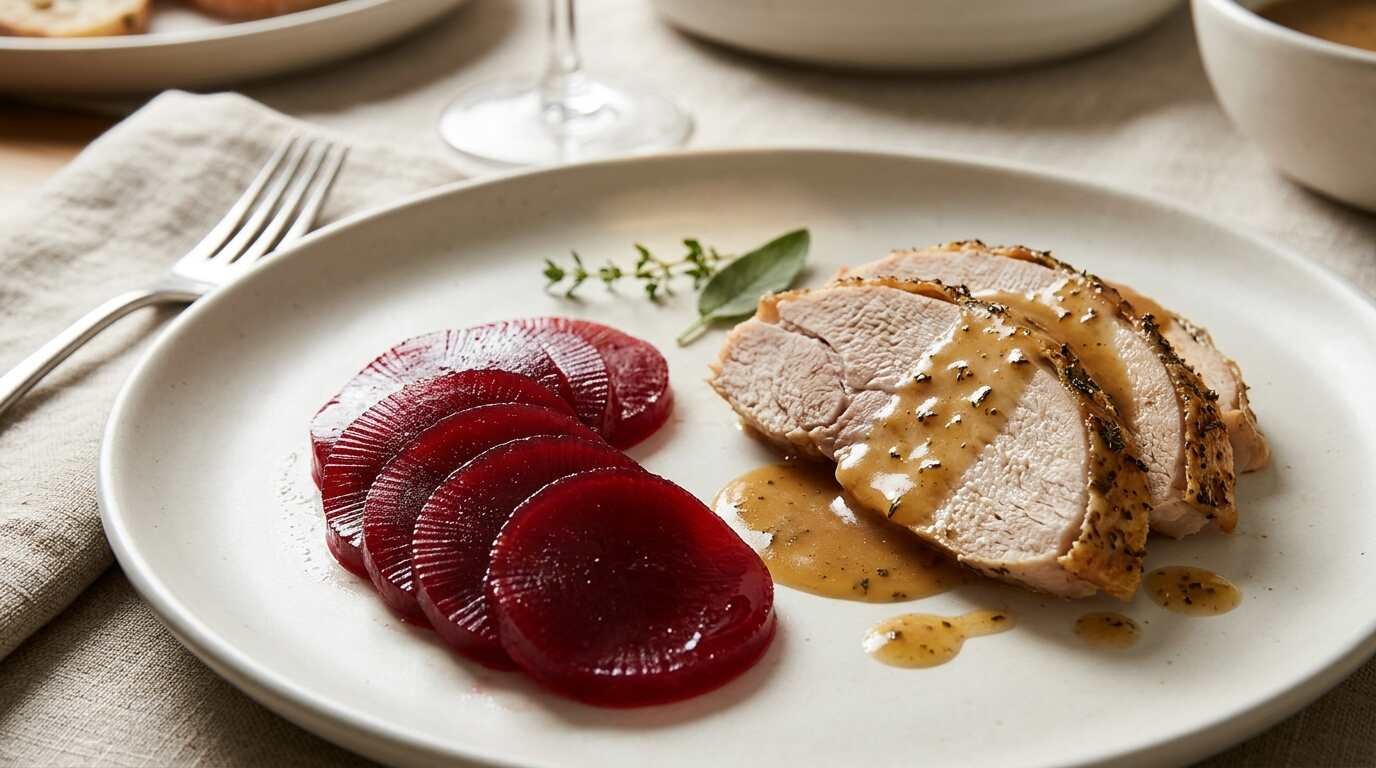
The Farmers’ Almanac suggests slicing the log into rounds with a dull butter knife and placing one round per plate with the ridges facing up, which keeps the canned look intact. For a pourable sauce, whisking the log with a fork or hand mixer loosens it enough to spoon over turkey or pork. Orange zest, a splash of port or a pinch of ground clove are the Almanac’s suggested additions.
On sweetness, Ocean Spray figures cited by Tasting Table put a 14-ounce can at about 150 grams of sugar, 144 grams of it added.
Timing is the smaller worry. The Heritage Diner’s own Thanksgiving timeline for a small kitchen counts the table’s work backward, and a tin that needs only a can opener is the easiest entry on it. A turkey gravy from scratch sits well against the sweet-tart sauce, and the leftover turkey ideas that follow the holiday tend to call for the last slices of cranberry too.
Sources
- Smithsonian Magazine, “This Man Made the First Canned Cranberry Sauce”: https://www.smithsonianmag.com/arts-culture/this-man-made-the-first-canned-cranberry-sauce-180947862/
- Encyclopedia.com, “Ocean Spray Cranberries, Inc.”: https://www.encyclopedia.com/books/politics-and-business-magazines/ocean-spray-cranberries-inc
- Bangor Daily News, “Canned cranberry sauce invented by Mainer”: https://www.bangordailynews.com/2025/12/22/state/state-culture/canned-cranberry-sauce-invented-by-mainer/
- Wikipedia, “Cranberry sauce” (used as a pointer for the 1912 and 1941 dates): https://en.wikipedia.org/wiki/Cranberry_sauce
- Law library blog, “Pass the Cranberry Sauce and Thank a Lawyer”: https://cmlawlibraryblog.classcaster.net/?p=4492
- Farmers’ Almanac, “Jellied Cranberry Sauce: A Side Dish of Nostalgia”: https://farmersalmanac.com/jellied-cranberry-sauce-nostalgia
- Tasting Table, “How Ocean Spray Turns Cranberries Into A Jellied Sauce”: https://www.tastingtable.com/1112238/how-ocean-spray-turns-cranberries-into-a-jellied-sauce
- Mental Floss, “Why Is Cranberry Sauce Canned Upside Down”: https://www.mentalfloss.com/holidays/thanksgiving/why-is-cranberry-sauce-canned-upside-down
- Bitter Grounds, on the ridges and the patent: https://bittergrounds.com/?p=10052
- Chowhound, “What’s With The Ribbed Marks On Canned Goods?”: https://www.chowhound.com/1447650/why-canned-food-container-ribbed
- U.S. Patent 3,142,577, Google Patents: https://patents.google.com/patent/US3142577A/en
- The Takeout, “Where America Stands On Fresh Vs. Canned Cranberry Sauce”: https://thetakeout.com/canned-vs-fresh-cranberry-sauce-ocean-spray-sales-data-1849743715
- Adweek, on Ocean Spray’s upside-down label: https://www.adweek.com/commerce/why-ocean-spray-intentionally-labels-its-cranberry-sauce-upside-down/
- TODAY on YouTube, “How Ocean Spray Jellied Cranberry Sauce Is Made”: https://www.youtube.com/watch?v=El5qGV4tItY
- 11Alive on YouTube, “Why does Ocean Spray put the label upside down”: https://www.youtube.com/watch?v=bepHfkQ9MlI