
Brunch has a birthday that gets repeated everywhere: 1895, a London essay, a man nursing a Saturday night. Most of that holds up, and the part that does not is the word “first.” The earliest printed use of “brunch” that a researcher at Word Histories could find was not in London at all, and it ran about two and a half months ahead of the essay that usually gets the credit. After that, the story branches into New Orleans claims, railroad claims, Hollywood claims and a Prohibition claim, and each one carries a different amount of evidence.
What follows sorts the documented from the repeated, and says plainly where a source offers no support.
The word came from Oxford, or close to it
The Word Histories entry on brunch lists the earliest citations in date order. The first is a piece by Margaret B. Wright, “Lunch at Oxford,” in New York’s The Independent on 22 August 1895, describing Oxford slang: when a man makes lunch his first meal of the day, it becomes “brunch.” Guy Beringer’s essay came on 5 November 1895.
The following summer, the word was still being treated as news. The Globe of London ran an item on 16 July 1896 crediting the magazine the Lady with the word. A day later it printed a correction from a philologist, who said the term was at least two years old and came from Oxford. Punch then credited Beringer on 1 August 1896, and noted an Oxford distinction between “brunch,” a meal nearer breakfast, and “blunch,” nearer lunch.
So the word may well have been in circulation among Oxford undergraduates for two years before anyone printed an essay about it. Beringer gets credit as its best-known early advocate rather than its inventor. That fits the Word Histories researcher’s own remark that the essay is often inaccurately attributed as the earliest use.
Claims of American firsts need the same caution. Salon says the term first appeared in the United States in an 1896 item in the New Oxford Item, which called it “a repast at 11 o’clock a.m.” The Wright piece in The Independent, dated August 1895, is earlier, so the Salon sentence cannot stand as a first. Both tell the same story from different angles: the word reached print in several places within a year, which is how slang usually behaves once it escapes a university town.
What Beringer proposed
A Sunday meal for people who stayed out on Saturday
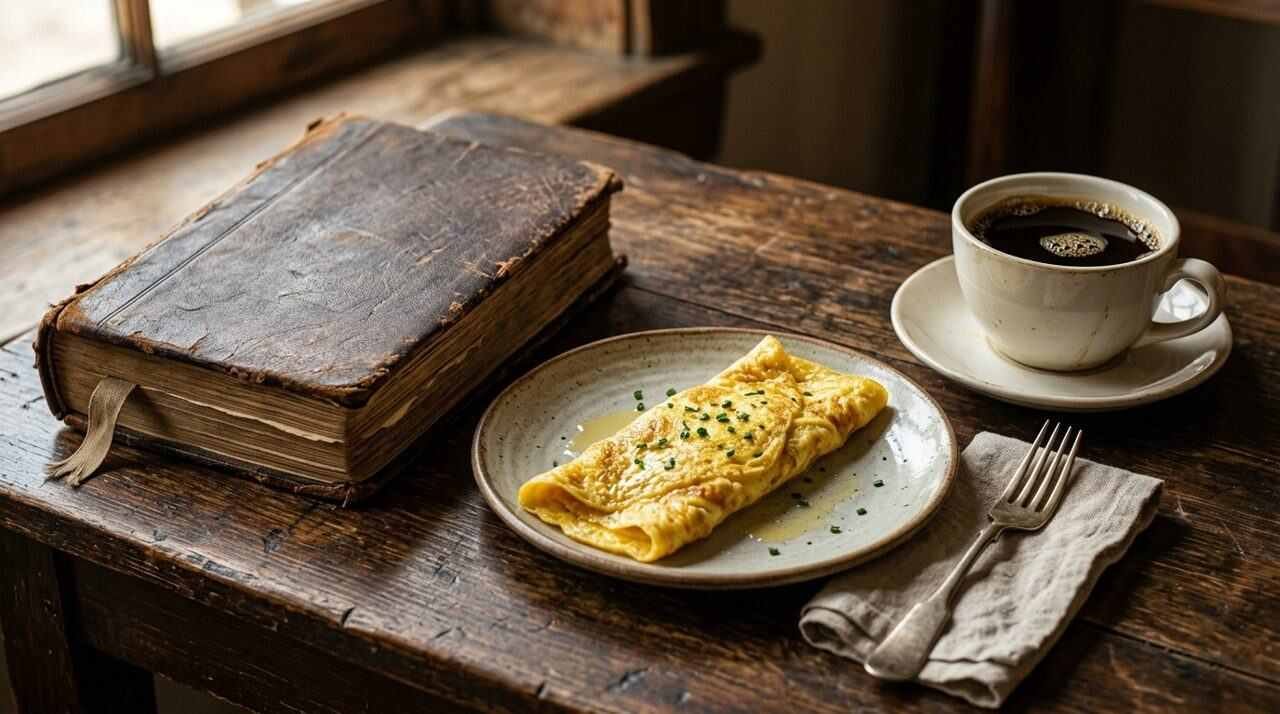
Beringer’s “Brunch: A Plea” appeared in the short-lived Hunter’s Weekly. Per the Word Histories entry, he wrote that “The word Brunch is a corruption of breakfast and lunch.” Other quotations from the essay circulate in secondary sources. A 2022 newspaper piece reproduces two: brunch “renders early rising not only unnecessary but ridiculous,” and “Beer and whiskey are admitted as substitutes for tea and coffee.” Those lines have not been checked here against the original text, only against how the secondary source prints them.
The argument itself was social. Beringer wanted a late-morning meal to replace the heavy Sunday dinner. VinePair’s history of brunch reports that he called brunch “cheerful, sociable and inciting,” and the same account says it let Saturday night run later. The Beacon article adds that the essay was reportedly written while its author recovered from a hangover. That detail sits in a single secondary source and has the flavor of a good story, so it is better held loosely.
Madame Bégué and the New Orleans claim
The most contested origin story belongs to New Orleans. Elizabeth Bégué, a Bavarian-born cook who ran a restaurant across from the French Market, is widely called the mother of brunch. The Historic New Orleans Collection, which holds her guest registers, has a long account of her restaurant. Her meal was a “second breakfast” for French Market butchers, served from 11 a.m. to 3 p.m., with six to seven courses of breakfast foods, meat and seafood, plus wine.
Her restaurant’s fame had a date attached. The museum article ties it to the 1884 World’s Industrial and Cotton Centennial Exposition, which brought visitors to the city, and notes that her 1900 cookbook was originally published by the Southern Pacific Railroad to promote tourism. It also cites historian Rien Fertel’s 2006 essay “Begué’s Eggs,” which argues that Gascon omelet traditions shaped her menu. The sources point to a restaurant that was celebrated in its own day, partly through tourism promotion, not to a meal that spawned a movement.
The same museum article is careful about the claim. Bégué never called it brunch. Beringer coined the term, the article says, without knowledge of her meal. It shows no direct line from her table to the later brunch tradition and treats Beringer’s hangover-cure concept as a separate lineage. Much of the praise for her restaurant comes from period newspapers, which were often promotional.
The honest summary is that she ran a famous late-morning meal until she stopped cooking in 1903. Whether that meal belongs in the family tree of brunch, or merely resembles it, is an interpretation. The Wikipedia entry on brunch states that she is “credited” with the second breakfast, which is attribution, not proof.
Hunt breakfasts and the fast before Mass
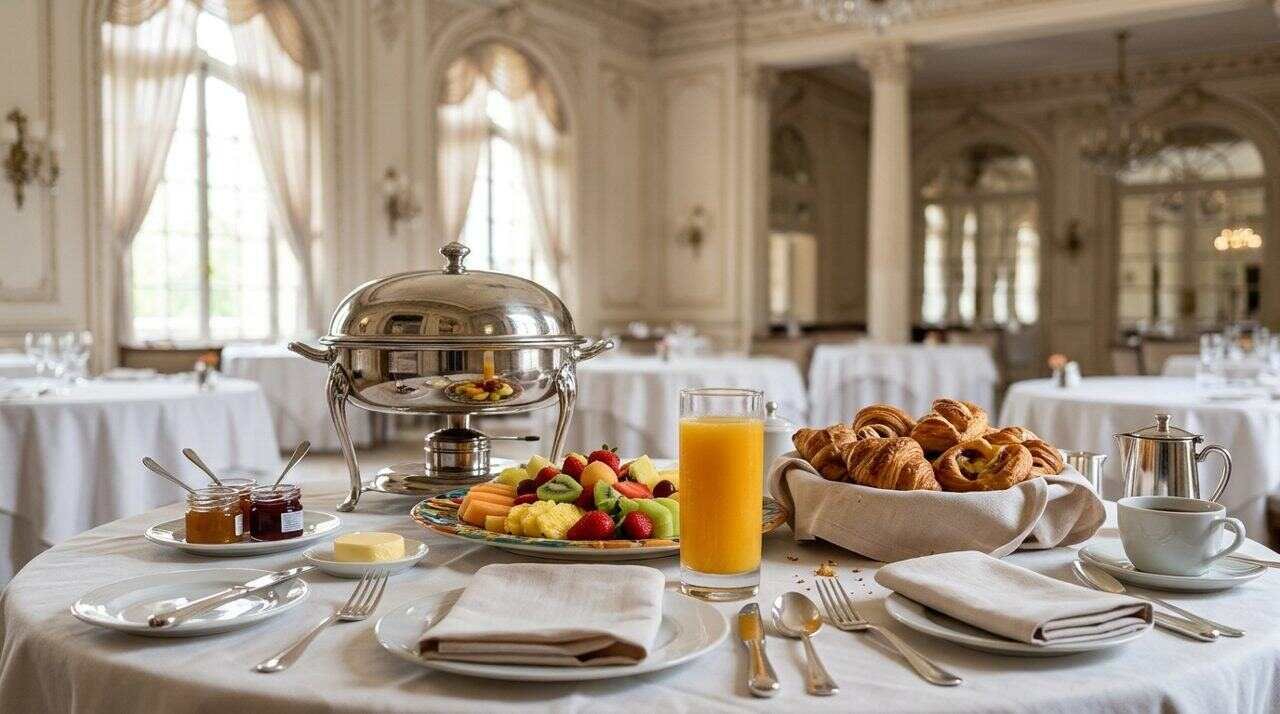
Two older ancestors get named in popular histories. VinePair says some food historians trace brunch to the smorgasbord-style hunt breakfasts of England, and others to Catholics who ate a large midday meal after fasting before Mass. The A&E Television Networks history site similarly says brunch can, in part, be traced back to upper-class British hunting luncheons that combined breakfast and lunch foods.
Neither claim comes with a date, a document or a named historian. They are plausible, and they are also the kind of statement that gets copied from one article to the next without anyone checking it. Treat both as possible influences rather than established lines of descent.
One more tradition tends to be filed in the wrong place. The Wikipedia entry treats Cantonese yum cha, or dim sum, as a separate and pre-existing tradition often discussed beside brunch, not as its origin.
Trains, Chicago and New York
Where the paper trail picks up
By the 1930s, brunch was an American restaurant fixture. Salon places it at Chicago’s Pump Room, in the Ambassador Hotel, in 1933, and says The New York Times called Sunday “a two-meal day” in 1939. Food writer Evan Jones is quoted there comparing the Pump Room scene to lunch at the Four Seasons.
The railroad angle is repeated widely. Transcontinental trains stopped in Chicago late in the morning, the story goes, and because restaurants were closed on Sundays, hotels began serving brunch to travelers. Tasting Table says this partially popularized the meal and then notes it cites no source for the train detail. The A&E history names John Barrymore, Helen Hayes and Clark Gable as Pump Room regulars on rail trips, and also gives no source. The Hollywood connection is therefore best read as a hedged suggestion; Tasting Table’s own headline says Hollywood “might be” responsible.
For New York, the Wikipedia entry says brunch spread among upper-class New Yorkers between 1920 and 1950, and that a 1939 New York Times feature found the word used mostly at home, with restaurants advertising the same meal as a “bracer breakfast” or “hunt breakfast.” It adds that New York’s alcohol rules barred restaurant liquor sales before 1:00 p.m., so brunches often started around then. The entry credits a 2016 work by Smith for these points, which this post has not independently checked.

The Prohibition story
A popular version holds that Prohibition made brunch. Juice-based cocktails such as the Bloody Mary, the Bellini and the mimosa masked alcohol, so daytime drinking became respectable. Salon repeats this, and an Eat Your Books post states it outright for the 1920s, with no source for the claim.
There is a timing problem the pages do not address. Beringer’s essay, as the newspaper piece above prints it, already admitted beer and whiskey to the late-morning table in 1895, a quarter-century before Prohibition. Daytime drinking attached itself to brunch from the start, and Prohibition may have changed the menu rather than caused the meal. That is a reading of the dates, not a finding any of these sources makes.
The same Salon piece says daytime drinking at brunch stayed mostly an upper-class habit until the 1970s, when it spread among the middle class and women.
After the war, brunch comes home
The postwar account is the most causal and the least documented. The A&E history says Sunday brunch grew after the Second World War because church attendance dropped significantly, and because convenience foods such as frozen orange juice, boxed cake mixes and powdered hollandaise made it easy to host. It gives no figures for either cause. VinePair tells a similar story, with brunch growing through the 1950s and 1960s as a home-cooked meal, then returning to restaurants around 1980, and being cemented in pop culture in the 1990s by television shows such as Sex and the City.
A reader can keep the sequence and hold the reasons loosely: restaurant meal for the well-off, then home meal for the middle class, then restaurant staple again. The Salon piece says Americans were brunching on Saturdays as well as Sundays by the twentieth century, which matches the schedule most menus keep now.
Anyone checking the earliest dates can start with the Word Histories entry, which lists each citation by publication and day.
Sources
- Word Histories: history of the portmanteau word ‘brunch’
- Beacon Tribune: The first mention of brunch
- Historic New Orleans Collection: How Madame Begue Invented Brunch
- VinePair: The History of Brunch
- A&E / History: The Goods on Brunch
- Salon: A brief history of brunch
- Tasting Table: Why Hollywood Might Be Responsible for Brunch in the US
- Eat Your Books: A brief history of brunch
- Wikipedia: Brunch