 275 Route 25A, Mt Sinai, NY 11766

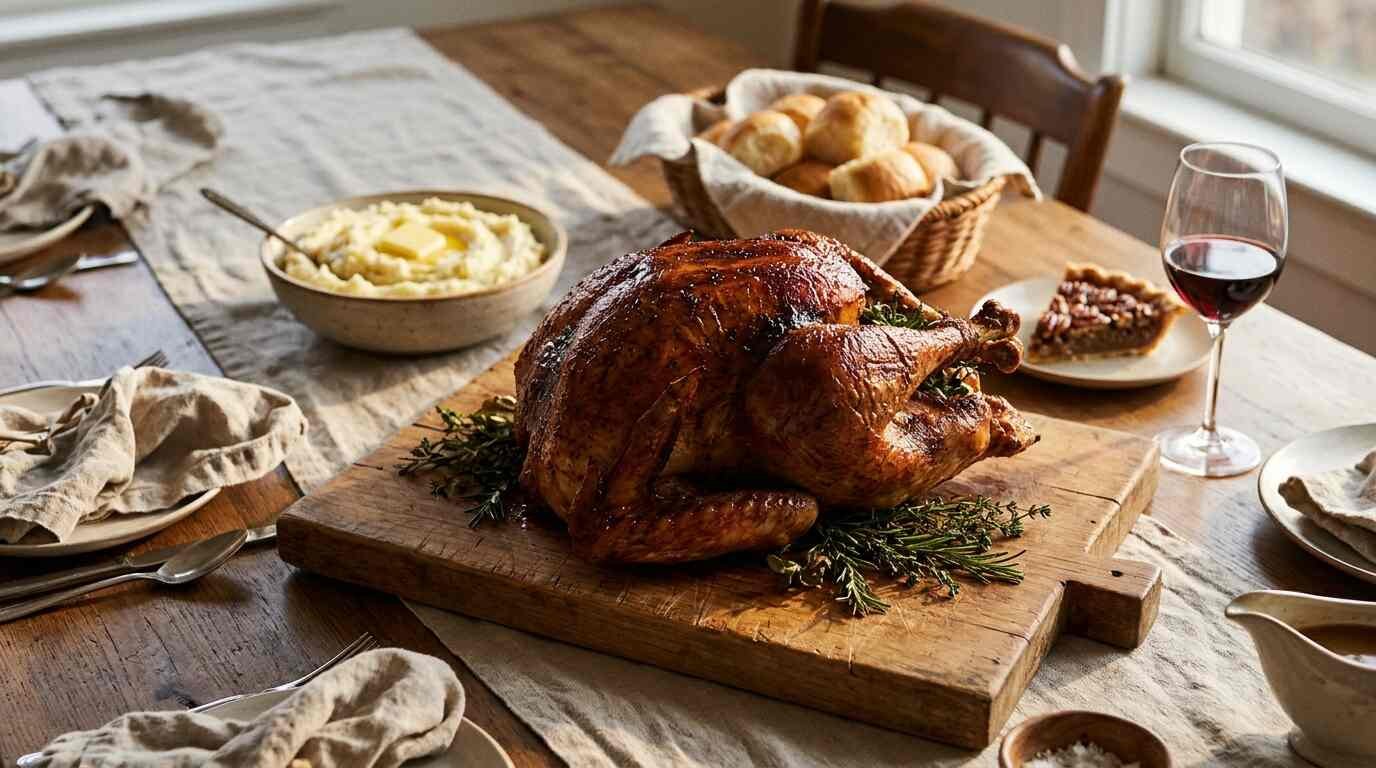
Six ounces of roast turkey breast holds 488 milligrams of tryptophan, according to MyFoodData’s table of high-tryptophan foods, which draws on USDA nutrition data. Six ounces of chicken breast holds 687. Nobody has ever blamed a chicken cutlet for a lost Thursday afternoon, yet every November the same bird gets wheeled into the same courtroom on the same charge, and the verdict is read before the gravy cools.
@@YOUTUBE@@ The accusation goes like this. Turkey is full of tryptophan, tryptophan makes the brain sleepy, and so the man in the recliner by four o’clock is a casualty of poultry. It is a tidy chain with a real molecule at one end and a real nap at the other. The trouble sits in the links between them, and that is where the defense earns its fee.
The charge sheet against the bird
One amino acid, two famous children, and a reputation it never asked for.
Tryptophan is an essential amino acid, which means the body cannot build it and has to get it from food. A post on Scientific American’s former blog network lays out the family tree: tryptophan is a precursor of serotonin, and serotonin is a precursor of melatonin, the hormone tied to sleep. That lineage is solid chemistry. It is also the whole reason the myth sounds plausible, as NPR’s Allison Aubrey reported in a 2008 Thanksgiving segment that put the question to nutrition scientists.
The leap comes next. Having tryptophan in a food and having extra serotonin in the brain are two separate events, linked by a delivery system that does not take orders from the dinner table. A pipe that feeds a building does not deliver more water because someone left a full bucket on the curb.
Turkey, for its part, was never in a special position to begin with.
The numbers on the bird
Pound for pound, the accused is an ordinary witness.
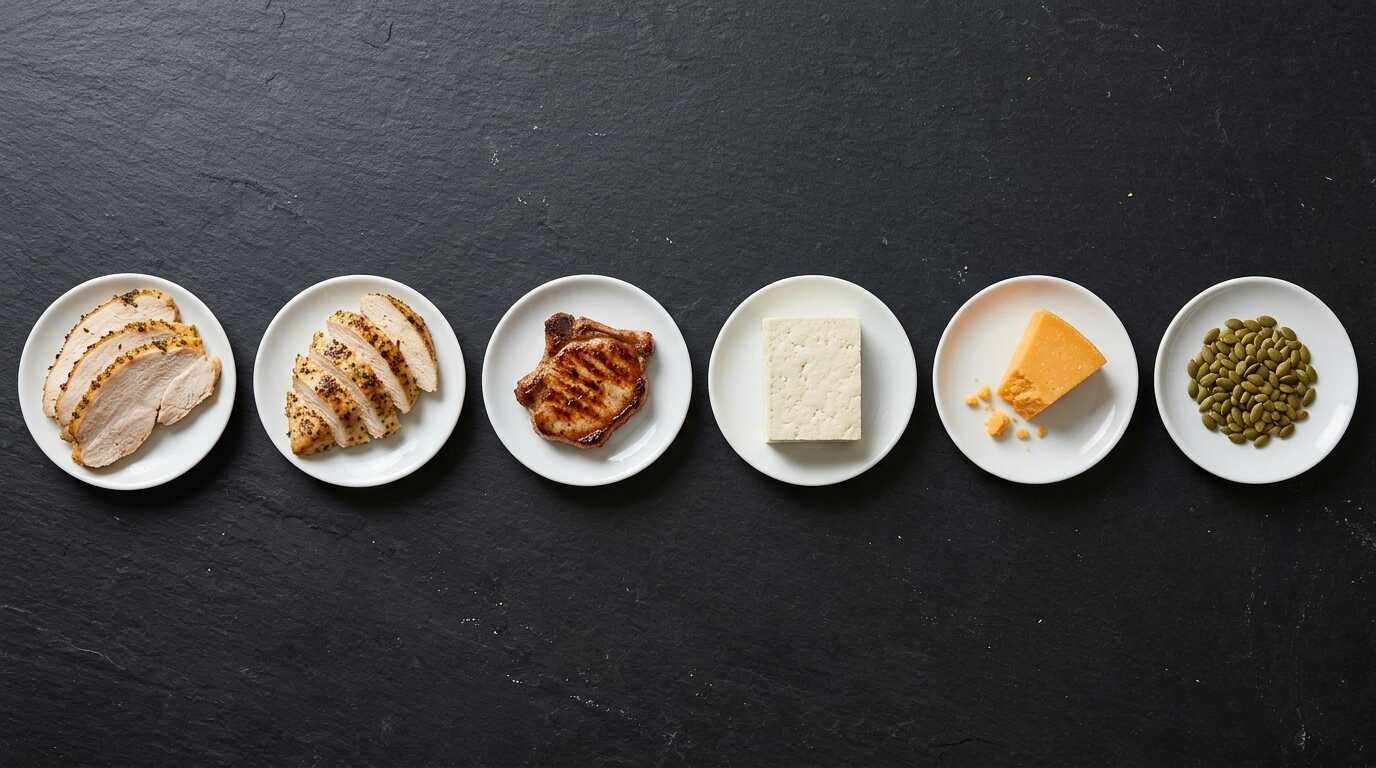
The USDA-derived figures collected by MyFoodData put turkey squarely in the middle of the protein crowd. A 6-ounce lean pork chop carries 627 milligrams. A cup of firm tofu carries 592. A single ounce of cheddar carries 155, which, multiplied out to the same six ounces as the turkey breast, would come to 930 milligrams; that last figure is simple arithmetic on the site’s own number, and it means a cheese board set out before dinner outguns the centerpiece by weight. Squash and pumpkin seeds come in at 164 milligrams per ounce. The site’s own summary is blunt: “many other foods contain as much tryptophan as turkey and are not believed to cause drowsiness.”
A second compilation built on USDA Standard Reference data, the Triage Method nutrition database, lists whole roasted turkey meat at 0.31 grams of tryptophan per 100 grams, alongside 29.1 grams of protein. The Scientific American post arrives at the same verdict from a different direction, figuring turkey at roughly 509 milligrams per 200-Calorie serving and calling it “quite an average food.”
Cornell molecular nutrition professor Martha Stipanuk put the matter plainly to NPR: “There’s nothing unique about turkey and its tryptophan content.” The same report noted that tofu, dairy products, nuts and virtually all meats carry the amino acid too.
So if turkey were a sedative, a diner flat-top on a Tuesday morning would be a dormitory. Ham and eggs, a cheeseburger, a hot turkey sandwich under brown gravy, a tuna melt: the counter would be lined with people asleep on their elbows by eleven. It is not. Short-order cooks have enough problems.
A crowded door at the blood-brain barrier
Tryptophan waits in line, and a big protein meal makes the line longer.
Here the case for the defense gets technical, and stronger. Tryptophan does not wander into the brain at will. It crosses the blood-brain barrier on a carrier it shares with a whole group of other amino acids, known as the large neutral amino acids, or LNAAs. Every one of them is competing for the same seats on the same bus.
John D. Fernstrom, in a 2013 review in the journal Amino Acids, describes how the brain’s uptake of these molecules reflects “the competitive nature of the transporter for LNAA at the blood–brain barrier.” His review also reports, according to its abstract on Europe PMC, that raising blood levels of the branched-chain amino acids lowers the brain’s uptake of tryptophan, and that eating particular proteins causes large swings in how much tryptophan gets through.
That turns the original accusation on its head. Turkey, like any meat, delivers tryptophan along with a much larger load of its competitors. A slab of protein does not flood the brain with the sleepy molecule; it crowds the doorway.
Richard J. Wurtman, looking back on early rat studies of the question, summarized the finding in a chapter for the Institute of Medicine’s 1994 volume Food Components to Enhance Performance. A protein-rich meal, he wrote, “decreases tryptophan’s transport into the brain and slows its conversion to serotonin.” In the rat studies he describes, protein meals raised tryptophan in the blood while brain tryptophan and serotonin failed to rise.
Stipanuk told NPR the same thing in human terms: high-protein diets do not change brain tryptophan or serotonin in people. The amino acid is on the plate. It just cannot get through the door in any special quantity.
The prosecution’s best argument
Clearing the turkey may mean indicting the stuffing.
A fair defense has to admit what the other side has. The same research that undercuts the turkey story contains a twist that keeps the myth from being pure nonsense.
Wurtman’s chapter recounts that when rats ate carbohydrate-containing meals, the scarce amino acid tryptophan rose in their brains. The mechanism, as he lays it out, runs through insulin: brain uptake of tryptophan climbs when blood levels of the other large neutral amino acids fall, which is what happens after insulin is secreted. The bus carries no extra tryptophan. There are simply fewer other passengers fighting for the seats.
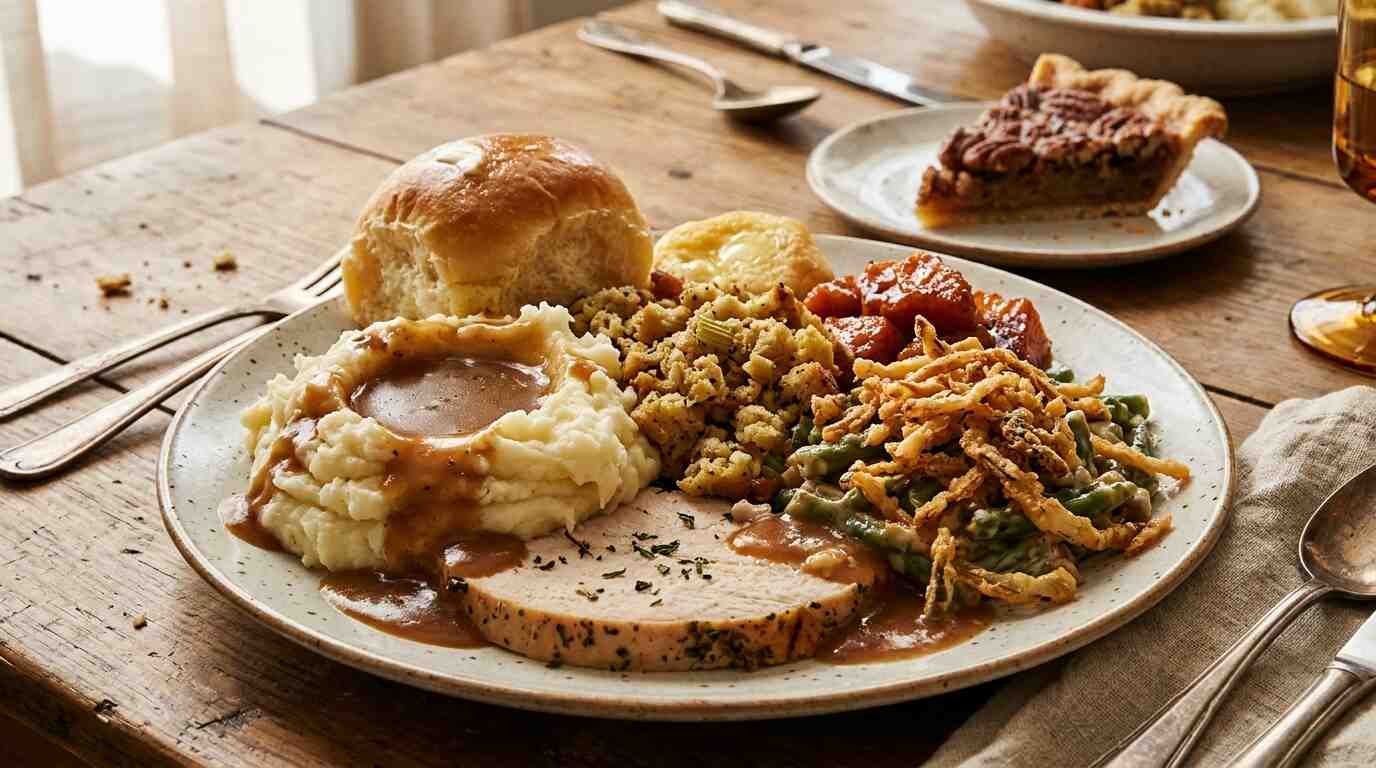
Thanksgiving is not a protein meal. It is a protein meal buried under mashed potatoes, rolls, candied yams, a green bean casserole with fried onions on top and then pie, and a dessert table that includes a pecan pie built on corn syrup is about as close as American cooking gets to an insulin event with a lattice crust. The WIRED video above lands on a version of this point, arguing that turkey eaten with a heavy load of carbohydrates is a different proposition from turkey alone. By that logic, if tryptophan plays any part in the afternoon slump, the bird is the alibi and the starch is the accomplice.
The Scientific American post goes further down a stranger road. Its author argues that the debate on both sides assumes the tryptophan-to-melatonin chain has to happen inside the brain, and that this is the wrong place to look. The post claims the intestine makes more melatonin than all other sites in the body combined, and it cites rat and chicken studies in which very large doses of pure tryptophan raised melatonin production enough to leak from the gut into the bloodstream. A pharmacological dose of the isolated amino acid, in other words, might make an animal drowsy by a route that bypasses the barrier entirely.
Then the same post closes that door too. Turkey, it says, simply does not contain enough tryptophan to do this. The gut theory explains how a supplement capsule might work, not how a drumstick would. The complication is real, and it still does not convict the bird.
The usual suspects
A long table, a full stomach, a second glass, and a clock that was going to win anyway.
Once tryptophan is reduced to a minor character, the actual causes of the Thanksgiving collapse are not hard to find. Most of them were sitting at the table the whole time.
The first is volume. NPR’s report lists overeating at the top of the likelier explanations: large meals make people sluggish. A holiday dinner is engineered to be eaten past the point of comfort, then followed by dessert, then followed by picking at the carcass in the kitchen. The effect is less a switch being thrown than a slow loss of pressure in a line.
The second is alcohol. The same report points to wine as a quick route to relaxation and drowsiness, and a Thursday that starts pouring at two in the afternoon has given the wine a long head start.
The third is the day itself. The Scientific American post itemizes it with a deadpan list: travel, cooking, hugging family, watching football, serving and eating, all of it adding up to a person who is simply tired and overstimulated. Then it delivers the line that belongs on the defense table as Exhibit A: “And look at the clock – it’s almost bed-time anyway.” The post is talking about the evening, and an afternoon feast stretched into dessert and dishes walks straight into it.
The fourth suspect is the hardest to measure. Christine DuBois, an anthropologist at Johns Hopkins, argued to NPR that the way people treat and interact with one another at these gatherings may matter more than any substance in the food. A day of managed conversation, old family friction and long hours in a crowded room drains a person in ways no nutrient label records. For whoever did the cooking, the day started long before the first plate was passed.
None of these explanations need tryptophan. All of them fit the evidence better.
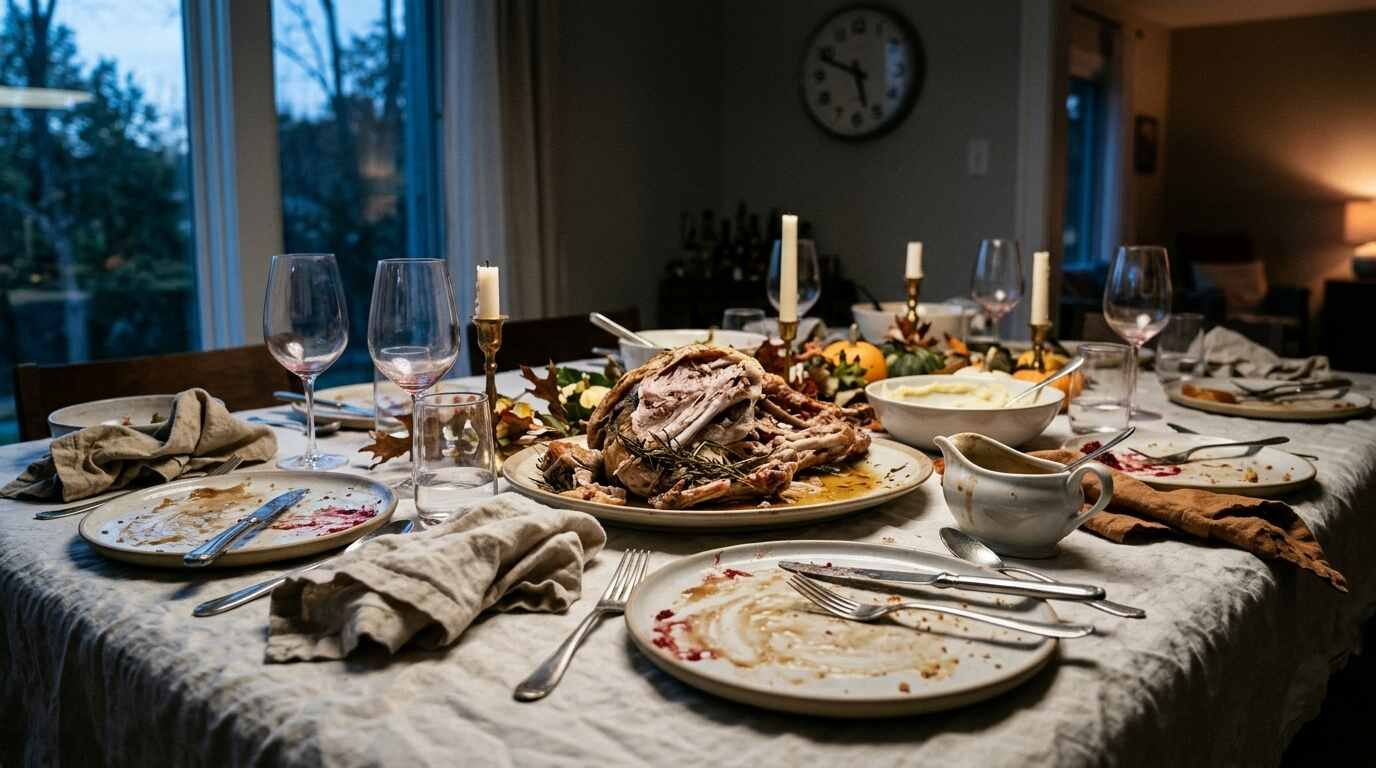
Why the turkey keeps getting convicted
A myth built on a little real chemistry is harder to kill than one built on none.
The tryptophan story survives because it is not entirely invented. Stipanuk described it to NPR as an idea resting on some correct information that was misunderstood and misapplied, and that is exactly the kind of claim that outlives its rebuttals. Tryptophan is real. It does feed serotonin and melatonin. Turkey does contain it. Every piece of the story checks out on its own, and only the assembly is wrong, the way a set of genuine parts can still produce an engine that will never turn over.
It also helps that the story gives people a tidy, blameless excuse. Falling asleep in front of the second half of a football game because of a molecule sounds better than falling asleep because of a fourth helping and a long day with relatives. The turkey takes the fall the way a busboy takes the blame for a cold plate that sat under the heat lamp for six minutes waiting on a server. It was standing closest when the trouble started.
And there is a cultural logic to it. Turkey is the one food on the table that belongs to that day and almost no other. Mashed potatoes, rolls, wine and pie show up all year long without anyone keeling over, so when the one unusual item arrives with the one unusual nap, the mind draws a straight line between them. Nobody files a complaint against the potatoes; they have been at every dinner since childhood and have a clean record.
The research, read straight, says the bird is innocent of the specific charge. It also suggests the meal around it, with its starch, its sugar, its volume and its wine, does most of the work, and that the calendar and the company handle the rest. Next week the same verdict will be passed again in living rooms across the country, by people holding a slice of pie, a third glass and a turkey sandwich built from the leftovers, who will then lie down on the couch and blame the bird.
So the question for the jury is a practical one. When the house goes quiet after dinner this year, which suspect is actually doing the work at that table: the plate, the glass, the clock, or the people?
You Might Also Like
- The Body Has a Real Reason for Wanting Stew the Moment It Gets Cold
- Cast Iron Seasoning Is Baked-On Oil, Not Magic, and Soap Won’t Strip It
- Lump-Free Turkey Gravy: A Roux Timeline for Thanksgiving Week
Sources
- NPR, Allison Aubrey, “A Myth Examined: Can Turkey Make You Tired?” (2008): https://www.npr.org/2008/11/27/97449569/a-myth-examined-can-turkey-make-you-tired
- NPR transcript of the same segment: https://www.npr.org/transcripts/97449569
- Scientific American former blog network, “Myths about myths about Thanksgiving turkey making you sleepy”: https://www.scientificamerican.com/blog/a-blog-around-the-clock/myths-about-myths-about-thanksgiving-turkey-making-you-sleepy/
- MyFoodData, “Top 10 Foods Highest in Tryptophan” (USDA-derived values): https://myfooddata.com/articles/high-tryptophan-foods.php
- Triage Method human nutrition database, “Turkey, whole, meat only, cooked, roasted” (USDA SR Legacy data): https://triagemethod.com/tools/human-nutrition-explorer/food/turkey-whole-meat-only-cooked-roasted.html
- Fernstrom JD, “Large neutral amino acids: dietary effects on brain neurochemistry and function,” Amino Acids 45(3):419–430 (2013): https://link.springer.com/article/10.1007/s00726-012-1330-y
- Europe PMC record and abstract for the Fernstrom review: https://www.ebi.ac.uk/europepmc/webservices/rest/search?query=EXT_ID:22677921%20AND%20SRC:MED&resultType=core&format=json
- Wurtman RJ, “Effects of Nutrients on Neurotransmitter Release,” in Food Components to Enhance Performance, Institute of Medicine (1994): https://www.ncbi.nlm.nih.gov/books/NBK209058/
- WIRED, “Food Myths: Does Turkey Make You Sleepy?” (YouTube): https://www.youtube.com/watch?v=ui4xYqBlZks
Suggested category: Technology & Science
Leave a Reply