 275 Route 25A, Mt Sinai, NY 11766



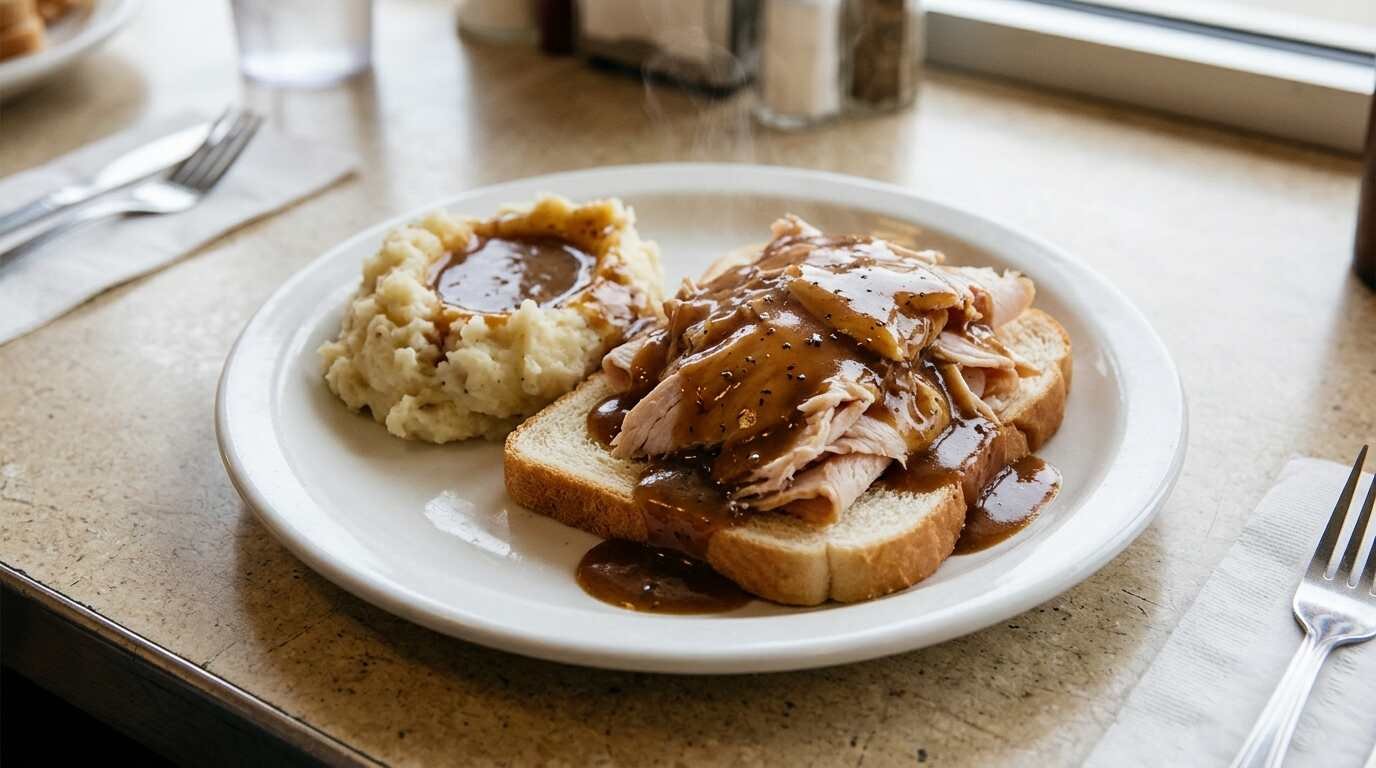
An open-faced plate of bread, sliced turkey and gravy, eaten with a knife and fork, and the Louisville and Pittsburgh cousins that run the same idea through a different sauce.
A hot turkey sandwich is a sandwich by courtesy only. Bread goes down flat on the plate, sliced turkey is laid over it, gravy is poured across the top, and nothing about the arrangement can be picked up. The bread underneath earns it the name.
The plate
The version described here uses four parts: soft white bread, turkey sliced thin, a pan gravy, and potatoes mashed to sit alongside. The video above, from the channel A Dash Of Seasoning, lists turkey sliced about a quarter inch thick and plain sandwich bread among its ingredients, and it treats the gravy as the main task.
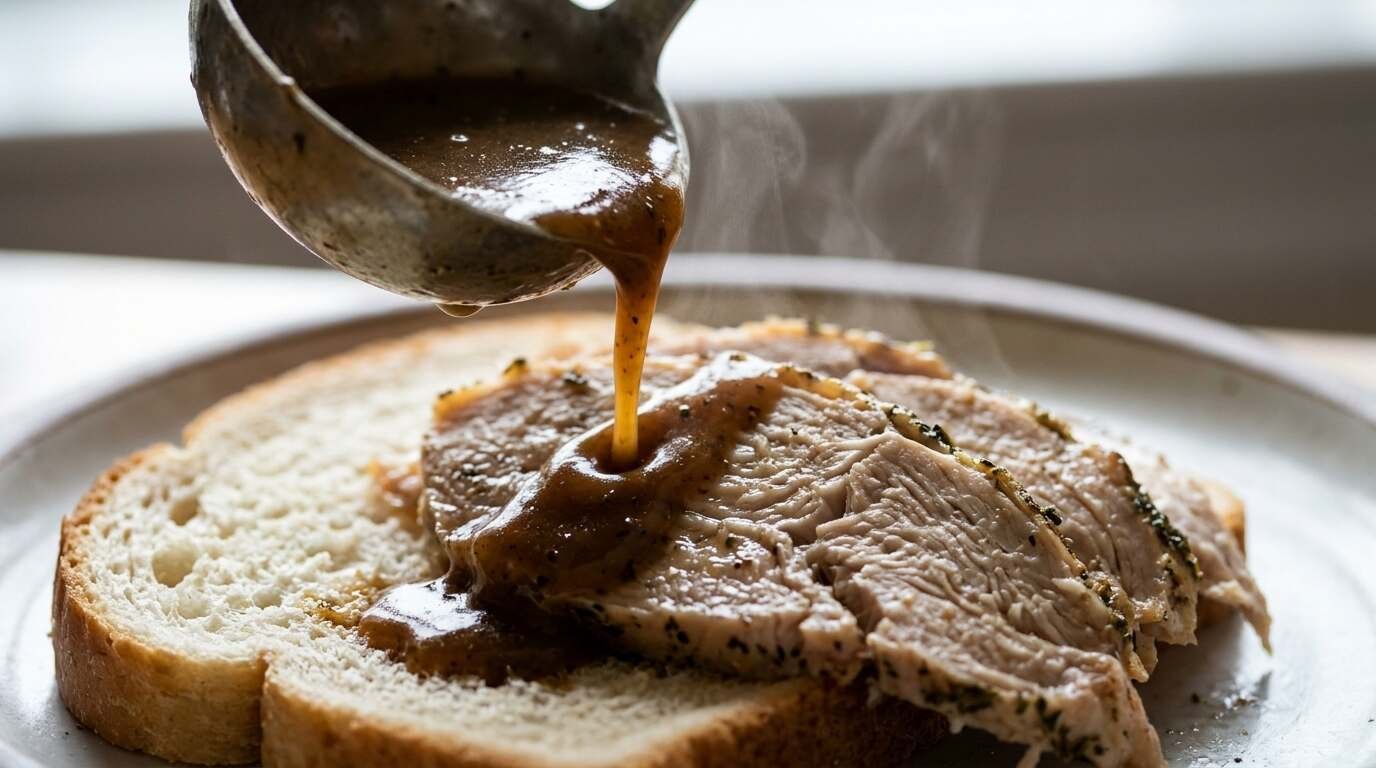
Gravy comes first. Fat and flour are cooked together into a roux, and stock goes in slowly while the pan is whisked. The timing that keeps a roux smooth is laid out in the diner’s own post on lump-free turkey gravy. Once the gravy is made, the sliced turkey goes into it to warm through, which heats the meat gently and coats each slice.
Toast holds its shape longer under gravy. Untoasted white bread goes soft and takes up the sauce, and plenty of plates are built that way on purpose. Mashed potatoes get a dip in the center for extra gravy.
Louisville: the Hot Brown
The best-documented relative of the plate is the Hot Brown, an open-faced turkey sandwich from the Brown Hotel in Louisville, Kentucky. CulinaryLore credits chef Fred K. Schmidt and gives the hotel’s opening as 1923 without naming an invention year. Pittsburgh Magazine dates the first Hot Brown to 1926, and The Local Palate puts the sandwich’s 100th anniversary in 2026, which points the same way.
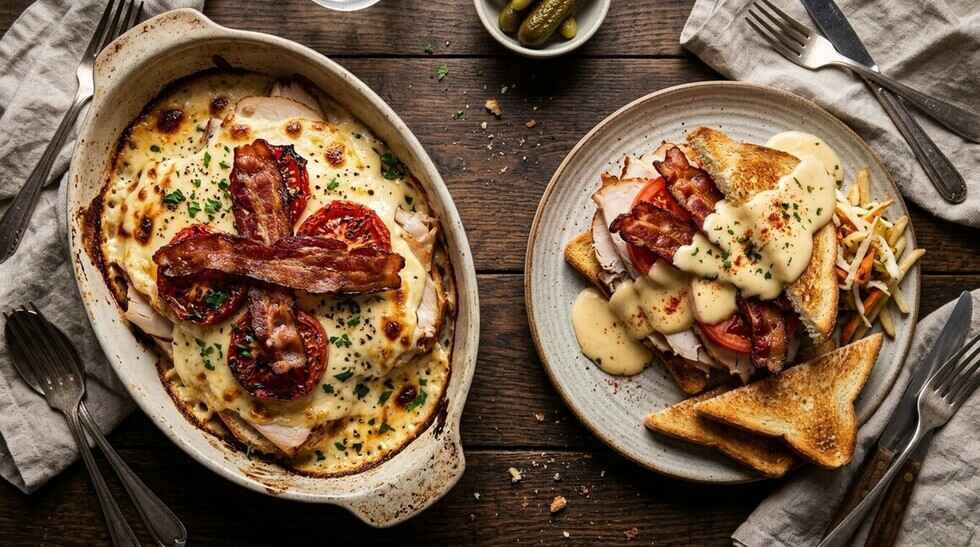
The occasion is consistent across the accounts. The hotel held nightly dinner dances that drew as many as 1,200 people, according to CulinaryLore, and Schmidt built a late-night meal for guests leaving them. The Local Palate adds that the hotel opened during Prohibition, that the band took a midnight break, and that guests wanted a snack. Schmidt answered with open-faced turkey, bacon and a creamy Mornay sauce.
The sauce is where it departs from diner gravy. The Local Palate describes a thick roux whisked with heavy cream, milk, pecorino-romano and a hint of nutmeg, poured over turkey and bread. The original recipe calls for Texas toast. Schmidt reportedly tried acidic additions, strawberries among them, before settling on two Roma tomato halves.
The dish outgrew the ballroom. CulinaryLore reports the hotel added it to its luncheon menu, where it became the most popular item, and that it spread across Kentucky and to other states, especially the upper South. The hotel also offered a cold version on rye with turkey or chicken, lettuce, tomato, hard-boiled eggs and Thousand Island dressing, which never matched the hot one. The Brown Hotel itself closed in 1971 and was sold to the Louisville Public Schools system; it was restored and reopened as a Hilton in the early 1980s after the Broadway Group acquired it.
Pittsburgh: Turkey Devonshire
A second relative comes from Pittsburgh. According to Pittsburgh Magazine, restaurateur Frank Blandi, then 28, wanted a fancy turkey sandwich on the menu at the Stratford Club in Shadyside in 1934, at a time when roast turkey was still a luxury. Food Republic describes Blandi as a Sicilian-American chef and says the sandwich was on his restaurant’s menu by the late 1930s.
The build is open-faced like the Hot Brown, with different parts. Pittsburgh Magazine lists toast points, crisp bacon, sliced turkey, a sauce of chicken stock and hot milk thickened with roux, Parmesan and paprika, all broiled until golden; tomato is, in its word, controversial. The Takeout puts the bacon on top and notes the Parmesan is browned under the broiler. Food Republic calls the sauce a cheddar roux.
Even the name is contested. Pittsburgh Magazine and Food Republic say Blandi named the sandwich for Devonshire Street, a nearby street of upscale houses. The Takeout says he chose the word to echo the English-sounding “Stratford” in the restaurant’s name. Blandi died in 1999 without giving many details of how he developed the sandwich, per The Takeout, which quotes a 1983 Pittsburgh Press interview in which he said the early version “was flat.”
Cooks who worked with him disagree on the sauce. Pittsburgh Magazine reports that Alex Colaizzi, who worked with Blandi from 1958, says there was never cheddar in the original sauce, though published recipes say there should be. Whether the Hot Brown inspired the Devonshire is unconfirmed: the magazine found no evidence that Blandi or his staff visited Louisville and suggests the two were likely created independently.
From fine dining to the lunch counter
Interest in the dish grew in Pittsburgh in the 1950s, Food Republic reports, with casual and upscale versions across the city. Some restaurants served it in cast iron and some used processed turkey, and chefs added tomatoes or asparagus, swapped toast for brioche, used béchamel instead of cheddar, and built seafood versions with crab. It was typically a large midday meal at local fine dining restaurants.
It peaked in the 1960s and 1970s as a staple of lunch and late-night menus, per Pittsburgh Magazine and The Takeout. Then the ingredients slipped. The Takeout reports that roasted bone-in turkey gave way to pre-sliced deli meat, fresh bread became generic sandwich slices, and cheaper bacon became standard. Tim Ryan, president of The Culinary Institute of America, calls ordering one “Devonshire roulette,” per Pittsburgh Magazine. Food Republic states that flavor and texture were not the cause of the decline and points to the loss of upscale daytime dining culture, and Pittsburgh Magazine adds the move toward one-handed, on-the-go lunches.
The plain version has no known inventor
None of the sources reviewed for this article names an inventor for the plain version, the one with gravy, white bread and mashed potatoes. The Hot Brown and Turkey Devonshire have creators, dates and addresses. The gravy-and-bread plate has a menu line and no named originator in the record reviewed here.
Both The Takeout and Food Republic end by recommending the sandwich as a home meal for Thanksgiving leftovers, which puts the dish back where it began, in a kitchen with a cooked bird in it.
Leftover turkey and the USDA rules
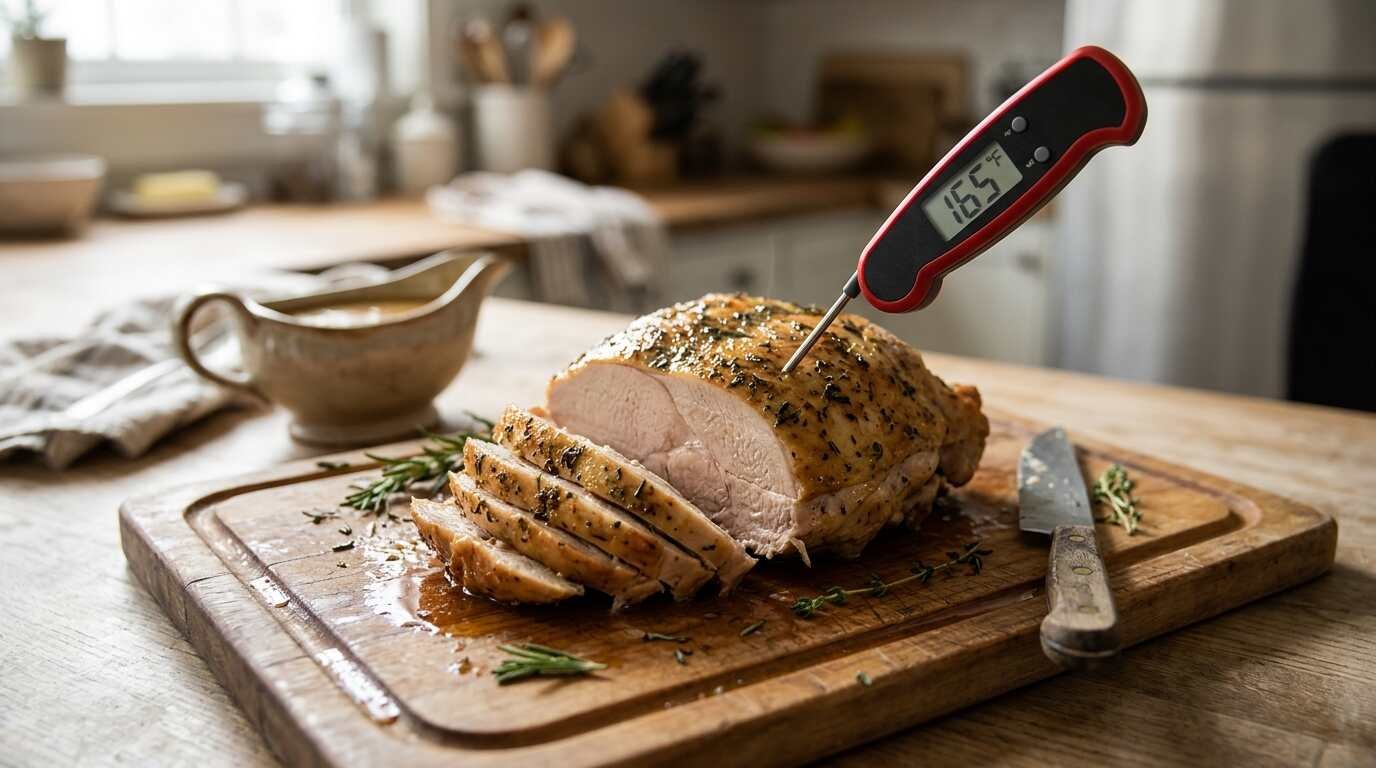
Turkey for a hot sandwich usually comes from a roast that has already been through the refrigerator, and the federal rules for that are specific. The USDA’s leftovers guidance says leftovers can be kept in the refrigerator for 3 to 4 days, must go into the refrigerator within 2 hours of cooking, and must reach 165°F when reheated, measured with a food thermometer. Gravies should be brought to a rolling boil. Leftovers should be covered during reheating.
Turkey Basics: Handling Cooked Dinners adds that a whole cooked turkey should not be reheated; the meat should be sliced into smaller pieces first, and cooked turkey and gravy both keep for 3 to 4 days in the refrigerator. For a Thanksgiving turkey, FoodSafety.gov counts that to the Monday after the holiday, and says leftovers should go into the refrigerator while still warm, in shallow containers, rather than waiting to cool at room temperature.
The practical result: gravy goes to a boil, turkey slices go into it, and a thermometer reads 165°F in the thickest slice before the plate goes out. More ways to use the rest of the bird are in the diner’s list of eight ways to use leftover turkey.
A thermometer for the 165°F check
An instant-read thermometer is the tool the USDA guidance assumes. The diner reviewed one in the ThermoPop 2 review.
ThermoWorks ThermoPop 2, Best Value Instant Read Thermometer measures internal temperature, which is what the 165°F rule requires. See it on Amazon (affiliate link)
As an Amazon Associate I earn from qualifying purchases. A commission may be earned if you buy through this link, at no extra cost to you.
Sources
- Pittsburgh Magazine, Turkey Devonshire: https://www.pittsburghmagazine.com/?p=9677
- The Takeout, The Vintage Open-Faced Sandwich That Used To Rule Pittsburgh Diners: https://www.thetakeout.com/1998739/vintage-turkey-devonshire-sandwich-pittsburgh-diner/
- Food Republic, The Old-School Turkey Diner Meal That’s No Longer Popular: https://www.foodrepublic.com/1953748/old-school-turkey-diner-meal-no-longer-popular
- CulinaryLore, What Is a Hot Brown Sandwich?: https://culinarylore.com/food-history:what-is-a-hot-brown-sandwich/
- The Local Palate, The Story Behind the Kentucky Hot Brown: https://thelocalpalate.com/articles/the-story-behind-the-kentucky-hot-brown/
- USDA FSIS, Leftovers and Food Safety: https://www.fsis.usda.gov/food-safety/safe-food-handling-and-preparation/food-safety-basics/leftovers-and-food-safety
- USDA FSIS, Turkey Basics: Handling Cooked Dinners: https://www.fsis.usda.gov/food-safety/safe-food-handling-and-preparation/poultry/turkey-basics-handling-cooked-dinners
- FoodSafety.gov, Thanksgiving Leftovers for Safe Keeping, Weekend Grazing: https://www.foodsafety.gov/blog/thanksgiving-leftovers-safe-keeping-weekend-grazing
- A Dash Of Seasoning, Open face turkey sandwich (video): https://www.youtube.com/watch?v=1f0k81JMTDM
Leave a Reply