A counter stool is a plain object. A steel post, a round seat, a swivel. Yet it carries a set of habits that changed how people eat in public: sit down fast, eat beside strangers, watch the food being made, and leave when you are done.
The history behind that seat is mostly practical, and in one important chapter, it is far more than that.
From lunch wagon to lunch counter
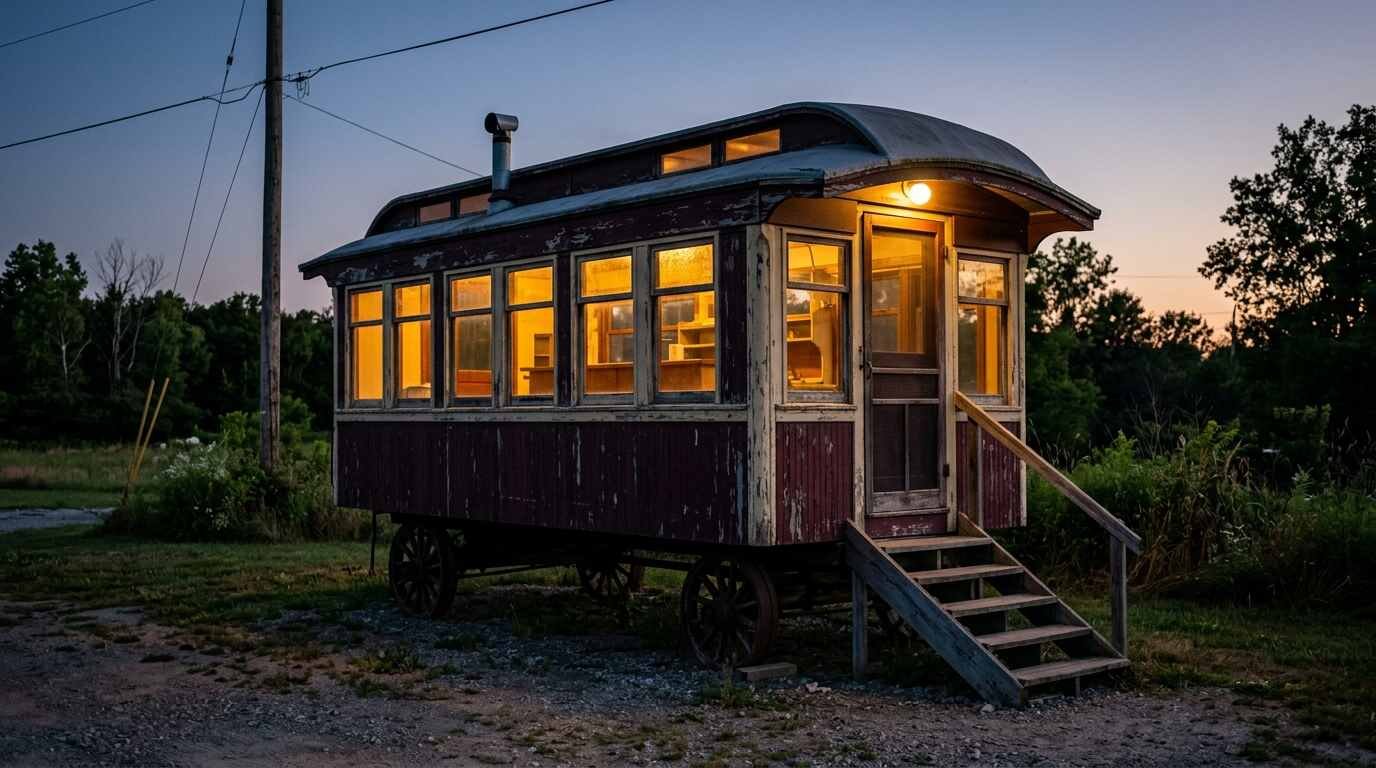
Quick, cheap meals sold from wagons appeared in American cities in the second half of the nineteenth century, serving workers who needed a bite at odd hours. As they grew, some wagons gained a counter inside, with stools along it and the cook working in the narrow space across. The railcar and later the stainless-steel diner built on the same idea, a compact room where everything was within reach.
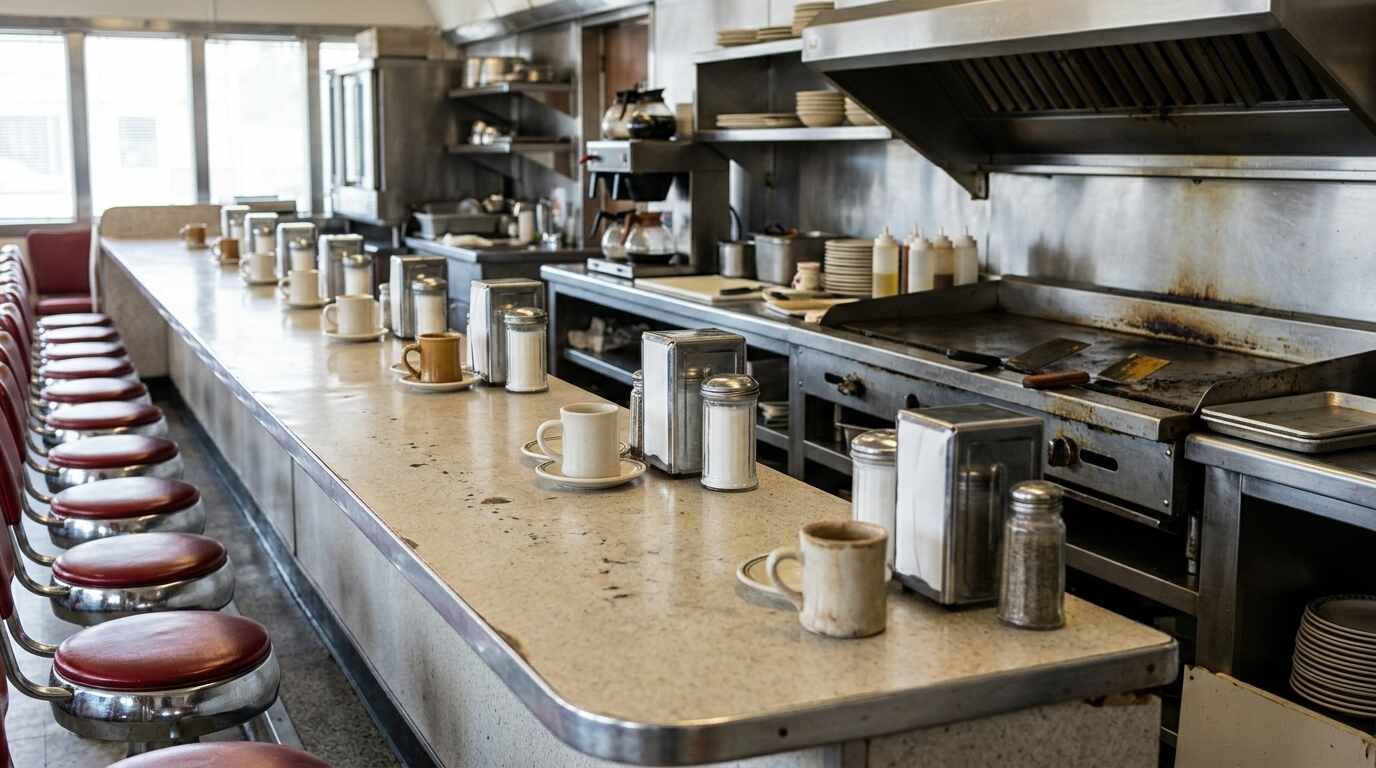
The layout is efficient because of how small it is. One cook can serve a dozen customers without walking, a server can fill a cup without leaving her place, and nobody waits long. The counter is a machine for speed.
Why the stools face the cook
Sitting at the counter means watching your breakfast get made, and that is half the appeal. You see the eggs crack, the hash brown flip, the plate slide. Nothing is hidden. It builds trust in a way a dining room behind a wall cannot.
It also invites conversation, or the choice not to have one. A person eating alone is not stranded at a table for two. The stool lets you sit by yourself without looking lonely, and the cook and server often become part of your morning. Regulars know it well: the same seat, the same cup, a few words, out the door.
The details of the seat
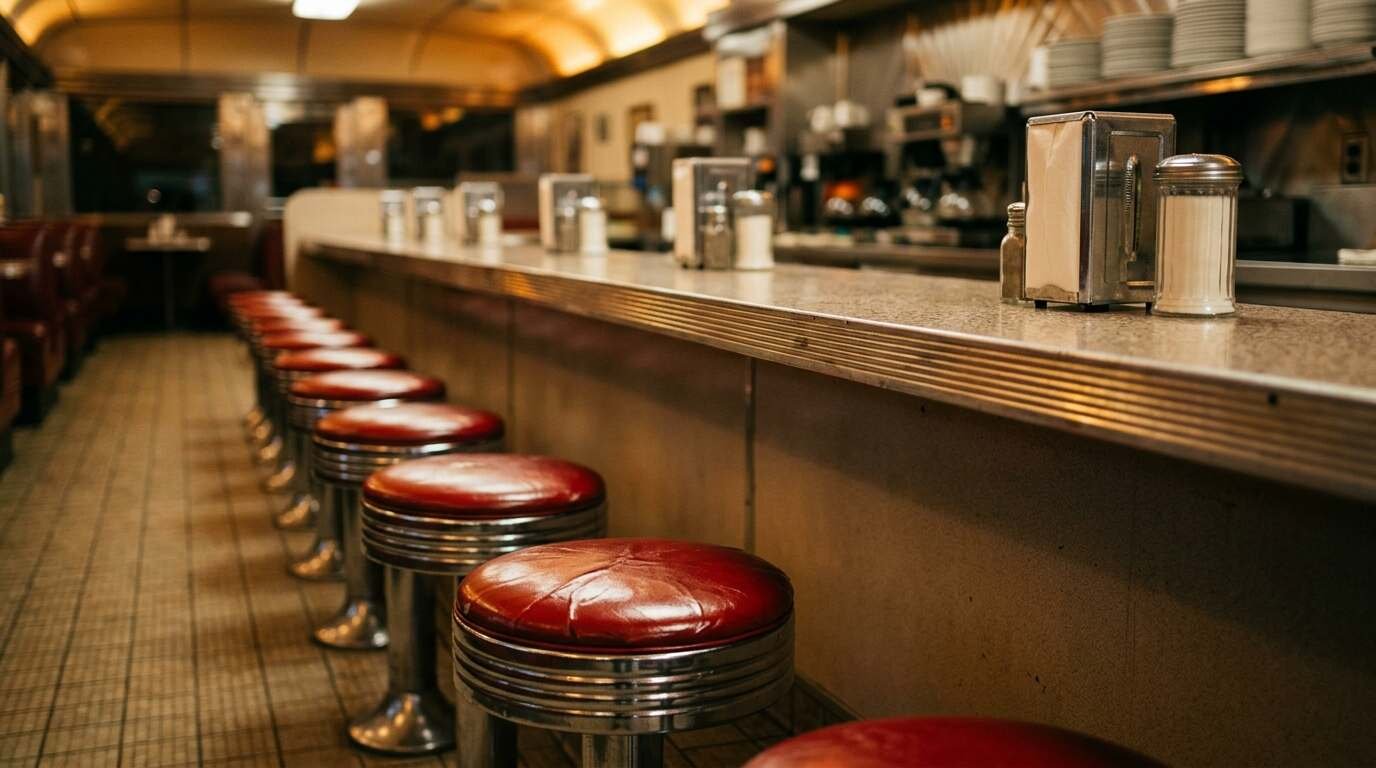
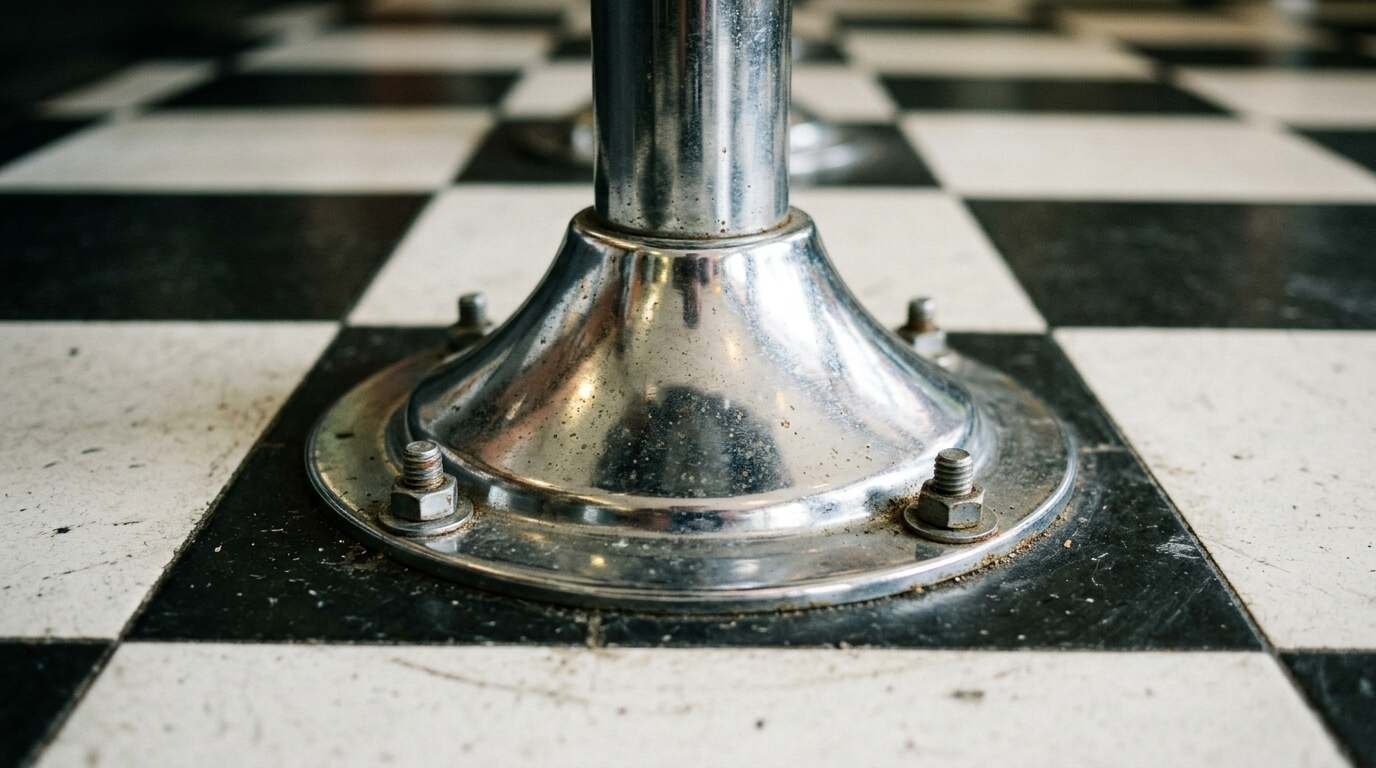
Look at a counter closely and the small choices show. The stool sits at a height that puts your elbows level with the counter edge. A footrest bar runs along the base so your feet are not left dangling. The seat swivels, so you can turn to talk to the person beside you or glance at the door.
The stool is bolted to the floor for good reason. It cannot be dragged away, tipped over or rearranged into a group of four. The fixed row sets the room’s rhythm and keeps the walkway clear for the server. Practical decisions like these are why the counter works so well in a tight space.
The counter surface itself is made to be wiped constantly. Napkins, sugar, ketchup and a stack of menus sit within arm’s reach, so that a customer rarely has to ask for anything twice.
Eating beside people you might not choose
The counter puts people next to each other regardless of who they are. A nurse coming off shift, a contractor, a student with a laptop, a retiree with the paper. Elbows nearly touch. Strangers pass the sugar.
That closeness has always been mixed with limits. A shared space is not automatically an equal one, which brings us to a part of the story that deserves plain words.
The Greensboro counter. In February 1960, four Black college students sat down at the whites-only lunch counter of a Woolworth store in Greensboro, North Carolina, and asked to be served. They were refused and stayed. The protest spread, and sit-ins at lunch counters followed in many Southern cities. Those actions helped drive the push to end segregation in public places.
The detail matters here because of the object. A stool is a small thing, and it became the center of a major moment in American history. Sitting down, ordering a cup of coffee and refusing to move was a form of protest that anyone could understand. The Smithsonian holds a section of that Greensboro counter, and its collection pages are a good place to read more.
Counter manners
Counter culture has unwritten rules, and they are mostly about leaving room. Do not spread out, since someone else will want the stool beside you. Keep your bag on the hook under the counter rather than on the next seat. Order promptly when the server comes by. Tip as you would at a table.
If the counter is busy and you are lingering over a second coffee, notice who is waiting. The best regulars have a sense for it. They finish, wave and leave a little extra on the way out.
On slow mornings, linger. The counter was built for a fast meal, but it also happens to be a good place to read a newspaper.
What the counter says today
Many diners keep the counter because it works. It is the fastest seat in the house, the best for a solo meal, the closest to the coffee. Some have added screens, some serve more takeout, and some have lost their counters to remodels. Others hold on, with the same chrome and vinyl.
If you have a favorite stool, you know what it gives you: a view of the line, a quick refill, a bit of company without obligation. Take it, and spare a thought for the many hands that shaped how that seat came to be.
Why it endures. Part of the reason is plain economics. A counter seats more people per square foot than tables do, and it turns over faster. Part is something harder to price. In a world of screens and takeout bags, a row of strangers eating the same breakfast, watched over by the person cooking it, is a small, steady piece of public life.