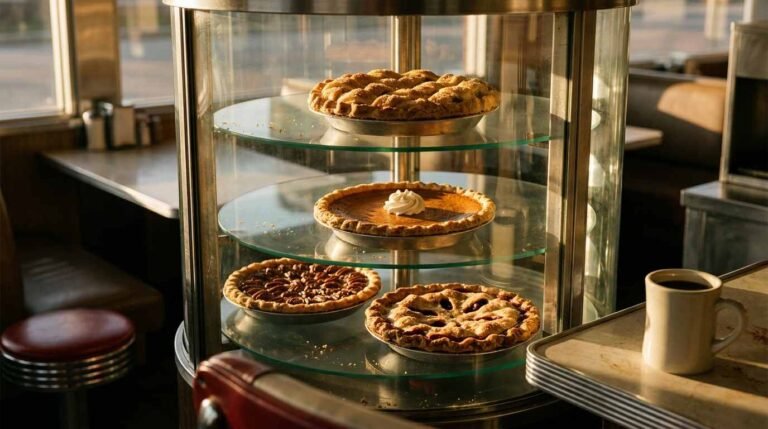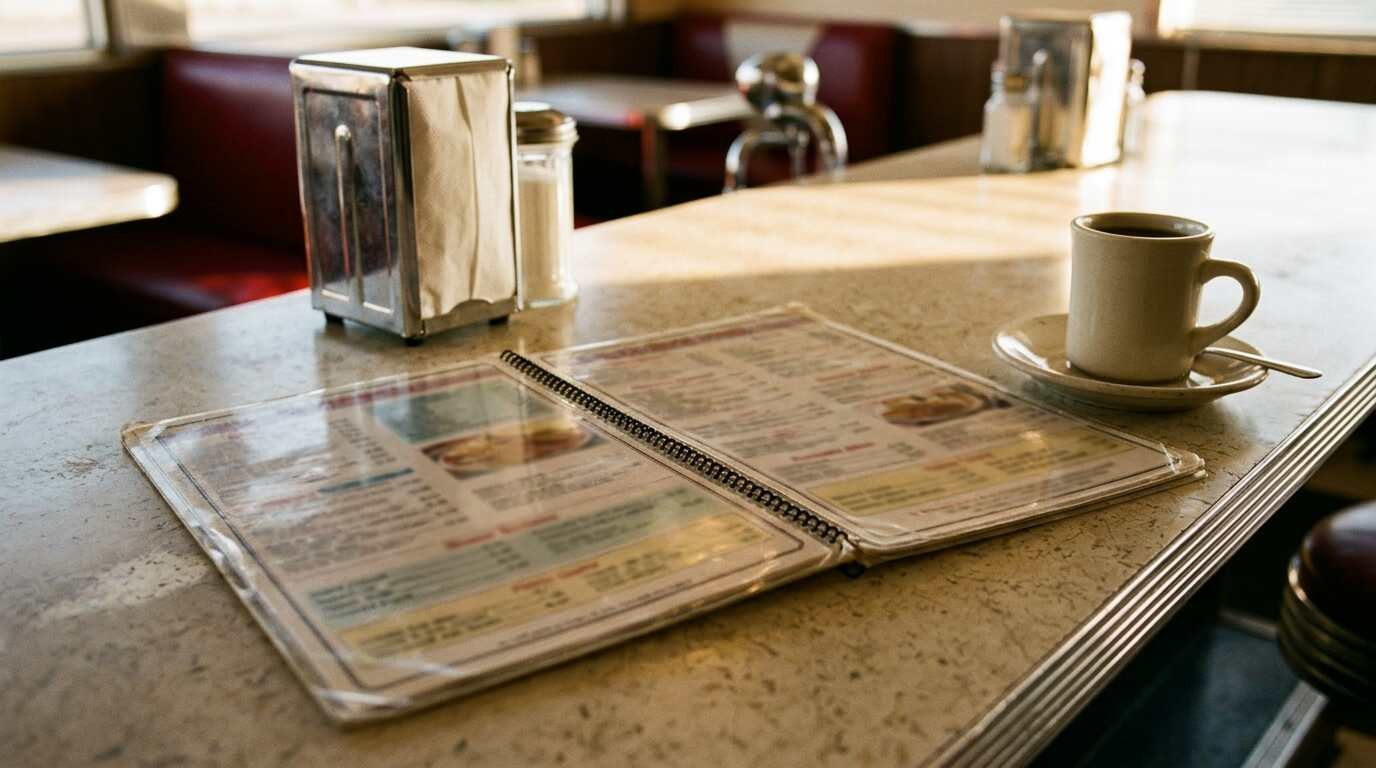
Pick up a menu at a Northeast diner and you may need two hands. Eggs any style, pancakes, burgers, club sandwiches, gyros, souvlaki, lasagna, broiled fish, liver and onions, a long row of milkshakes. The pages run on, and so does the debate over whether any kitchen should try to do all of it.
They do, though, and they have for generations. The reasons are partly history, partly economics, and partly a particular idea of what hospitality means.
A brief history, with the edges hedged
The American diner grew out of lunch wagons and railcar-style restaurants, and by the middle of the twentieth century it was a fixture of roadsides and small towns. Over the decades, many diners, especially around New York and New Jersey, came to be owned and run by Greek-American families. That pattern is well documented by historians and anyone who has eaten in a few diners, though the exact numbers and the details of how it happened vary from account to account, so treat any single statistic you read with caution.
Immigration is part of the story. Restaurants offered a way to start a business with modest capital and family labor, and relatives often helped one another open new places. A diner lets a family work together, and its long hours reward people willing to put in the time. That is an observation about the industry, not a claim about any one family.
And as the owners brought dishes from home, the menu grew. Greek salad, gyro, spanakopita and rice pudding joined the American standards, and nobody felt obliged to choose between them.
The sociable reason: one table, many appetites
A diner is where a family of five, an office group and a solo trucker all sit down within minutes of one another. If one person at a table wants pancakes and another wants a gyro, a short menu would send half the party across the street.
That is a reasoned guess, not a documented rule, but it fits what you see on the floor. A broad menu keeps the whole table in the room. It turns a group decision from a negotiation into a non-event.
The kitchen reason: the same ingredients, over and over
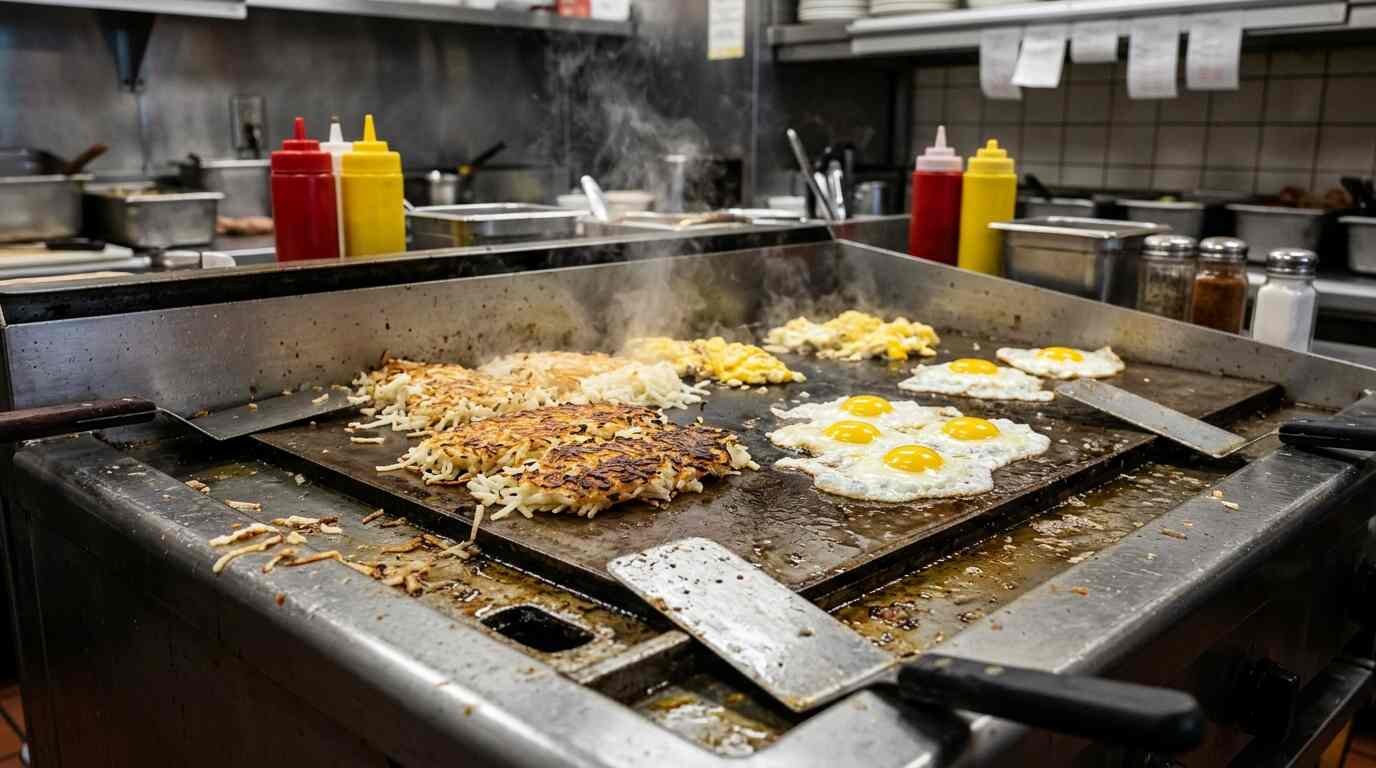
Ten pages sounds like ten pages of inventory, yet look closely and many items share parts. The same chicken breast appears in a club sandwich, a Caesar salad and a cutlet plate. The same tomatoes go into the omelet, the Greek salad and the burger. The same potatoes become home fries, fries and mashed.
Cooks call this cross-utilization, and it lets a kitchen carry a long list without a long pantry. Waste is the enemy of every menu, and ingredients that serve three or four dishes get used up before they go bad.
Equipment helps, too. A griddle, a fryer, a broiler and a flattop cover a startling range. Breakfast and dinner are mostly the same few techniques applied to different foods.
The all-day idea
Diners sell breakfast at all hours. That is a feature, not an accident. It meets people on their schedule: the night-shift worker at seven in the morning wants dinner, and the early riser at four in the afternoon may want eggs. A menu that does not care what time it is means fewer disappointed customers.
It also smooths the day for the kitchen. Eggs and pancakes keep the griddle busy during slow dinner hours, and a steady stream of small orders is easier to run than a crush of complicated ones.
How a kitchen actually keeps it straight. Behind the menu is a system. Stations divide the work: griddle, fryer, grill, cold side, bakery. Prep is done ahead, so a cook assembles rather than creates from scratch. Sauces, soups and dressings are made in batches. Tickets move in order, and the cook calling out what is next keeps the line moving.
Skill matters most at the busiest hours. A cook who can run eight orders at once on a flattop, with eggs at different doneness levels, is a craftsman. It is hard work, mostly invisible, and it is why a long menu can still produce hot food.
The Greek-American plates that stayed
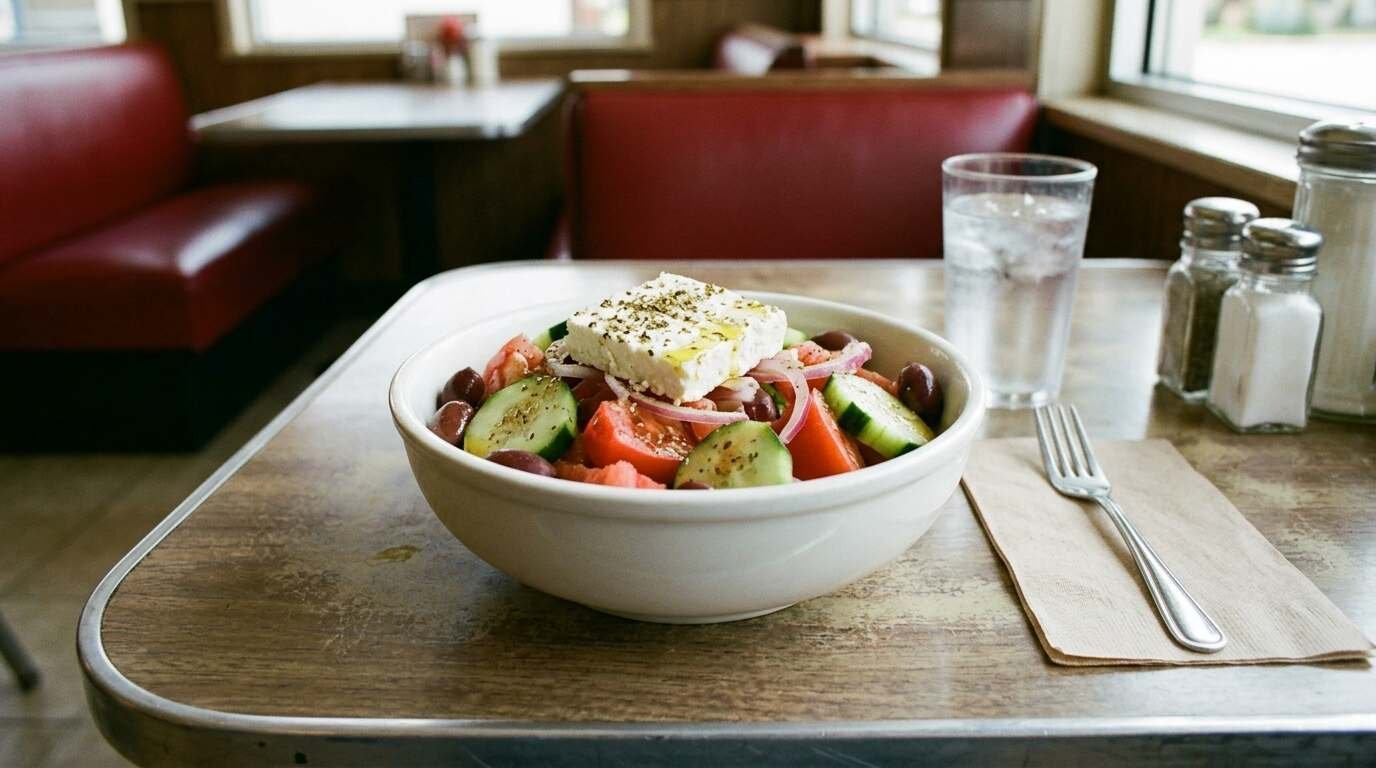
Walk the menu and a few dishes announce their origin. Greek salad, with tomato, cucumber, onion, olives and feta, is a staple in diners across the Northeast. Gyro sandwiches and souvlaki platters, lemon potatoes, spanakopita and moussaka turn up often. Avgolemono, the egg and lemon soup, appears as a special in many places. Rice pudding and sometimes baklava finish the meal.
What is interesting is how comfortably these sit beside meatloaf and French toast. Nobody blinks when a plate of eggs arrives with a side of feta, or when a gyro shares a page with a patty melt. The diner absorbed these dishes and made them its own, and the Greek-American menu is as much a part of the American diner as the milkshake.
A caution: menus vary widely from place to place, and no diner is required to carry any of these. Treat the list as a common pattern, not a rule.
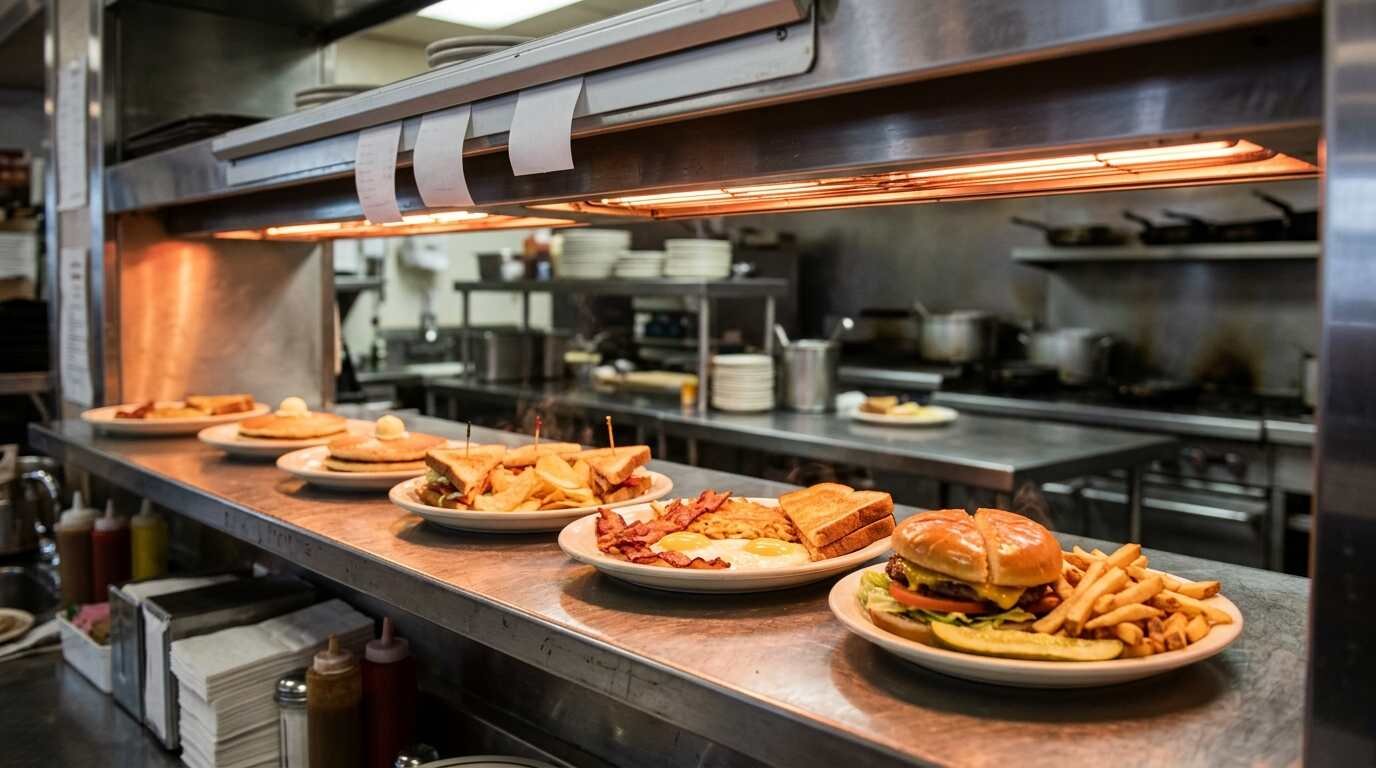
Is the long menu still worth it?
Some kitchens now narrow the list, citing labor costs and waste. Others stay broad because their customers expect it. There is no single right answer, and anyone who tells you otherwise has not run one.
What the long menu offers, at its best, is a kind of promise. Come as you are, order what you want, and somebody back there will make it. That promise has been worth keeping for a long time.
Reading a long menu. A ten-page menu can feel like a trap, but there are ways through it. Start with the specials, which usually reflect what the kitchen has plenty of and has prepared that day. Look for the items the staff recommends without hesitation. Order from the part of the menu that matches the time of day, or from the griddle if you are not sure, since a griddle is where a diner does its most practiced work.
Items that move quickly tend to be fresher, because ingredients turn over. A dish that appears on every table around you is probably a safe bet. And when you see something that looks like the owner’s own cooking, such as a family dish on the specials board, order it.