Some links in this post are Amazon affiliate links. As an Amazon Associate, Heritage Diner earns from qualifying purchases at no extra cost to you.
Meatloaf is a humble plate that is easy to ruin. Too dense and it eats like a brick. Too loose and it collapses into crumbs when the knife comes down. The line cooks who got it right every Tuesday knew a few small rules, and none of them involved a secret ingredient.
What follows is the method, in the order you will use it.
Choose the meat
Plan on about two pounds of ground meat for a loaf that feeds six. Ground beef at roughly 80 percent lean carries enough fat to stay juicy. Very lean beef bakes up dry. Many cooks mix beef with ground pork, which adds richness and a softer bite. A mix of two parts beef to one part pork is a common starting point.
Ground meat is safe at 160 degrees F, a number the USDA stresses because grinding spreads surface bacteria through the whole mass. Color is not a reliable signal. A thermometer is.
The binder is a panade. The thing that keeps a meatloaf tender is a panade, which is a paste of starch and liquid. Soak about a cup of fresh bread cubes or a half cup of plain dry breadcrumbs in a third of a cup of milk for five minutes, until it turns to mush. Mix that into the meat along with an egg.
Why it works: the starch holds moisture and physically gets between the strands of protein, so the loaf cannot tighten into a rubbery block. Crackers or quick oats also work. Plain breadcrumbs from a canister do the job in a pinch, though fresh bread gives a softer crumb.
The egg is glue. One large egg per two pounds is usually enough. More makes the loaf bouncy.
Why fat and salt matter more than the recipe says
A meatloaf lives on fat. When a lean loaf comes out dry, the cook usually blames the bake time, but the real culprit is the grind. If all you can find is lean beef, add a bit of ground pork, or work a spoonful of olive oil into the mixture. The fat melts as the loaf heats, and that is the juice you taste.
Salt does more than season. It dissolves some of the protein, which helps the meat hold together and keeps the loaf from falling into crumbles. Too little, and the slice is both bland and loose. Too much, and it eats like ham. Fry a small spoonful of the mix in a skillet, taste it, and adjust before you shape the loaf.
That little test patty is a habit worth keeping. It takes two minutes and saves a whole dinner.
Cook the onions first
Raw onion in a meatloaf stays crunchy in the middle and releases water as it cooks. A better route is to dice an onion, and a stalk of celery if you like, and cook them in a little butter or oil for about six minutes until soft. Cool them before you add them, so that they do not warm the meat and start to soften the fat.
Garlic goes in near the end of that step, just for a minute. Season the mix with salt, pepper, a spoonful of Worcestershire and maybe a pinch of dried thyme. About a teaspoon of kosher salt per pound of meat is a common range, but taste a small cooked patty if you are unsure.
Mix gently, shape with a light hand. Combine everything with your hands, folding until just blended. The moment the mixture looks uniform, stop. Overworking tightens the proteins and gives you a sausage texture.
Free-form or loaf pan? A loaf pan keeps the shape and is easy, but the meat steams in its own juices and the sides stay pale. A free-form loaf shaped on a rimmed sheet pan, lined with parchment, browns on all sides and sheds the fat. A rimmed baking sheet with a wire cooling rack set on top lets the fat drip away if you prefer a lean-looking slice.
Shape it into a loaf roughly two inches thick and as wide as your sheet pan allows. A flatter loaf cooks faster and more evenly than a tall one.
Why a rest in the pan helps the glaze too
A short rest does one more job nobody mentions. As the loaf cools, the glaze tightens into a sticky, lacquered skin that stays put when you cut. Slice right out of the oven and the sweet topping slides off in a sheet. Wait ten minutes and it clings.
While you wait, use the time. Warm the plates, finish the mashed potatoes, and pour yourself a cup of coffee. Meatloaf is not a dish that suffers from a pause.
If the pan has a good amount of browned juice, tip it into a small saucepan with a splash of stock, simmer it down for a couple of minutes, and spoon a little over each slice.
Glaze late. The glaze is ketchup, brown sugar and a splash of cider vinegar, stirred together. A ratio of about half a cup of ketchup to two tablespoons of brown sugar and a tablespoon of vinegar is a fair starting point. Taste it. It should be sweet, tangy and a bit sharp.
Put the loaf in a 350 degree F oven with half the glaze brushed on top, or none at all. Add the rest in the last fifteen minutes. Sugar burns, and a glaze that sits for an hour turns bitter and black.
Bake until 160, then rest
A two-pound free-form loaf generally takes about 50 to 60 minutes at 350 degrees F, but the clock is a guess. Slide an instant-read thermometer into the center. When it reads 160 degrees F, the loaf is done. A reliable instant-read thermometer removes the guesswork, and you will use it for chicken and roasts all year.
Take the meatloaf out and let it rest on the pan for ten to fifteen minutes. The juices settle back into the meat, the fat firms up a little, and the slices hold together. Cut too early and it falls apart on the plate.
Slice with a thin, sharp knife and a sawing motion. Wipe the blade between cuts if it gets greasy.
Side plates that belong
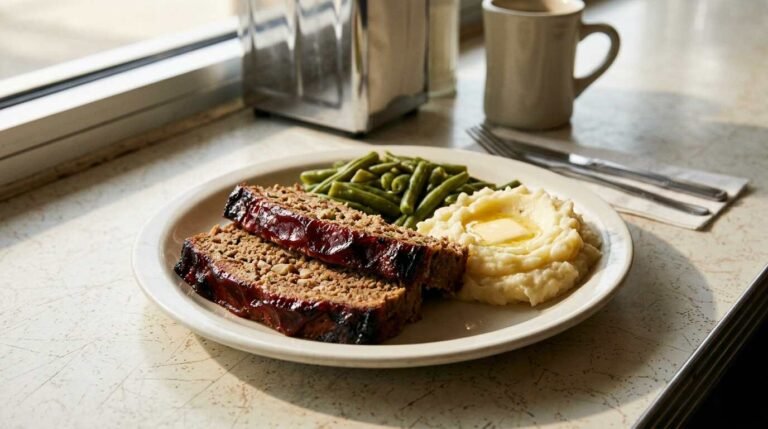
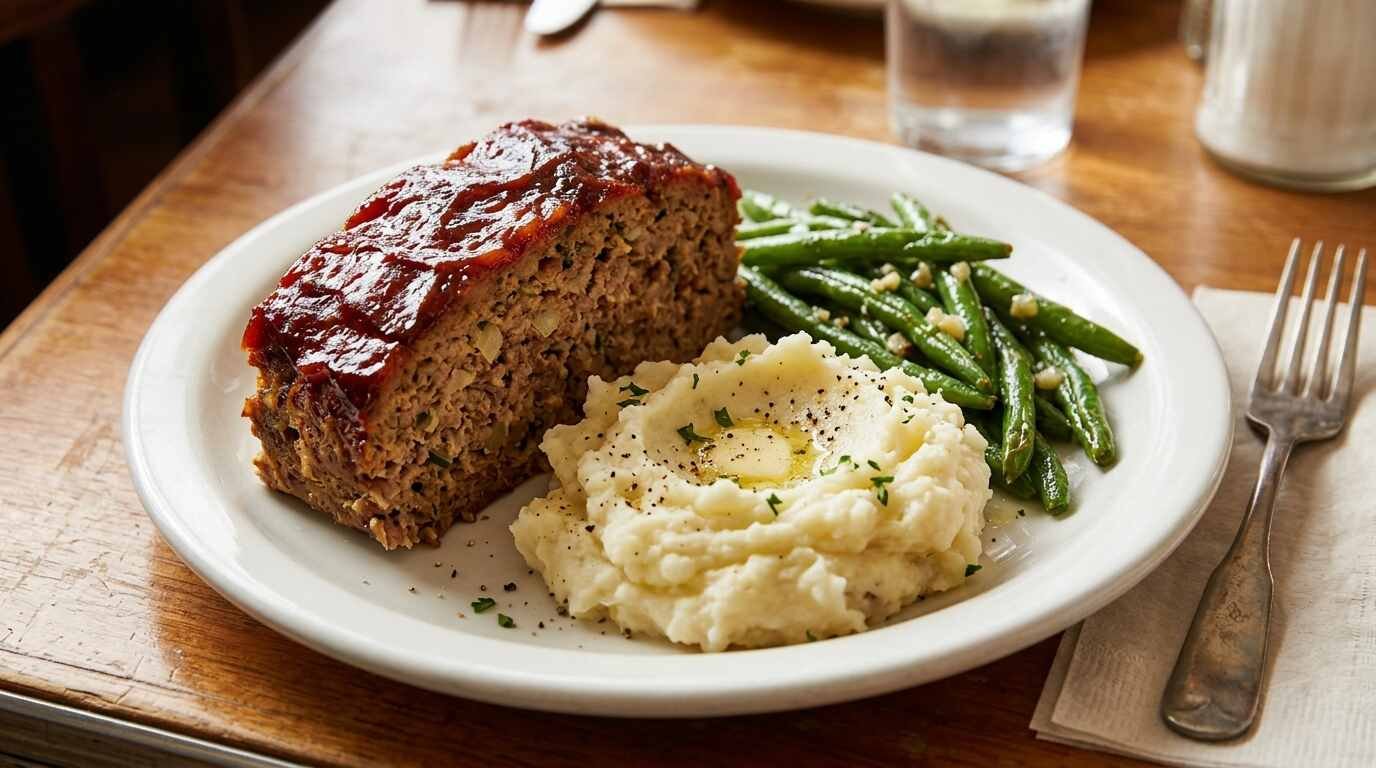
Mashed potatoes and gravy are the classic partners, and a pan sauce built from a bit of stock and the cooked-on bits from the baking sheet works when you want something lighter. Buttered peas or green beans add color. A simple sliced tomato salad cuts the richness in summer.
If you are baking potatoes alongside, a 350 degree F oven suits both. Put the potatoes in a little ahead of the loaf and they finish about together.
Freezing and reheating. A raw loaf freezes well, wrapped tightly in plastic and then foil. Thaw it in the refrigerator, not on the counter, and bake as usual, still to 160 degrees F. Baked slices freeze nicely, too, if you wrap them in portions. Reheat covered, in a low oven, with a splash of broth or a spoonful of gravy so they do not dry out.
The cold slice, thin and eaten on soft white bread with mustard, is a fine lunch the next day.
Common mistakes.
- Dry loaf: lean meat, no panade, or baked past 160 degrees F.
- Crumbly loaf: not enough binder, or sliced too soon.
- Greasy loaf: too much fat in the meat; lift it off the pan fat after it bakes, or use a rack.
- Bland loaf: not enough salt, no onion cooked first, or no seasoning in the glaze.
- Burnt glaze: added too early.
Leftovers make the best sandwich of the week. Cool them within two hours, refrigerate, and use within three to four days.