
As an Amazon Associate I earn from qualifying purchases. A commission may be earned if you buy through this link, at no extra cost to you.
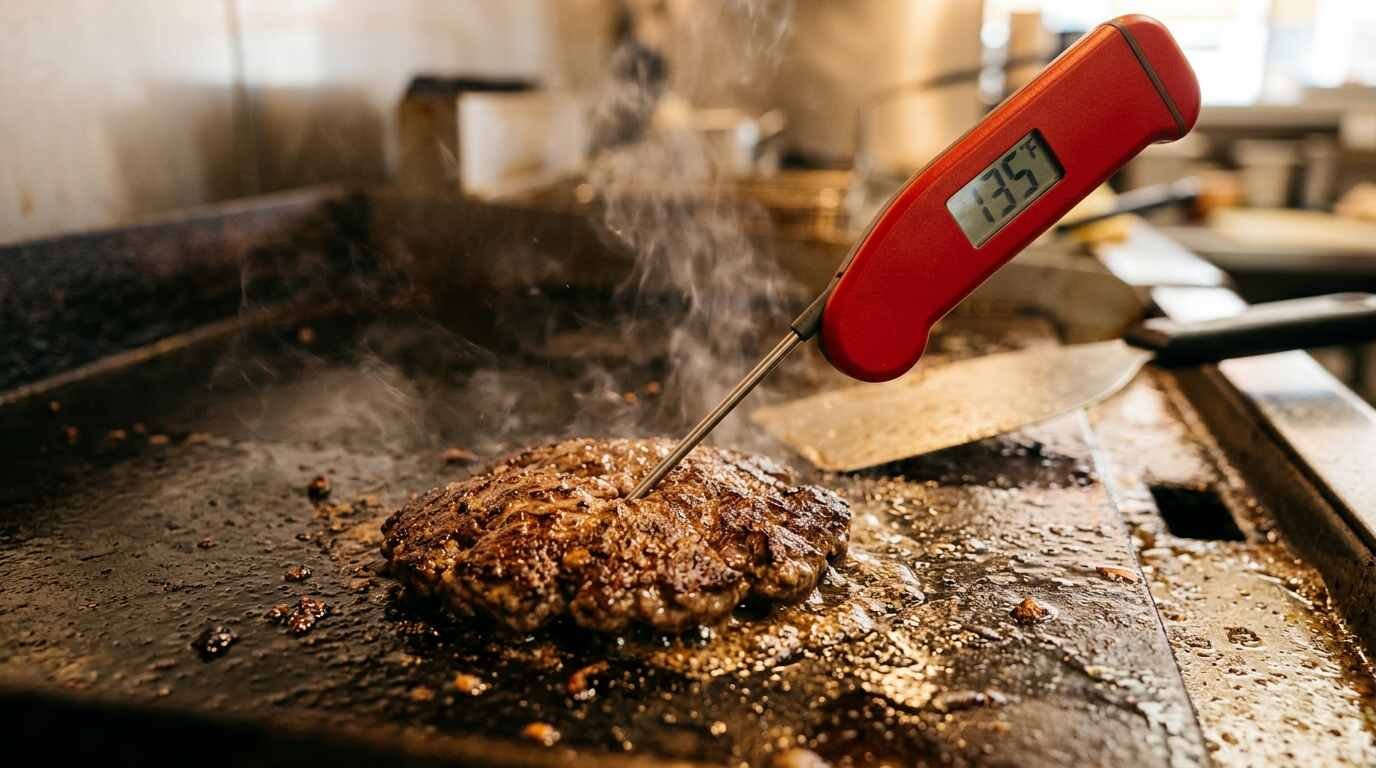
A diner cook checks temperature by feel after twenty years at the flat-top. A home cook has no such luck, and guessing at a pork chop or a tray of fried chicken is how dinner ends up dry or, worse, underdone. An instant-read thermometer fixes that cheaply. The ThermoPop 2 from ThermoWorks is one of the most often recommended, and this review looks at what it does, what it leaves out, and whether it fits the kind of cooking this blog is about.
A note on method before going further. This review works from the maker’s published specifications and from independent reviewers who tested the thermometer. It is not based on hands-on testing at the Heritage Diner or at home, and nothing here claims otherwise. Prices and specs change, so check the current listing before you buy.
What the maker claims, and what it leaves out
ThermoWorks lists the ThermoPop 2 at $39 for the standard 4.5-inch probe, with an 8-inch probe version also offered. Accuracy is given as plus or minus 1°F from 14 to 208°F, which covers nearly everything a home cook measures: poultry, pork, ground beef, custard, and the temperature of a pot of oil on the way up. Readings take two to three seconds with the shorter probe and three to four with the longer one, according to the same page.
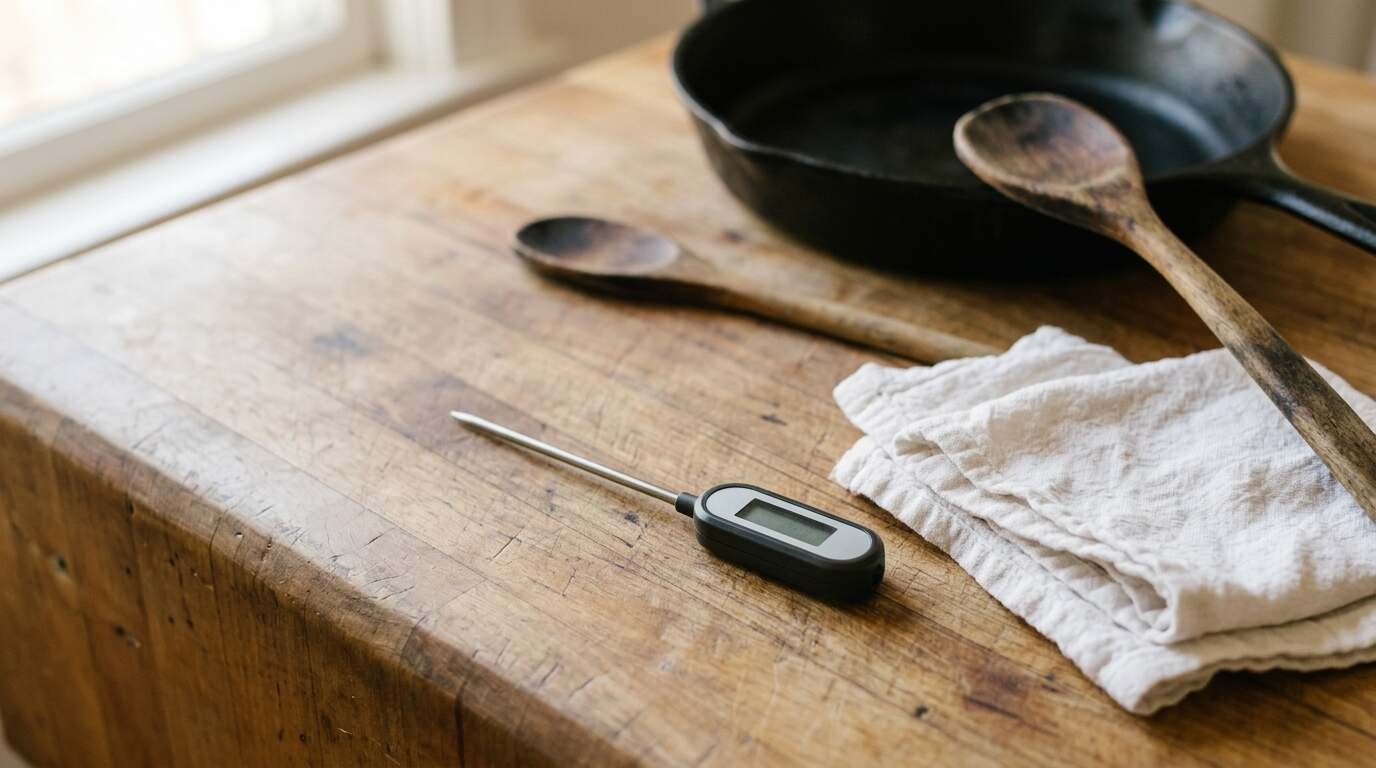
The display is backlit and rotates automatically, so it can be read from either hand. The thermometer runs on a single CR2032 coin cell, which the maker rates at about 4,000 hours, and it switches itself off after ten minutes. It carries an IP67 rating, which means it can be rinsed, and a two-year warranty. Each unit ships with a calibration certificate traceable to NIST.
What the page does not do is promise it can ride along in the oven. The operating range for the body of the thermometer is 32 to 122°F, so the handle has to stay out of the heat. The probe tip measures up to 572°F, but the electronics do not. It is a thermometer you reach in with, not one you leave in.
What independent reviewers found
Two independent reviews are worth reading. Bill McGrath, who tests thermometers for AmazingRibs.com, rated the ThermoPop a Platinum pick and wrote that accuracy was very good and response was fast, with readings arriving in under four seconds. He also liked the rotating display, the switch between Fahrenheit and Celsius, and the plain manual. His cons were short: no app, no alarm, no logging, and no leaving it in the oven or on the grill.
A second reviewer, writing at Smoked BBQ Source, called the ThermoPop 2 a strong, affordable thermometer for simple home use. That reviewer found it accurate to better than one degree Fahrenheit out of the box, held up against other probes in the reviewer’s collection, and liked the larger, bolder display. The one complaint was that the protective sheath is easy to lose.
The same reviewer also draws the line that matters for a buying decision. The ThermoPop 2 uses a thermistor, so it is a touch slower than ThermoWorks’ Thermapen ONE, which uses a thermocouple and costs roughly three times as much. For a home kitchen the difference is a second or two. For a restaurant line checking dozens of tickets an hour, it adds up.
One discrepancy to flag. The AmazingRibs spec table lists a water-resistance rating of IP66 and a battery life of 5,000 hours, while ThermoWorks’ current page lists IP67 and 4,000 hours. The review covers the transition from the original ThermoPop to the redesigned version, so the older numbers may have carried over. Go with the maker’s page for the current model.
Where the sources go quiet
Neither review reports long-term durability. A thermometer in a kitchen gets dropped, splashed, left on a hot stove and shoved in a drawer with the tongs. The IP rating and the maker’s reputation suggest it will cope, and the two-year warranty puts some weight behind that. But no independent source reviewed here tracked one through years of daily use, and a review built on specs should say so.
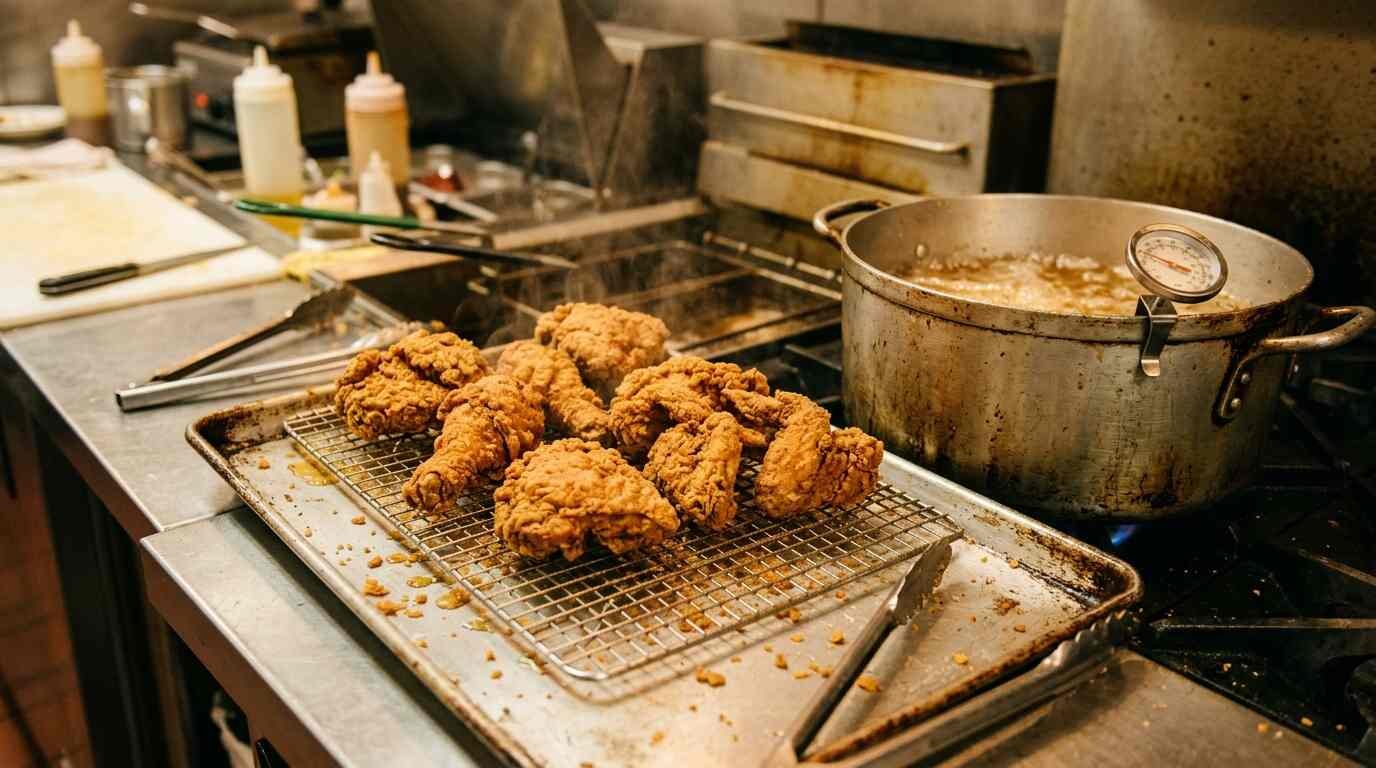
The reviews also do not test it against the thing this blog cares about most: a crowded home kitchen with a pan of hot fat, wet hands and a timer going. Judging by the specs, a thermistor with a short probe is fine for a burger or a chop. A deep pot of oil asks more of it, since the probe is short and the handle has to stay clear of the heat. ThermoWorks sells a clip for the side of a pot, listed separately, and its page calls the 8-inch version the better choice for candy and frying.
Does it fit diner-style cooking at home?
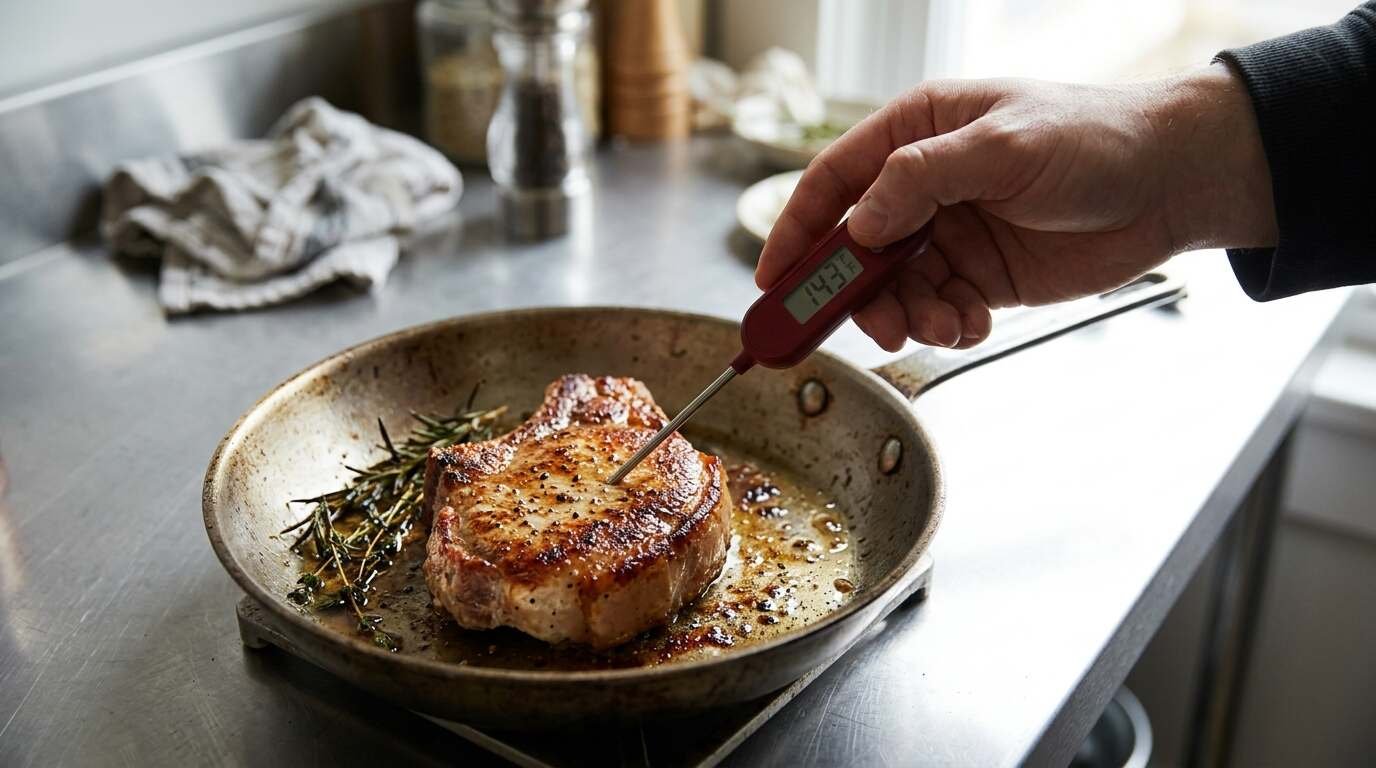
The temperatures that matter here are well documented. The USDA’s safe minimums are 160°F for ground meats such as burger patties and sausage, 165°F for poultry and leftovers, and 145°F with a three-minute rest for pork chops, steaks and roasts. A thermometer that reads to within a degree at those points does the work that a diner cook once did by eye.
It handles the common jobs. A smash burger comes off at 160°F. A pan-fried pork chop is done at 145°F, then rests. Fried chicken is checked at the thickest part of the thigh, away from bone, against 165°F. Frying oil sits well inside the probe’s 572°F ceiling, though the short probe and the handle limit are real considerations when the pot is deep.
It will not serve a roast that stays in the oven for three hours. That job calls for a probe on a cable with an alarm, which is a different product with a different price. The ThermoPop 2 is the thermometer that comes out of the drawer for the final check, not the one that sits in the meat.
Pros, cons, who it suits, and who should skip it
- Pros: accurate to within a degree across the cooking range, per the maker and two reviewers.
- Pros: reads in about two to three seconds.
- Pros: backlit, rotating display and simple one-button operation.
- Pros: IP67 rating, calibration certificate and a two-year warranty, per the maker.
- Pros: priced at $39 on the maker’s page, a fraction of the Thermapen ONE.
- Cons: not for leaving in the oven; the body is rated only to 122°F.
- Cons: no alarm, app or data logging.
- Cons: a thermistor, so a bit slower than a thermocouple model.
- Cons: the sheath is easy to lose, per one reviewer.
- Cons: no independent long-term durability data in the sources reviewed.
It suits home cooks who want a dependable thermometer for burgers, chops, chicken and sauces without paying for features they will not use. It also suits anyone who has been guessing. It is a poor fit for people who smoke briskets all night or roast large cuts and need a leave-in probe with an alarm, and for anyone who would rather have the fastest reading on the market and is willing to pay roughly three times more for it.
The verdict, and where to find it
On the evidence available, the ThermoPop 2 is a sound buy for home cooking. Its accuracy is documented by the maker and confirmed by independent reviewers, the price is fair, and its limits are clear: use it for a quick check, not as an oven probe. If you cook diner food at home, a thermometer like this prevents more bad dinners than any other tool on the counter.
You can find the ThermoWorks ThermoPop 2 on Amazon, using the button at the top of this post or the link here. Because I link through an affiliate account, I earn a commission if you buy, at no extra cost to you. Prices and availability change, so confirm the model and probe length on the listing before you order.
As an Amazon Associate I earn from qualifying purchases. A commission may be earned if you buy through this link, at no extra cost to you.