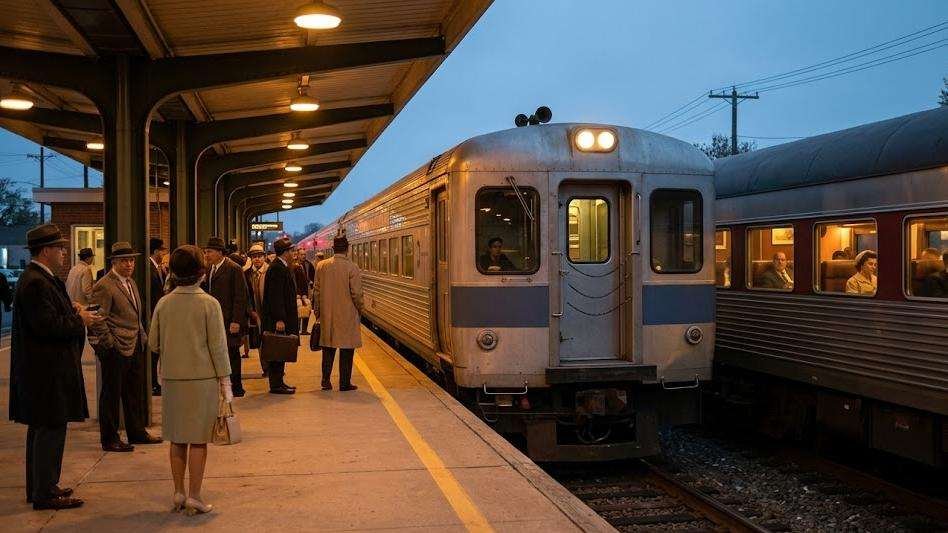
White Tablecloths at Sixty Miles an Hour
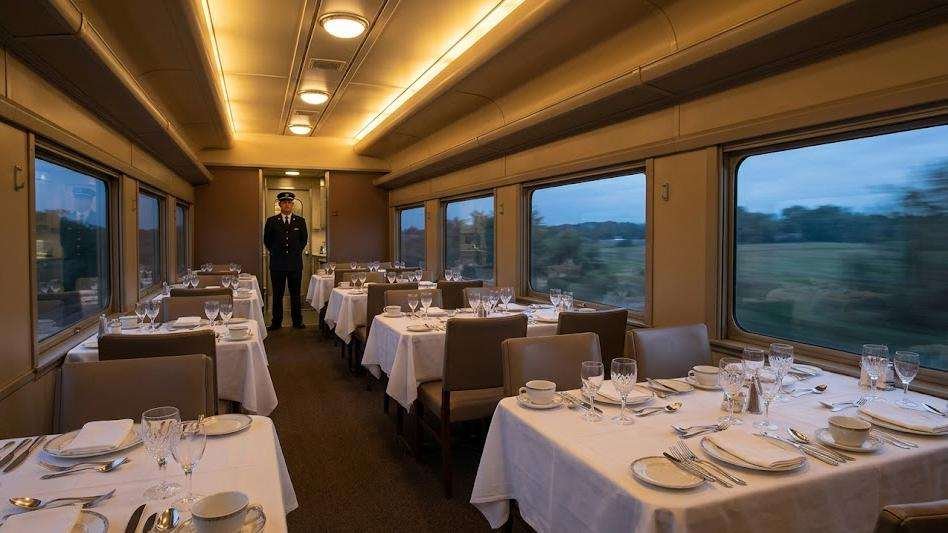
The Long Island Rail Road ran dining cars. Real ones. Not a rolling vending machine, not a cart with shrink-wrapped sandwiches — actual dining service in an actual rail car with a kitchen producing actual food. In 1977, a passenger riding from Jamaica to Amagansett in the summer could order chicken cacciatore in the Tuscarora Club, the LIRR’s modified heavyweight dining car, and eat it somewhere on the Montauk Branch in a car that had been rebuilt from Lehigh Valley No. 1000, originally a baggage-club car, acquired by the LIRR in 1961.
This wasn’t the golden era of American railroading — that peaked around the turn of the twentieth century with the introduction of the Pullman dining car. By the 1960s and 1970s, the LIRR’s food service was already a relic operating on borrowed time. But it existed. It had a car with a name. It served full cooked meals on specific named trains: the Advance Cannonball, the Weekender, the Sundowner, the Cannonball — trains with all-reserved parlor cars and full bar service, running east to Montauk from Penn Station on weekends through the summer season.
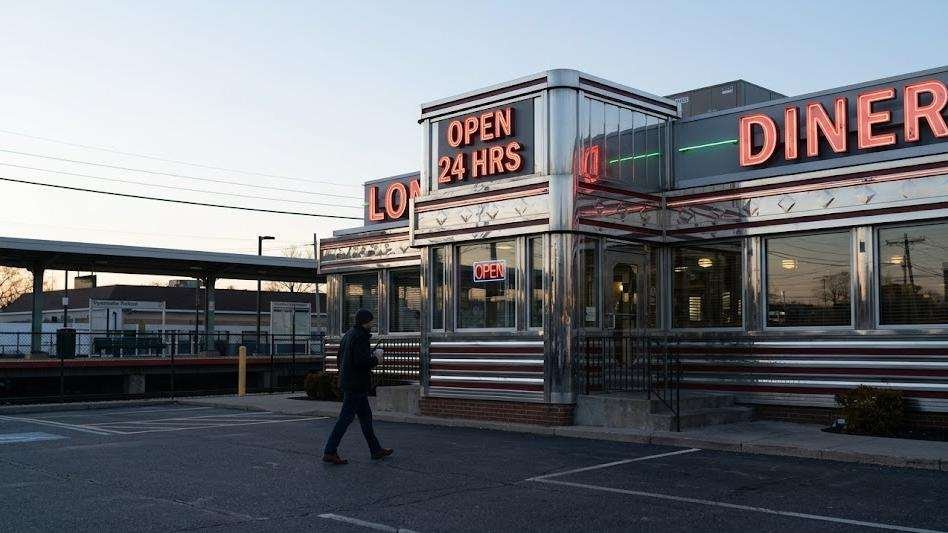
When that ended, the commuter who used to eat on the train needed to eat somewhere. The diner was waiting outside the station, and it understood the assignment.
The Infrastructure That Existed
The history of the LIRR’s premium passenger service is largely a story of acquiring rolling stock from railroads that were failing elsewhere and trying to extend the useful life of cars that were already showing their age. For most of its history, the railroad served commuters in the basic sense — get people from Long Island to New York, and back again — but it also maintained a named-train service on the east end, particularly to Montauk, that carried parlor cars and full bar service for decades.
The heavyweight parlor cars — the Cayuga Club, Mohawk Club, Seneca Club, Onondaga Club, Oneida Club — were Pullman-built cars acquired from the Pennsylvania Railroad. The Tuscarora Club was different: originally a baggage-club car rebuilt by Lehigh Valley as a 48-seat diner, purchased by the LIRR in 1961 and used for dining service on the summer east-end trains into the late 1970s.
By 1964, documented railroad records show that dining service on the Tuscarora Club ran on specific trains: the Advance Cannonball on Thursdays, the Weekender on Fridays, the Sundowner on Sundays, and the Cannonball on Mondays. The car was deadheaded east to Montauk on Sunday nights to position it for the Monday morning westbound run. This was seasonal service — the dining car spent winters stored at Montauk, which railroad historians have noted was damaging, the salt air accelerating the deterioration of cars that needed more care than they got.
Alongside the dining car, the LIRR operated a separate category of private commuter club cars — the Syosset, Oyster Bay, South Shore, and Locust Valley — which served regular commuters on the electrified lines. The LIRR also ran bar cars from 1960 until 1999, when the rolling stock on the railroad’s non-electrified branches was replaced with double-decker C3 coaches. The bar car service — coffee in the mornings, bar service in the afternoons — was more durable than the dining car service precisely because it required less operational infrastructure.
What Ended First and Why
The economics of railroad dining never worked in the railroad’s favor. Even Amtrak, with its national network and federal subsidy, has spent decades struggling with the cost of full dining service. For a commuter railroad operating on limited routes with a primarily captive ridership of workers moving between Long Island and Manhattan, the case for maintaining a real kitchen car was always thin. The passengers who could afford the Montauk parlor cars were not the base ridership. They were a summer luxury tier, a premium that made sense when the railroad was trying to compete against the emerging car culture of the postwar suburbs.
By the 1950s, the LIRR had gone through receivership in 1949 and was being subsidized by New York State. In 1965, the state finalized an agreement to buy the railroad from the Pennsylvania Railroad for $65 million, placing it under what became the Metropolitan Transportation Authority in 1968. With MTA ownership, the focus shifted to modernization and capacity — electrification extensions, air conditioning, grade crossing eliminations — rather than premium services. The Tuscarora Club dining service ended; the bar cars survived longer because they required no kitchen, no cooking staff, no commissary operation, and no coordination between the dining car’s position and the train consist.
The bar cars ran until 1999. The last ones in service anywhere in the northeast — Metro-North’s bar cars — were retired in May 2014.
The Station-Adjacent Diner as a Direct Response
Nassau County’s diner geography is not random. Walk the station areas of any railroad town on Long Island — Valley Stream, Rockville Centre, Baldwin, Freeport, Merrick, Lynbrook, Hempstead — and you find diners within practical walking distance of the platforms. This clustering has a straightforward explanation that has nothing to do with aesthetics or accident: commuters eat before they board and after they arrive, and the establishments that positioned themselves to serve that need built businesses that the railroad itself had stopped serving.
The LIRR’s Nassau County ridership was, for most of the postwar period, the foundational customer of the county’s diner economy. Not the trucker. Not the highway traveler. The person who left the house before dawn, needed coffee and something on a plate before the train, and came home too late and too tired to cook. The diner’s hours, its menu, its counter-style speed — all of it matched the rhythm of a commuter’s day in a way that nothing else did.
That rhythm is what makes the diner a working-class institution rather than a leisure one. The counter is not where you go when you have time. It’s where you go when you have exactly enough time. Fifteen minutes before the 7:42. Twenty minutes after the 6:15. A cup of coffee that arrives before you’ve finished taking your coat off, and an order that comes up in under five minutes because the guy on the flat-top knows you’re watching the clock.
The LIRR never operated a diner. But it built the infrastructure — the stations, the schedules, the captive population of people who needed to eat at specific times with limited alternatives — that made Long Island’s diner economy possible. When it stopped feeding people on the train, it handed the business to the establishments that were already waiting at the station.
What the Gravy Boats Left Behind
The Tuscarora Club ended up as part of a railroad-themed restaurant called the American Flyer Cafe, alongside the CSX mainline in downtown Marietta, Georgia. A dining car that had served chicken cacciatore in the summer Hamptons trade of the 1970s spent its second life as a stationary restaurant prop in the deep south — an outcome that says something about the strange afterlives of railroad equipment.
The parlor cars that carried the LIRR’s premium east-end service through the 1960s and 1970s rotted in the salt air at Montauk between seasons, or survived to be repainted in MTA gray and blue before retirement. The named trains — the Cannonball, the Sundowner, the Weekender — faded into the general weekday commuter schedule as the railroad modernized its fleet.
What didn’t fade: the Cannonball still runs. Every summer Friday, a twelve-car train runs from Penn Station to Montauk with two all-reserved parlor cars with full bar service. The name is a nod to a train that has been running, in some form, since 1899. You can still reserve a parlor seat. There’s still a bar. There’s no kitchen.
The diner handles the kitchen.
You Might Also Like
- Rum Row and the Freeport Bootleggers: Long Island’s Clandestine War on the Water
- The Forgotten Montauk Surfman’s Chowder: Cooking with Seawater at the 1800s Life-Saving Stations
Sources
- Long Island Rail Road — Wikipedia
- History of the Long Island Rail Road — Wikipedia
- Bar car — Wikipedia
- LIRR Diner “Tuscarora Club” — Railroad.net forum, including research by Mike Boland from The Keystone, Autumn 1995
- LIRR Parlor-Tuscarora Club — Trains Are Fun / David Keller LIRR history archive
- Ron Ziel and George Foster, Steel Rails to the Sunrise
- Dining Cars in the Golden Age of Railroading — New-York Historical Society