Some links in this post are Amazon affiliate links. As an Amazon Associate, Heritage Diner earns from qualifying purchases at no extra cost to you.
There is a reason chicken soup shows up whenever someone in the house feels run down. It is warm, salty, soft to eat and easy to make in the dullest of moods. No claims here about what it does for a cold; that is for a doctor to say. This is a post about making a very good pot of it with the least fuss.
The trick is to use one pot for everything. The chicken, the vegetables and the broth all come together there, and the washing up is a single pot and a cutting board.
Why bone-in chicken
A broth made from bones and skin has body and flavor that a carton of stock cannot match. Bone-in thighs, or a mix of thighs and breasts, give you meat and a broth in one go. Thighs stay tender through long simmering; breasts dry out if they cook too long. A whole cut-up chicken is the old-fashioned way and works as well.
Plan on about two pounds of bone-in chicken for a pot that serves four to six. Skin on gives richer broth; you can lift off the fat later.
The ingredients.
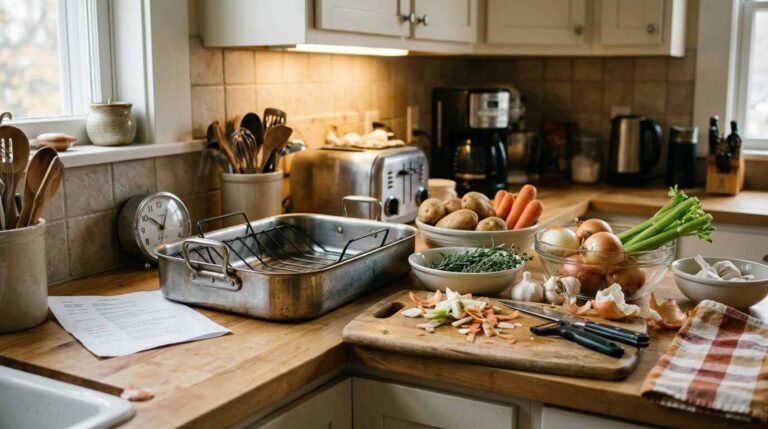
- 2 pounds bone-in chicken thighs or a mix of parts
- 1 tablespoon oil or butter for the vegetables
- 1 large onion, diced
- 3 carrots, sliced into coins
- 3 stalks celery, sliced
- 3 cloves garlic, minced
- About 10 cups water, or part water and part store-bought broth
- 2 bay leaves and a few sprigs of fresh thyme or a pinch of dried
- Salt and black pepper
- 8 ounces wide egg noodles
- Fresh parsley or dill, and a lemon for the end
You do not need a special pot, but a wide Dutch oven makes the browning easy and holds heat well. A plain stockpot works fine. A fat separator is handy if you like a clear, lean broth, though a spoon will do.
Why the pot matters less than the patience
A good chicken soup is not an ingredients problem. Most of what it needs is already in the refrigerator. What it asks for is time at a low temperature, which turns tough connective tissue in the thighs into gelatin and gives the broth its silky weight. That gelatin is why a homemade broth turns wobbly when chilled, and why it feels fuller in the mouth than a carton of stock.
You can shortcut the clock by using part boxed broth in place of some of the water. That is a fair trade on a weeknight. Choose low-sodium so you control the salt. Just do not skip the browned vegetables or the bones; they carry most of the flavor.
Build the base. Heat the oil in the pot over medium heat and cook the onion, carrots and celery for about five minutes, until they begin to soften. Stir in the garlic for another minute. This step is called sweating the vegetables, and it matters. Raw vegetables dropped into water taste flat; ones cooked first taste sweeter and rounder.
Season the chicken with salt, then tuck it into the pot among the vegetables. Pour in the water, add the bay leaves and thyme, and bring everything to a boil.
Turn the heat down to a gentle simmer. Skim off any foam that rises to the top in the first ten minutes. A hard boil makes the broth cloudy and the chicken stringy, so keep the surface barely moving.
Simmer and check the chicken
Partially cover and simmer for 30 to 40 minutes for thighs. Poultry is safe at 165 degrees F, according to the USDA, so check the thickest part of a thigh away from the bone with an instant-read thermometer. When it hits 165, it is done, and the meat will pull easily from the bone.
Lift the chicken onto a cutting board and let it cool for a few minutes. Meanwhile, taste the broth. It will already have a good flavor, though it may want salt. Add it a pinch at a time.
Remove the skin and bones, shred the meat with two forks and return it to the pot. Fish out the bay leaves. If you left the broth very fatty, tilt the pot and spoon the fat from the surface.
Add the noodles last
Egg noodles cook fast, about six to eight minutes, so add them when the soup is hot and you are close to eating. Check the package for timing. Stir often so they do not stick to each other or to the pot.
Noodles keep drinking broth after the pot comes off the heat. In a soup you plan to eat for several days, they turn soft and swollen. The fix is to cook the noodles in a separate pot of salted water, drain them and add them to each bowl. Then the leftover soup stays brothy, and the noodles keep their chew.
Finish bright. Right before serving, stir in a handful of chopped parsley or dill and a squeeze of lemon juice. The acid wakes up the flavors and cuts the richness of the chicken fat. Add a few turns of black pepper, ground at the last moment. Taste once more. Is it salty enough? A soup that tastes slightly under-salted in the pot tastes dull in the bowl.
A slower, richer version when you have time
On a weekend, brown the chicken pieces skin-side down in the pot before adding the vegetables. Take them out, cook the vegetables in the rendered fat, then return the chicken. The browned bits on the bottom dissolve into the broth and give it a deeper color and a roasted note.
Another step is to start with cold water and bring it up slowly. The gradual heat draws more flavor from the bones. Hold the simmer for an hour or longer, then strain the broth and discard the spent vegetables if you want a clear, golden result, adding fresh carrots and celery near the end so they stay bright.
If you end up with extra broth, freeze it in jars or containers, leaving room for expansion. A batch of homemade stock in the freezer is a small gift to your future self.
Variations
- Rice instead of noodles: add about a cup of rice with the chicken and simmer until tender.
- Add a diced potato or a handful of frozen peas at the end.
- A spoonful of grated ginger and a pinch of turmeric for a different flavor.
- Pastina or small pasta shapes are good when you want something gentler.
If you want a thicker, heartier soup, stir a spoonful of flour into the vegetables before adding the water. It is not traditional, but it works.
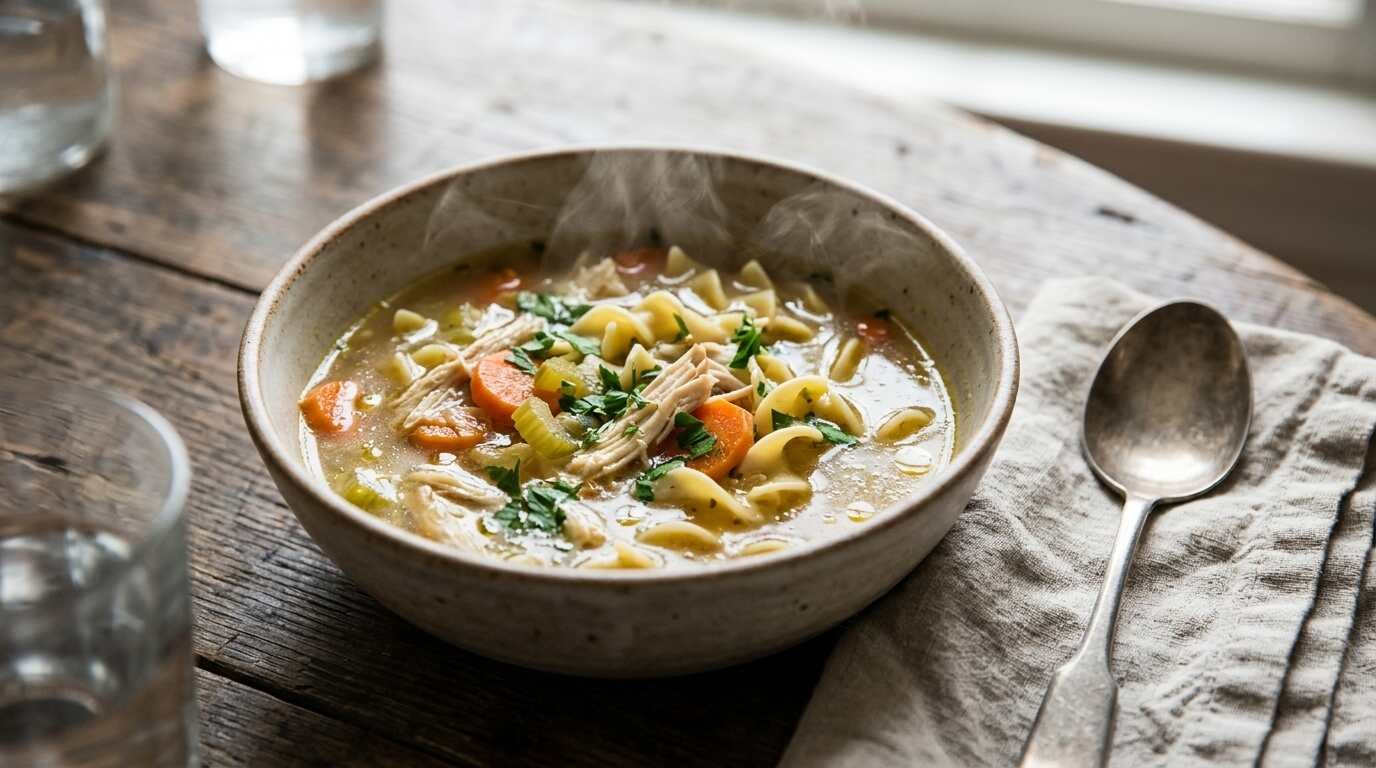
Serving it right. Soup tastes best from a warm bowl. Run the bowls under hot water or set them in a low oven for a few minutes. Add the noodles to the bowl first, ladle the broth and chicken over them, and finish with the herbs and lemon.
Crackers, a slice of buttered rye or a grilled cheese on the side turns it into a full meal. A soup ladle with a pour spout keeps the table tidy.
Storing and reheating. Cool the soup quickly, ideally within two hours of cooking, by dividing it into shallow containers. Refrigerate and use within three to four days. Soup freezes well without noodles, for a few months. Reheat until steaming hot, which means 165 degrees F, and add fresh noodles or a splash of water if it has thickened.
Common mistakes.
- Boiling hard, which clouds the broth and toughens the meat.
- Adding the noodles too early, so they turn mushy.
- Under-salting, which is the most common reason a good soup tastes flat.
- Skipping the lemon or herbs at the end.
And skimping on time. The broth does its best work in a patient simmer.