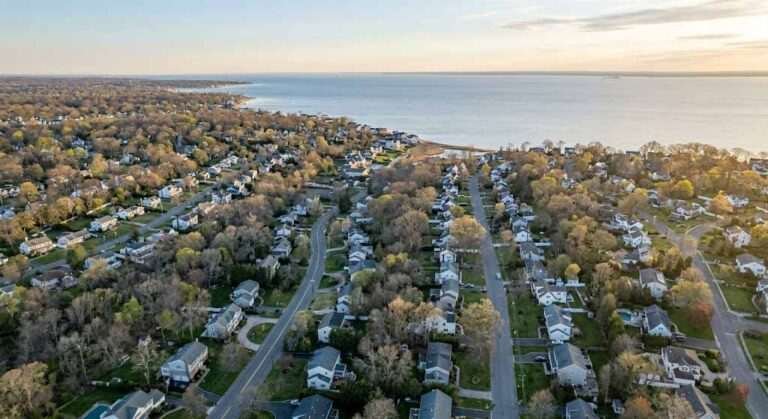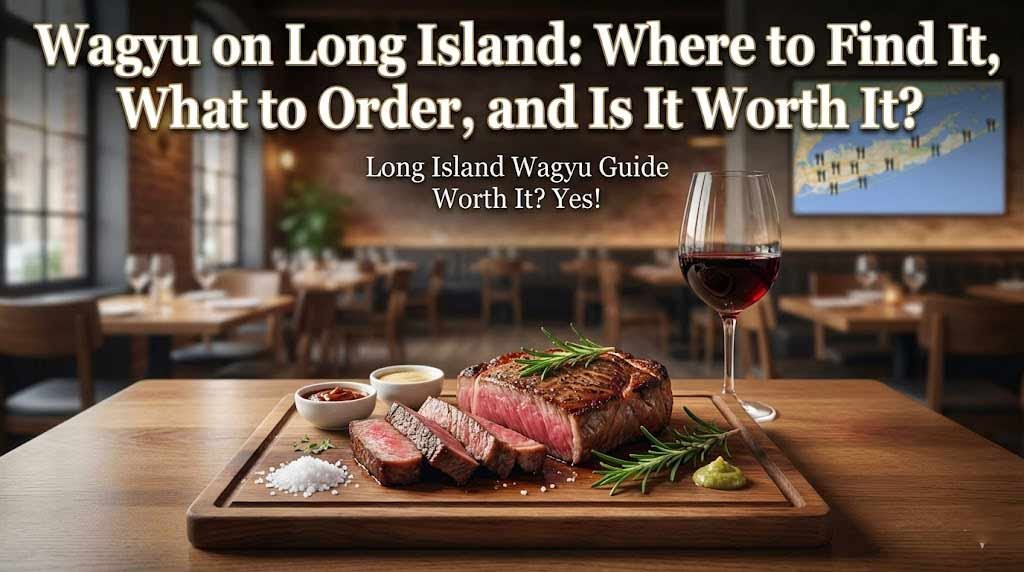
Wagyu beef has captivated food lovers worldwide with its snowflake-like marbling, buttery texture, and melt-in-your-mouth richness that turns even a simple sear into an unforgettable experience. On Long Island, this Japanese delicacy is no longer a rare import reserved for Manhattan trips—local steakhouses, certified Kobe suppliers, and family-run butchers now bring authentic A5-grade and high-end American Wagyu options straight to Nassau and Suffolk County tables. From Huntington’s upscale grills to Farmingdale’s hibachi spots and Babylon Village meat counters, LI residents can savor or cook cuts that trace back to 19th-century Japanese work cattle selectively bred for extreme intramuscular fat. Yet with prices reaching hundreds per pound, the big question remains: does the legendary flavor justify the premium, especially when compared to dry-aged Prime or local Angus?
The Rich History and Unique Characteristics of Wagyu Beef
Wagyu literally translates to “Japanese cow” (Wa = Japanese, gyu = cow). The breed originated as draft animals in Japan’s mountainous regions, where farmers valued their strength and stamina. After the 1868 Meiji Restoration legalized beef consumption, selective breeding intensified to enhance marbling rather than size. Four main strains emerged—Japanese Black (97% of production, the most marbled), Japanese Brown, Japanese Shorthorn, and Japanese Polled—each refined in specific prefectures under strict lineage rules.
Live exports were banned after 1997 (with a brief earlier window in the 1970s), so U.S. herds descend from just a handful of animals imported in 1976. Today, full-blood Wagyu remains rare in America—roughly 23,000 head out of 94 million total U.S. cattle. The signature trait? Genetic predisposition for oleic acid-rich fat that melts at body temperature (around 77–86°F), creating that legendary “melt-in-mouth” sensation absent in conventional beef.
Understanding Wagyu Grades, Marbling, and Nutritional Profile
Japan’s grading system sets the global gold standard: Yield grade A–C combined with Beef Marbling Score (BMS) 1–12. Only A3–A5 is certified for export or premium sale; A5 requires BMS 8–12 with exceptional color, brightness, firmness, and fat quality. A single ribeye can contain 40–60%+ intramuscular fat versus 5–10% in USDA Prime.
Nutritionally, Wagyu stands apart. It delivers up to 300% more monounsaturated fat than standard beef, higher omega-3 and omega-6 fatty acids, and the highest conjugated linoleic acid (CLA) levels—30% more per gram than other beef. Its fat profile mirrors olive oil or salmon, with lower cholesterol than chicken in some comparisons. A 2002 Japanese auction saw one cow sell for roughly $400,000, illustrating the breed’s elite status.
For visual proof of the difference, watch this breakdown: We Cooked Every Steak to See if Wagyu is Overrated or Why WAGYU is crazy expensive!.
Top Restaurants Serving Wagyu (and Authentic Kobe) on Long Island
Long Island’s scene blends traditional steakhouses with Japanese specialists:
- Blackstone Steakhouse (Melville) stands alone as the only LI restaurant certified by the Official Kobe Beef Association of Japan. Order the Authentic Japanese Kobe Beef—4 oz for shabu-style with broth and black garlic or 8 oz for serious indulgence. They also offer Wagyu “Hot Stone” (thin-sliced and seared tableside), Wagyu sliders, and Wagyu-topped sushi rolls. Location: 10 Pinelawn Rd, Melville. Certified authenticity makes this the gold standard for true Japanese Wagyu/Kobe on LI.
- IMC Imperial Meat Company (Huntington) highlights Wagyu for its intense marbling and elevated omega-3/6 content. Expect premium cuts prepared simply to let the fat shine. 279 Main Street, Huntington—open for brunch and dinner with a focus on “finest beef in the world.”
- Sasa Hibachi Sushi Bar (Farmingdale) delivers approachable Wagyu: A5 Miyazaki Wagyu seared with truffle oil and konbu salt ($22), grilled Wagyu steak on hot stone ($38), and Wagyu in rolls or appetizers. Great for groups or hibachi fun at 2119 Broad Hollow Rd.
- Opus Steakhouse (Jericho) holds Kobe Beef Association certification and features Wagyu short rib ragu and surf-and-turf rolls with seared Wagyu. Prime steaks dominate, but the certification guarantees access to elite Japanese imports.
- Inatome Japanese Steak House (Valley Stream) has historically flown in genuine Wagyu/Kobe Beef from Japan for special arrangements—check current availability at 6 Fifth Street.
Other mentions on Yelp and local forums include Chops Steakhouse (Patchogue) for dry-aged options that sometimes feature Wagyu enhancements, though not always core.
# Butcher Shops and Markets to Buy Wagyu for Home Cooking on Long Island
For DIY enthusiasts:
- Babylon Village Meat Market (Babylon) sells A5 Wagyu from the Kuroge Washu breed (same as Kobe cattle but sourced from different Japanese regions). They emphasize it rates A5 only—higher consistency than some Kobe that can be A4. Family-owned since 1983; order online or in-store for steaks, roasts, or ground.
- Farmingdale Meat Market and similar premium butchers supply many LI steakhouses with dry-aged Prime and occasionally source Wagyu or American Wagyu crosses. Call ahead for availability.
- Cow Palace Butcher Shop (multiple LI locations, including Middle Island) offers premium meats and supplies local restaurants—worth inquiring about Wagyu stock.
Home cooks can sear ribeyes in a cast-iron skillet or reverse-sear filets for perfect edge-to-edge doneness. Pro tip: rest 10+ minutes so the high fat redistributes.
What to Order: Best Cuts, Preparations, and Pairings
Maximize marbling with these:
- Ribeye or Rib Cap: Ultimate marbling showcase—grill or hot-stone sear.
- Tenderloin/Filet: Leaner but still luxuriously tender; ideal for those new to Wagyu’s richness.
- Short Rib or Chuck: Slow-braise or hot-pot for fall-apart texture.
- Thin-sliced for Shabu or Sukiyaki: Blackstone’s style—dip briefly in broth.
Preparations: Keep it simple—salt only, medium-rare (internal 130–135°F). Overcooking wastes the fat. Pair with bold reds (Cabernet, Malbec), umami sides like grilled mushrooms or miso-glazed eggplant, or bright pickles to cut richness. For home: try A5 ground for burgers that redefine the backyard classic.
See the history section above for why these cuts excel.
# The Cost Breakdown: Restaurant vs. Retail Prices
Expect sticker shock:
- Restaurant: Blackstone’s 4 oz Kobe ~$152; 8 oz ~$304. Sasa’s A5 portions $22–$38. Full steaks at steakhouses often $80–$150+ per person.
- Retail: Japanese A5 can hit $150–$300+/lb online or at specialty counters. American Wagyu or crosses run $40–$100/lb at butchers like Babylon Village. Compare to USDA Prime ribeye at $25–$40/lb.
Portion sizes stay small because the richness fills you faster—4–6 oz often suffices.
Is Wagyu Worth the Hype? Pros, Cons, and Expert Insights
Pros: Unmatched tenderness and flavor from even fat distribution; healthier fat profile (oleic acid like olive oil); status and experience factor. Blind taste tests and chef consensus consistently rank A5 above Prime or dry-aged alternatives for pure luxury.
Cons: Can feel overly fatty or “too rich” for everyday meals; high price excludes many; some American “Wagyu” is only 50% bloodline and less impressive. Reddit threads and reviews note disappointment when expectations exceed reality.
Current events: Wagyu demand surges globally, with U.S. production growing but full-blood supply still tiny. LI’s certified spots like Blackstone reflect rising local access to authentic imports post-pandemic fine-dining rebound.
Analogy: Wagyu is to regular steak what single-malt Scotch is to blended whisky—both good, but one delivers layered, transformative depth.
Ultimately, yes—it’s worth it for special occasions, anniversaries, or when you crave the pinnacle of beef. For casual nights, a great Prime ribeye suffices. On Long Island, you’re spoiled with options to decide for yourself.
Treat yourself to Blackstone’s certified Kobe or Babylon Village’s A5 for home. Your palate (and Instagram feed) will thank you. What’s your favorite Wagyu memory or must-try spot? Share in the comments—happy hunting across LI’s premium beef trail.