If you had told your grandmother that liver supplements would become a $128 million global market in 2025, she might have laughed. After all, she already knew liver was good for you. But the numbers are real: according to Global Info Research, the global beef organ supplements market hit $128 million in 2025 and is projected to keep growing through 2032 (Global Info Research, 2025). Meanwhile, consumer insights firm Circana reports that sales of beef offal are up 49 percent since 2020, while chicken offal sales have surged an astonishing 388 percent (Circana, via NewsNation, 2026).
This revival is not just a wellness-influencer trend. Organ meats were a staple of the American diet for most of human history. U.S. consumption peaked in the 1940s during wartime rationing, when muscle cuts went to the troops and families relied on offal for affordable nutrition (Bloomberg, via NewsNation, 2026). Weston A. Price, the American dentist and nutrition researcher, documented in his landmark book Nutrition and Physical Degeneration that indigenous North Americans often gave muscle meat to their dogs and saved the organs for themselves, recognizing their superior nutritional value (Price, as cited by Chris Kresser, 2022).
The Nutrient Density Argument
The Cleveland Clinic’s Julia Zumpano, a registered dietitian, notes that organ meats are packed with nutrients that surpass standard muscle cuts in several categories (Cleveland Clinic, 2022). Consider beef liver: a single 3.5-ounce serving delivers staggering amounts of vitamin A, vitamin B12, folate, copper, and iron. It contains over 9,000 micrograms of vitamin A, most of which is retained through cooking (Nutrisense, 2024). Beef heart is rich in Coenzyme Q10, a powerful antioxidant critical for cellular energy production. Kidneys are loaded with selenium, an anti-inflammatory mineral that supports immune function and thyroid health.
A 2022 paper published in Frontiers in Nutrition by Ty Beal and Flaminia Ortenzi identified the foods highest in bioavailable iron, zinc, folate, vitamin A, calcium, and vitamin B12. Organ meats consistently ranked at or near the top of every category, outperforming both plant foods and conventional muscle meats (Beal and Ortenzi, Frontiers in Nutrition, 2022). A 2024 review in Nutrients further confirmed that edible offal represents a nutrient-rich and functional ingredient source with significant potential for improving dietary quality globally (Nutrients, 2024).
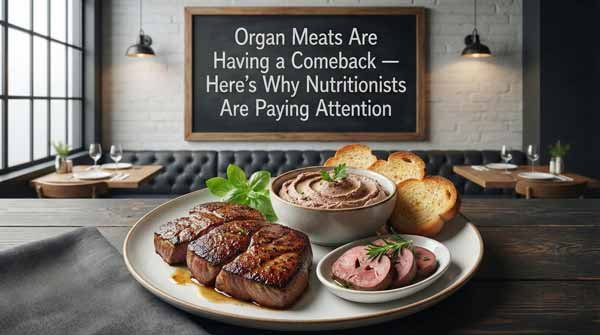
Companies like Heart and Soil Supplements, co-founded by Dr. Paul Saladino, achieved $50 million in revenue within three years by encapsulating organ meats in pill form for people who cannot stomach the taste (Accio, 2025). For those willing to cook, starting with chicken liver pate or beef heart in a slow-cooked stew is a low-barrier entry point. The key, as Zumpano recommends, is moderation. Organ meats are high in cholesterol and purines, which means people with gout, hemochromatosis, or heart disease should consult their doctor before diving in (Cleveland Clinic, 2022).
Watch: This comprehensive overview explains why organ meats are considered nature’s original multivitamin:
Why Organ Meats Are the Most Nutrient-Dense Foods — Dr. Berg (YouTube)Related: Farm-to-Table Living on Long Island: Communities with Access to Local Food