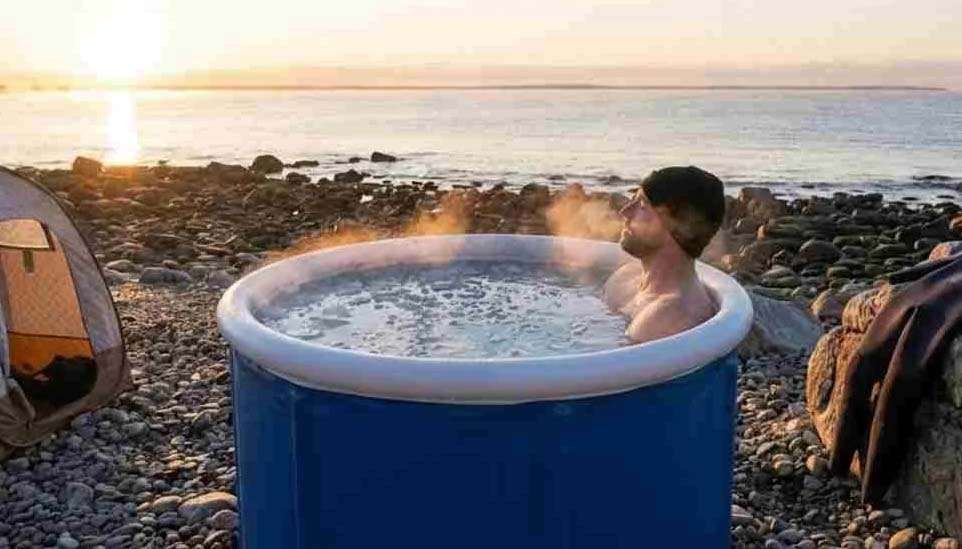
Somewhere between October and April, when the Long Island Sound drops below 50 degrees and the shore at Mount Sinai sits empty of the summer crowd, something remarkable happens to the handful of people willing to walk into that water. The body, confronted with the shock of cold, initiates one of the most sophisticated metabolic responses in human biology — a cascade of cellular events that scientists are only now beginning to fully decode. What the ancient Greeks intuited, what Hippocrates wrote about in On Airs, Water and Places, and what Wim Hof turned into a global movement, modern endocrinology is now confirming with growing precision: deliberate cold exposure does not merely harden the body. It rewires it at the cellular level, awakening a class of tissue that most adults have allowed to go dormant — brown adipose tissue, or what researchers simply call brown fat.
I’ve been watching this trend move across the North Shore with the same quiet, inevitable momentum I’ve watched sourdough come back, artisan leather come back, and the farmer’s market come back. People are rediscovering what their bodies already knew.
The Anatomy of Two Fats: Why Brown Fat Is Not What You Think
The popular imagination conflates all body fat into a single category — the enemy, the thing to be burned and banished. That conflation is physiologically illiterate. The body maintains two fundamentally different adipose systems, and their functions could not be more opposed.
White adipose tissue — the fat that accumulates around the midsection after years of processed food and sedentary living — is largely inert from a metabolic standpoint. It stores energy. That’s it. Brown adipose tissue, by contrast, is metabolically active, mitochondria-dense, and thermogenic. Where white fat warehouses energy, brown fat burns it. Unlike white fat, which stores energy, brown fat burns it — densely packed with mitochondria, the tiny cellular power plants that generate heat. Salus Saunas
Brown fat’s purpose is thermoregulation. Infants are born loaded with it, their small bodies unable to shiver efficiently enough to maintain core temperature in cold environments. As we age, adults usually have significantly lower levels of brown fat compared to babies and teenagers — the brown tissue replaced, progressively, by metabolically inert white tissue. Wim Hof Method This is not destiny. It is, as researchers are increasingly demonstrating, a reversible condition.
The location of brown fat in the adult body is precise and purposeful. Brown fat is located in six different places in the body, with the largest depot sitting under the clavicular bones — down the neck and out to the shoulders — positioned near vital organs, maintaining warm blood flow to the brain, the heart, the liver, and the kidneys. It sits centered around the central nervous system, which is, as Dr. Susanna Søberg of the University of Copenhagen has noted, exactly where nature would design such a system to operate. ZOE
The Sympathetic Nervous System: The Cold’s First Responder
When you lower yourself into 48-degree water off the coast of Mount Sinai in January — slowly, deliberately, the way a man enters any serious commitment — the first thing to fire is not brown fat. It’s your sympathetic nervous system. The body reads cold as threat. Norepinephrine floods the system. Blood vessels constrict in the extremities, routing warm blood inward to protect core temperature and vital organs.
Cold exposure is an effective mechanism to stimulate BAT activity and increase glucose and lipid uptake through mitochondrial uncoupling, resulting in metabolic benefits including elevated energy expenditure and increased insulin sensitivity. PubMed Central The key phrase here is mitochondrial uncoupling — a process by which brown fat’s mitochondria generate heat instead of ATP, essentially burning fuel as heat rather than capturing it as stored chemical energy. It is metabolic combustion in its most direct form.
This is the molecular architecture of thermogenesis. And it is activated not by pharmaceuticals, not by surgery, not by any technology more sophisticated than cold water and the willingness to enter it.
What Ten Days Can Do: The Brown Fat Recruitment Window
The common misunderstanding about cold exposure is that a single plunge delivers transformation. The science tells a more nuanced story — and a more encouraging one.
Measurable recruitment of brown adipose tissue has been observed in as little as ten days of regular mild cold exposure in protocolized studies. Physiological shifts — glucose uptake, non-shivering thermogenesis — appear within one to three weeks depending on exposure intensity and individual baseline BAT levels. Long-term habitual cold exposure can further consolidate these changes. Salus Saunas
Intermittent cold exposure consistently increases the activity of brown adipose tissue and transitions white adipose tissue to a phenotype more in line with BAT — a phenomenon researchers call “beiging” or “browning.” PubMed Central This beiging process is particularly significant: it suggests that even the body’s inert white fat stores can, under the right stimulus, begin adopting the metabolic behavior of brown fat. The beige adipocyte is something of a metabolic convert — white fat that has learned to burn.
Dr. Søberg’s research, published in Cell Metabolism in 2021, demonstrated that cold immersion a few times per week can meaningfully improve insulin sensitivity and activate brown fat in adult subjects. Her findings showed that just minutes of exposure, a few times a week, could improve insulin sensitivity, activate brown fat, and lower stress markers. ZOE The Søberg Principle, as it has come to be known, advocates ending contrast therapy sessions on cold rather than heat — forcing the body to generate its own warmth, thereby maximizing brown fat recruitment.
The Long Island Sound as Medicine
There is no cold plunge tank that can replicate what the Long Island Sound delivers in February. The temperature variance, the mineral content of the brackish water, the wind coming in across the Sound from the Connecticut shore — these are not aesthetic details. They are variables that may in fact deepen the physiological response.
North Fork residents and Sound-adjacent communities have been cold water swimming in the Long Island Sound for years — some daily, year-round — reporting benefits ranging from mood stabilization to reduced inflammation to what one practitioner described as going “into that deep, creative, vibrant space before your day is hijacked.” Northforker
That language is not merely poetic. The neurochemical substrate is real. Cold water immersion triggers a cascade of dopamine and norepinephrine release, with some studies measuring dopamine increases of over 250% sustained for hours after immersion. The mood elevation, the sharpened mental clarity, the sense of calm vitality that cold plungers report — these are not placebo. They are biochemistry.
Standing on the shore at Conscience Bay or Cedar Beach in January, looking out at the grey water of the Sound, I think about the leather on my workbench at home — English bridle, sourced from J&E Sedgwick, vegetable-tanned over months, its integrity built slowly through sustained exposure to specific conditions. Brown fat works the same way. You cannot rush it. You cannot fake it. Consistency, cold, and time are the inputs. The patina accumulates.
Insulin Sensitivity, Metabolic Disease, and Why This Matters Now
The United States is in the midst of a metabolic health crisis that no single pharmacological intervention has been able to reverse. Type 2 diabetes, insulin resistance, obesity — these conditions now touch roughly 40% of the adult American population in some form. The pharmaceutical industry’s response has been Ozempic and its derivatives, GLP-1 agonists that suppress appetite by mimicking gut hormones. They work, often dramatically. But they work on the symptom, not the machinery.
Brown fat activation addresses the machinery.
In healthy individuals, cold exposure can increase energy expenditure and whole body glucose and fatty acid utilization. Repeated exposures can lower fasting glucose and insulin levels and improve dietary fatty acid handling, even in healthy individuals. American Physiological Society For those with type 2 diabetes specifically, both acute and repeated exposures to the cold can improve insulin sensitivity and reduce fasting glycemia American Physiological Society — suggesting a non-pharmacological mechanism for attacking one of the core pathologies of metabolic disease.
This is not an invitation to abandon medicine. It is an invitation to reconsider what the human body is capable of when it is given the conditions it evolved to navigate. Our ancestors did not live in 72-degree climate-controlled environments year-round. The Long Island Sound in January is not an anomaly. It is, biologically speaking, closer to the ancestral baseline.
The Heritage Table Connection: Cold Exposure and Nutritional Synergy
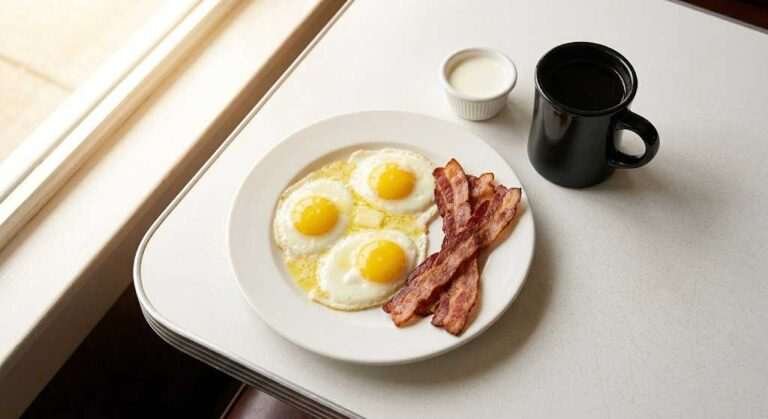
At the Heritage Diner, I’ve been watching dietary science evolve for 25 years. The same principles that underlie cold exposure — metabolic activation, cellular stress response, the productive discomfort that generates long-term adaptation — mirror what happens in the kitchen when you cook with integrity.
Our slow-fermented sourdough bread, proofed over 24 hours using naturally occurring lactobacillus cultures, produces a lower glycemic response than commercial bread because the fermentation process pre-digests much of the starch. That is metabolic optimization through patience. Cold plunge therapy, pairing the shock of 45-degree water with the body’s ancient thermoregulatory intelligence, is metabolic optimization through deliberate discomfort.
The two practices are not unrelated. Post-cold-plunge, when the body has activated its brown fat and elevated its norepinephrine, it is in a state of heightened metabolic receptivity. A meal rich in quality protein, healthy fat, and slow-digesting carbohydrates — the kind of meal we build at the Heritage, centered on real ingredients from local farms — lands differently in a body that has just been through a cold protocol. The cells are listening more carefully.
Marcus Aurelius wrote that “the impediment to action advances action. What stands in the way becomes the way.” He was writing about Stoic resilience, but he might as well have been describing brown fat activation. The cold is the impediment. The warmth it generates is the advancement.
Protocol, Precaution, and the North Shore Practice
The science suggests optimal results emerge from consistency rather than extreme duration. Five-minute sessions of cold water immersion below 59°F have been associated with an increased metabolic rate. Istretchplus The recommended temperature range for therapeutic immersion sits between 50 and 59 degrees Fahrenheit — a range the Long Island Sound occupies naturally from late October through April.
For those not ready to walk into the Sound, cold plunge facilities have been proliferating across Suffolk County. North Shore Therapeutic in Setauket offers supervised cold water immersion sessions. iStretch Plus in the region pairs plunge therapy with assisted stretching and infrared sauna. The contrast protocol — heat followed by cold, ending on cold — represents what the evidence increasingly supports as the optimal sequence for both brown fat recruitment and cardiovascular benefit.
People with known cardiovascular disease, unstable hypertension, unmanaged arrhythmias, or a history of syncope should consult a physician before attempting plunges. Salus Saunas The cold shock response is real. The initial gasp, the heart rate spike, the blood pressure surge — these are not trivial. A healthy adult entering the practice gradually, starting with cool showers and working toward full immersion over weeks, is approaching this the right way.
There is a reason the Coney Island Polar Bear Club — founded in 1903, making it the oldest such organization in the United States — is still operating. The practice persists because the results persist. You don’t maintain a habit for 120 years on hype.
What I keep coming back to, watching the wellness economy expand across the North Shore, is the essential simplicity at the center of all of it. Cold plunge therapy does not require expensive equipment, a subscription, or a particular ideology. It requires the Long Island Sound, which has been here far longer than any of us, and the willingness to enter it when it is uncomfortable to do so.
The brown fat was always there, waiting. The Sound is always there, cold and patient. The question is whether we’re willing to trade a few minutes of discomfort for a cellular language the body already knows how to speak.
At 275 Route 25A, we start with the best ingredients and let time do the work. The same equation applies here — cold water, consistency, and the quiet understanding that the body rewards people who take it seriously.