Tucked behind the manicured hedgerows and oceanfront estates of Southampton, just two miles from one of the most expensive zip codes in the United States, sits a peninsula that has been inhabited for approximately 13,000 years. The Shinnecock Indian Nation — the “people of the stony shore” in their own Algonquian tongue — did not merely pass through this land. They built a civilization on it, read its tides, harvested its waters, and cultivated its soil with a sophistication that European settlers would only partially understand, and largely fail to credit.
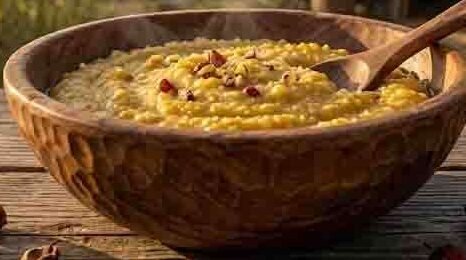
Before the golf courses, before the summer mansions, before the Hamptons became shorthand for American excess, there was corn. Specifically, there was suppawn — a cornmeal mush ground from the same Long Island soil that would one day be worth a million dollars an acre.
This is not just a food story. It is a Long Island story.
People of the Stony Shore: Who the Shinnecock Were Before Contact
Archaeological evidence places the Shinnecock people on eastern Long Island more than 10,000 years ago, making them among the oldest continuous residents of New York State. Their ancestral territory was not a reservation. It was a living landscape: 146 miles of oceanfront, bays, sounds, marshes, salt meadows, and forest stretching from what is now Southampton to Montauk and beyond, encompassing the full sweep of the Peconic Bay system (Shinnecock Indian Nation, shinnecock-nsn.gov).
They were Algonquian-speaking people related linguistically and politically to the Pequot and Narragansett of southern New England across Long Island Sound. Their society was decentralized by design — a collection of autonomous villages linked by kinship, each stewarded by a Sachem whose obligation was not ownership but protection of the people and the land.
They were expert fishermen, hunters, whalers, and farmers. The women cultivated the fields; the men worked the water. And at the center of their agricultural life — the crop that fed communities through the winter, sustained warriors on long journeys, and anchored every communal meal — was corn. (Zea mays. Maize. The grain the colonists would rename “Indian corn” and reluctantly adopt as their own lifeline.)
Their villages shifted seasonally, from coastal encampments in summer to sheltered inland settlements when the cold set in. With each migration, the food stores traveled with them: dried fish, smoked venison, preserved beans, squash cut into thin strips and sun-dried on mats — and always, the ground corn.
What Suppawn Was, and Why It Mattered
The Shinnecock preparation of corn was more intricate than the colonists’ accounts suggest. According to historical records preserved at Native Long Island, they hulled the corn with wood ash, washed it free of lye, pounded it in a carved wooden mortar, tossed it in a flat basket to separate the hard parts, and cooked it into dumplings mixed with huckleberries or beans depending on the season. When prepared as a porridge, the dish was called suppawn — or sappaen in some Algonquian dialects — a thick, slow-cooked cornmeal mush that formed the nutritional backbone of daily life across the Algonquian nations of the Northeast.
The Dutch observer Adriaen van der Donck, writing in the seventeenth century, described it as a basic part of the indigenous diet: “It is the common food of all; young and old eat it.” Another Dutch observer, Isaack de Rasieres, found that suppawn was not merely tolerable but genuinely satisfying — improved, he conceded, with a bit of Dutch butter, though it needed no such addition.
What made suppawn more than simple porridge was the process of nixtamalization — the alkaline treatment of dried corn with wood ash or lime that dissolved the hard outer shell of the kernel, unlocked niacin that would otherwise be biologically unavailable, and increased the overall nutritional value of the grain (Cutchogue-New Suffolk Historical Council, cutchoguenewsuffolkhistory.org). The Shinnecock and their Algonquian neighbors understood this chemistry not through laboratory science but through millennia of accumulated practice. They ate corn without developing the vitamin deficiencies that plagued populations elsewhere who consumed maize without this critical processing step.
The regional variations were slight. To the Wampanoag and Narragansett it was nassamp or samp. To the Munsee and Unami speakers it was sappaen. In colonial New York, the colonists absorbed the word whole and called it suppawn, as the dish migrated from native cookfires into Dutch and English kitchens across the region. What was called “hasty pudding” in New England and “grits” in the American South and “polenta” in northern Italy was, on Long Island, born from the same Shinnecock mortar.
The Lean Years: Dispossession and the Dish That Endured
The period that followed 1640 — when Shinnecock village leaders permitted English colonists to share a portion of their lands in exchange for sixty cloth coats, sixty bushels of corn, and a promise of military protection — would eventually reduce a 146-mile territorial civilization to roughly 900 acres on a peninsula jutting into Shinnecock Bay.
The English considered the original agreement a land sale. The Shinnecock did not. What followed was a centuries-long legal and political erosion. In 1703, the nation relinquished more territory in exchange for a 1,000-year lease of 3,500 acres that included what is now the Shinnecock Hills Golf Club — four courses built on land the Shinnecock still consider their ancestral burial grounds. In 1859, the New York Legislature voided even that lease in a transaction the tribe long characterized as fraudulent, driven by a forged petition (Wikipedia, Shinnecock Indian Nation).
Through these lean years — and the word lean is no metaphor here — corn mush was not a romantic heirloom. It was survival. As land was lost, as employment options narrowed, as Shinnecock men took to deep-sea whaling aboard vessels out of Sag Harbor and Shinnecock women entered domestic service in the households of the very settlers who occupied their ancestral grounds, suppawn remained.
It required almost nothing to make. Dried corn, a mortar, water, and fire. It could be stored indefinitely in its dry form. It could feed a family on what cost almost nothing. It was the food of a people who had everything taken from them and who held onto what the land had originally given.
By the turn of the twentieth century, as the tribe’s population had dwindled to approximately 150 people on the reservation and the Shinnecock language itself was fading — it was spoken in childhood only by elders like Wickam Cuffee and Mary Ann Cuffee, whose parents had used it but whose children would not — the old foodways began their quiet retreat as well. Suppawn yielded to the colonial diet. The mortar gathered dust.
Corn, Community, and the Three Sisters on Long Island’s East End
What the historical record preserves about Shinnecock food culture is not the suppawn alone but the system that produced it. The agricultural framework known among Algonquian nations as the Three Sisters — corn, beans, and squash cultivated together in a single mound — was not a charming piece of folklore. It was sophisticated companion planting. The corn stalks provided vertical structure for the bean vines to climb. The beans fixed atmospheric nitrogen into the soil, enriching it for the corn’s heavy feeding. The squash spread along the ground, its broad leaves reducing moisture evaporation and suppressing weeds. Each plant served the other. The system produced more food per acre than monoculture, without depleting the soil.
Shinnecock women — the farmers of the nation — managed this system through the growing season while the men fished and hunted. The harvest would be dried, stored, and portioned through the winter with a precision that no European observer fully appreciated. As the Wikipedia article on Southern New England Algonquian cuisine notes, when colonial Europeans described native people as “gluttons” in times of abundance and then marveled at their endurance in lean times, they failed to recognize the deliberate, seasonal intelligence at work: eating plentifully when the land gave abundantly, then drawing on preserved stores when it did not.
The corn mush was the winter food, the hard-travel food, the food eaten during siege and shortage. It was mixed with huckleberries in summer when the Shinnecock passed through the hills. It was eaten plain in winter from carved wooden bowls with shells used as spoons. Colonist Roger Williams, writing about the broader Algonquian world in his Key into the Language of America (1643), described the porridge as nourishing beyond what simple ingredients might suggest, and noted it was “exceedingly wholesome” even by English standards.
The Shinnecock Today: Sovereignty, Memory, and the Living Table
The Shinnecock Indian Nation, formally recognized by the United States federal government as the 565th federally recognized tribe on October 1, 2010, after a 30-year effort that included suing the Department of Interior, continues to inhabit roughly 900 acres of their ancestral peninsula, plus approximately 100 acres at Westwoods along the Peconic Bay in Hampton Bays.
Today, roughly 1,550 enrolled members make up the nation, about half of them living on Shinnecock Neck. They operate the Shinnecock Nation Cultural Center and Museum, established in 2001 as the only Native American-owned and operated nonprofit on Long Island — five thousand square feet of Adirondack white pine housing artifacts and histories that span 10,000 years of Shinnecock presence on this island.
The food traditions persist, carried forward through informal channels. The Three Sisters, a traditional Indigenous dish similar to succotash — beans for protein, squash for vitamins and fiber, and corn for carbohydrates — remains a staple of the Shinnecock table. Venison, harvested from Long Island’s abundant deer population, continues to feed families and appears in the work of Shinnecock caterers like Denise Smith, whose venison stew and chili are prepared from family recipes passed through tribal generations. The Shinnecock Kelp Farmers, an Indigenous women-led group, work to restore the same coastal ecosystem that once delivered the protein — the clams, oysters, fish, and shellfish — that accompanied the corn mush through those lean winters.
The tribe’s current federal litigation, Silva v. Farrish, now before the U.S. District Court for the Eastern District of New York, asserts aboriginal fishing rights in Shinnecock Bay that have never been ceded or extinguished — a legal echo of the same argument the Shinnecock have made about their land for 385 years: that what was never willingly given cannot be legitimately taken.
The land that now hosts Shinnecock Hills Golf Club — where the U.S. Open has been contested multiple times in modern memory, within sight of burial grounds the tribe has fought to protect — was once the earth that grew the corn that was ground into the mush that sustained a people through their deepest dispossession.
That proximity is not a metaphor. It is a fact, and it sits on Long Island’s East End like a stone in shallow water.
Why This Dish Belongs in the Long Island Food Conversation
Long Island’s culinary identity has been built around lobster rolls, clam chowder, and the farm stands of the North Fork. These are legitimate, and they are genuinely delicious. But they are recent chapters in a much longer story.
The suppawn of the Shinnecock is the oldest Long Island food that can be named, documented, and understood. It predates the clam bar by millennia. It predates the North Fork wine trail by 13,000 years. It was eaten within full view of the same Peconic Bay estuary that now commands premium waterfront real estate. It was made from corn grown in the same Suffolk County soil that today yields the strawberries and sweet corn at farmstands along Route 25.
For those of us who live and work on this island — who have watched its culinary scene deepen and mature, who have watched the conversation around heritage ingredients and traditional foodways expand into something more honest and more complete — the Shinnecock table is not a footnote to Long Island food history.
It is the table at which Long Island food history begins.
To visit the Shinnecock Nation Cultural Center and Museum: shinnecockmuseum.com. To learn more about the nation’s history, sovereignty efforts, and current initiatives: shinnecock-nsn.gov.
Sources
- Shinnecock Indian Nation. Official Website. shinnecock-nsn.gov
- Native Long Island. “Shinnecock Indian Reservation.” nativelongisland.com
- Cutchogue-New Suffolk Historical Council. “When the Days Grew Shorter, Samp Was on the Menu for Colonial East Enders.” cutchoguenewsuffolkhistory.org
- Wikipedia. “Shinnecock Indian Nation.” en.wikipedia.org
- Wikipedia. “Southern New England Algonquian Cuisine.” en.wikipedia.org
- NMAI Magazine. “An Island Divided: Generations in the Hamptons’ Shadow.” American Indian Magazine, Spring 2021. americanindianmagazine.org
- 27East. “A Shinnecock Thanksgiving.” 27east.com
- Native News Online. “Shinnecock Nation Asserts Fishing Rights in Long Island Waters.” nativenewsonline.net
- Shinnecock Nation Cultural Center and Museum. shinnecockmuseum.com
- Valley Table. “Corn Meal, A.K.A. Grits, Polenta, Suppawn, Cornpone…” valleytable.com
- NAHC Mapping Encyclopedia. “Corn – Maiz – Indian Corn.” encyclopedia.nahc-mapping.org
- Roger Williams. A Key into the Language of America. 1643.
- Strong, John A. The Algonquian Peoples of Long Island from Earliest Times to 1700. 1997.