
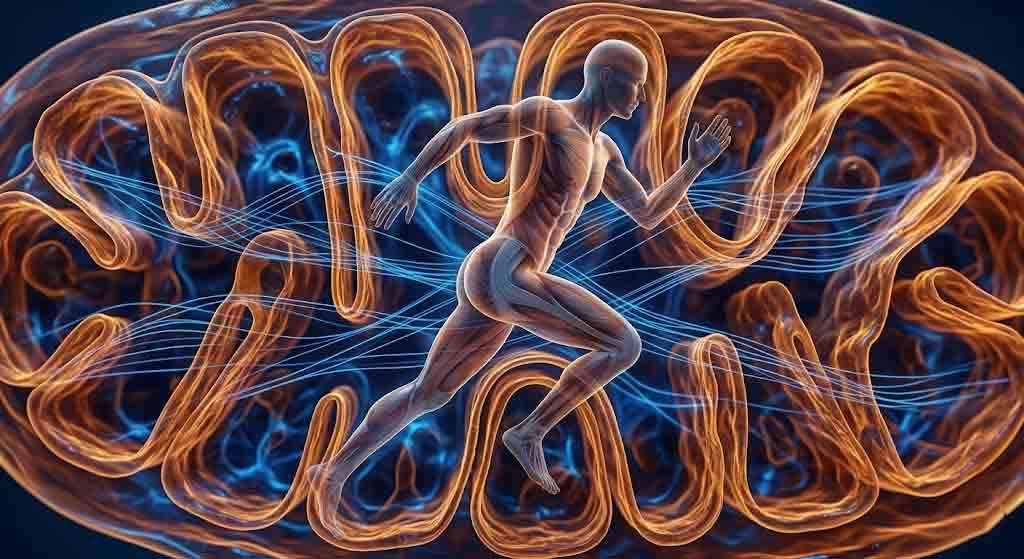
Your body doesn’t flip a switch. It rewires the entire electrical grid. Most people start keto expecting a clean transition — cut the carbs, burn the fat, feel great by Friday. What they get instead is a week of fog, cramps, and a general sense that something has gone very wrong. Nothing went wrong. What they’re feeling is the sound of a metabolic overhaul that has been 10,000 years in the making, and it doesn’t apologize for the noise.
The science behind fat adaptation is more interesting than most keto guides let on. It isn’t just “your body switches fuels.” It’s a cascade of cellular events — hormonal shifts, mitochondrial restructuring, gene expression changes — that unfold across three distinct phases over roughly twelve weeks. Knowing what’s happening and when makes the difference between quitting in week two and coming out the other side genuinely metabolically flexible. Here’s what’s actually going on, stage by stage.

Phase One: Glycogen Depletion (Days 1–5)
The first thing your body does when you cut carbohydrates is resist. Hard.
Glycogen — the stored form of glucose in your liver and muscles — is the body’s preferred quick-access fuel. The liver holds roughly 100 grams of it; skeletal muscle stores another 400–500 grams. Under normal eating conditions, that supply is topped off constantly. Drop carbs below 20–50 grams per day and those tanks start draining within 24 to 48 hours.
Here’s where it gets biochemically interesting. Glycogen is stored with water — approximately 3 to 4 grams of water per gram of glycogen. As the glycogen goes, so does the water. Most people drop 3 to 7 pounds in the first week of keto. None of that is fat. It’s water weight being flushed out as glycogen empties. The rapid loss is real; the fat loss part of it is not.
That water flush comes with consequences. Sodium, potassium, and magnesium — all electrolytes — leave with it. Insulin drops, the kidneys respond by excreting more sodium, and you end up depleted faster than you expect. This is the physiological origin of what people call the keto flu: headaches, fatigue, muscle cramps, irritability, brain fog. It isn’t a flu. It’s electrolyte depletion and your brain adjusting to a temporary glucose shortage before ketones ramp up.
Practical intervention: salt your food aggressively, supplement magnesium glycinate (200–400mg before bed), and stay hydrated. The symptoms are real but manageable. Most pass within 3 to 5 days.
Meanwhile, as blood glucose drops, insulin falls with it. Glucagon rises. The liver, receiving that signal, begins ramping up a process called beta-oxidation — the breakdown of fatty acids — and starts producing the first meaningful quantities of ketone bodies: acetoacetate, beta-hydroxybutyrate (BHB), and acetone. You’re not fat-adapted yet. But the machinery is starting.
Phase Two: Metabolic Transition (Weeks 2–4)
Weeks two through four are the most physiologically active period of the entire adaptation process — and, paradoxically, the period when most people feel the worst and quit.
By the end of week one, glycogen stores are effectively depleted during periods of fasting and low-intensity activity. The body is producing ketones, but the brain and muscle tissue haven’t yet built the enzymatic infrastructure to use them efficiently. Think of it as installing a new fuel line in an engine that’s still mostly tooled for the old one. The new fuel is flowing, but the injectors aren’t calibrated yet.
Ketones, primarily BHB, become the dominant fuel for the brain once glucose is unavailable. But upregulating ketone transport across the blood-brain barrier requires increased expression of monocarboxylate transporters (MCT1 and MCT2). This takes time — roughly two to four weeks of consistent carbohydrate restriction. Until those transporters are fully upregulated, cognitive function can feel sluggish. The brain isn’t starving; it’s adapting. The fog lifts as MCT expression catches up.
Simultaneously, the liver is increasing the density of enzymes required for beta-oxidation: carnitine palmitoyltransferase I (CPT1), which shuttles long-chain fatty acids into the mitochondria; beta-ketothiolase, which handles the final steps of ketone synthesis; and a cascade of oxidative enzymes that were largely dormant when glucose was plentiful. This enzymatic upregulation doesn’t happen overnight. It’s a gene expression event — the metabolic equivalent of retraining a kitchen crew on an entirely new menu.
Insulin sensitivity begins improving during this phase. Lower circulating insulin allows adipose tissue to release stored fatty acids more freely. Lipolysis — fat breakdown from stored tissue — accelerates. This is when actual fat loss begins in earnest, not the water loss of week one.
Practical notes for weeks two through four: expect performance drops in the gym. Explosive, high-intensity work is fueled by glycolysis — you’ve just constrained that system. Endurance and moderate-intensity activity holds up better, as fat oxidation is well-suited for those. Don’t test your one-rep max during the transition. Walking, light cycling, zone 2 cardio — those are your allies right now.

Phase Three: Full Fat Adaptation and Mitochondrial Biogenesis (Weeks 5–12)
Weeks five through twelve are where the real transformation occurs, and most people who’ve never gone this deep never know it exists.
Full fat adaptation isn’t simply “your body burns fat now.” It involves structural changes at the cellular level — specifically, mitochondrial biogenesis: the growth of new mitochondria within muscle cells. Mitochondria are the organelles where fat is actually oxidized. The more of them you have, the more fat-burning capacity you possess. And sustained ketogenic eating, combined with appropriate exercise, is one of the strongest known signals for mitochondrial biogenesis, operating primarily through a transcription factor called PGC-1α (peroxisome proliferator-activated receptor gamma coactivator 1-alpha).
PGC-1α is activated by several overlapping signals that align naturally in this phase: AMP kinase activity (elevated when glycogen is low), reactive oxygen species at functional levels, and the low-insulin environment that ketogenic eating creates. The result, over weeks five through twelve, is a measurable increase in mitochondrial density in skeletal muscle. Your cells literally become better at burning fat — not because you’re eating less, but because the machinery for fat oxidation has been rebuilt.
This phase also sees the stabilization of blood ketone levels into a functional therapeutic range, typically 0.5 to 3.0 mmol/L. Cognitive performance often improves noticeably by week six or seven. The brain has fully transitioned to ketones as its primary fuel, the MCT transporters are upregulated, and many people report a clarity and sustained energy that feels qualitatively different from glucose metabolism. There’s a reason this isn’t just perceived — ketones generate less oxidative stress per unit of ATP produced than glucose does. The brain runs cleaner on them, at least under restriction conditions.
Hunger patterns shift significantly in this phase as well. Ghrelin — the hunger hormone — tends to stabilize at lower baseline levels under ketogenic conditions. Leptin sensitivity can improve. The feast-and-crash cycle driven by glucose and insulin swings flattens out into a more stable appetite pattern. Many people find they’re genuinely not thinking about food every three hours, which, for anyone who grew up in a carbohydrate-dominant culture, can feel like a revelation.
Athletic performance rebounds fully by weeks eight through twelve for most people, often surpassing pre-keto baseline for endurance activities. Strength performance returns to prior levels; some competitive athletes report small benefits in weight-class sports due to body composition changes.
The Metabolic Flexibility Endpoint
By week twelve, a properly adapted person has something more valuable than weight loss. They have metabolic flexibility — the ability to switch efficiently between fuel sources depending on availability and demand. This is, physiologically, what human metabolism was always supposed to do. The fossil record and anthropological evidence suggest our Paleolithic ancestors alternated regularly between periods of carbohydrate availability and extended periods of fat oxidation. The modern carbohydrate-saturated diet locked most people into glucose dependency so thoroughly that the fat-burning machinery atrophied from disuse.
Twelve weeks of ketogenic eating doesn’t just induce weight loss. It restores a biological capacity that’s been dormant — sometimes for decades.
That’s worth the headache in week one.
Common Pitfalls by Phase (Quick Reference)
Weeks 1–2: Don’t cut electrolytes, cut carbs. Salt everything. Supplement magnesium. Don’t gauge adaptation by performance — your engine is in transition.
Weeks 2–4: Don’t abandon the diet because you feel mentally slow or weak in the gym. This is the enzymatic upregulation phase. It passes. If carb cravings are severe, add a small amount of targeted carbohydrate around intense training — 20–30 grams peri-workout will not derail adaptation if the rest of the day is clean.
Weeks 4–8: This is when a lot of people accidentally sabotage themselves by “rewarding” early progress with cheat meals. One high-carb day can take 2–3 days to reverse in terms of ketosis. You’re not out of the race, but you’re resetting the enzymatic clock partially. Decide what you’re doing and stay consistent.
Weeks 8–12: Focus on dietary quality. Ketogenic eating that’s built around processed fats, poor-quality proteins, and artificial sweeteners will get you into ketosis but may not deliver the mitochondrial benefits of a diet built around whole animal proteins, quality fats, and minimal processing. If you want the cellular upgrade, the food quality matters as much as the macros.
What the Research Says
The physiological changes described above aren’t theoretical. The enzymatic adaptations of fat adaptation have been documented in human subjects. A landmark 1983 study by Phinney et al. in Metabolism showed that trained cyclists maintained performance over a 4-week ketogenic adaptation period and demonstrated significantly enhanced fat oxidation rates. More recent work from the Volek and Phinney collaboration, including their research published in Nutrition & Metabolism (2012), documented the upregulation of fat oxidation enzymes and the performance restoration timeline in detail.
Mitochondrial biogenesis under ketogenic conditions has been studied extensively in animal models and, increasingly, in human tissue. A 2019 review in Cell Metabolism examined the relationship between ketone signaling, PGC-1α activation, and mitochondrial proliferation, finding that BHB acts not only as a fuel substrate but as a signaling molecule that directly influences gene expression — including the genes governing mitochondrial replication.
The science here is solid. Twelve weeks. The electrical grid gets rewired. Give it the time it needs.
You might also like: Unlocking the Power of Keto: Benefits, Science, Recipes, and More | Is Dirty Keto Worth It? What Happens When You Stop Caring About Food Quality | The Best Cuts of Meat for Keto—and How to Cook Each One
Sources
- Phinney SD, Bistrian BR, Evans WJ, Gervino E, Blackburn GL. “The human metabolic response to chronic ketosis without caloric restriction: preservation of submaximal exercise capacity with reduced carbohydrate oxidation.” Metabolism. 1983;32(8):769–776. https://pubmed.ncbi.nlm.nih.gov/6865776/
- Volek JS, Phinney SD, Forsythe CE, et al. “Carbohydrate restriction has a more favorable impact on the metabolic syndrome than a low fat diet.” Lipids. 2009;44(4):297–309. https://pubmed.ncbi.nlm.nih.gov/19082851/
- Volek JS, Freidenreich DJ, Saenz C, et al. “Metabolic characteristics of keto-adapted ultra-endurance runners.” Metabolism. 2016;65(3):100–110. https://pubmed.ncbi.nlm.nih.gov/26892521/
- Newman JC, Verdin E. “β-Hydroxybutyrate: A Signaling Metabolite.” Annual Review of Nutrition. 2017;37:51–76. https://pubmed.ncbi.nlm.nih.gov/28826372/
- Phinney SD, Volek JS. The Art and Science of Low Carbohydrate Living. Beyond Obesity LLC, 2011. https://www.artandscienceoflowcarb.com/
- Koeslag JH, Noakes TD, Sloan AW. “Post-exercise ketosis.” The Journal of Physiology. 1980;301:79–90. https://pubmed.ncbi.nlm.nih.gov/7411456/