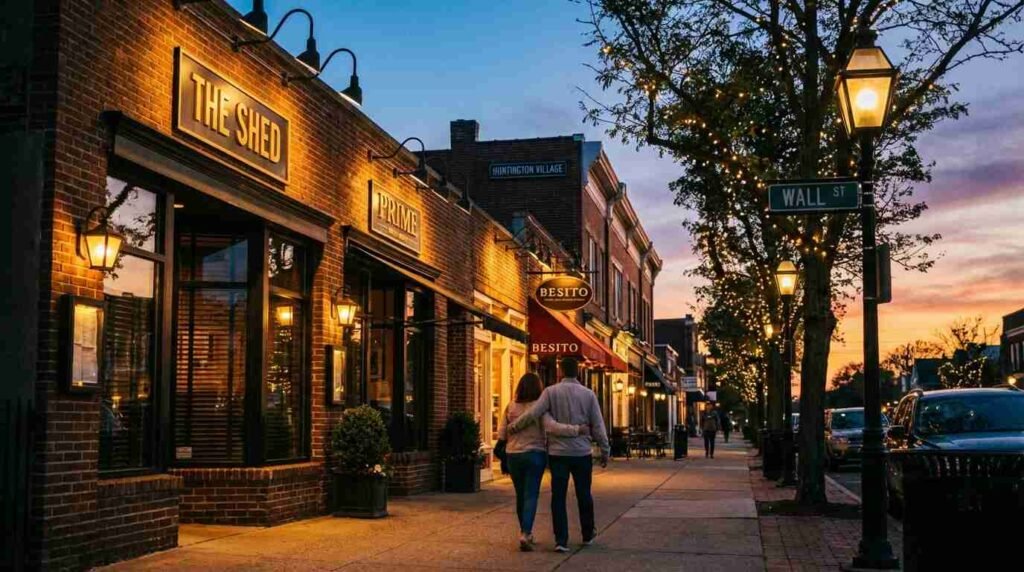
Huntington village has a restaurant strip that wine people talk about when they want to make a point about the disconnect between where serious wine programs actually exist and where the wine press bothers to look. It’s not the Hamptons. It’s not a Michelin-mapped Manhattan block. It’s New Street, Gerard Street, and Main Street in a Suffolk County village where the LIRR platform is close enough to the restaurant row that you can hear the trains from certain tables.
The customers figured this out fifteen years ago. The reviews haven’t caught up.
What the Awards Say
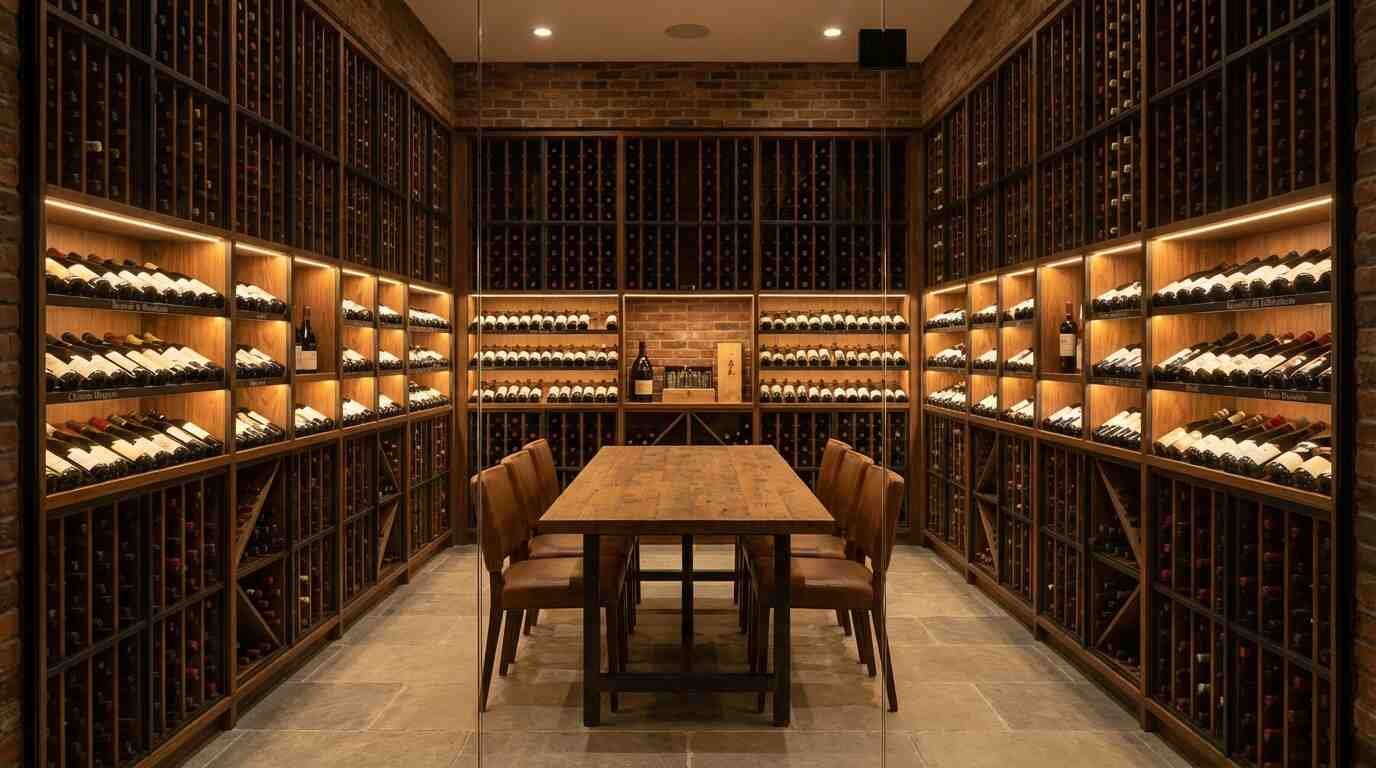
Jonathan’s Ristorante, at 15 Wall Street in the heart of Huntington Village, has earned Wine Spectator’s Award of Excellence for nine consecutive years. That’s not a participation trophy — the Award of Excellence recognizes lists that offer a well-chosen assortment of quality producers, with appropriate thematic match to the menu in both price and style. Jonathan’s achieved it through a list that draws from small vineyards in Italy, California, France, and Australia, served in Riedel wine glasses and supported by a temperature-controlled wine cellar on-site.
Zagat called the wine list “impressive and affordable.” That pairing — impressive and affordable — is not something a restaurant in Manhattan pulls off reliably. It requires an owner who isn’t trying to extract maximum markup from customers he expects to lose. Roberto Ornato has been running Jonathan’s for more than two decades. The wine program reflects the same logic as the restaurant itself: build something worth coming back to.
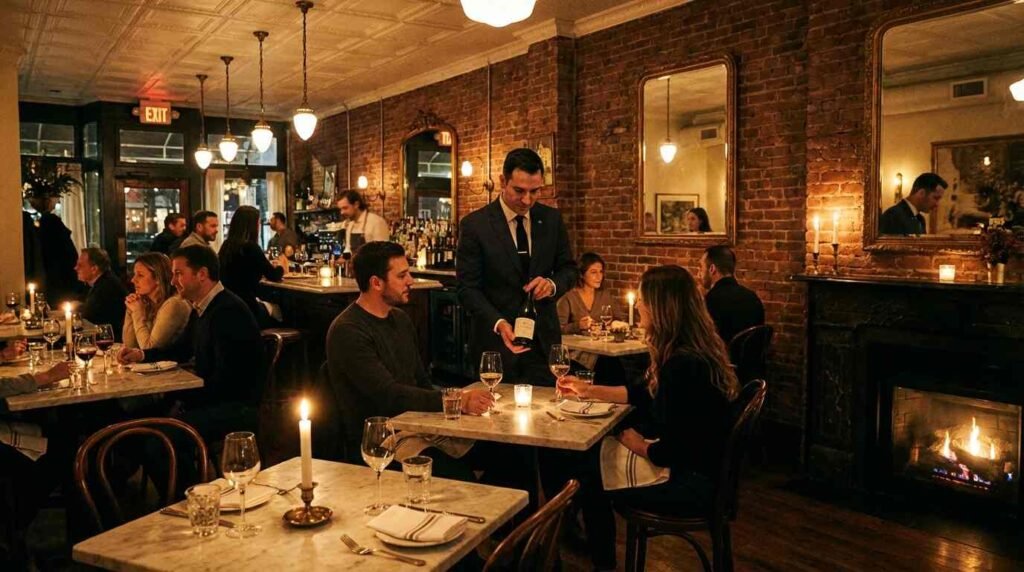
Bistro Cassis, at 55 Wall Street, brings a French wine program to a room that already looks like it was designed to hold one — vintage mirrors, rich wood tones, marble-topped tables, a menu running from coq au vin to steak frites. A French bistro without a serious Loire and Burgundy representation is a costume party. Bistro Cassis isn’t that. The wine list is curated to match the kitchen, which is the basic requirement and also, in practice, harder than it sounds.
The Demographic That Built It
The story of why Huntington’s wine culture developed the way it did — concentrated, serious, largely undocumented — runs through its commuter demography. Huntington Station is a direct LIRR connection to Penn Station. The commute is real and the commuters are real: finance industry, law, medicine, the professional class that spent their workdays in midtown and came home to a village that didn’t have a serious restaurant culture in 1995.
By 2005, it did. The development of Huntington’s restaurant strip in that decade was driven by a specific consumer: someone who knew what a good Barolo cost at Marea and wasn’t willing to pay Marea prices at home, but also wasn’t willing to drink house red poured from a jug. That customer was the market signal, and the restaurants that read it correctly survived. The ones that didn’t, didn’t.
What those customers wanted wasn’t complicated: a real wine list, a knowledgeable floor staff who could navigate it, and a glass of something worth drinking without requiring a reservation three weeks out or a $300 minimum spend. Huntington offered all of that before it occurred to anyone outside the village to write about it.
The Concentration Problem (That Turned Out to Be a Feature)
When several restaurants within a few blocks of each other develop serious wine programs simultaneously, they create a competitive pressure that raises standards rather than lowering them. Each program has to be real — because the customer can walk across the street and eat just as well. In Huntington village, this compression of serious dining into a small geographic footprint meant that wine programs couldn’t be decorative. They had to work.
The New York State Liquor Authority’s licensing records show the density of liquor licenses in the Huntington village corridor — a concentration that reflects the district’s dining development over the past two decades. The Huntington Business Improvement District has tracked the growth of the restaurant scene along its main commercial streets, and what it shows is not a sudden clustering but a gradual accumulation: restaurant by restaurant, wine program by wine program, regular customer by regular customer.
What the Hamptons offered — and still offers — is spectacle. The celebrity chef, the summer lease, the wine list designed to be photographed. What Huntington offers is something slower and more durable: the restaurant you’ve been going to for twelve years, where the floor staff remembers that you drink Burgundy with everything and Champagne before dinner, and nobody treats you differently because your car isn’t a Range Rover.
What Long Island Wine Council Documents Don’t Capture
The Long Island Wine Council understandably focuses on the North Fork — the vineyards, the production side, the tourism infrastructure that’s been building since the 1970s. What it doesn’t fully capture is the retail and restaurant wine culture that developed independently of production, driven by consumption rather than harvest.
Huntington’s serious wine restaurants aren’t showcasing Long Island wines as a primary orientation. Jonathan’s list runs through Italian small-producer selections, California, France, Australia. That’s a reflection of what its customer base actually drinks — the range of someone who’s been paying attention to wine for two decades, not a regional boosterism play. This matters because it shows that Huntington’s wine culture grew from consumer sophistication rather than from proximity to a wine region. The demand was there independent of the supply.
That’s a different thing from what happens in wine country restaurants, where the list is curated around a geographic identity. Huntington restaurants built their programs around a customer identity. Those are not the same thing, and the difference is audible in the conversation between a floor staffer and a table at Jonathan’s versus a table at a North Fork tasting room.
The Press Failure
Wine Spectator publishes its Restaurant Awards annually. The 2021 awards alone recognized 21 Long Island restaurants across the island. The coverage in national wine media is minimal. Regional coverage — Newsday, Long Island’s food sections — has been more attentive, but the archival depth in outlets like Newsday from the 2005–2015 formative period of the Huntington wine scene is not widely accessible online.
The result is a documented record that lives mostly in the databases: Wine Spectator’s own searchable award history, the NYS Liquor Authority licensing records, the reservation logs that no publication ever asked to see. The story is there. It just required someone to connect it.
Nobody in the wine press colonized Huntington the way they colonized the North Fork or the Hamptons. The consequence, for the people who actually live there, is a dining culture that functions as a kind of semi-private intelligence. You find out about Jonathan’s because a colleague who lives in Centerport mentioned it at a work dinner. You find out about Bistro Cassis because a friend told you about it.
That word-of-mouth architecture is how wine culture actually propagates in a place where no one is trying to sell you a destination. It’s slower than a magazine profile, and more durable.
You Might Also Like
- Prime: An American Kitchen & Bar — 117 North New York Avenue, Huntington, NY 11743
- Maroni Cuisine — 18 Woodbine Avenue, Northport, NY 11768
- Channing Daughters Winery — 1927 Scuttlehole Road, Bridgehampton, NY 11932