
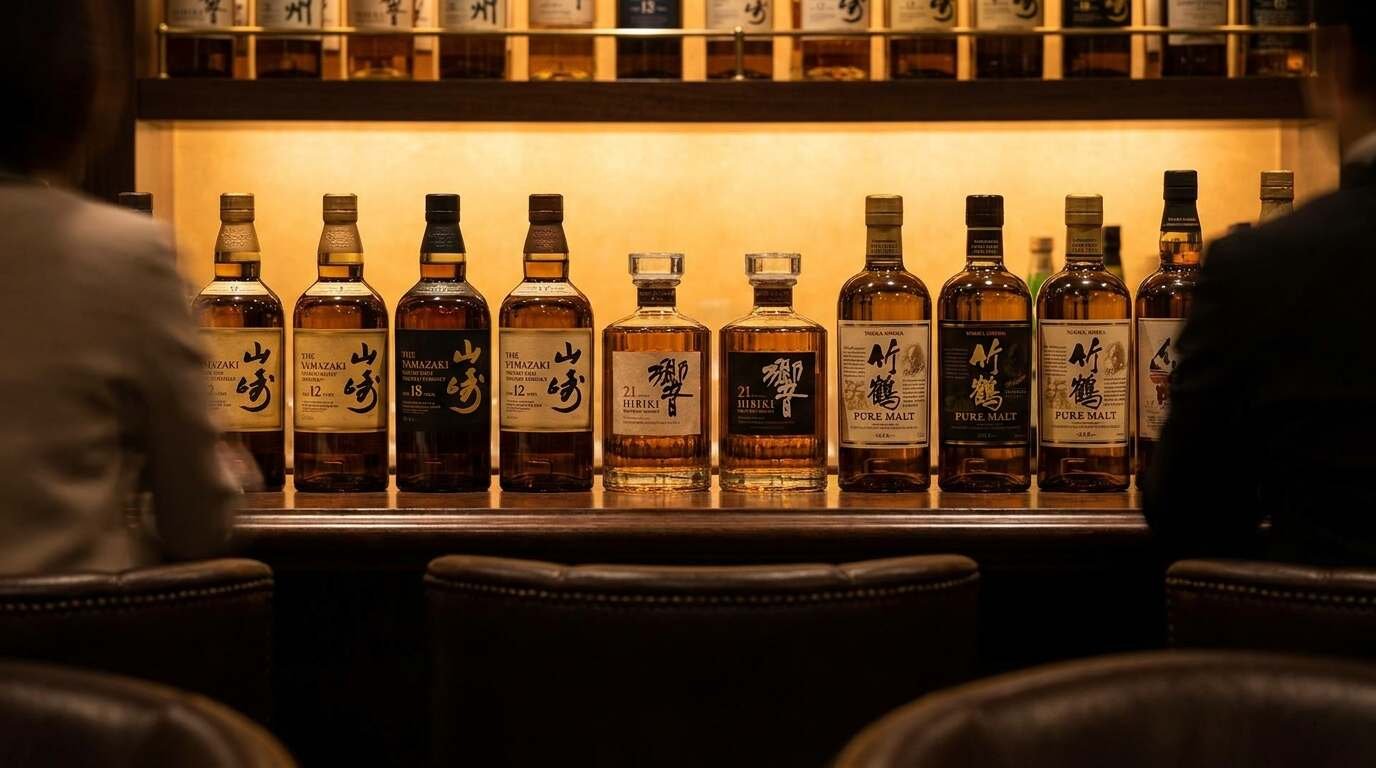
Supply and demand sounds like economics class. It tastes like a $400 bottle of Hibiki that used to sit on the shelf for $60.
The math is not mysterious once you understand the timeline. Japanese whisky is aged in barrels — sometimes for 12, 17, 21, or more years. In 2014, when the world suddenly decided it wanted Japanese whisky, the barrels that would satisfy that demand were already locked in warehouses, halfway through their maturation cycle. Nobody could open a still in 2014 and serve those customers by 2015. They could serve them by 2026, maybe. And some of that 2026 stock is just now coming to market.
In the meantime, the industry made decisions. Some of those decisions were rational. Some of them look different in retrospect. All of them have a direct effect on what you’re paying right now.
The 2014 Boom Nobody Saw Coming and the Barrels That Didn’t Exist
Japanese whisky had been building a quiet reputation among specialist drinkers for decades. Masataka Taketsuru, founder of Nikka, had studied distilling in Scotland in the 1920s and brought the craft back to Japan with a commitment to traditional pot still methods. Suntory’s Yamazaki distillery, founded in 1923, had been producing single malt since before most American craft distilleries existed as ideas. The product was serious. The international audience was small.
Then in 2014, the World Whiskies Awards began recognizing Japanese expressions at the top of their rankings with increasing regularity. Critics published enthusiastic write-ups. Yamazaki 18-Year won major accolades. The story of Japan’s meticulous, technically rigorous approach to whisky-making became the story of global spirits writing for about eighteen months, and then every collector, investor, bar program director, and whisky-curious drinker on four continents wanted in simultaneously.
The distilleries were not ready. They could not be ready. That’s the structural fact that underlies every price discussion and every empty shelf you’ve encountered since.
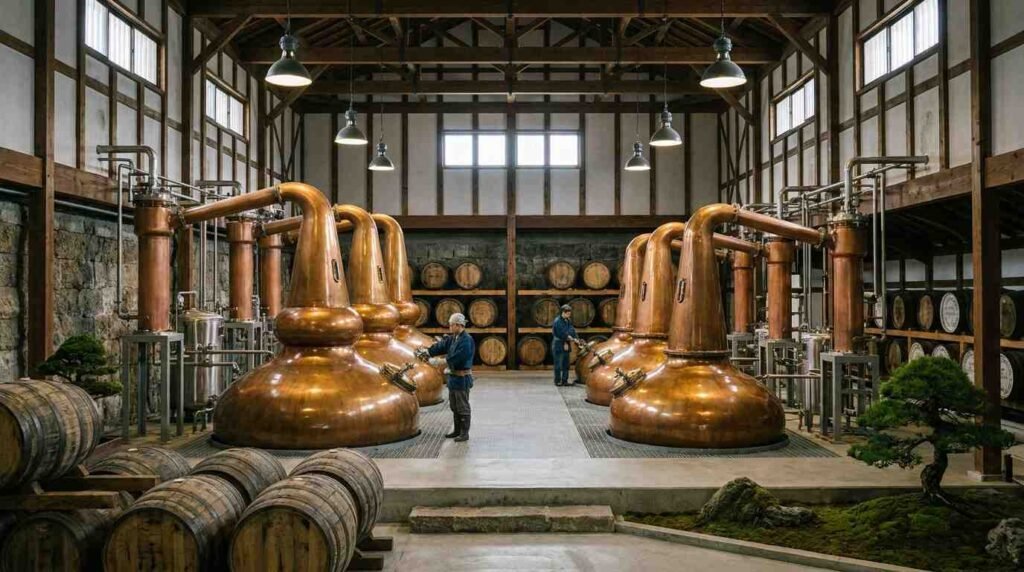
How Nikka and Suntory Actually Make Whisky and Why That Takes Time
Both Suntory and Nikka operate on production timelines that are measured in decades, not quarters. Whisky that is distilled today and put into a new American oak barrel or an ex-bourbon cask is, by definition, unavailable for a minimum of three years under Japanese law — and realistically, the premium expressions that drove the boom were aged for 12 to 21 years before release.
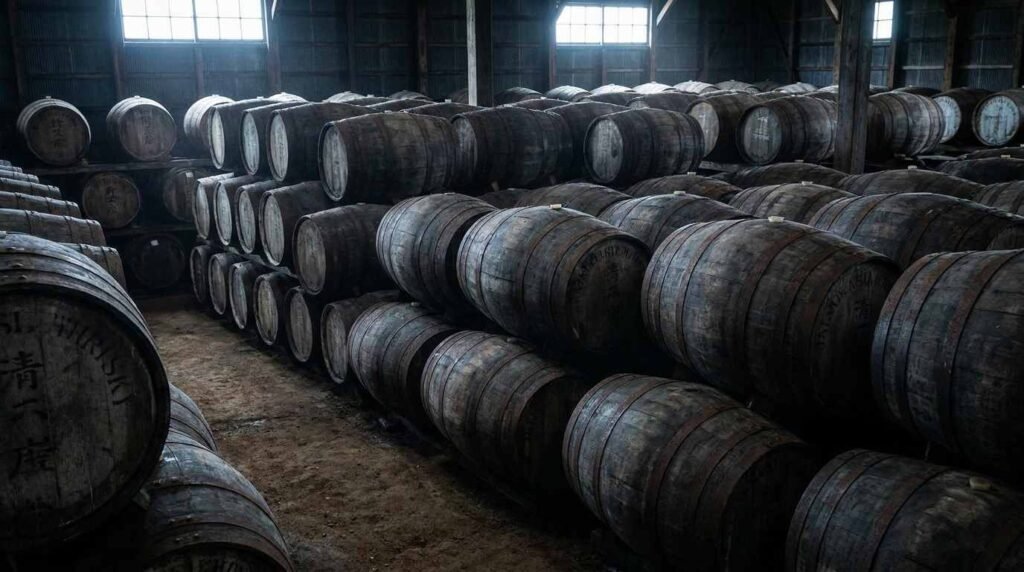
This is not a manufacturing inefficiency. It’s physics and chemistry. Whisky draws color, tannin, vanilla, and wood sugars from the barrel. It loses volume to evaporation — the so-called angel’s share — at a rate of roughly 2–3% per year in the relatively humid Japanese climate. It develops complexity through esterification, oxidation, and a dozen other slow chemical processes that cannot be rushed. A distillery can add more stills, hire more staff, and increase production capacity in 2015. What it cannot do is produce aged whisky for 2015. It can only produce whisky that will be ready for 2027.
Suntory discontinued or suspended several of its aged-statement expressions beginning around 2015. The Yamazaki 12-Year and Hibiki 12-Year became nearly impossible to find at retail. The Hakushu 12-Year was discontinued in 2018. These were not marketing decisions designed to artificially inflate scarcity, as some collectors have alleged. They were production decisions made by distillers who had run the inventory math and discovered they simply didn’t have enough aged stock to supply global demand without depleting reserves they needed to support future product years.
What ‘No Age Statement’ Actually Means When Distillers Say It
The shift to no age statement (NAS) expressions across the Japanese whisky industry around 2015–2018 was the industry’s immediate response to the shortage problem, and it’s been widely misunderstood.
An age statement on a whisky bottle — 12 Year, 17 Year, 21 Year — is a legal minimum. Every drop in that bottle is at least that old. A no age statement whisky contains no such commitment. The distiller can blend whiskies of varying ages, including some very young spirit, to produce an expression that meets their flavor target without the inventory constraint of maintaining an all-aged supply chain.
For collectors and enthusiasts, NAS became a dirty term. It implied young whisky, thin whisky, cheap whisky dressed up in expensive packaging. In reality, NAS is a tool — neutral in itself, only as good as the distiller using it. Suntory’s Hibiki Japanese Harmony, their flagship NAS release, contains older whiskies blended to match the spirit’s intended profile. It’s not equivalent to a 17-Year in terms of barrel complexity, but it’s not the hustle some online forums made it out to be.
The deeper issue is that NAS releases gave distilleries a way to keep product on shelves while their production backlog — the new barrels laid down in the post-2014 expansion period — finishes maturing. Suntory invested heavily in distillery expansion at Yamazaki, Hakushu, and Chita following the boom. Nikka expanded capacity at Yoichi and Miyagikyo. Those investments are now, in 2025 and 2026, beginning to produce mature whisky that can reenter aged-statement production lines. The pipeline is refilling. Slowly.
The Role of American Collectors in Draining Japanese Inventory
No honest account of the Japanese whisky shortage leaves out the secondary market.
American and European collectors, operating on platforms like WhiskyAuctioneer and Whisky.auction, drove secondary market prices for premium Japanese expressions to multiples of retail almost immediately after the boom began. Bottles of Yamazaki 18-Year that retailed at $150 were selling at auction for $400, $600, $800 — not because the buyers needed whisky, but because the bottles had become investments. The dynamics of this market pulled supply away from consumers and into storage, further depleting retail availability while simultaneously distorting price expectations upward.
By 2018, a bottle of Yamazaki 25-Year that might have retailed for $500 was regularly clearing $2,000 at auction. Hibiki 21-Year, discontinued in Japan, became nearly mythological — bottles discovered in airport duty-free shops went viral on social media, creating queues and buying frenzies. The Macallan phenomenon of the previous decade, where premium Scotch became a liquid asset class, was now happening to Japanese whisky with several years’ compounded momentum behind it.
This collector dynamic created a feedback loop that the distilleries were structurally unable to counteract. Price controls and allocation systems helped — both Suntory and Nikka moved to controlled distribution for premium expressions — but secondary market activity operated outside those controls. The consumer who wanted a bottle of Yamazaki 18 to drink on a Tuesday evening now faced prices set not by the distillery but by the auction market.
What to Buy Right Now While the Next Generation Matures
The honest answer is: shop with calibrated expectations.
Nikka Coffey Grain and Nikka Coffey Malt are both NAS expressions produced using Nikka’s unusual Coffey column stills, originally brought from Scotland by Masataka Taketsuru himself. They’re accessible, reasonably priced, and genuinely interesting as expressions of a production method you can’t find elsewhere. They are not substitutes for aged Yoichi single malt. They are good whisky. That’s a different and sufficient thing.
Suntory’s Toki is designed specifically for the cocktail market — light, accessible, better in a highball than on its own, and priced at a point where it makes sense to actually drink it. The Japanese whisky highball, with good ice and soda water, is an entirely legitimate way to approach Toki. It’s not a compromise. It’s the format the whisky was made for.
For those committed to age statements at something close to historical prices, the emerging alternative is Taiwanese whisky. Kavalan, produced at the King Car distillery in Yilan, Taiwan, has been winning international awards since the late 2000s and benefits from a subtropical climate that accelerates maturation — barrels turn over their complexity faster in Taiwan’s heat, which means younger age statements carry more weight than they would in Scotland or Japan. The price-to-quality ratio is currently where Japanese whisky was in 2010, which is to say, very favorable for anyone paying attention.
Japan’s distilleries will eventually catch up to the demand their own excellence created. The production years of 2014 through 2020 are coming to maturity now. The 2025 and 2026 vintage windows are when serious aged-statement whisky, built on the expanded production capacity of the boom years, starts to reach shelves in meaningful quantities. Until then, drink what’s available, drink it the way it was made to be drunk, and hold the auction market with deserved skepticism.
The barrel always wins. It just works on its own schedule.
This is for informational purposes only and does not constitute investment advice. Consult a licensed financial advisor for decisions regarding spirit investment.
Sources
– IWSR Drinks Market Analysis — Japanese Whisky Market Reports – Suntory Holdings Press Releases — Discontinuation of Yamazaki and Hakushu age-statement expressions (2018) – WhiskyAuctioneer — Secondary market price tracking – Nikka Whisky — Distillery history and production documentation – Stefan Van Eycken, Whisky Rising: The Definitive Guide to the Finest Whiskies and Distillers of Japan (Cider Mill Press, 2016)