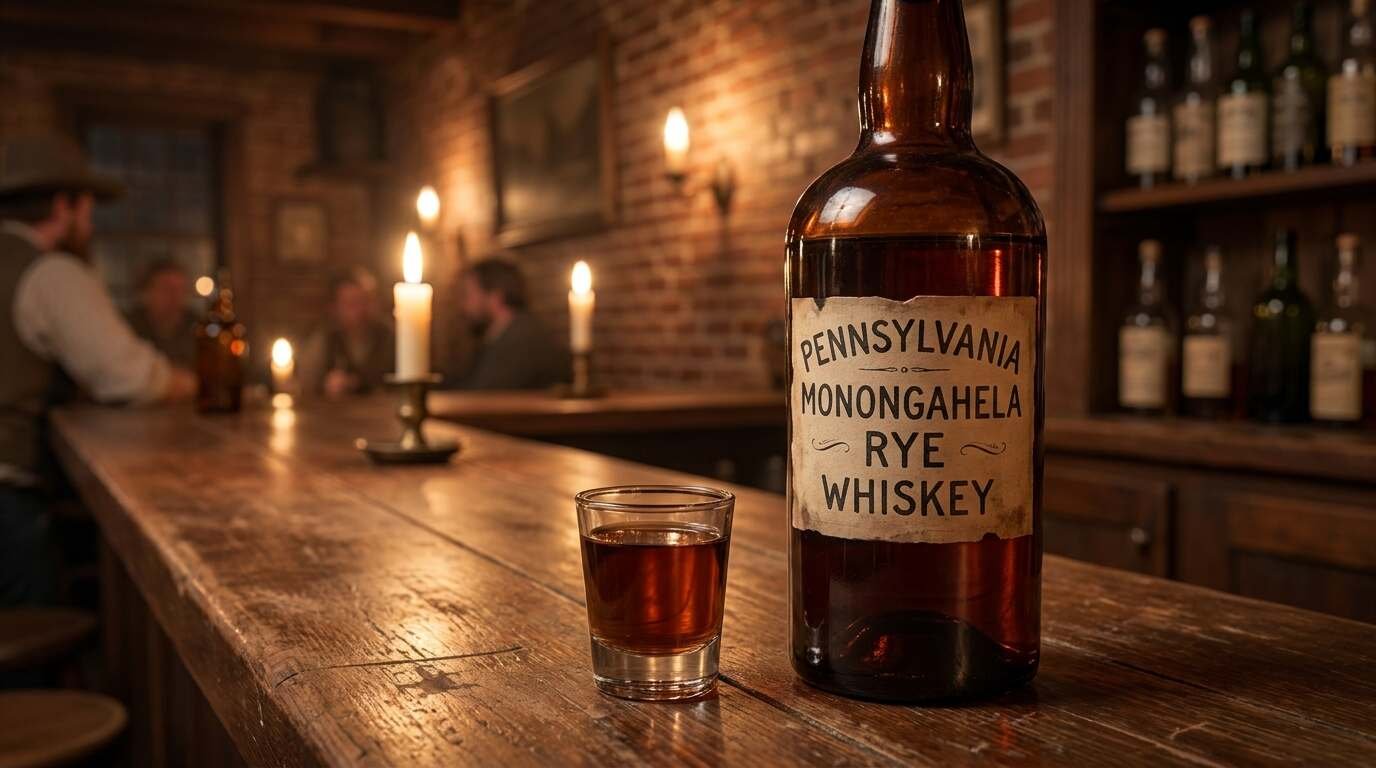
Bourbon gets the statues. Rye built the country. Then we forgot it for fifty years like a tool we misplaced in the back of the garage.
Not lost — misplaced. There’s a difference. A misplaced tool still exists. It’s just buried under everything that came after.
Rye whiskey is back now, properly back, and the numbers bear that out. According to data tracked by the Distilled Spirits Council of the United States (DISCUS), rye volumes surged over 1,200% between 2009 and 2019, from near-invisibility to 1.2 million nine-liter cases. That’s not a trend. That’s a resurrection. But to understand why the comeback matters, you need to understand what was lost in the first place — and how close we came to losing it for good.
Before Bourbon, There Was Rye: What Most Drinkers Don’t Know
The story starts not in Kentucky but in Pennsylvania, and it starts with poor people.
When Scotch-Irish and German immigrants arrived in the Mid-Atlantic colonies in the early 1700s, they brought their distilling knowledge and precious little else. What they found was terrain that matched what they’d left: cold, rocky soil that didn’t favor wheat. Wheat was for the rich back in Europe — a gentleman’s grain. Rye grew where wheat couldn’t, which made it a working man’s grain, which made it exactly what these settlers planted. The Oberholtzers (later shortened to Overholt) and the Böhmes (later anglicized to Beam) arrived on the same ship in 1710, according to whiskey historian John Lipman. Two families, two grain legacies, one boat.
By the late 1700s, rye wasn’t just popular — it was money. Alexander Hamilton wanted to tax it specifically because farmers trusted rye whiskey as currency more than they trusted the new republic’s paper notes. When Washington’s government slapped an excise tax on distilled spirits in 1791, the response was the Whiskey Rebellion of 1794, a genuine armed uprising quelled only when Washington marched 13,000 troops into western Pennsylvania. That’s how important rye was. People took up arms over it. You don’t revolt over a beverage. You revolt over an economy.
By 1810, Pennsylvania’s rye production was nearly three times that of Kentucky’s bourbon output. One Pennsylvania county alone reportedly produced enough rye whiskey in the early 1800s to give every two Americans in the entire country their own barrel. Herman Melville, who knew his drinks, has a character in Moby-Dick calling out for “unspeakable old Monongahela.” George Washington himself ran one of the country’s most productive rye distilleries at Mount Vernon, turning out roughly 11,000 gallons in 1799 alone. This was not a regional curiosity. This was America’s whiskey.
How Prohibition Didn’t Just Slow Rye — It Nearly Erased It
Every American spirit took a hit from Prohibition. Rye took a different kind of hit.
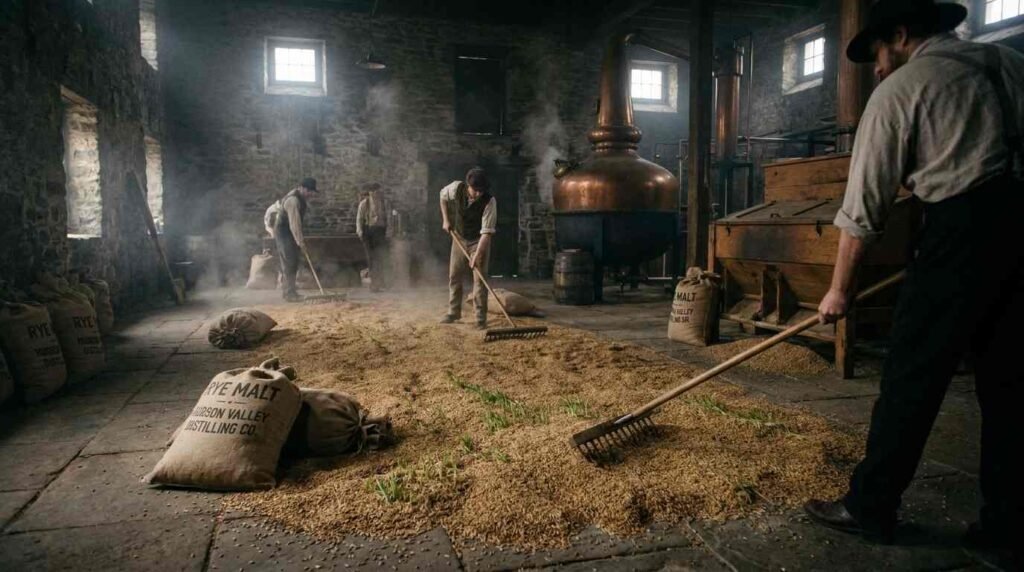
Bourbon had geography on its side. Kentucky’s distilling infrastructure, its legal environment after Repeal, and its access to cheap corn and well-financed railroads meant bourbon could reconstitute itself relatively quickly after 1933. Pennsylvania and Maryland had none of those advantages. Higher postwar taxes, stricter regulations, and less favorable political conditions hit rye’s home territory hard. Then there was the simple economic logic of bootlegging: rye is a stubborn grain to work with, and bootleggers during Prohibition favored corn, which was cheaper, faster, and more forgiving. The clandestine market during those thirteen years didn’t just pause rye production — it permanently shifted consumer palates toward lighter, sweeter spirits.
By the time Repeal came in 1933, the American public had developed a taste for Canadian whisky (which was often called “rye” on the label but contained little actual rye grain), blended light Scotch, and eventually vodka. Real rye — Pennsylvania Monongahela style, with its 70–95% rye mash bill, three-chamber still, and heated warehouse aging — had almost nowhere to land. The legendary Overholt distillery at Broad Ford, Pennsylvania, the largest rye operation after Repeal, closed in 1951. By the mid-century, there were more myths about rye than bottles of it. What survived was barely recognizable: Old Overholt had migrated its production to Kentucky, and the Pennsylvania and Maryland traditions it represented had been, for all practical purposes, buried.
From the end of Prohibition through 2006, total rye whiskey sales in the United States sat at roughly 150,000 cases annually. Bourbon was moving 14.7 million. That’s not competition. That’s a category on life support.
The Pennsylvania and Maryland Styles Nobody Talks About Anymore
Here’s what the revival conversation usually skips: rye was never one thing.
Pennsylvania Monongahela style meant a mash bill that could run as high as 95% rye — dense, spicy, rich with dried fruit and a peppery finish that hit you like cold rain on brick. The process involved unmalted rye, sweet mash fermentation, copper three-chamber stills (unique to the region), and aging in heated warehouses that accelerated maturation. The result was a whiskey that did not apologize for itself.
Maryland style ran differently. Typically 60–70% rye with a corn component for sweetness, fermented as a sweet mash, occasionally finished with a splash of fruit juice (prune or cherry) that rectifiers used to round the edges. Maryland rye was the more sociable of the two — not soft, but willing to meet you halfway. By 1911, Maryland had 44 distilleries producing 5.6 million gallons annually, mostly rye. Notable brands included Pikesville, Sherwood, Hunter Baltimore Rye, and Monticello. Every one of those names is gone or barely breathing.
The distinction between the two styles, scholars now note, may have been more pronounced in the 20th century than the 19th. A gathering of the Vintage Whiskey Society in December 2025 for a historical tasting of pre-Prohibition Pennsylvania and Maryland ryes found the mash bills nearly identical between the two regions — primarily rye and malted barley, without significant corn. The regional differentiation that most drinkers assume was baked in from the start turned out to be more of a later development. What was consistent across both traditions was the commitment to rye content at levels bourbon never approached. These were serious whiskeys for people who worked for a living and expected their drink to be as honest as they were.
Who Actually Brought Rye Back: The Distillers Who Refused to Let It Die
The modern rye revival has two engines: craft cocktail bartenders and a grain supplier most drinkers have never heard of.
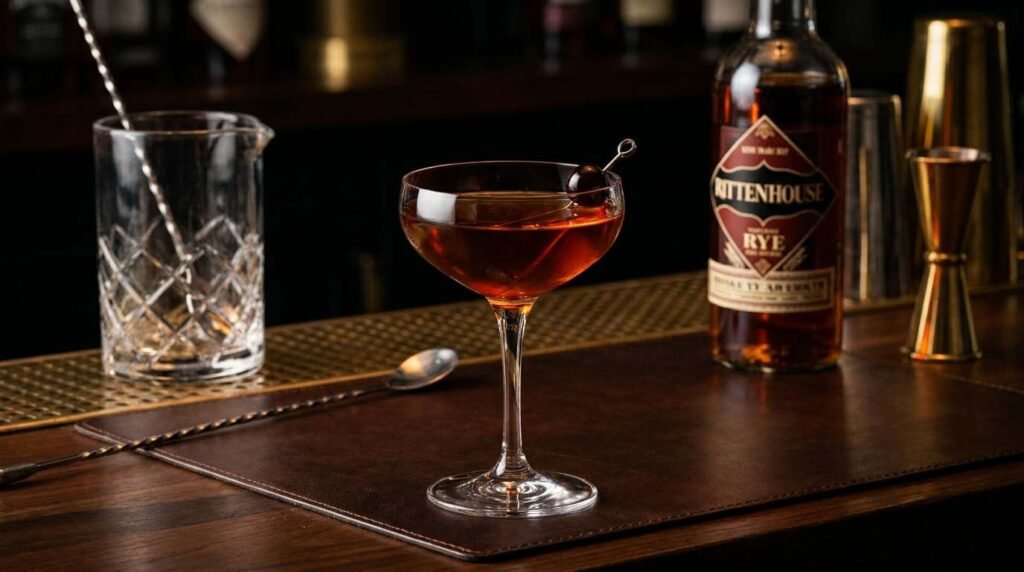
The cocktail renaissance hit San Francisco first, then New York, around 2005–2008. Bartenders began going back to original pre-Prohibition recipes — the Manhattan, the Sazerac, the Old Fashioned, the Vieux Carré — and discovered that the classics had been written for rye, not bourbon. Rye’s dry, spicy character cuts through sugar and sweet vermouth the way bourbon’s caramel sweetness can’t. The difference in a properly made Manhattan isn’t subtle. It’s like swapping a No. 2 pencil for a utility knife. Both tools work. Only one was designed for the job.
The bartender demand created a supply problem. American rye production was so depleted that several early “craft” brands — High West, WhistlePig, others — were sourcing their liquid from Lawrenceburg, Indiana, from a facility then owned by Midwest Grain Products, now known as MGP Ingredients. MGP had been quietly producing contract rye for decades, and it became the backbone of the early revival. That’s not a criticism; it’s how industries reconstitute. A distiller who sources honestly while building their own production is playing a long game. A distiller who sources and lies about it is something else. The best actors in the early rye revival were transparent about where the juice came from.
Regional authentic production has followed. Dad’s Hat in Pennsylvania, now distilling in the Monongahela tradition with high-rye mash bills. Sagamore Spirit in Maryland, honoring the state’s historic sweet mash heritage with Maryland-style expressions. Michter’s, which has deep roots in Pennsylvania rye history going back to the 1750s. These are not brands cosplaying a tradition. They’re the tradition making its way back into the room. Right here in New York, the WhistlePig PiggyBack Rye — which I wrote about a while back on the blog — planted the flag for Vermont’s rye ambitions and made a convincing case that you don’t have to be in Pennsylvania to make rye worth drinking.
What to Drink If You Want to Taste What America Tasted Like
The easiest entry point is Rittenhouse Bottled-in-Bond 100 proof. It’s a workhorse — not flashy, not expensive, made for cocktails and capable of standing on its own. It’s the rye equivalent of a well-made pair of work boots. Nothing exciting to look at. You’re glad you have it when you need it.
For something that reaches closer to the Monongahela tradition, Dad’s Hat Pennsylvania Rye is the most honest attempt at regional authenticity currently available. Their use of Pennsylvania rye grain, small batches, and commitment to high rye content in the mash bill makes their bottles a direct conversation with the category’s history. Sagamore Spirit’s Double Oak is a Maryland-style expression that gives you the sweeter, more yielding profile of the state’s historic distilling tradition — finished in additional barrels for complexity that doesn’t sacrifice the grain’s character.
If you want the high end: WhistlePig 10-Year is the gateway to understanding what aged rye becomes when left alone long enough. The grain opens up. The spice mellows into something more complicated than heat. You start to understand why Herman Melville’s whalers were calling for Monongahela from the middle of the ocean. It wasn’t nostalgia. It was the best thing they’d ever tasted, and they knew it, and they were three thousand miles away from ever tasting it again.
That’s rye. That’s what we almost threw away. That’s what we’re getting back, one bottle at a time.
This post is for informational purposes only. Always drink responsibly.
Sources
– Distilled Spirits Council of the United States (DISCUS) — Rye Whiskey Market Data – Distiller Magazine — A History of Rye in the US, Parts I & II – Limestone Branch Distillery — The History of Rye Whiskey – Spec’s Wines — Rye Whiskey Renaissance – Amongst the Whiskey — Historical Tasting at West Overton Museum (December 2025) – Fred Minnick, Whiskey: The Definitive World Guide (Dorling Kindersley, 2015)