Retailers get three bottles of Pappy. They have four hundred customers who want one. This is not a bourbon problem. This is a human nature problem.
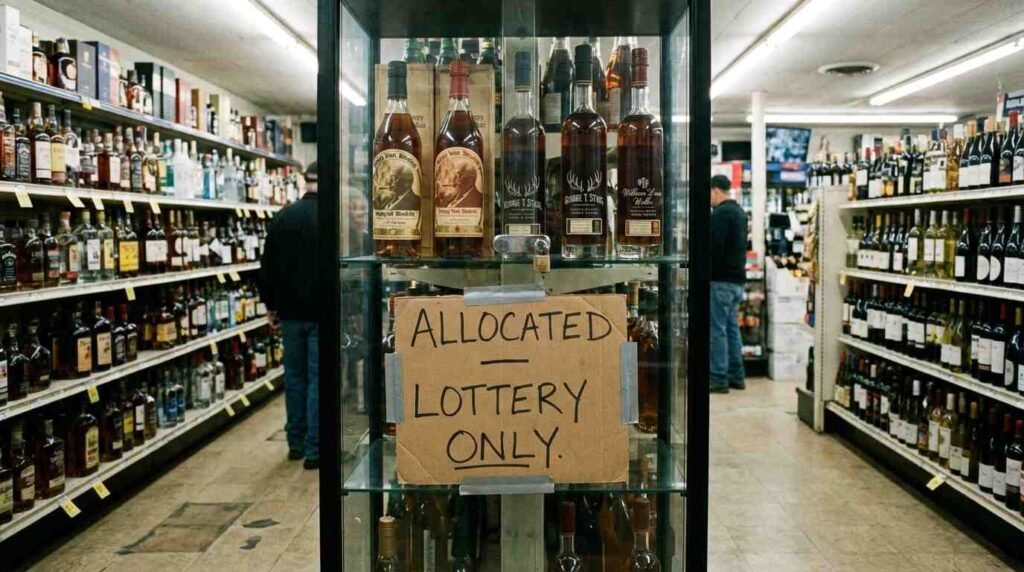
There’s a liquor store somewhere in your county that gets a Pappy Van Winkle allocation every fall. They’ve had the same allocation account for a decade. The owner knows the sales rep. The sales rep knows the distributor. The distributor knows the Buffalo Trace representative. It is a chain of relationships that functions exactly like every other supply chain in America, except that at the end of this one, the product is so scarce relative to demand that the whole thing has evolved into something resembling a feudal system. The store gets three bottles. They might put one on the shelf with a markup. They might hold the others for their best customers. They might do a lottery. There are four hundred people who want one. This is not allocation. This is theater.
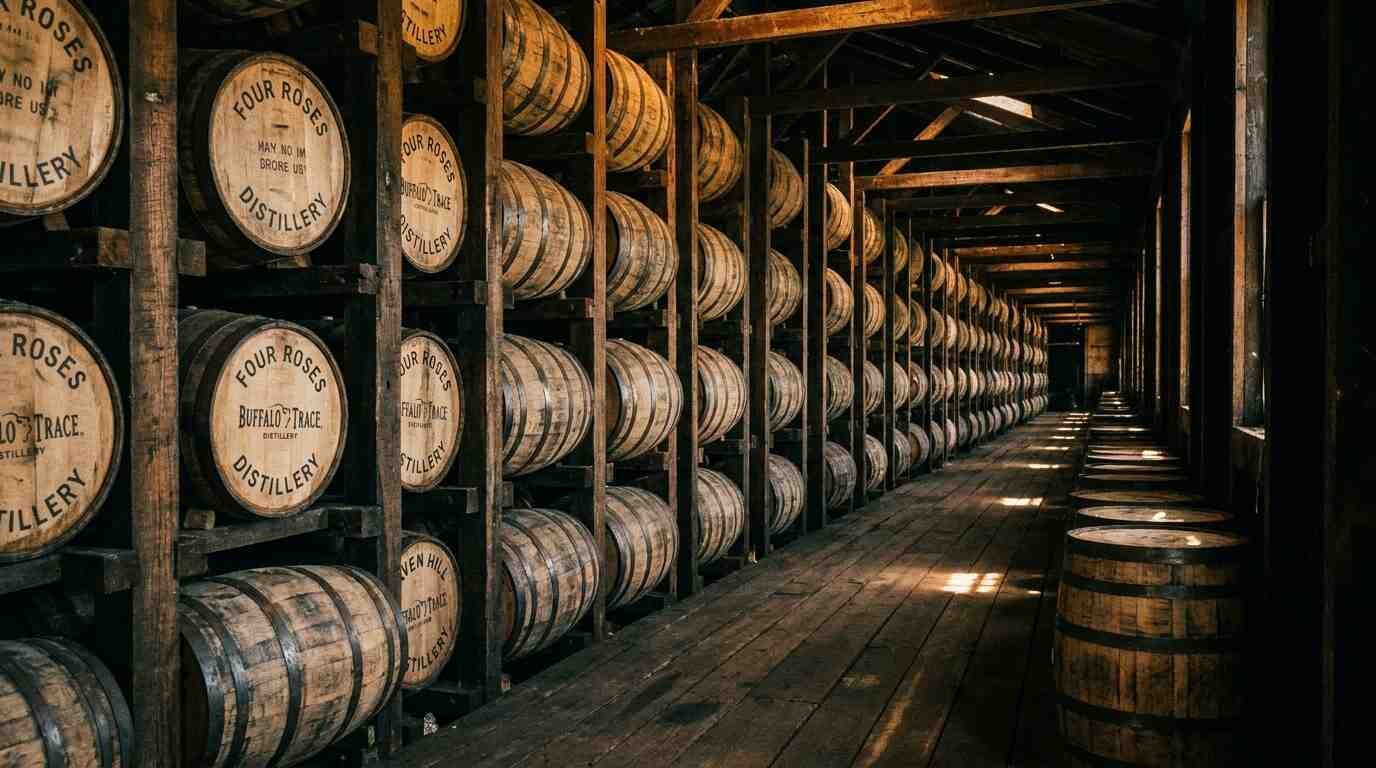
Buffalo Trace Distillery in Frankfort, Kentucky, is one of the oldest continuously operating distilleries in the United States, owned by the Sazerac Company and producing a range of whiskeys that spans from its approachable namesake expression at retail prices anyone can manage to George T. Stagg, which runs over $100 at MSRP and trades hands on the secondary market for multiples of that. Understanding how this system actually works requires separating the mythology from the supply chain reality.
What the Buffalo Trace Antique Collection Actually Is and Why It Matters
The Buffalo Trace Antique Collection — the BTAC to anyone who has spent time in bourbon circles — is a group of five annually released expressions: George T. Stagg, William Larue Weller, Thomas H. Handy Sazerac Rye, Sazerac 18-Year-Old Rye, and Eagle Rare 17-Year-Old. They are released once per year, in the fall, in quantities that are never sufficient to meet demand. They have won enough awards from Whisky Advocate and Wine Enthusiast over the years to function as a rolling credential for the distillery itself.
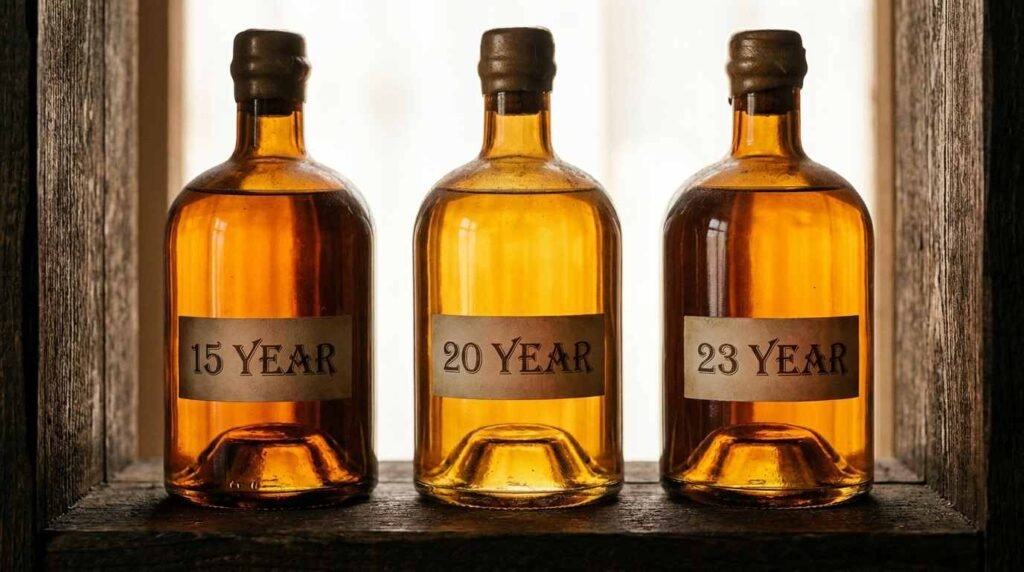
The Van Winkle family expressions — Old Rip Van Winkle 10-Year, Lot B 12-Year, Van Winkle Special Reserve 13-Year Rye, Pappy Van Winkle’s Family Reserve 15-Year, 20-Year, and 23-Year — are released under a licensing agreement between Buffalo Trace and the Van Winkle family. The whiskey is distilled and aged at Buffalo Trace. The Van Winkle family manages the brand. The bottles carry their name. This arrangement has existed since the late 1990s, when Julian Van Winkle III, grandson of the founder, partnered with Sazerac after the family’s own distillery operations wound down.
The 23-Year Van Winkle carries an MSRP of approximately $300. On the secondary market, the same bottle trades for $5,000 to $6,000 or more depending on the year and the buyer. That spread — between the price a distillery sets and the price the market will bear — tells you everything about why this system exists and why it can’t be fixed with simple production increases.
How the Allocation System Works and Who Actually Gets the Bottles
The mechanics are straightforward. Buffalo Trace produces a finite number of bottles of each BTAC and Van Winkle expression. Those bottles are distributed to the Sazerac Company’s network of state distributors, who in turn allocate them to licensed retailers. The retailer’s allocation is typically based on their overall purchase volume with that distributor — how much of everything else they buy through that relationship. Buy more Sazerac’s standard products, get more of the allocated stuff.
This creates an obvious incentive structure: stores that do high volume across the full portfolio get the prized bottles. Small independent stores that might be passionate about the category but buy modestly get passed over or receive allocations so small they’re almost symbolic. The system rewards loyalty to the distributor relationship, not passion for the product.
From there, the retailer decides what to do. They can sell at MSRP to whoever shows up first. They can hold for regulars. They can mark up to a price that reduces demand to a manageable level. They can raffle. Some states have laws that limit markup on allocated bottles; many do not. In states without those controls, a retailer who receives a bottle of Pappy 23-Year at $300 MSRP and marks it to $1,500 is doing something economically rational and entirely legal. They are also ensuring that only a specific economic bracket walks out with it, which is its own conversation.
I’ve spent twenty-five years watching people want things that are artificially limited. The diner has had dishes we couldn’t keep on the menu because we couldn’t source the ingredient reliably. Scarcity does something to desire that abundance never can. People want what other people can’t have. Buffalo Trace has, whether intentionally or not, built an entire brand architecture on this principle.
Pappy Van Winkle: The Family Deal That Created a Monster
Julian Van Winkle III has been quoted expressing some discomfort with what his product has become. He did not set out to make a status symbol. He set out to make very good bourbon, aged long enough that the wood does interesting things to the spirit. The 20-Year and 23-Year expressions require that the distillery commit barrel space for two decades, which means that every Pappy 23 being uncorked tonight was distilled in 2002, which was itself built on a bet about what demand would look like in 2025.
The brand became famous in the early 2000s, partly through critical attention from Wine Spectator and bourbon writers who were covering a category that had been undervalued for a generation, and partly through the cultural dynamics that attach themselves to anything genuinely scarce and genuinely good. By the time demand outpaced supply in meaningful ways, there was no practical way to respond. You can’t rush time. You can build new warehouses, fill more barrels, hire more staff. But the 23-Year bourbon you fill today won’t be ready until 2048. The only lever available is the one Buffalo Trace has been careful not to pull too hard: marketing. They don’t advertise Pappy aggressively. The scarcity does the advertising.
Why the Distillery Can’t Just Make More (It’s Not That Simple)
This is the most common question, and the answer is genuinely complicated. Buffalo Trace is not a small operation. They have expanded meaningfully over the past two decades, investing hundreds of millions of dollars in new warehouse construction and production capacity. More bourbon is going into barrels every year than at any prior point in the distillery’s history.
But bourbon production is a 10-to-20-year supply chain. The whiskey that will become Pappy 20-Year or George T. Stagg in 2035 is being made and barreled right now, based on projections about where demand will be in a decade. If those projections are wrong — if the bourbon boom fades, if tastes shift, if the economy contracts — there will be warehouses full of very expensive aged whiskey and not enough buyers willing to pay for it. Distillers in Kentucky remember the 1980s, when overproduction in a cooling market left warehouses sitting on inventory that took years to move.
The allocated bottles also represent a tiny fraction of total production. Eagle Rare 10-Year — the widely available expression from the same family — is not scarce. Buffalo Trace’s standard bourbon is not scarce. Blanton’s allocation is tight but findable in most markets. The allocated scarcity is concentrated at the very top of the age and quality spectrum, precisely where production decisions made 15 to 23 years ago determine what’s available today.
I’ve written about New York craft distilleries before — operations like Tuthilltown Spirits in Gardiner and Hillrock Estate in Ancram — where production decisions are made at a scale that makes every barrel feel personal. At Buffalo Trace, they’re making the same call, just with warehouses full of thousands of barrels and a twenty-year time horizon. The constraint is real, not manufactured.
What to Actually Buy From Buffalo Trace When You Can Find It
Here is the practical information that the mythology tends to obscure.
Buffalo Trace Bourbon — the standard expression, white label, widely available at $30 or under in most markets — is an excellent whiskey. It is mellow, approachable, well-made, and consistently one of the best values in American whiskey. If you can find it, buy it. Lately even the standard bottle has seen some tightness on shelves due to the brand’s overall heat, but it is substantially more findable than anything in the allocated tier.
Eagle Rare 10-Year is the next step up and similarly worthwhile. At MSRP ($35-40), it overdelivers. It has some of the same house character as the pricier expressions at a fraction of the cost and age. When it shows up at retail price, that’s the bottle to take home.
Blanton’s Single Barrel — also from Buffalo Trace, also heavily allocated — carries the bourbon boom’s cultural momentum in a bottle with a horse stopper on the cork. Worth having if you can find it at retail. Not worth the secondary market price, which in recent years has ranged from $100 to $200 for a bottle that retails for $65.
The Van Winkle family expressions at MSRP are genuinely excellent whiskeys. The 15-Year is often considered the best value in the lineup, offering the house character at an age that’s long enough to be deeply interesting without the astronomical secondary market premium attached to the 20 and 23. If you have a connection to get any of them at retail, take it.
The secondary market, where these bottles trade among collectors and resellers, is a separate ecosystem with its own logic. Pappy 23 commanding $5,000 to $6,000 on that market says more about scarcity psychology and collector behavior than it says about what’s in the bottle. It’s very good bourbon. It is not a $6,000 experience.
There’s a version of every market where the thing worth having is not the thing everyone is chasing. In bourbon, right now, that thing is a well-chosen craft rye from a distillery that doesn’t have an allocation list. The Finger Lakes Distillery Trail has a few of them. So does the Hudson Valley. They’re not impossible to find. They just require knowing where to look and being willing to want something that hasn’t been made famous yet.
You Might Also Like:
- The Finger Lakes Distillery Trail: A Three-Day Tasting Route Through Upstate New York’s Craft Spirits Boom
- WhistlePig PiggyBack 6 Year Old Rye: Vermont’s Most Democratizing Drop
- Hillrock Estate Distillery — 408 Pooles Hill Road, Ancram, NY 12502
Sources:
- Sazerac Company public records and corporate documentation
- Bourbon Culture — 2026 Allocated Bourbon & Whiskey Price Guide
- Maxim — Buffalo Trace Releases 2024 Pappy Van Winkle Bourbon Collection
- Business of Bourbon — Pappy Van Winkle, Scarcity and the Psychology of Bourbon
- Whisky Advocate and Wine Enthusiast documented ratings archives
- Van Winkle family historical documentation and licensing timeline