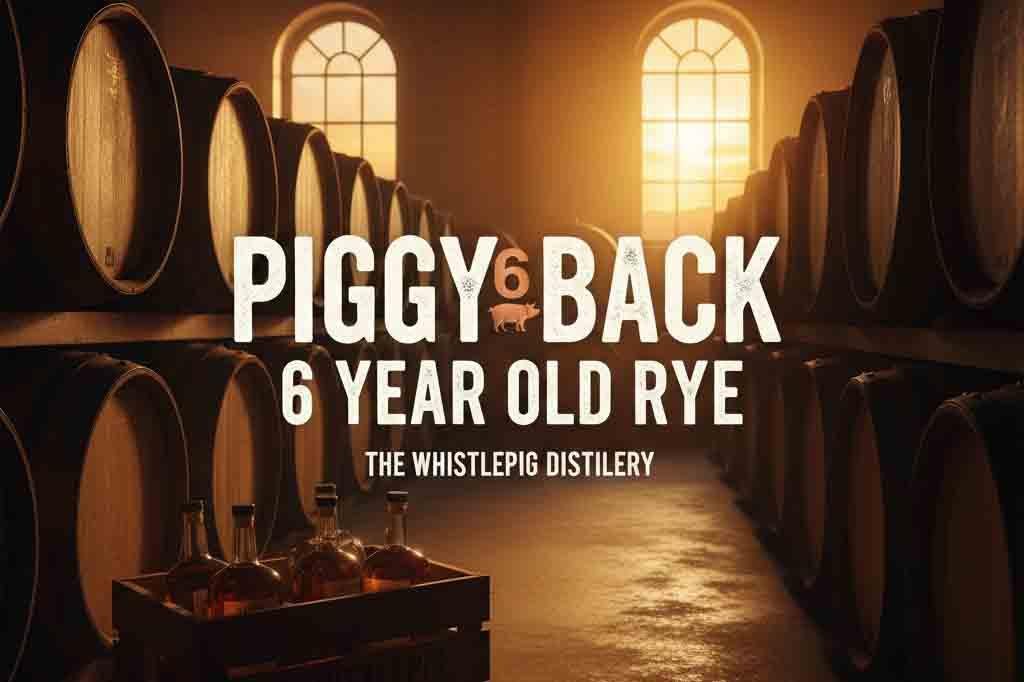
Rye whiskey was a forgotten man. For most of the twentieth century, it had been demoted to supporting actor—the spirit you reached for when you needed something spicy to disappear into a Manhattan or a Sazerac, not the thing you poured into a crystal glass and considered. Then a Pennsylvanian entrepreneur bought a crumbling dairy farm in Vermont and, with the help of a legendary distiller in a Stetson hat, engineered one of the most audacious category revivals in the history of American spirits. WhistlePig did not simply ride the rye renaissance—it ignited it. And within that ascent, the PiggyBack 6 Year Old Rye stands as the distillery’s most revealing statement: a bottle that refuses to be merely expensive, and insists instead on being useful, brilliant, and honest.
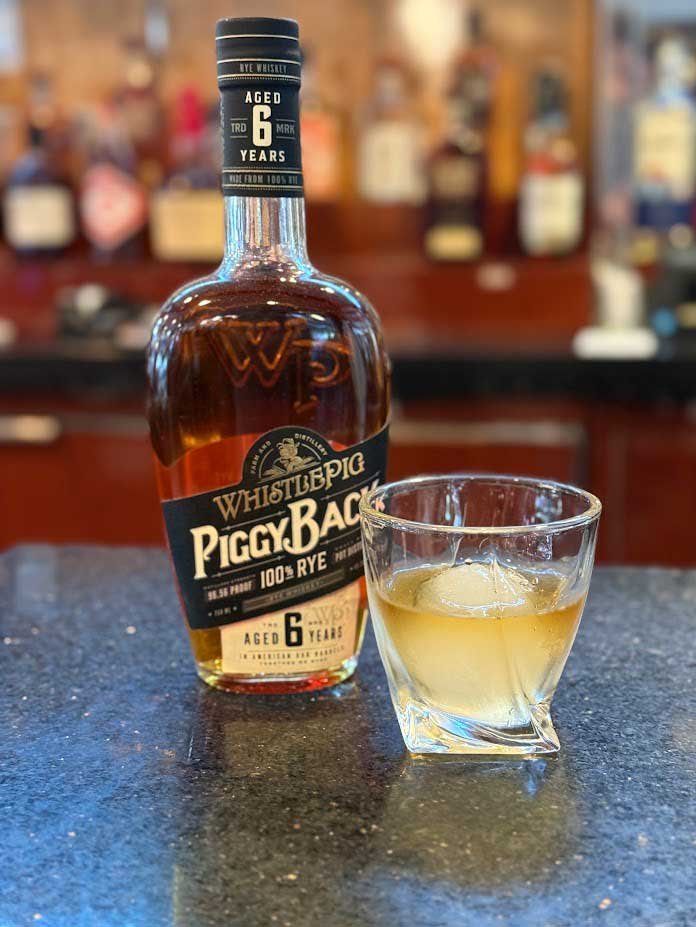
There is something philosophically instructive about that posture. In a marketplace crowded with whiskeys priced to signal status rather than deliver experience, the PiggyBack bets on a different proposition—that a six-year-old, 100% rye grain spirit, bottled at exactly 96.56 proof and priced south of fifty dollars, can compete with anything on the back bar. After twenty-five years of running The Heritage Diner in Mount Sinai, watching what people actually reach for at the bar rail versus what they photograph for social media, I have developed considerable respect for whiskeys that do the work rather than merely perform it.
A Dairy Farm in Vermont and the Resurrection of an American Spirit
The story of WhistlePig begins with improbability piled upon improbability. Raj Bhakta—first-generation American, former contestant on Donald Trump’s The Apprentice, failed Republican congressional candidate from Philadelphia’s 13th district, and investment banker by original training—purchased a 500-acre former dairy farm in Shoreham, Vermont in 2007. His stated ambition: to build America’s first true luxury farm-to-bottle rye whiskey brand, priced at three times the going rate for Maker’s Mark, from a dilapidated property in the far northwest corner of a state known primarily for maple syrup and leaf-peeping. Most people he shared this vision with, by his own account, looked at him with “pity and a measure of sympathy, as if I were a deluded mad man.”
What saved Bhakta—and what ultimately built WhistlePig into what industry analysts now recognize as the dominant force in super-premium rye—was his partnership with Dave Pickerell. A master distiller of near-mythological reputation in craft spirits circles, Pickerell had previously served as the head distiller at Maker’s Mark for fourteen years. The two men traveled to Alberta, Canada and secured a long-term supply contract for what Pickerell considered the finest available aged Canadian rye in the world—barrels from the Alberta Premium Distillery, then owned by Fortune Brands, containing high-ester 100% rye grain whisky that was already years into its maturation. By 2008, Bhakta had acquired more than 5,000 gallons of well-aged Canadian rye before most spirits professionals even recognized it as a savvy play (VinePair, 2020).
The brand officially launched in 2010. By 2015, WhistlePig had broken ground on its own on-site distillery, housed in a 150-year-old renovated barn, and released its first estate-distilled product. The concept they codified internally—”Triple Terroir,” meaning grain, water, and wood all sourced from the Vermont property—became a north star for the farm-to-bottle whiskey movement more broadly. Bhakta may have departed the company under contentious circumstances by 2019, but the architecture he and Pickerell built persists, and it continues to produce some of the most technically accomplished rye whiskey in North America (WhistlePig Wikipedia, 2025).
Dave Pickerell and the Dream Behind the Bottle
Any honest accounting of the PiggyBack 6 Year Old Rye must begin with Pickerell’s death. He passed in November 2018, and the PiggyBack was among the last expressions he actively curated before his passing. The bottle carries this history in its design: where the standard WhistlePig pig wears a formal top hat, the PiggyBack pig wears a Stetson—Pickerell’s own signature headwear, the hat he wore through decades of distillery consultations across Kentucky, Vermont, and beyond. Embossed discreetly on the neck wrapper are the years 1956–2018. Nothing ostentatious. Just the quiet marking of a man who spent his life thinking about how time and wood and grain interact, and who never stopped caring whether what went into the glass was worthy of the people drinking it.
Pickerell’s animating idea for PiggyBack was rooted in an observation about cocktail culture. Bartenders across the country, he had noted with some alarm, were using WhistlePig’s premium 10 Year expression—then retailing well above $60—as a cocktail base. “Some people are making cocktails with the 10 Year, and that’s not necessarily good for their business,” said Pete Lynch, WhistlePig’s Master Blender (The Whiskey Wash, 2019). Pickerell’s solution was to build a rye designed from inception for the back bar: full spice from 100% rye grain, six years of age for what he called “unprecedented complexity,” and a proof point chosen not arbitrarily but as tribute. The 96.56 proof—a curiously precise number—is a nod to his birth year, 1956. The bottle itself was engineered ergonomically for bartenders, with a shape that permits single-handed pouring and resists slipping on a wet service mat.
This is the kind of unseen detail that separates artisanship from mere manufacturing. Nobody will ever consciously notice the proof point on a bottle, but the accumulation of invisible decisions like that is precisely what makes one whiskey feel considered and another feel assembled. Pickerell understood that excellence is a function of commitments made before anyone is watching, and the PiggyBack’s proof, its grain bill, its bottle geometry—all of it reflects that discipline.
The Whiskey Itself: Anatomy of a 100% Rye
The PiggyBack 6 Year Old Rye is sourced from Alberta Distillers in Calgary, Canada—the same house that provided WhistlePig’s founding stocks, and one of the most respected 100% rye producers on the continent. The mash bill is uncompromising: not the 51% rye threshold mandated for American rye whiskey under federal standards, but a full 100% rye grain, which produces a flavor profile fundamentally different from anything in the bourbon family. It is then aged six years—though internal blending notes suggest the actual weighted average across constituent batches runs closer to 7.25 years—in new charred American oak at char level three, and bottled without chill filtration at that precise 48.28% ABV (The Whiskey Wash, 2019).
The nose arrives with what one reviewer aptly described as “spice and more spice” (The Whiskey Wash, 2019): white pepper, fresh cinnamon, ground clove, and then—once the initial warmth subsides—vanilla bean, jasmine, and something faintly citric, like grapefruit pith. Total Wine’s official tasting notes add grapefruit zest as a secondary nose element, which rings accurate. This is a whiskey that rewards patience on the nosing; pour it, cover the glass, walk away for three minutes, and it will have opened into something noticeably more complex than what first presented.
On the palate, the 100% rye declares itself immediately and unambiguously. Clove and cardamom move through the sinus cavity. Dark cherry appears mid-palate—clean, not jammy—bracketed by caramelized sugar and a persistent herbal bitterness on the back. There are notes reviewers have described as “treated leather” (Total Wine, 2024), which, given that I spend my working hours at the Marcellino workshop with English bridle leather from J&E Sedgwick’s heritage tannery, I find entirely credible. Oak tannins in a 100% rye whiskey interact differently than they do in a corn-forward bourbon: they pull in a drier, more austere direction, which is why the sweetness that does appear in PiggyBack feels earned rather than engineered.
The finish is medium-long, warming rather than burning, with vanilla and baking spice lingering well past the swallow. Multiple reviewers across the spectrum—from Breaking Bourbon to The Whiskey Jug—have praised its balance, with The Whiskey Jug calling it “a velvety feel” and noting “a nice sweet profile that complements the dominant rustic and spicey notes” (The Whiskey Jug, 2020). At 96.56 proof, it is high enough to assert itself in a cocktail without overwhelming fresh citrus or sweet vermouth, yet controlled enough to sip neat without requiring a water back.
The Case for Canadian Rye in an American Whiskey Conversation
There is, in certain corners of the whiskey internet, a reflexive skepticism toward sourced Canadian whisky appearing in American bottles at American premium prices. This skepticism is not entirely unreasonable, but when applied to PiggyBack without nuance, it misreads what Alberta Distillers produces and why WhistlePig’s use of that source matters.
Canadian whisky regulations permit—and Alberta Distillers employs—100% rye grain distillate, which is categorically different from the blended Canadian whiskies dominated by corn-based base spirit that gave the broader category its bland reputation. Alberta’s 100% rye is a serious, complex product that has earned the respect of professional tasters worldwide. The National Restaurant Association’s 2023 cocktail trend data noted rye whiskey’s continued ascent as the category of choice for craft bartenders, driven precisely by the availability of high-quality, full-spice rye expressions for use in elevated cocktail programs (National Restaurant Association, 2023). WhistlePig didn’t just buy barrels—they sourced judiciously, aged further under Vermont conditions, and bottled with a specific palate target in mind.
The Vermont aging environment itself adds a variable worth considering. The state’s dramatic seasonal temperature swings—cold winters that contract the wood and slow extraction, summers that expand the barrel stave and drive spirit deeper into the char layer—produce a different interaction between whiskey and oak than, say, the consistently hot warehouses of Kentucky. Financial Times spirits correspondent Jancis Robinson has written extensively on how terroir principles, long established in wine, are beginning to be applied rigorously to aged spirits (Financial Times, 2022). Vermont’s climate is a legitimate aging variable, not a marketing fiction.
On Price, Value, and the Economics of the Back Bar
PiggyBack retails between $45 and $50 for a 750mL bottle—making it, as intended, WhistlePig’s most accessible expression. Reviewers are divided on whether that price is correct. Breaking Bourbon found it “a hard pill to swallow” specifically for a cocktail-forward whiskey when competitors like Rittenhouse and Bulleit offer capable rye at lower price points (Breaking Bourbon, n.d.). The Whiskey Jug suggested it was “about $10 overpriced” while simultaneously calling it one of their favorite WhistlePig releases (The Whiskey Jug, 2020).
The honest answer is that both positions contain truth, and the framing of the question reveals something about how we think about value in spirits. If the benchmark is “cost per cocktail,” then yes, PiggyBack faces real competition in the $25–$35 rye tier. But if the question is “how much additional quality per dollar over the floor of competent rye does PiggyBack represent,” the calculus shifts. A 100% rye mash bill, minimum six years of age, nearly 97 proof, careful blending by an experienced team, and a brand architecture built around genuine distillation expertise—these are not incidental attributes.
At The Heritage Diner, twenty-five years of pricing decisions have taught me that value is always relative to the transaction being made. A guest who orders a whiskey neat at my bar is making a different calculation than a bartender building a Sazerac program for a fine dining room. PiggyBack serves the latter with particular distinction—and at $50 wholesale versus the $60–$70 entry point for the WhistlePig 10 Year, the math for a cocktail program manager is genuinely compelling.
WhistlePig Today: The Distillery at Full Stride
Under its current leadership—with CEO Jeff Kozak, notably the same Jeff Kozak who once served the founding team Hawaiian pizza on the original sourcing trip to Alberta (“Abomination,” Bhakta later wrote)—WhistlePig has expanded steadily beyond its rye roots. The distillery now operates tasting rooms in Quechee, Vermont, in partnership with the glassware studio Simon Pearce, and at Stowe Mountain Resort’s WhistlePig Pavilion. In September 2025, the company announced a Louisville, Kentucky location at 403 E. Market Street, dubbed “The Vault,” marking its first serious presence in the heart of American bourbon country (WhistlePig Wikipedia, 2025).
The product lineup has also expanded considerably. WhistlePig now produces bourbon under the Beyond Bonded label, distributes Limavady Irish Whiskey, and in 2022 released a non-alcoholic whiskey—a fascinating market signal—that uses its 6-year-aged PiggyBack Rye as its reference spirit. In 2023, the 21-year Béhôlden became the distillery’s oldest aged release; in 2024, The Badönkådonk arrived as a 25-year expression finished in Silver Oak Cabernet barrels, carrying a retail price of $1,999.99 (WhistlePig Wikipedia, 2025). The distillery that once bet everything on a $100 bottle of rye at a time when no such thing existed now comfortably commands four figures.
What remains consistent across this expansion is the distillery’s commitment to what Master Blender Pete Lynch called the core WhistlePig character: “spice, balance, and classic rye character” (Film & Whiskey, 2025). The PiggyBack is not a compromise entry point—it is a distillation of that philosophy into a format the everyday drinker, the serious home bartender, and the professional back bar can all access without apology.
Rye Whiskey, North Shore Long Island, and the Permanence of the Handmade
There is a reason cocktail culture has embraced rye whiskey’s resurgence with such particular enthusiasm, and it speaks to something larger than flavor preference. In an era of mass production and algorithmic taste—where beverage conglomerates build spirits on focus group data and optimize for the median palate—the 100% rye tradition represents a commitment to grain integrity that borders on the obstinate. You cannot soften 100% rye with corn’s natural sweetness. You cannot hide an immature distillate behind caramel addition or heavy char. The grain tells the truth. This is either a problem or a virtue depending entirely on your philosophy of what whiskey is for.
From where I stand—behind the counter at the Heritage Diner on Route 25A in Mount Sinai, twenty-five years into serving this North Shore community—it reads unambiguously as virtue. The grain tells the truth about every decision made upstream of the bottle. You cannot hide an immature distillate behind corn’s natural sweetness or a heavy char. That honesty is either a problem or a virtue depending entirely on your philosophy of what whiskey is for, and WhistlePig has always bet on virtue.
The PiggyBack 6 Year Old Rye is the product of people who made the same commitment at every stage of its production. Dave Pickerell spent his career making choices no consumer would ever consciously notice—oak entry proof, barrel size, rick house placement, proofing water chemistry—because he understood that excellence is architectural, not decorative. The bottle on your shelf carries those choices forward, encoded in the liquid inside, waiting to reveal themselves in a well-made Sazerac or a quiet Friday evening pour.
After twenty-five years of running The Heritage Diner, I think constantly about what endures. Restaurants built on authentic community, craft, and cultural roots outlast establishments assembled purely for capital appreciation. The same distinction applies to whiskey. WhistlePig PiggyBack is not simply a less expensive version of the WhistlePig 10 Year. It is its own argument about what rye can be when the maker is honest about the purpose.
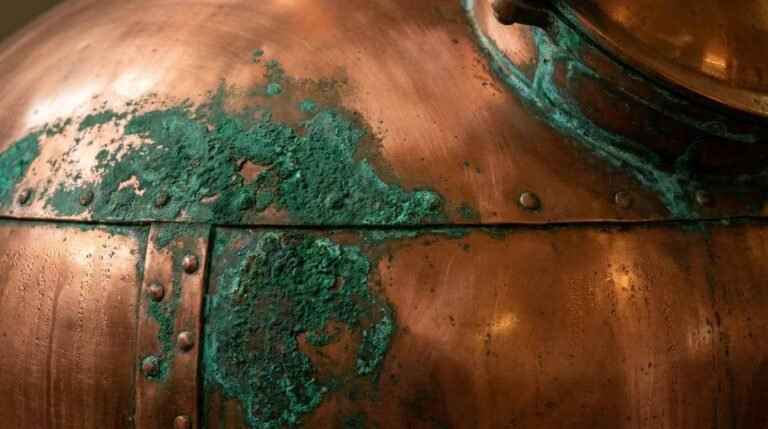
The 500 acres in Shoreham, Vermont are still there, still producing, still home to Kune Kune pigs and rye fields and a copper pot still operating in a 150-year-old renovated barn. Dave Pickerell’s Stetson hat still appears on every bottle of PiggyBack, in embossed form, marking a man who believed that a great bartender’s tool was worth building with the same seriousness as a great aged collector’s whiskey. The proof, quite literally, is in the proof: 96.56, a number that sounds arbitrary until you know it carries a birth year inside it, and then it becomes the most human detail on the label. Some things are worth doing slowly, carefully, and with full commitment to the invisible work that nobody will ever explicitly notice but everyone will eventually taste.
Peter is the owner of The Heritage Diner at 275 Route 25A, Mount Sinai, NY, where he has served the North Shore community for 25 years. He holds graduate degrees in Philosophy from Long Island University and The New School University in New York City.