Some links in this post are Amazon affiliate links. As an Amazon Associate, Heritage Diner earns from qualifying purchases at no extra cost to you.
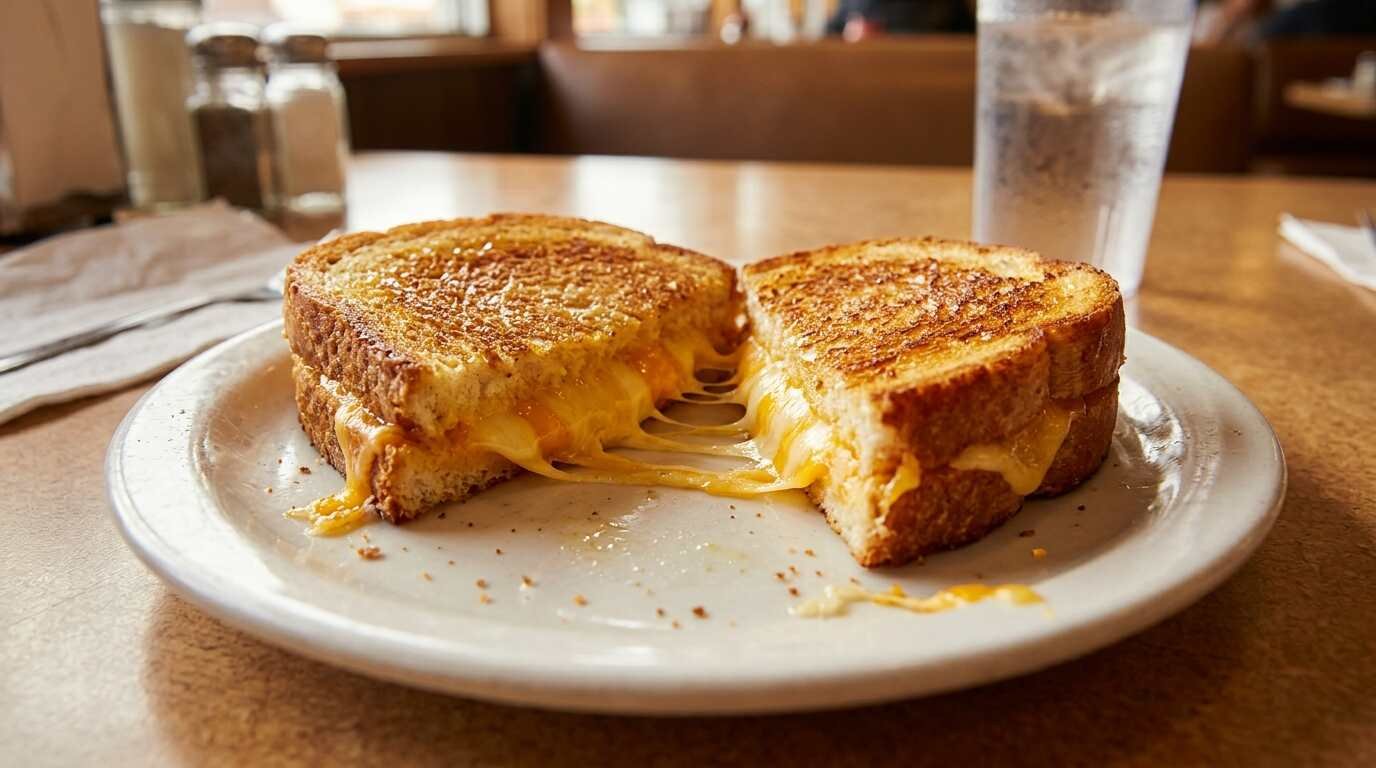
People overthink the burger and underthink the grilled cheese. Yet a grilled cheese gets ordered all day, by kids and by retirees, and the same sandwich can come out either perfect or sad. Crisp, amber bread with cheese melted clear to the corners is a skill, not an accident.
Nothing in it is hard. What goes wrong is nearly always heat, and the cure for heat is patience.
Start with the bread
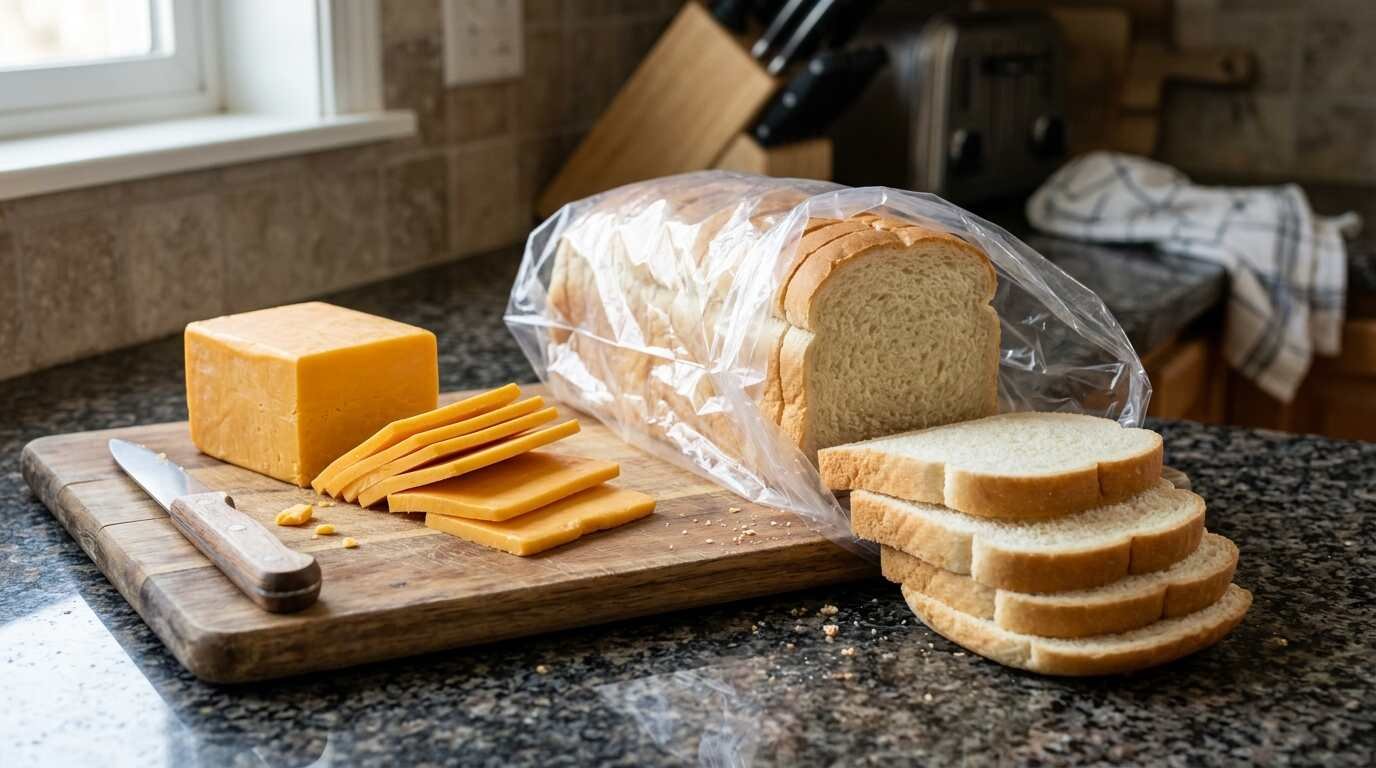
Sliced sandwich bread, white or something close to it, is what the griddle was built for. Look for slices around half an inch thick. Too thin and the bread scorches before the cheese gives in; too thick and the center stays doughy.
Day-old bread works a little better than very fresh, because it holds less moisture and browns more evenly. If you only have a fresh loaf, that is fine. Just do not squash it flat in the pan.
Why the sandwich cooks the way it does. A grilled cheese is really two jobs happening at once. The bread has to dry out and brown, which wants a fairly high surface temperature. The cheese has to warm through and flow, which wants time at a gentler heat. Those goals pull against each other, and the cook sits in the middle managing them.
Fat is the referee. A layer of butter or mayonnaise conducts heat evenly, so every inch of the slice meets the pan at the same pace. Without it, you get patchy toast and cheese that never quite gives in.
Thickness is the other referee. A sandwich with three slices of cheese stacked in the middle takes much longer to melt than one with a single slice, and the bread will not wait. If you want a thick filling, grate or slice the cheese thinly and spread it to the edges so it melts in layers.
Pick a cheese that melts
Melt is the whole game. American cheese, the processed kind sold in slices, is engineered to melt smoothly, which is exactly why the diner leans on it. Young cheddar, Muenster, provolone and Monterey Jack are good natural options. Very aged, dry cheeses tend to turn grainy or greasy when heated, so they work best in small amounts mixed with a softer partner.
Two cheeses beat one. A common pairing is a slice of American for the melt and a few thin pieces of sharp cheddar for flavor. If you grate the cheese, you get more even coverage, but preshredded bags often carry anti-caking starch, so read the label if you are fussy.
Take the cheese out of the refrigerator ten minutes before you start. Cold cheese needs more time in the pan, and that extra time is when the bread burns.
What to do when the cheese will not cooperate
Cheese that hardens in a lump or leaks oil is usually telling you one of two things. Either the heat was higher than the cheese could handle, or the cheese itself was too aged and dry to melt gracefully. Try the sandwich again with a younger variety, lower flame and a cover.
A trick worth knowing: if one side is browned and the cheese is still firm, flip the sandwich onto its lighter side, drop the heat and cover the pan. The browned side will not darken much, and the cheese will have the time it was asking for.
Thin slices are friendlier than thick ones. Four paper-thin pieces melt in half the time of a single chunky slab, and they stack into a more even layer. When in doubt, go thinner and add more pieces.
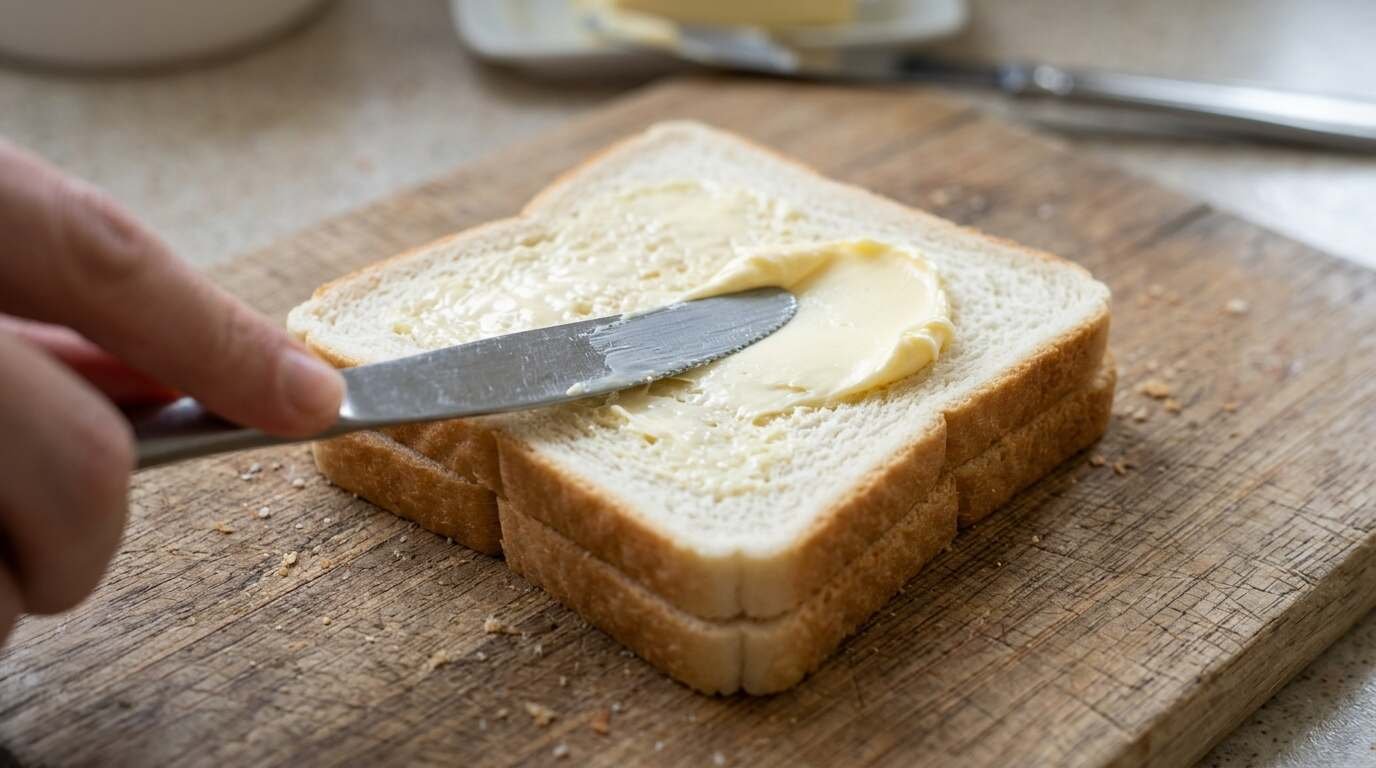
Butter or mayonnaise on the outside. Soft butter spread edge to edge gives deep flavor and golden color. Spread it all the way to the crusts; a bare corner will come out pale. Mayonnaise is the quiet favorite among some cooks, since its oil and egg content browns evenly and it does not burn as fast as butter. Either approach is legitimate.
Butter that is cold and hard will tear the bread. Leave it out for a while, or use a spreadable stick. A small butter knife spreader sounds like a luxury but makes the job faster.
Build, then heat gently
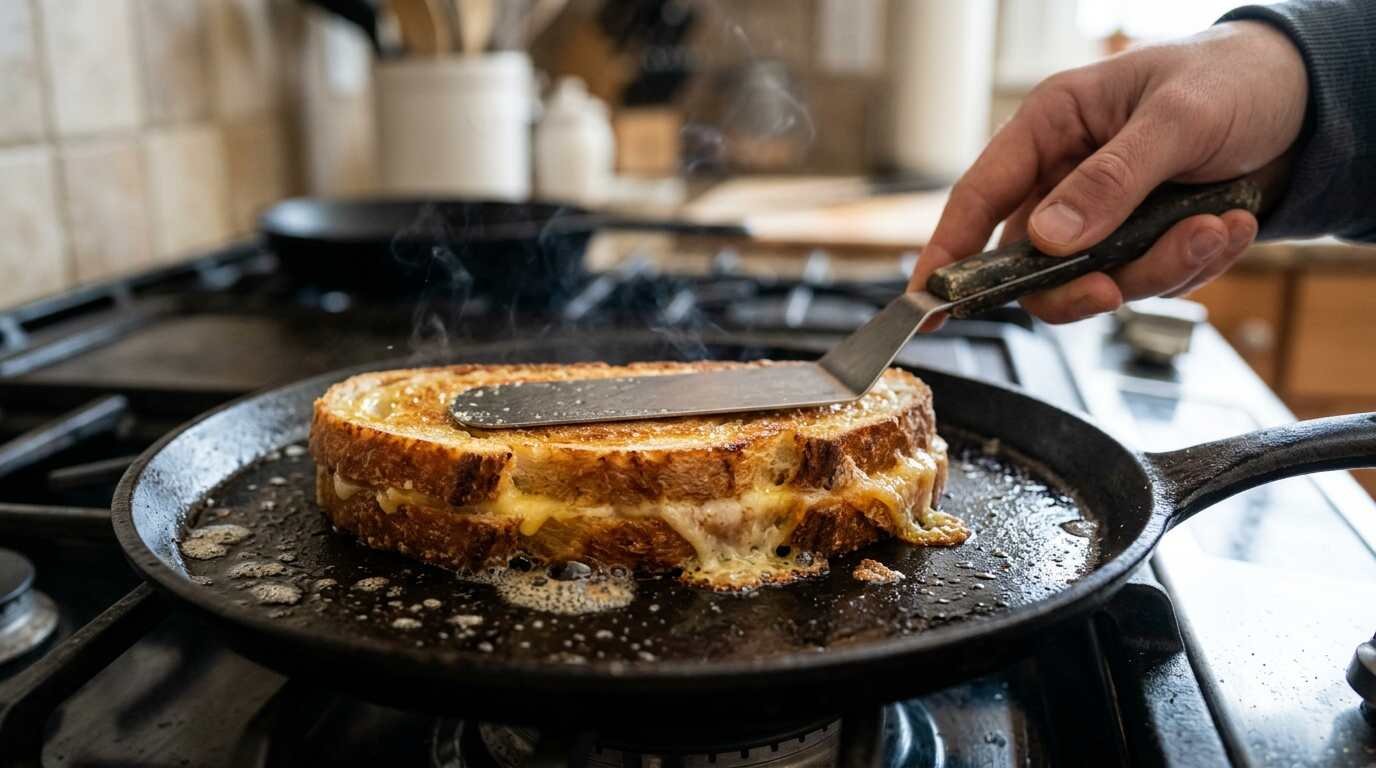
Lay the cheese on the unbuttered side of one slice and top it with the second slice, buttered side facing out. Put the sandwich into a cold or barely warm pan, then bring the heat up to medium-low. A heavy nonstick skillet or a flat griddle handles this well. Cast iron works, too, once it has come up to heat slowly.
That slow start matters. Medium-low gives the cheese time to soften while the bread toasts. Crank it higher and the outside will be dark long before the inside is warm.
Expect about three to four minutes per side, though stoves differ. Watch for a color somewhere between honey and mahogany, and lift a corner to peek.
The lid trick. If the cheese refuses to melt by the time the bread is toasted, cover the pan for a minute with a lid or an overturned bowl. The trapped steam softens the cheese from above. A second option is to lower the heat after the first flip and let the sandwich sit another minute or two.
Press down gently with a spatula once. Do not smash it repeatedly, which squeezes out the butter and flattens the crumb into a cracker.
Variations that stay honest
Once you have the base right, add-ins are easy. A thin slice of tomato sits well between two layers of cheese, which keeps the juice away from the bread. Cooked bacon, sliced ham or caramelized onion all work if they are already cooked and not wet.
A smear of mustard or a thin layer of jam on the inside brings a surprising lift. For a diner-style melt, switch to rye or a sturdy white loaf and add sliced deli meat. Keep the heat low and the sandwich flat.
Cooking a few at a time? Use a large griddle or two pans, and hold the finished ones on a rack set over a baking sheet in a low oven, around 200 degrees F. A rack keeps the bottoms from steaming. A plate would turn them soft in minutes.
Cleaning up and caring for the pan
Wipe out any crumbs between batches, since burnt bits in the pan will speckle the next sandwich. Use a paper towel and a pair of tongs rather than your fingers. If butter has browned too far, wipe the pan, add fresh butter and carry on.
Let the pan cool before washing. Dropping a hot pan into cold water can warp thin metal. If you are using nonstick, skip the metal utensils.
Rest, slice, serve. Take the sandwich off the heat and let it rest for a minute. The cheese tightens slightly and will not pour out when you cut. Slice it on the diagonal, because the long cut shows off the melt and looks like the one you remember.
A cut-resistant board and a sharp, serrated bread knife make cleaner halves, though any sharp knife will do the job.
Common mistakes.
- Burned bread, raw cheese: the heat was too high. Drop it, and be patient.
- Greasy sandwich: too much butter in the pan, or the cheese was oily when it hit the heat. Butter the bread, not the pan.
- Uneven color: the pan has hot spots. Rotate the sandwich a quarter turn halfway through.
- Soggy center: the bread was too moist or the cheese contained a lot of water. Try a drier cheese.
Tomato soup on the side is the classic partner. A few dill pickle slices on the plate will cut the richness.