Some links in this post are Amazon affiliate links. As an Amazon Associate, Heritage Diner earns from qualifying purchases at no extra cost to you.
Thanksgiving in a small kitchen comes down to one question: what is using the oven, and when? Everything else is a detail. If you work out the oven first and then count backward from the moment people sit down, the rest of the day falls into place.
Here is a schedule built that way, using four o’clock as the dinner hour. Slide it earlier or later to suit your table.
Four days before: thaw the bird
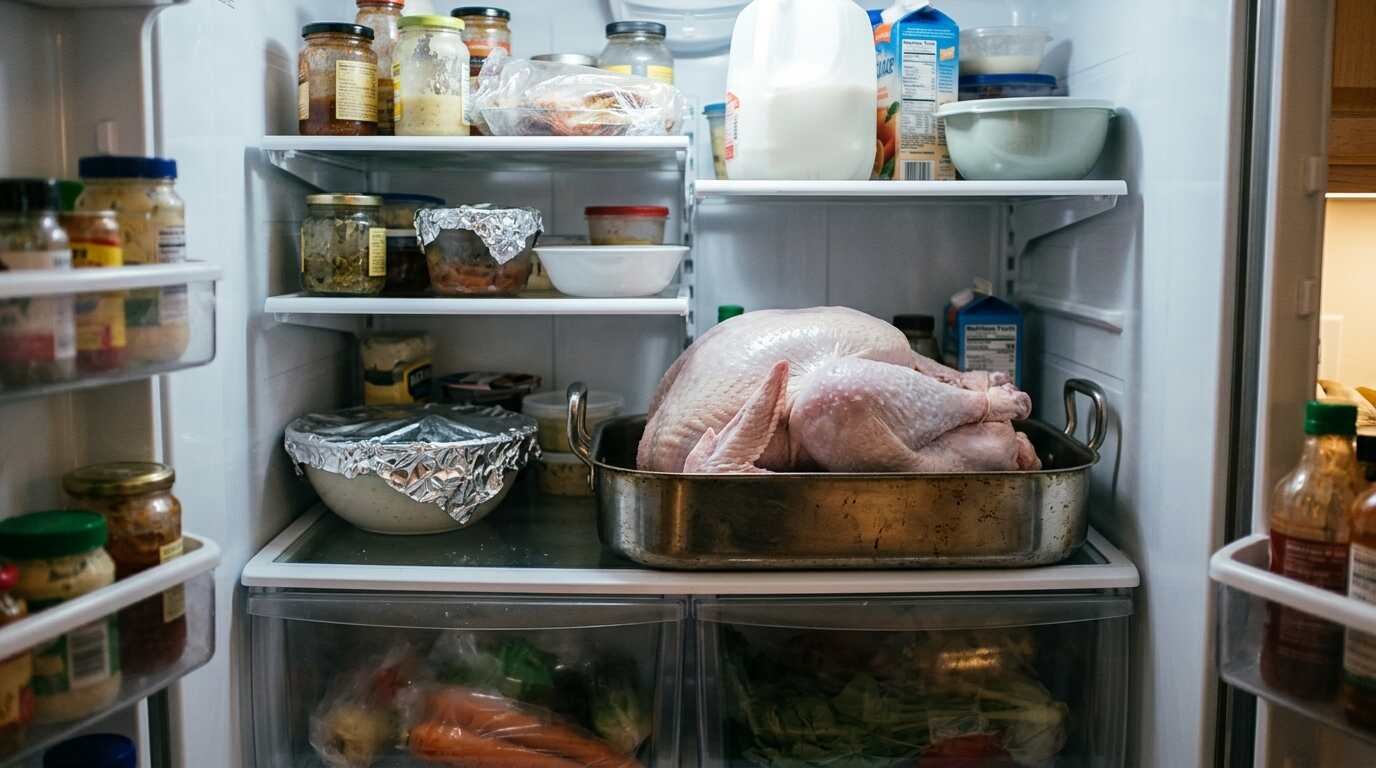
A frozen turkey needs time. The USDA guidance for thawing in the refrigerator is about 24 hours for every four to five pounds of bird, so a sixteen-pound turkey needs roughly three to four days. Put the bird, in its wrapper, on a tray on the bottom shelf so any juices cannot drip onto other food.
Clear that shelf now. A refrigerator already crowded with pies and side dishes is the most common obstacle in a small kitchen. Move drinks to a cooler on the porch if the weather is cold, but keep raw poultry in the refrigerator.
Buy a reliable instant-read thermometer if you do not have one. It is the single tool that makes the timeline trustworthy.
Two days before: make what holds
Cranberry sauce improves with a day or two in the refrigerator. Pie crusts and fillings can be made ahead, and some pies are better baked now. Make gravy stock and chop the vegetables for stuffing, storing them in sealed containers.
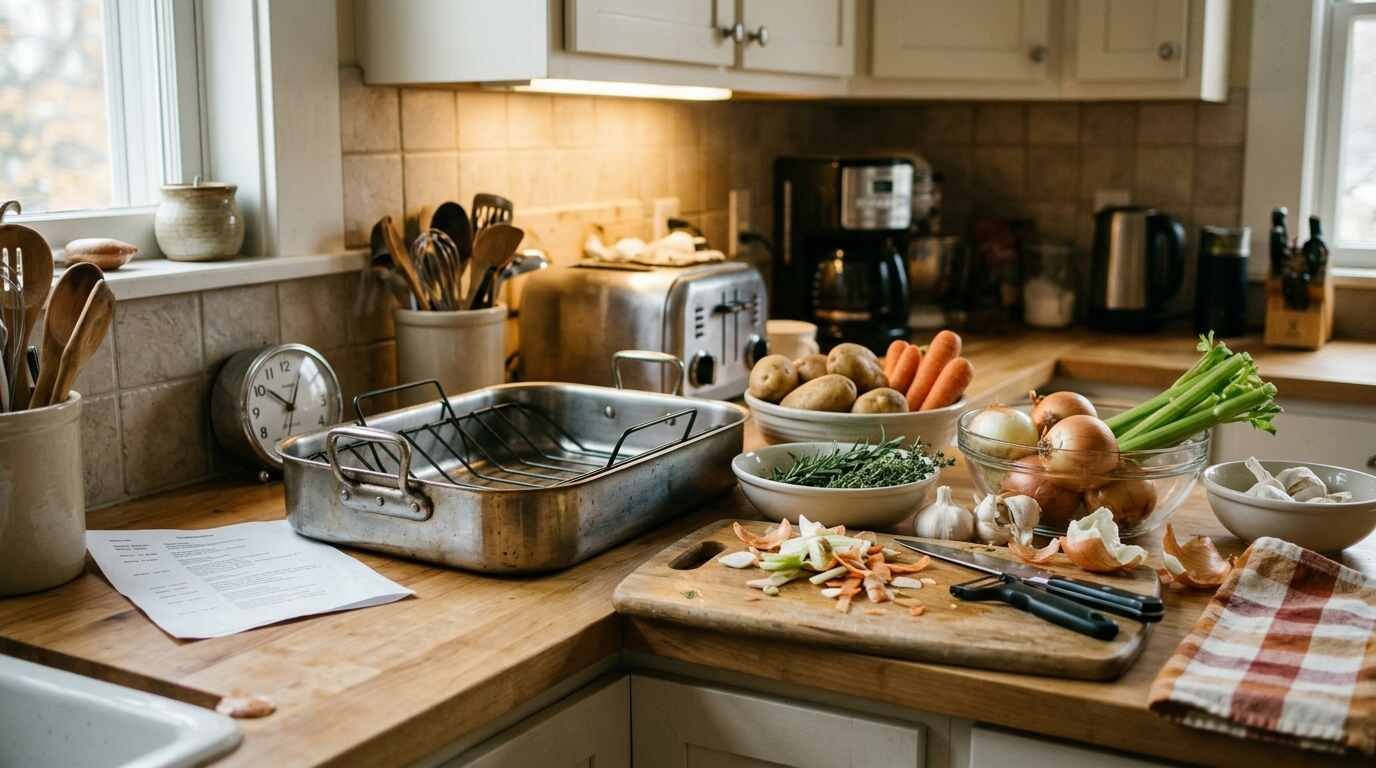
Clean the oven if it needs it. A smoking oven on Thursday morning is no one’s idea of a good time. Check that the roasting pan fits, because some pans are bigger than the oven allows. A disposable roasting pan with rack is a good backup.
The day before: set the table and prep. Set the table, arrange serving dishes and label each with a note on a sticky tag for the dish it will hold. Peel potatoes and keep them in cold water in the refrigerator. Assemble casseroles through the step before baking. Brine or season the turkey if you plan to.
Make a written schedule and tape it where you can see it. It sounds fussy, and then Thursday arrives.
Counting back from four o’clock
A turkey needs time to roast and time to rest. Estimates vary by size and oven, so rely on a thermometer. The bird is done when the thickest part of the breast, the innermost thigh and the thickest part of the wing all read 165 degrees F. If you stuff it, the stuffing must reach 165 as well. As a rough guess, a modest bird takes around three hours in a 325 degree F oven; the package label gives a range for your size, and the thermometer has the final word.
- 11:30 a.m.: turkey out of the refrigerator for no more than half an hour to take the chill off, then into the oven; do not leave it out longer.
- Noon: turkey roasting. Start checking the temperature a half hour before you expect it to be done.
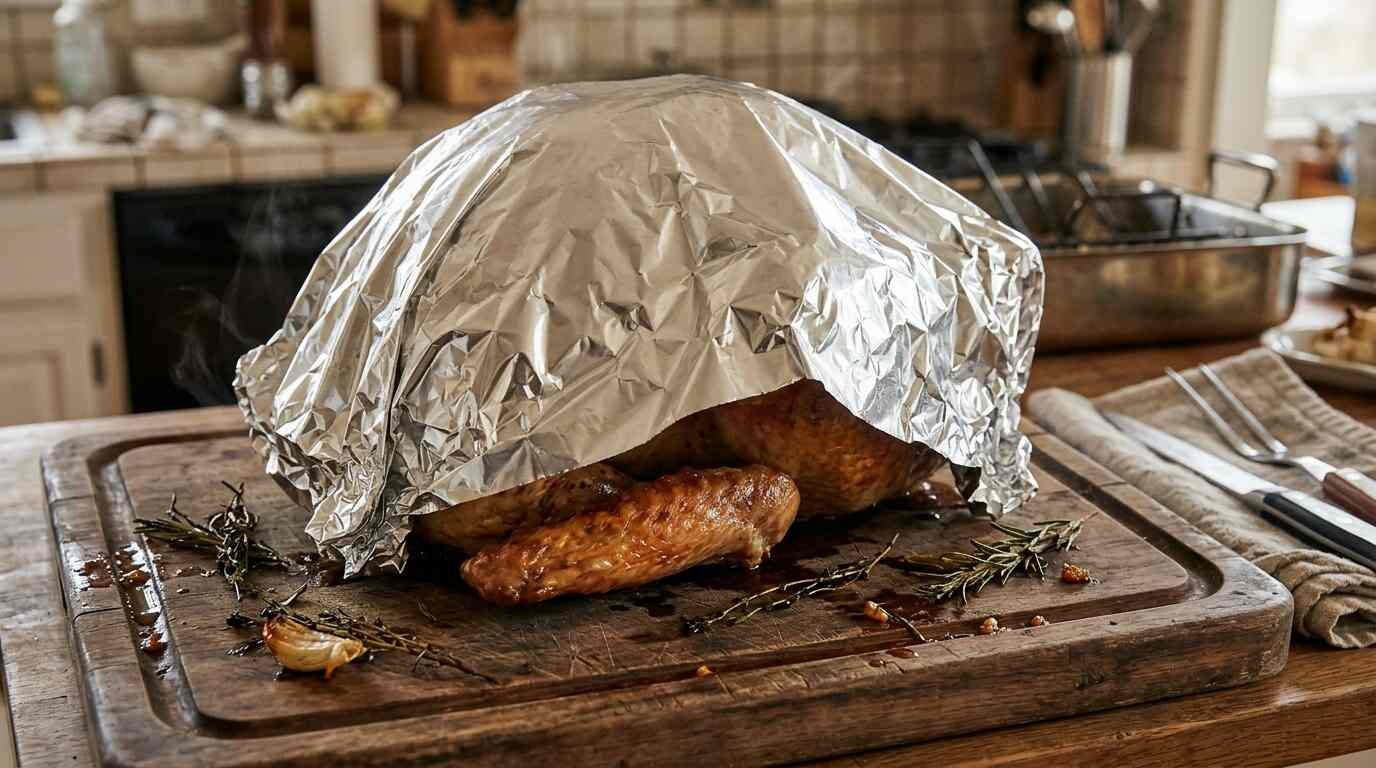
- 2:45 to 3:00 p.m.: pull the turkey at 165 degrees F in all three spots, tent loosely with foil, and let it rest on the board.
- 3:00 p.m.: oven free. Raise the heat to 400 or 425 degrees F for rolls, casseroles and roasted vegetables.
- 3:15 p.m.: make the gravy with the pan drippings.
- 3:45 p.m.: carve and plate. Rolls out of the oven.
- 4:00 p.m.: sit.
The resting time is your friend. A turkey needs at least 20 to 30 minutes of rest for the juices to settle, and it stays hot under foil for longer than you would expect.
Small-kitchen tricks that save the day
Space is the real constraint. Use a cooler with ice for drinks so the refrigerator is free for food. Stack stovetop pots with lids on, so you can hold dishes warm without using a burner. Use the top of the dishwasher, the washing machine or a rolling cart as extra counter space, after wiping it clean.
Borrow an oven if you can. A neighbor’s oven for a casserole or a second pie takes pressure off your own. A countertop toaster oven handles rolls and small dishes. A toaster oven is a useful secondary oven all year, not just in November.
Wash as you go. A sink full of dirty pans by one o’clock is a sign that something is about to go wrong. Keep a bowl for scraps and a small trash bag at the counter edge.
Using the oven twice
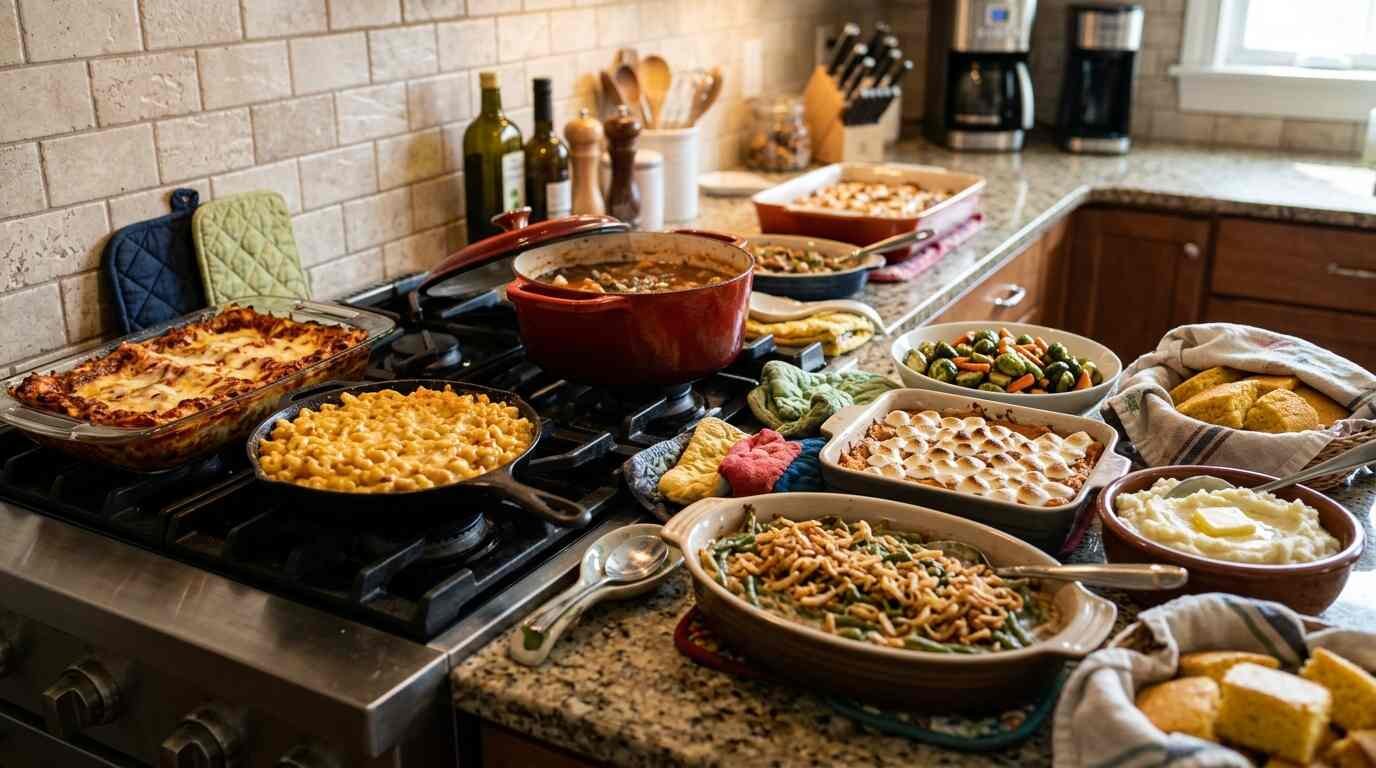
Casseroles that can be baked ahead, such as sweet potatoes and green beans, can go back into the oven for a short reheat while the turkey rests. Sides that are reheated should reach 165 degrees F. Stovetop dishes like mashed potatoes can be made in the morning and held in a slow cooker on warm.
A second heat source is worth planning for. A small slow cooker keeps mashed potatoes or gravy hot without taking a burner.
Where timelines usually slip
The common failures are predictable. A turkey that is still partly frozen on Wednesday night. An oven crowded with dishes that all need different temperatures. A gravy plan left until the last minute. Pies baked on Thursday morning that need the oven when the turkey does.
Guard against these with a margin. Allow extra time for the roast, since a bird that finishes early is easy to hold, and one that runs late is a problem. Bake pies the day before. Choose side dishes that share a temperature. Keep one dish simple.
And when something goes wrong, which it will, lower the standard for that one dish and keep going. The turkey is the event. Everything else is support.
After dinner. Perishable food should be refrigerated within two hours of coming off the heat. Carve the leftover turkey off the bones and store it in shallow containers so it chills quickly. Plan on using it within three to four days, or freezing it.
Then sit down, and let someone else do the dishes.