Some links in this post are Amazon affiliate links. As an Amazon Associate, Heritage Diner earns from qualifying purchases at no extra cost to you.
Ask a cook where sausage gravy goes wrong and the answer is almost always in the first two minutes. Somebody dumps the flour on too quickly, or the milk goes in cold and all at once, and lumps arrive like a bad guest. The sauce itself is simple. It just rewards doing things in order.
Here is the order, laid out in layers, with the reasons attached so you can fix the pan when it misbehaves.
Layer one: the sausage
Use plain bulk breakfast sausage, about a pound. Mild or sage-forward both work, and the label will tell you the fat content. You want some fat, since it is the base of the sauce. A very lean sausage leaves too little to carry the flour.
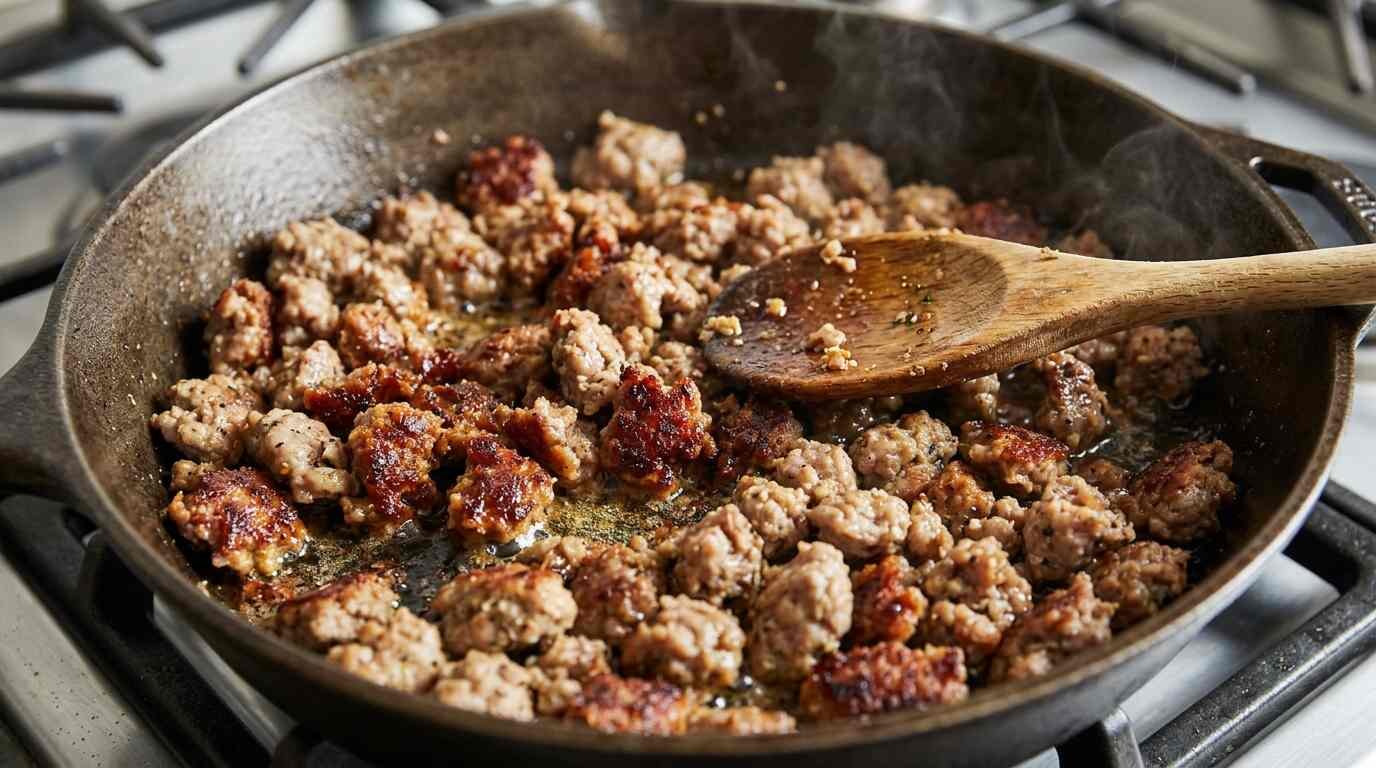
Break it up in a wide skillet over medium heat and keep stirring. Spread the crumbles out to brown rather than steam. The color you build here becomes the flavor of the gravy. Cook the meat until it is fully done; ground pork needs to reach 160 degrees F, and the crumbles should have no pink left.
Do not drain the pan. If you end up with a lot of rendered fat, spoon off the excess and leave roughly four tablespoons with the meat.
Layer two: the flour
Sprinkle about a quarter cup of all-purpose flour over the sausage and fat, a little at a time, stirring as you go. This is a roux built right in the pan. The fat coats each flour particle so the milk cannot clump it later.
Cook it for a minute or two, until the paste smells toasty and loses its raw, chalky edge. Not longer; you are not after a brown roux here. The flour should look pale gold and cling to the meat.
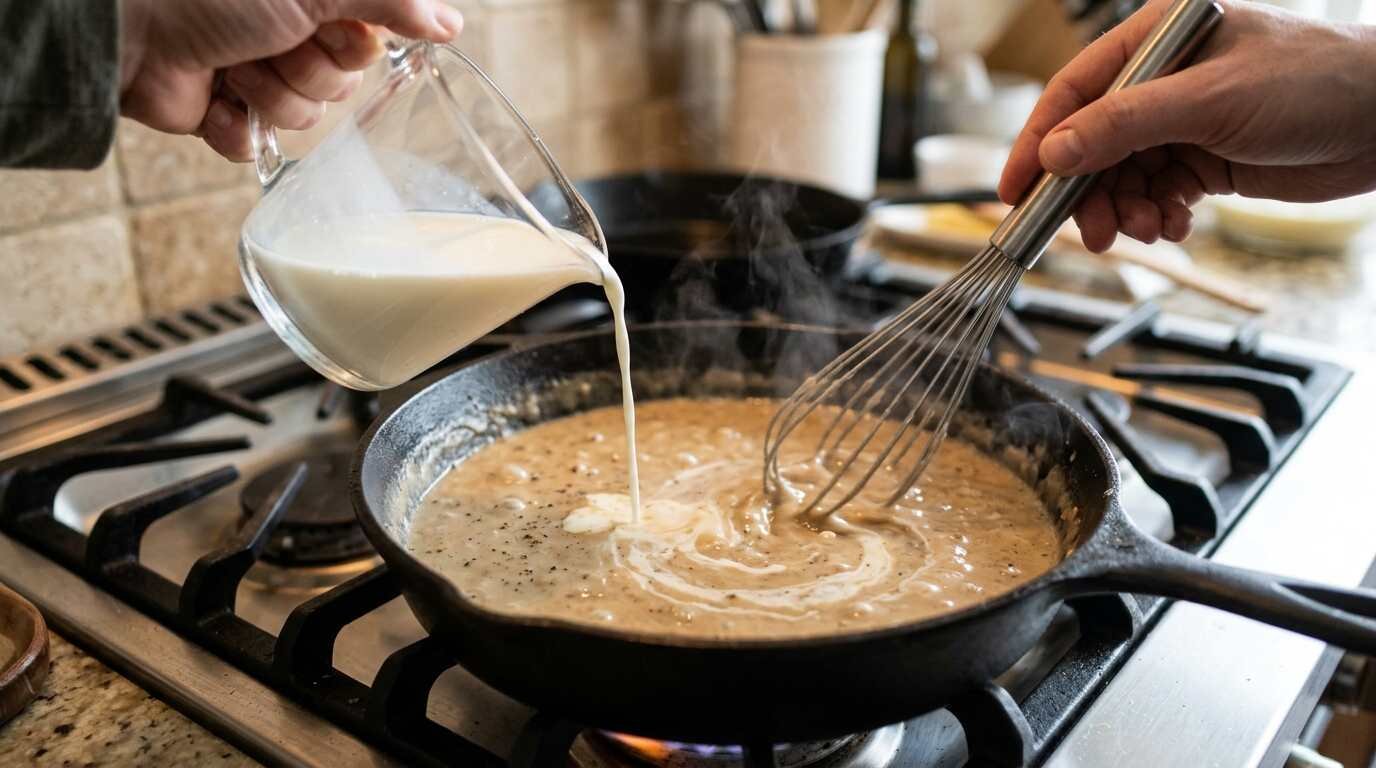
Layer three: the milk. This is where lumps are born. Pour in the milk gradually, about a cup to start, while stirring steadily. The pan will seize into a thick paste first. That is normal. Keep stirring and add the next splash only when the last one is absorbed.
Whole milk gives the best body. Three cups is the standard amount for a quarter cup of flour and a pound of sausage, but you may want a bit more or less. Bring the pan to a gentle simmer, stirring and scraping the bottom, and the sauce will thicken in a few minutes.
Warm milk goes in a little smoother than cold, so microwave it for a short time if you are in a hurry. It is a small edge, not a requirement.
Salt, pepper and the sausage you buy
Breakfast sausage varies widely. Some brands are heavy on sage and black pepper; others lean sweet with maple. A sweet link makes a very different gravy than a peppery one, so read the label or taste a cooked pinch before you decide how much seasoning to add.
Some people like to add a pinch of dried thyme or a little ground sage to a bland sausage. A grating of nutmeg is old-fashioned and subtle. Go slowly, because the gravy concentrates as it simmers.
Salt is the one you cannot easily remove. Add it last, in small pinches, after the gravy has thickened and had time to simmer.

Layer four: the seasoning
Pepper is the star, and a lot of it. Freshly cracked black pepper, at least a teaspoon, belongs in a proper gravy. Taste before adding salt, because the sausage is already salty. A pinch of cayenne or a few drops of hot sauce can wake things up.
Let the gravy simmer for a couple of minutes after seasoning. It should coat the back of a spoon and fall from it in a slow ribbon. If it is too thick, whisk in milk a splash at a time. Too thin? Simmer another few minutes, or sprinkle in a little more flour mixed with cold milk.
Remember it thickens as it sits. A gravy that looks perfect at the stove will be pasty by the time the biscuits are plated.
Why milk, and not stock or water. Cooks sometimes ask whether a splash of stock can stand in for part of the milk. It can, but the result is a different animal: thinner, more savory, closer to a brown gravy than the white country style this plate calls for. Milk brings sweetness and richness that balance the pepper and the salt in the sausage, and the proteins in it help the sauce cling.
Cream makes the gravy heavier. A splash at the end is plenty if you want it, but a full pour of cream turns a breakfast sauce into something you would serve at a dinner party.
Fixing a lumpy pan
Lumps happen. If you spot them early, whisk hard off the heat. For a stubborn batch, push the gravy through a fine strainer or give it a few pulses with an immersion blender, then fold the sausage back in. A balloon whisk and a fine mesh strainer are two inexpensive things that earn their drawer space.
Common mistakes.
- Gravy tastes like raw flour: the roux was not cooked long enough. Give it another minute or two next time.
- Gravy is greasy: too much fat was left in the pan. Spoon off the excess before adding flour.
- Gravy is gummy: it was stirred too long after thickening, or the flour ratio was too high. Add milk and bring it to a simmer.
- Gravy is bland: pepper and salt, in that order. Fresh pepper makes the biggest difference.
And a quiet one: serving on cold biscuits. Warm them first.
Timing the whole plate. The gravy asks for about fifteen minutes of attention, and a biscuit takes roughly the same in the oven if you start both together. Put the biscuits in first, since they are the stubborn clock. Brown the sausage while they bake, finish the sauce as they come out, and everything lands hot.
If you are cooking for a crowd, you can brown the sausage ahead and hold it in the refrigerator. When the table is nearly ready, reheat the meat in the pan, add the flour and milk, and you will skip the longest step. Make the gravy last. It is the one thing that does not improve with waiting.
Serve it in a warm bowl or over a plate, not a cold one. Gravy loses heat quickly, and a cold dish makes it set at the edges.
The biscuits
A gravy deserves a good biscuit, so a quick word on those. The rules are old and consistent: cold butter, a light hand and a hot oven. Cut very cold fat into the flour until it looks like coarse crumbs, add cold buttermilk, and stir only until the dough just comes together.
Pat it out rather than rolling it thin, fold it over a couple of times, and cut straight down with a sharp cutter. Twisting the cutter seals the edges and keeps the biscuits from rising. Bake on a sheet pan in a hot oven, around 425 degrees F, until the tops are golden. Check your recipe for timing.
Short on time? A tube of refrigerated biscuits from the store is a perfectly respectable stand-in.
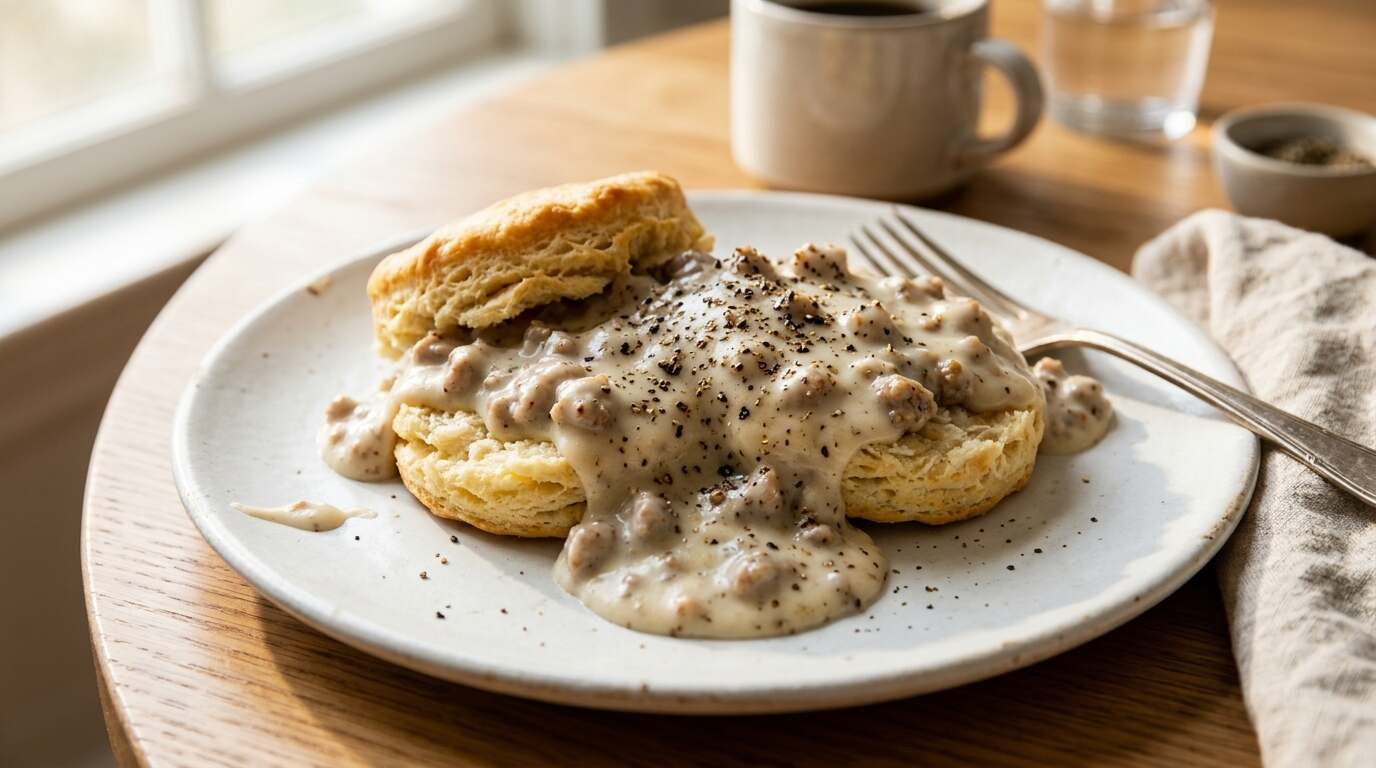
Serving and storing. Split the biscuits, set them on a warm plate and ladle the gravy over the top. Do not hold back on the pepper.
Leftover gravy should go into the refrigerator within two hours, and it keeps for about three to four days. It will set up like pudding. Reheat gently with a splash of milk, stirring, and bring it to 165 degrees F before serving.