 275 Route 25A, Mt Sinai, NY 11766


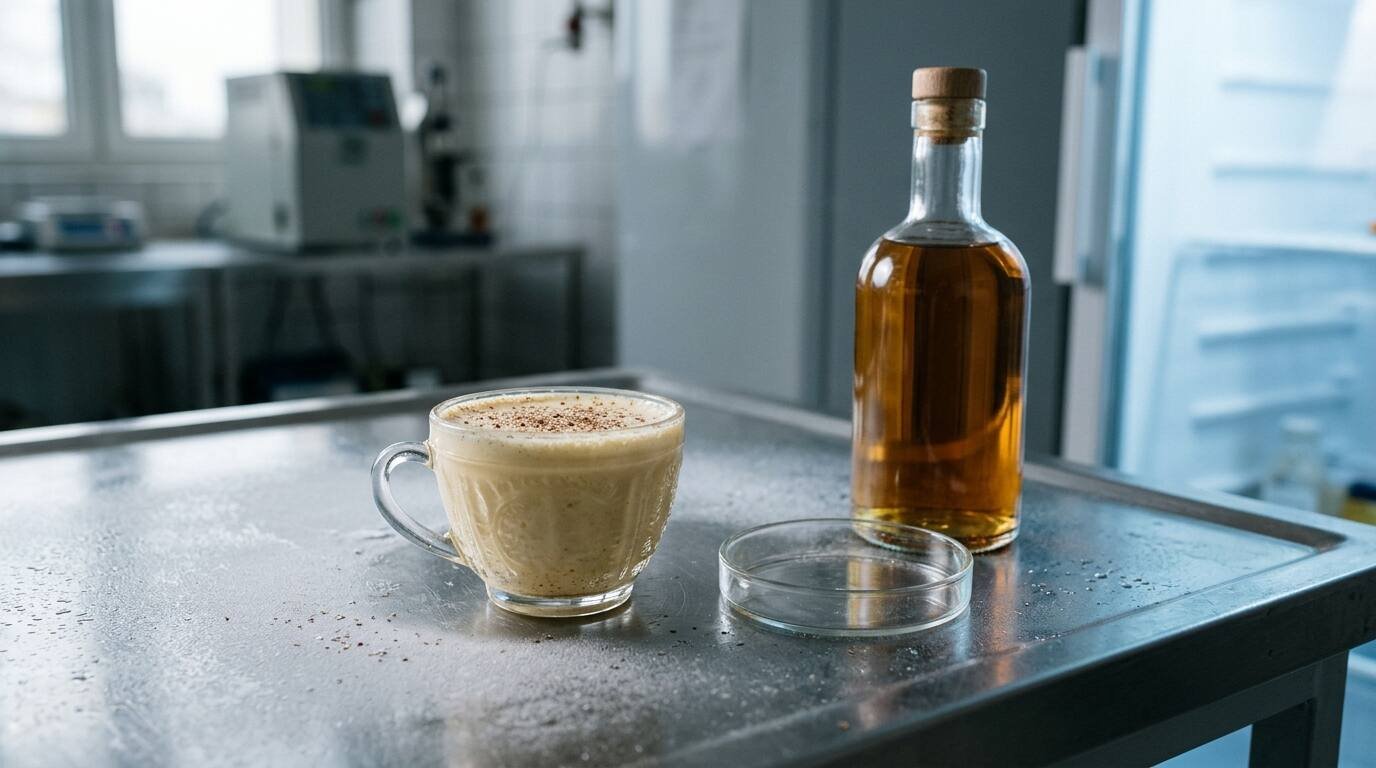
Every year before Thanksgiving, a laboratory that studies dangerous bacteria cracks a dozen raw eggs into a bowl, pours in a pint of bourbon and a quart of rum, and puts the result in its cold room for about a month. The lab is the Laboratory of Bacterial Pathogenesis and Immunology at Rockefeller University, and according to Popular Science, its scientists have kept the habit going for more than five decades, serving the aged nog at a December party.
@@YOUTUBE@@ That cold-room ritual eventually became an experiment, and the experiment became one of the most repeated food facts of the holiday season: let homemade eggnog age long enough and the alcohol will kill the Salmonella. The claim has a real lab behind it. It also has a sample size that would get a freshman lab report sent back.
A tradition older than the question
The recipe came first. The microbiology came decades later.
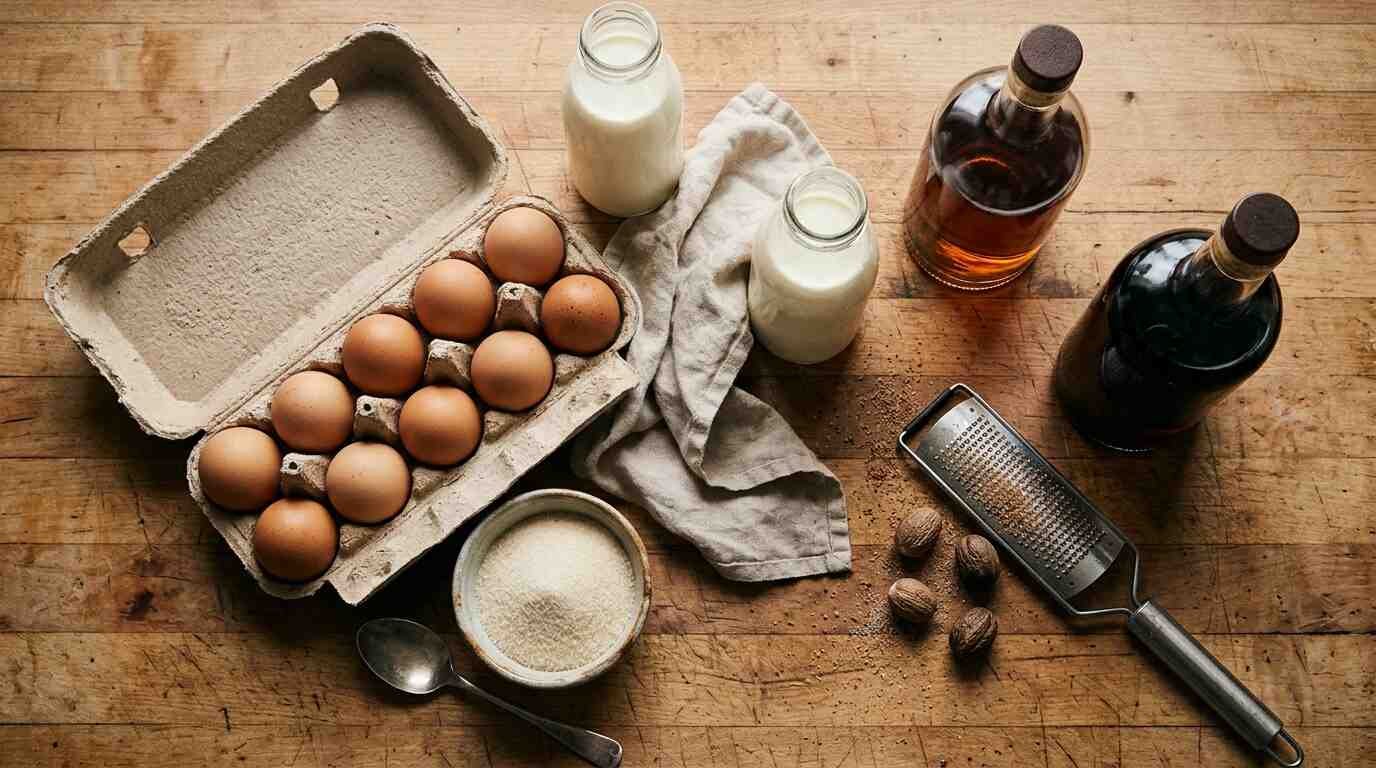
Popular Science traces the custom to Rebecca Lancefield, who started it, and to Vincent Fischetti, who took over the lab after her death in 1981. The recipe printed under her name in that Popular Science piece reads like a shopping list for a small wedding: one dozen large eggs, a quart of heavy cream, a quart of light cream, a pint of bourbon, a quart of rum, sugar and nutmeg. The eggs are beaten, the liquor goes in slowly, the cream follows, and the whole thing rests in the refrigerator for weeks.
Nobody in that lab needed a study to keep drinking it. On Science Friday in December 2024, Fischetti said the lab had never had an eggnog-related illness, only intoxication. Five decades of holiday parties without a case of food poisoning is a reassuring record. It is also a record kept by the people who made the drink, which is roughly how most family recipes earn the word “safe.”
A lab full of microbiologists is still a strange place for an untested food habit to survive that long. The people best equipped to culture a sample of the stuff had spent decades pouring it into cups instead. Then a radio show asked.
Science Friday brings the plates
First test: twenty-four hours, and a result nobody could toast.
In December 2008, at the request of NPR’s Science Friday, Fischetti’s lab ran the first trial. The university’s own news release, dated December 19, 2008, describes a homemade eggnog made with raw eggs, cream and a 20 percent mixture of rum and bourbon, set beside a store-bought nonalcoholic carton. Samples of each were incubated for 24 hours at 37°C, body temperature.
Bacteria of several kinds turned up in the carton, which Fischetti said were likely harmless and probably came from the dairy. The homemade spiked batch came up completely sterile. So far, a win for the cold room.
Then the team added Salmonella on purpose, a heavy dose the release puts at about 1,000 times what a contaminated egg would carry, and the alcohol did not finish the job within the 24-hour window. The result was called inconclusive. Asked about testing further, Fischetti offered the most honest line in the history of holiday science: “We’d probably need a grant,” according to Rockefeller University.
Science Friday’s video from that first round, produced by Flora Lichtman, survives on the show’s video page, framed around a single question: whether adding alcohol to homemade eggnog would safeguard against Salmonella.
Three weeks in the cold room
The second batch went the distance, and the story went everywhere.
Time did the work in the follow-up that a single day could not. A later Science Friday video, dated December 18, 2009 on the show’s site, shows Fischetti and fellow Rockefeller microbiologist Raymond Schuch testing whether Salmonella could survive in a batch of spiked eggnog. In the 2024 segment, host Ira Flatow recalled that controlled follow-up coming about a year after the first videos.
America’s Test Kitchen summarized the result in one sentence that has been passed around ever since: “By the three-week mark, the alcohol had rendered the eggnog completely sterile.” Popular Science described the same arc in more detail, with the bacteria thriving at first and then appearing to be gone one to three weeks later. The scientists, it notes, did not drink the contaminated batch.
Fischetti’s own account on Science Friday fills in the mechanism. The kill improved over about a week, which suggests the alcohol works gradually rather than on contact. Ethanol denatures bacterial membranes, he explained, and higher concentrations do it faster. Picture a slow leak in a pipe joint rather than a hammer blow: the damage is real, but it takes its time.
Carried into a test kitchen, the finding held up on flavor. America’s Test Kitchen reported that its panel found aged nog smoother than a fresh batch, which tasted harsher and boozier by comparison. That is a flavor result, and a believable one. Weeks in the cold round off the edges of raw liquor the way years in a drawer soften a leather belt.
The trouble is what happened next. A careful, small, unreplicated observation became a recipe note, then a headline, then something people repeat with the confidence of a building code.
The sample size was one
A batch is an anecdote with a thermometer in it.
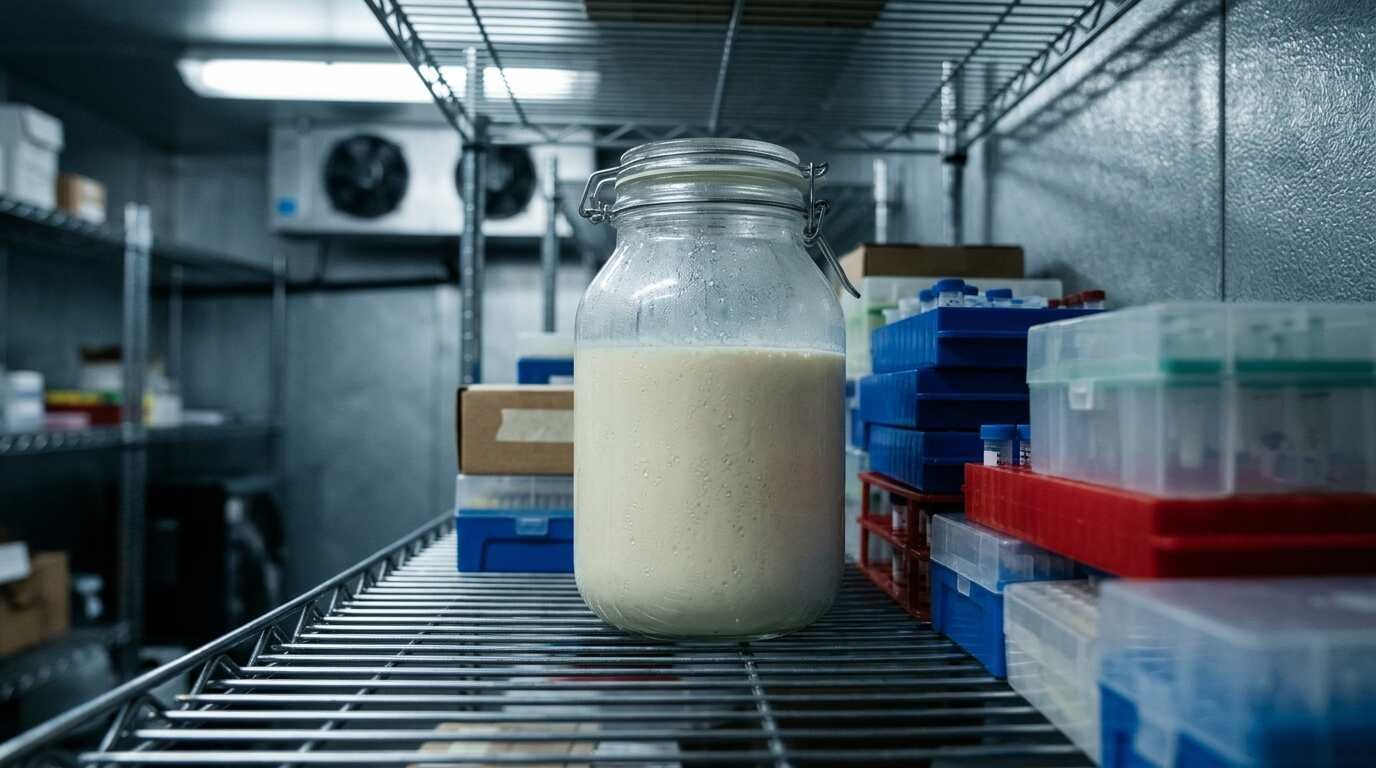
When Science Friday revisited the work in 2024, director and senior producer Charles Bergquist described it as an “n equals 1” study. That phrase carries most of the weight in this story. One batch, one recipe, one refrigerator, one alcohol level, one strain of bacteria added in one dose, observed over one stretch of weeks. Change any of those and the result is no longer the same experiment.
That small sample was flagged in Popular Science too, where Fischetti said there was no follow-up planned. Sixteen years after the first trial, the lab still had no further eggnog research on the books, per the 2024 segment. The grant, apparently, never came through.
Ben Chapman, a food safety specialist at North Carolina State University, made the point more formally in a 2014 NC State News piece. The aged-nog stories, he noted, mostly trace back to the Rockefeller experiment, and that work “hasn’t been evaluated by peer review.” The Rockefeller batch was about 14 percent alcohol and refrigerated throughout. Chapman added that nobody knows whether a weaker version, say 9 percent held for a week, would be safe.
Those two numbers deserve a second look. The university’s 2008 release describes a 20 percent rum and bourbon mixture; NC State puts the finished drink at about 14 percent. Both can be true, since the liquor is diluted by eggs and cream, but it means the figure people repeat depends on which point in the recipe they are quoting. Home recipes vary wildly in how much bourbon goes in, and the one variable the experiment depended on most is the one cooks adjust most freely.
Alcohol is not a safety plan
Fat is a coat, and Salmonella wears it.
The case against leaning on the cold room goes beyond sample size. Chapman, in the same NC State piece, cited a 2010 study that found ethanol alone was not enough. Over 24 hours it reduced Salmonella by about 90 to 99 percent, with no reduction at all in the first hour. Ninety-nine percent sounds close to finished until the starting count is large. A 1 percent survivor rate on a heavy load is still a crowd.
Fat complicates things further. According to Chapman, fat protects Salmonella, which is why the cream in eggnog makes the problem harder rather than easier. The drink that makes eggnog worth making is the part that shields the thing nobody wants in it. He also pointed out that alcohol does not stop spoilage: other microbes can still grow in the mix and produce off flavors.
This is where the obvious reading of the Rockefeller result goes wrong. The experiment did not show that alcohol makes raw-egg eggnog safe. It showed that one high-proof, well-chilled batch, made by people who handle bacteria for a living, came up clean after a few weeks. Those are different sentences, and the difference is where people get sick.
None of this is abstract. Popular Science, citing the CDC, reported an estimated 1.2 million Salmonella cases a year, about 42,000 confirmed, and roughly 400 deaths. The FDA lists children, older adults, pregnant women and people with weakened immune systems among those at greater risk of severe illness, and notes that symptoms typically appear 12 to 72 hours after infection. A holiday party is, by design, a room full of exactly those people.
What the FDA and NC State point to instead
The boring answer was available the whole time.
For any recipe in which eggs stay raw or undercooked when served, the FDA points to shell eggs treated to destroy Salmonella, such as in-shell pasteurized eggs, or to pasteurized egg products. Treated eggs usually say so on the carton. For cooked dishes, the agency’s line is short: “Casseroles and other dishes containing eggs should be cooked to 160° F.”
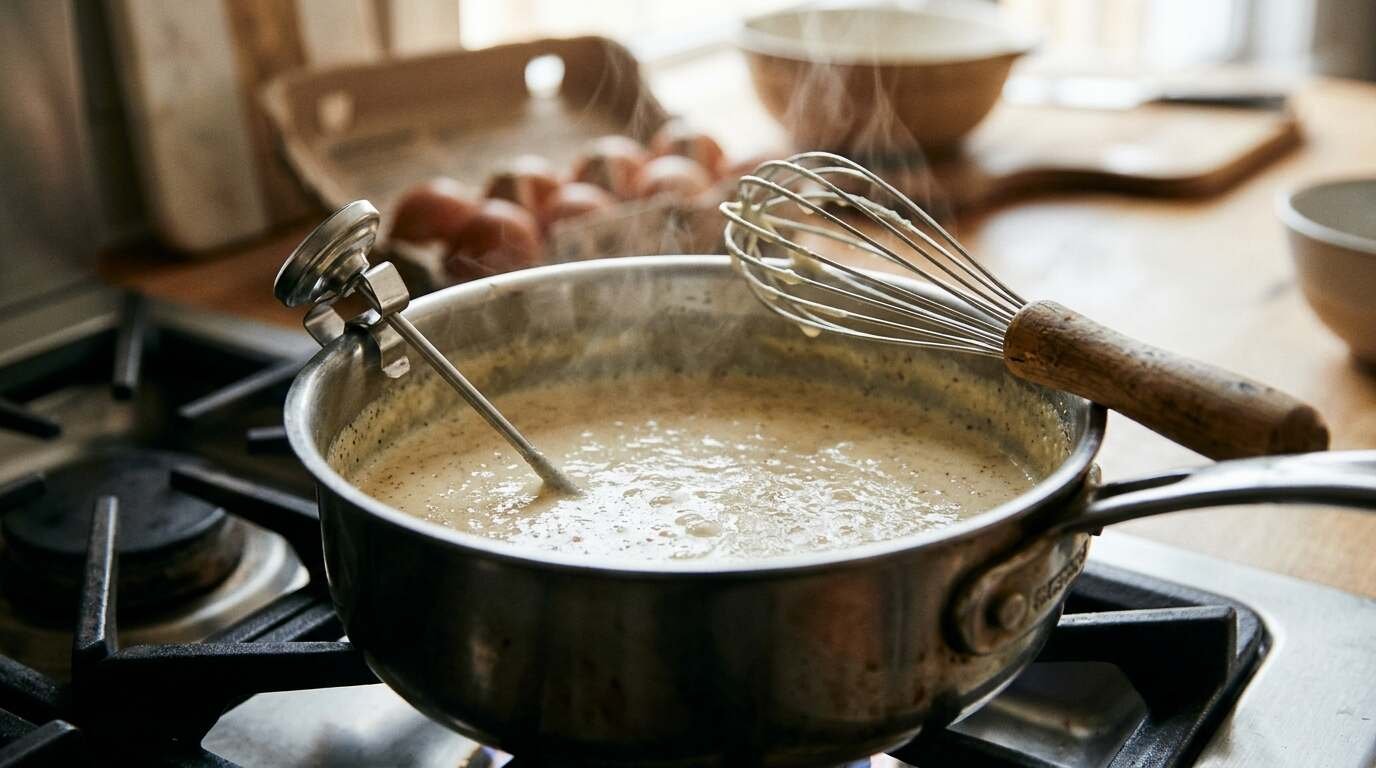
Chapman’s advice for eggnog runs along the same rails. Commercial eggnog is likely pasteurized, he said, meaning the egg-and-milk mixture has been heat-treated to kill most harmful microorganisms. For homemade, the safer routes are pasteurized eggs or egg products, or heating the eggnog base slowly to 160°F, as described in the NC State piece.
Flavor is a separate argument. Aging may still make a smoother drink, and America’s Test Kitchen’s tasters thought it did. The question is only what does the safety work. Pasteurization is the part that was tested at scale, for decades, by people paid to be dull about it. The cold room is the part that makes a good story.
Diner cooks will recognize the shape of the problem. The flat-top that has never burned anyone is not evidence that the flat-top is cool. The same eggs that land on a plate over easy or come out of a poaching pot every morning are cooked because heat is the thing everyone has agreed to trust. Eggnog sits in the same family as a pumpkin pie custard, just with the oven swapped for bourbon and a calendar.
The legend that outlived the lab notes
A good story needs one result. Science needs the second and third.
There is a familiar pattern here, and it shows up wherever a single tidy result meets a food people already love. The sprout outbreaks traced from Germany in 2011 to Idaho in 2026 are a reminder that a food with a wholesome reputation can still carry Salmonella. Aged eggnog runs on comfort: an old recipe, a famous lab, a drink that tastes better after waiting. Each detail is true, and together they assemble into a promise nobody actually made.
What the Rockefeller scientists did is easy to admire. They took a party custom, put it under the same scrutiny they would give any sample, announced the inconclusive first result instead of burying it, and the show that asked for the test later called the follow-up what it was, a sample of one. That candor is the part that rarely travels. The phrase “completely sterile” fits on a recipe card. “n equals 1” does not.
So the lab keeps making its nog, around Thanksgiving, for a party a few weeks later. And every December the same question arrives at kitchen counters with a carton of raw eggs and a bottle of rum on it: if the one test ever run came back clean, how many more batches would it take before that result stopped being a story and started being a rule?
You Might Also Like
- Green Bean Casserole History: Dorcas Reilly’s 1955 Recipe and How It Became a Thanksgiving Fixture
- How to Make a Real New York Egg Cream (No Egg, No Cream)
- Pecan Pie History: The Karo Syrup Claim and the Recipes That Came Before It
Sources
- Rockefeller University, “Rockefeller microbiologist tests safety of spiked eggnog,” December 19, 2008: https://www.rockefeller.edu/news/2008-rockefeller-microbiologist-tests-safety-of-spiked-eggnog/
- Brooke Borel, “Why You Shouldn’t Fear The Eggnog,” Popular Science, December 18, 2013: https://www.popsci.com/blog-network/our-modern-plagues/why-you-shouldnt-fear-eggnog
- Science Friday, “Can Spiking Eggnog Kill Bacteria From The Raw Eggs?” December 20, 2024: https://www.sciencefriday.com/segments/spiked-eggnog-recipe-science/
- Science Friday, “Another Reason To Spike That Eggnog” (video): https://www.sciencefriday.com/videos/another-reason-to-spike-that-eggnog/
- Science Friday, “Yet Another Reason To Spike That Eggnog” (video): https://www.sciencefriday.com/videos/yet-another-reason-to-spike-that-eggnog/
- America’s Test Kitchen, “Eggnog: Better and Safer with Age”: https://www.americastestkitchen.com/how_tos/6704-eggnog-better-and-safer-with-age
- NC State News, eggnog food safety with Ben Chapman, December 15, 2014: https://news.ncsu.edu/2014/12/15/eggnog-food-safety
- U.S. Food and Drug Administration, “Egg Safety: What You Need to Know”: https://www.fda.gov/food/buy-store-serve-safe-food/egg-safety-what-you-need-know
Suggested category: Food History
Leave a Reply