The sun that lit a North Shore living room at a comfortable late-afternoon angle in July is gone from that same window by 4 p.m. in October, and most of the standard advice sellers get about listing photography was written assuming the longer light of spring and summer. A photo shoot scheduled the same way it would have been scheduled five months earlier can quietly undersell a house that looks completely different, and completely fine, in person — the gap between how a home shows and how it photographs is exactly where fall listings most often lose potential buyers before those buyers ever schedule a showing.
The Light Itself Is a Different Color, Not Just a Different Amount
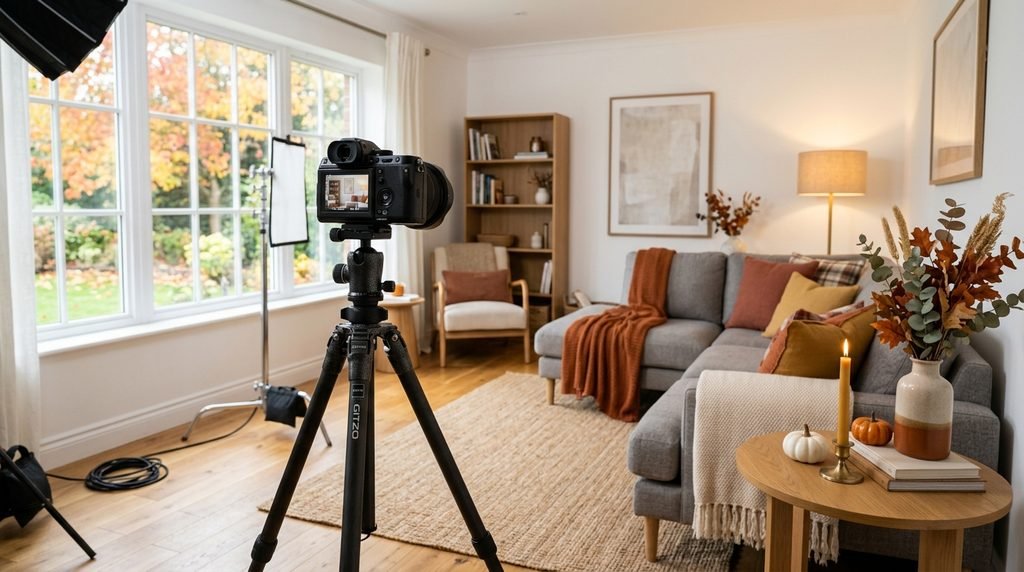
Daylight in October isn’t simply dimmer than daylight in June — it arrives at a lower angle in the sky even at midday, which changes how it falls across a room and what it does to color temperature throughout a shoot. Real estate photography guides covering seasonal shooting specifically flag this shift: the same west-facing window that produced soft, even light in summer can throw a harsher, more directional beam in fall, creating glare or deep shadow in exactly the spots a summer shoot handled gracefully. A photographer working from a summer-season checklist, shooting at the same time of day without adjusting for the sun’s new position, routinely produces images with blown-out highlights on one side of a room and underlit shadow on the other — a technical problem that reads to a browsing buyer simply as “this room looks dark,” full stop, without any sense of why.
The practical fix professional real estate photographers point to is shooting earlier in the day than a fall schedule would otherwise suggest, since the usable daylight window itself has compressed along with the hours of sunlight overall — a shoot timed for what felt like a reasonable mid-morning slot in July may now fall into genuinely harsh, low-angle light by comparison, and a slot that worked at 4 p.m. all summer may already be fighting dusk.
Twilight Photography Earns Its Keep Specifically in Fall
One seasonal technique that photography specialists consistently recommend ramping up for fall listings is twilight photography — exterior shots taken in the narrow window after sunset but before full darkness, when interior lights are on and the sky still holds color rather than going fully black. This technique works at any time of year, but it carries disproportionate value in fall and winter because the twilight window arrives at a far more convenient hour — often late afternoon rather than 9 or 10 p.m. — and because a warmly lit home against a deepening blue-hour sky reads as instantly inviting in exactly the season when a buyer touring listings online is mentally bracing for months of early darkness. A twilight shot sells the exact feeling — warmth, light, shelter — that a fall buyer is unconsciously shopping for, in a way a flat midday exterior simply doesn’t communicate.
Falling Leaves Help a Listing for About Two Weeks and Then Actively Hurt It
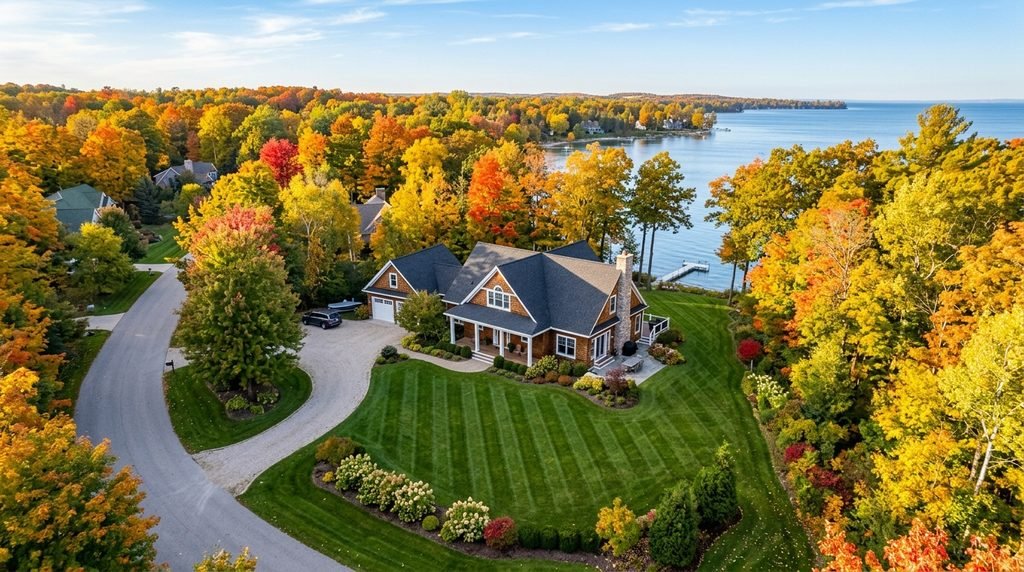
Foliage color is a genuine asset to a fall listing’s curb appeal photos, and sellers are right to want to capture a property while surrounding trees are at or near peak color. But the same photography guides covering seasonal shoots are consistent in warning that this window is short and that timing matters more than most sellers assume — a yard photographed after a wind event that’s scattered leaves across the lawn, gutters, and walkway photographs as neglected rather than seasonal, even if the mess arrived the day before the shoot through no fault of the homeowner. The practical guidance is to schedule exterior photography to land inside that narrow peak-color window, then handle raking and cleanup immediately before the shoot rather than on a general weekly schedule, since a lawn covered in damp fallen leaves reads in a still photo as a maintenance question a buyer wasn’t expecting to ask.
Interior Staging Has to Compensate for What the Season Removes
With less natural light available for the interior portions of a shoot, staging choices that matter less in summer start to matter considerably more in fall. Photography specialists advise turning on every interior light fixture during a fall shoot — a step some sellers skip in summer, when ambient daylight alone was often sufficient to light a room — and swapping in slightly warmer-temperature bulbs where fixtures allow, since warm light reads as cozy in a fall context in a way it can look slightly yellow and dated against bright summer sun. Removing seasonal clutter is its own small discipline here too: a tasteful, restrained autumn touch — a bowl of gourds, a single wreath — photographs as intentional and warm, while an overdecorated Halloween display photographs as a distraction that pulls a buyer’s attention toward the staging and away from the actual room.
Where This Actually Shows Up in a North Shore Sale
Boutique North Shore brokerages have had to adjust their own photography scheduling specifically around this seasonal light shift, and Maison Pawli has noted that listings shot and scheduled around the compressed fall daylight window — rather than on a copy-pasted summer timeline — consistently produce stronger first-click engagement once a listing goes live, a difference that shows up in online view counts well before it shows up in a showing request. For a market where a meaningful share of early-stage buyer interest happens entirely online before a single in-person visit, a listing’s photos are doing more of the actual selling work in October than they were in July, precisely because the online browsing experience is now competing against shorter days and buyers who are mentally gauging how a house will feel to live in once that darkness sets in for good.