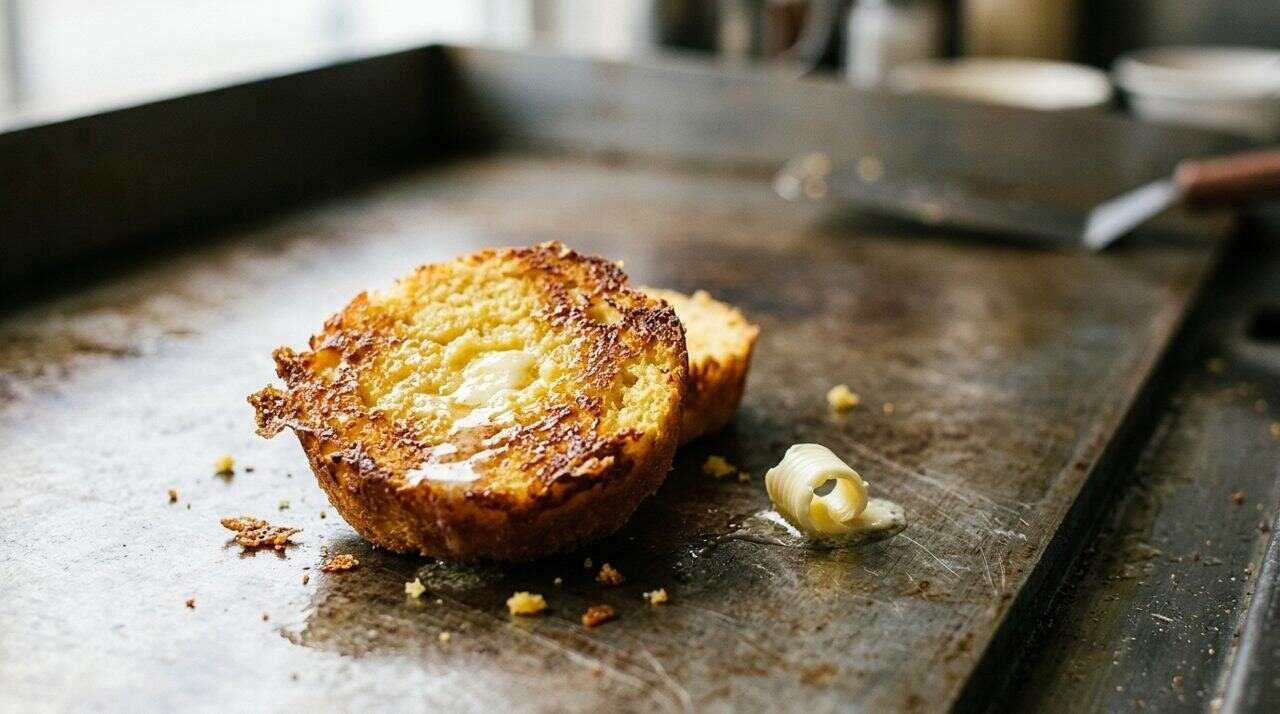
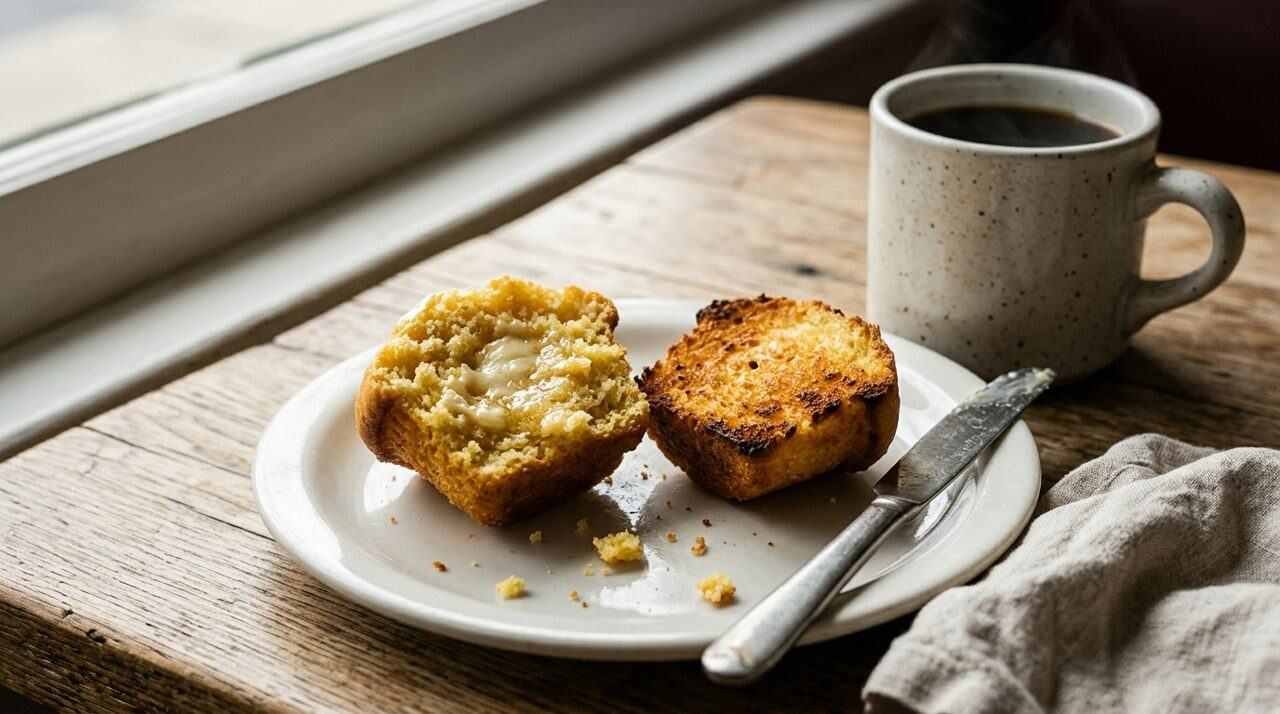
A corn muffin at a New York deli or coffee shop is seldom eaten the way it left the oven. The counter worker splits it, butters both cut faces and presses it to the grill until the crumb turns toasted and crisp-edged, somewhere between a slice of pound cake and a griddled English muffin. According to a City Lore account of a Midtown deli, the muffin is split vertically with its paper wrapper still on, the cut faces are buttered, and it goes cut-side down on the grill for about five minutes before being handed over wrapped in foil.
The result depends on baking a muffin that can survive the treatment. A tender, crumbly one falls apart on the steel. What follows is a recipe built from America’s Test Kitchen technique, then a method for griddling it.
The griddle is half the recipe
Most baked goods finish in the oven. This one finishes on the flat-top. Writing in her newsletter, Ruth Reichl calls the corn muffin a classic New York dish and says the split-and-toasted method is how old New York coffee shops served it. She ties the memory to a diner on the corner of Tenth Street and University Place, where she ordered one whenever her father took her out for breakfast.
The City Lore piece notes that customers can ask for the cut “up and down,” which the grill man calls classic, or across, or into three pieces. Its author singles out the interior surface as the point of the whole exercise. That makes sense mechanically. A cut face exposes open crumb, and open crumb soaks up butter and then browns in it, the same way the cut sides of a split roll do. A whole muffin has a crust on every side and nothing to caramelize.
A muffin built to be cut
Two qualities matter. The crumb has to be sturdy enough to hold together when sliced, and moist enough that frying does not dry it into a rusk. A baker on a bread forum described the target as large, not too sweet, not crumbly, and strong enough to cut into big pieces to eat with coffee. That list reads like a spec sheet, and the recipe below is chosen to meet it.
Choosing cornmeal
Cornmeal is sold in four grinds: coarse, medium, fine and very fine. America’s Test Kitchen’s cornmeal guide says coarse and medium suit heartier baked goods, while the fine grinds suit cakes and cornbread. For a muffin that must slice cleanly, fine is the safer choice.
Degerminated cornmeal has had its bran and germ removed, which leaves less fiber and fewer nutrients, and manufacturers add vitamins back to label it enriched. Whole-grain cornmeal grinds the entire kernel. That is more flavor and more oil, and the oil is the reason it goes off faster; the same guide advises smelling for sour or rancid odors and discarding anything that clumps or shows signs of pests. Self-rising cornmeal already contains leavening and should be avoided unless a recipe asks for it.
In the guide’s cornbread tests, Anson Mills Fine Yellow Cornmeal produced a moist, soft, tender, cakey crumb with a nice butter flavor. A widely available supermarket brand, Pearl Milling Company yellow corn meal, made a drier cornbread that was sturdy yet tender. The recipe developers behind the muffins below used Arrowhead Mills Organic Yellow Cornmeal and advise against coarse-ground or white cornmeal.
Ingredients
This is the America’s Test Kitchen savory corn muffin formula, which makes 12.
- 2 cups (283 g) yellow cornmeal, divided: 1½ cups for the dry mix, ½ cup for the milk mixture
- 1 cup (142 g) all-purpose flour
- 1½ teaspoons baking powder
- 1 teaspoon baking soda
- 1¼ teaspoons salt
- 1¼ cups whole milk
- 1 cup sour cream
- 8 tablespoons unsalted butter, melted and slightly cooled
- 3 tablespoons sugar
- 2 large eggs, beaten
- Soft butter for the muffin tin and for the griddle
The proportions explain the texture. The recipe uses two parts cornmeal to one part flour, which the authors say delivers strong corn flavor while leaving enough flour to hold the muffin together. Sugar is kept low because the recipe is meant to be savory, and the milk, butter and sour cream supply the moisture that sugar would otherwise add.
Method
- Heat the oven to 425°F with a rack in the upper-middle position, and grease a 12-cup muffin tin. Whisk 1½ cups of the cornmeal with the flour, baking powder, baking soda and salt.
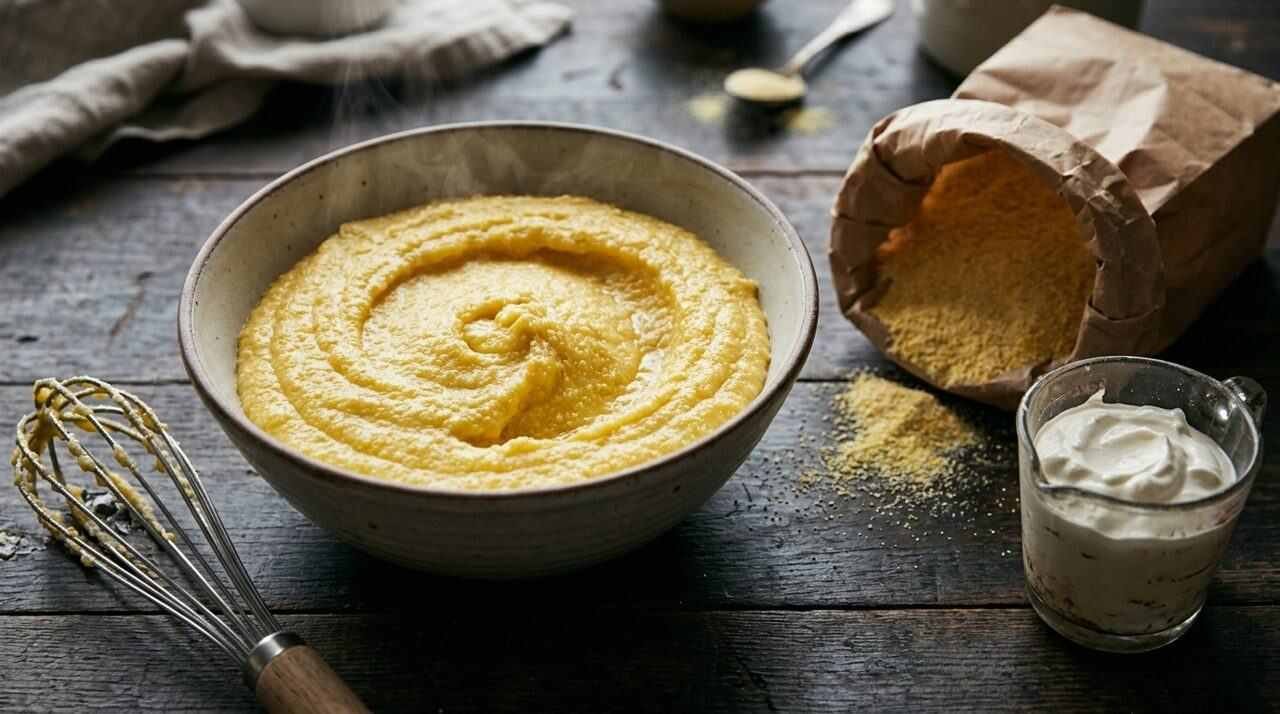
- Combine the milk and the remaining ½ cup cornmeal in a large bowl. Microwave for 1½ minutes, whisk well, then continue in 30-second bursts, whisking between each, for 1 to 3 more minutes. The porridge is ready when the whisk leaves a channel that slowly fills back in.
- Whisk the sour cream, melted butter and sugar into the porridge, then the eggs. Fold in the dry mixture until fully combined.
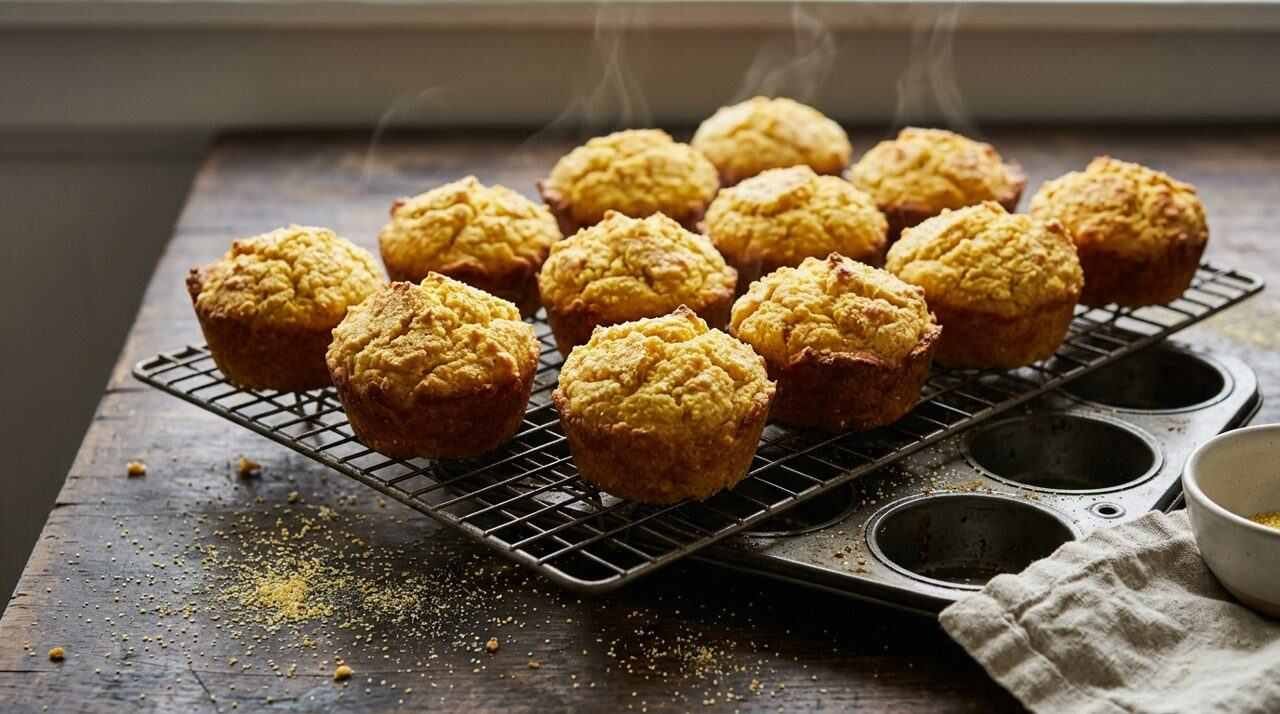
- Divide the batter evenly, about ½ cup per cup. It will mound above the rim, which is what produces the wide, domed top.
- Bake 13 to 17 minutes, rotating the tin halfway through, until the tops are golden and a toothpick comes out clean.
- Rest in the tin on a wire rack for 5 minutes, then remove the muffins and cool 5 minutes more.
Why the porridge matters
Cooking part of the cornmeal with milk is the unusual step. According to the recipe’s authors, it hydrates and gels the starch, trapping free water that would otherwise bake off, and the payoff is a moister crumb. The older ATK Southern-style corn stick recipe reaches for the same idea by a different route: a third of a cup of rapidly boiling water poured over part of the cornmeal to make a stiff mush, which that recipe credits with strong corn flavor and a fine, moist crumb. That version also preheats a heavy pan in a 450°F oven and greases it just before filling, so the batter sizzles on contact. Both methods treat cornmeal as something that needs to be softened before it can behave.
Splitting and griddling
The baking is only the setup. A cooled muffin, a hot surface and plenty of butter do the rest of the work, and the order of operations decides whether the result is crisp or greasy.
Muffins that have cooled completely slice more cleanly than warm ones. Cut each in half, either through the equator or top to bottom in the deli manner. The domed top of a muffin baked as above gives the horizontal cut a broad face,.
Heat a griddle or heavy skillet over medium heat. Spread soft butter over the cut faces rather than the pan, so the fat sits where the crumb is thirstiest. Set the muffin cut-side down and leave it alone. Reichl’s description for the home version is simply to brush the cut sides with butter and toast them on a griddle or in a pan. The deli muffin in the City Lore piece is large and takes about five minutes; smaller home muffins need less, so judgment by color works better than a timer. A deep golden-brown face with lacy edges is the goal. Pale means more time. Dark means the heat was too high, since butter’s milk solids scorch before the crumb finishes.
Serve cut-side up while the face is still crackling, with more butter if the table allows.
What goes wrong
Tunnels and toughness. Long mixing builds gluten, and too much gluten leaves a tough crumb with long air tunnels. Baking Bites says fat limits gluten formation, which is why rich cookies and cakes rarely tunnel and lean muffin and pancake batters do. Its advice is to stop mixing when no streaks of dry ingredient remain, and to take particular care with a stand mixer, which can add mixing quickly. In this batter, folding by hand is the safer course.
A dry crumb. Overbaking is the likeliest cause, and a coarse grind or an old, stale bag of cornmeal can add to it. For muffins headed to the griddle, pull them from the oven at the early end of the 13-to-17-minute range, since the butter and the flat-top will supply the finish.
A pale face on the griddle. The pan was probably too cool, or the crumb was too cold and wet to brown. Muffins stored in the refrigerator should come back to room temperature first.
Day-old muffins and where this fits
A day-old muffin griddles better than a fresh one. The crumb has firmed enough to slice without tearing, and the cut face takes butter without crumbling. Anyone who has tried to saw a warm muffin in half knows the difference. The same flat-top logic drives the split-and-griddled English muffin, where the open interior is the whole point.
Wrapped in foil, a griddled half travels well, which may explain why the City Lore deli hands it over that way. The contrast between crisp face and soft interior fades as the steam softens the crust, so the first ten minutes are the best ones.
For a crowd, bake the tin ahead and split the muffins to order; each half takes only a few minutes on the flat-top, and the butter should be soft enough to spread on a cooled face.
Sources
- America’s Test Kitchen: Savory Corn Muffins
- America’s Test Kitchen: Southern-Style Corn Sticks or Muffins
- America’s Test Kitchen: Cornmeal taste test
- City Lore: Taste the Grilled Deli Corn Muffin
- Ruth Reichl: A Taste of the Past on a Snowy Morning
- Baking Bites: What is Tunneling?
- The Fresh Loaf: Big flavorful diner style corn muffins