As an Amazon Associate I earn from qualifying purchases. A commission may be earned if you buy through this link, at no extra cost to you.
A diner flat-top is a slab of steel that never gets the chance to cool, and no home stove comes close to matching it. The nearest thing a household can own is a single thick piece of iron that stores heat and hands it back the instant a cold patty or a pile of raw potatoes lands on it. Among the pans sold for that job, the Lodge 12-inch pre-seasoned skillet, model L10SK3, is the one other skillets tend to get measured against. This review covers what the pan is, what the professional testers found, where it fits in a diner-style kitchen, and where it does not.
What Lodge Is Celebrating This Year
Lodge has made cast iron in the United States since 1896, which makes 2026 its 130th year. In an April 2026 interview posted by the Cookware & Bakeware Alliance, brand manager Emily Rasmussen described a company that treats its age as a reason to keep releasing things rather than a reason to coast. The anniversary lineup includes a Road Trip Collection of skillets themed on all 50 states plus Washington, DC, rolled out over two years, with 19 state designs available when the interview was recorded.
The company also announced its first bread ovens on July 14, 2026, citing a sharp rise in home sourdough baking, and it says more than 60 percent of the iron it pours is recycled material. Those are company statements, not independent audits, and they say nothing about how a skillet behaves on a burner. They do explain why the brand is in the news, and why a plain black 12-inch pan is a fair moment to look at again.
The Specs, Read Off the Spec Sheets
A retailer spec listing for the L10SK3 and the America’s Test Kitchen testing notes agree on the essentials:
- Diameter: about 12.5 inches across the top, with sides roughly 2¼ inches deep
- Cooking surface: about 10 inches across the bottom, per the testers
- Weight: a little over 8 pounds (the testers give 8 lb ¾ oz; one retailer lists 7.9 with no unit, so treat the exact figure as approximate)
- Handles: a long main handle plus a short helper handle opposite it, and two pour spouts on the rim
- Finish: pre-seasoned with vegetable oil, so it can be used on arrival
- Compatibility: stovetop, induction, oven, grill, and campfire
- Origin and warranty: made in the USA, with a limited lifetime warranty
- Care: hand wash only
One caution on the numbers. Several retail pages repeat odd dimensions (one lists an overall depth of 18 inches for a round pan), so the manufacturer’s own sheet is the safer reference when size matters for an oven shelf or a cabinet.
Where It Earns a Place Next to a Flat-Top
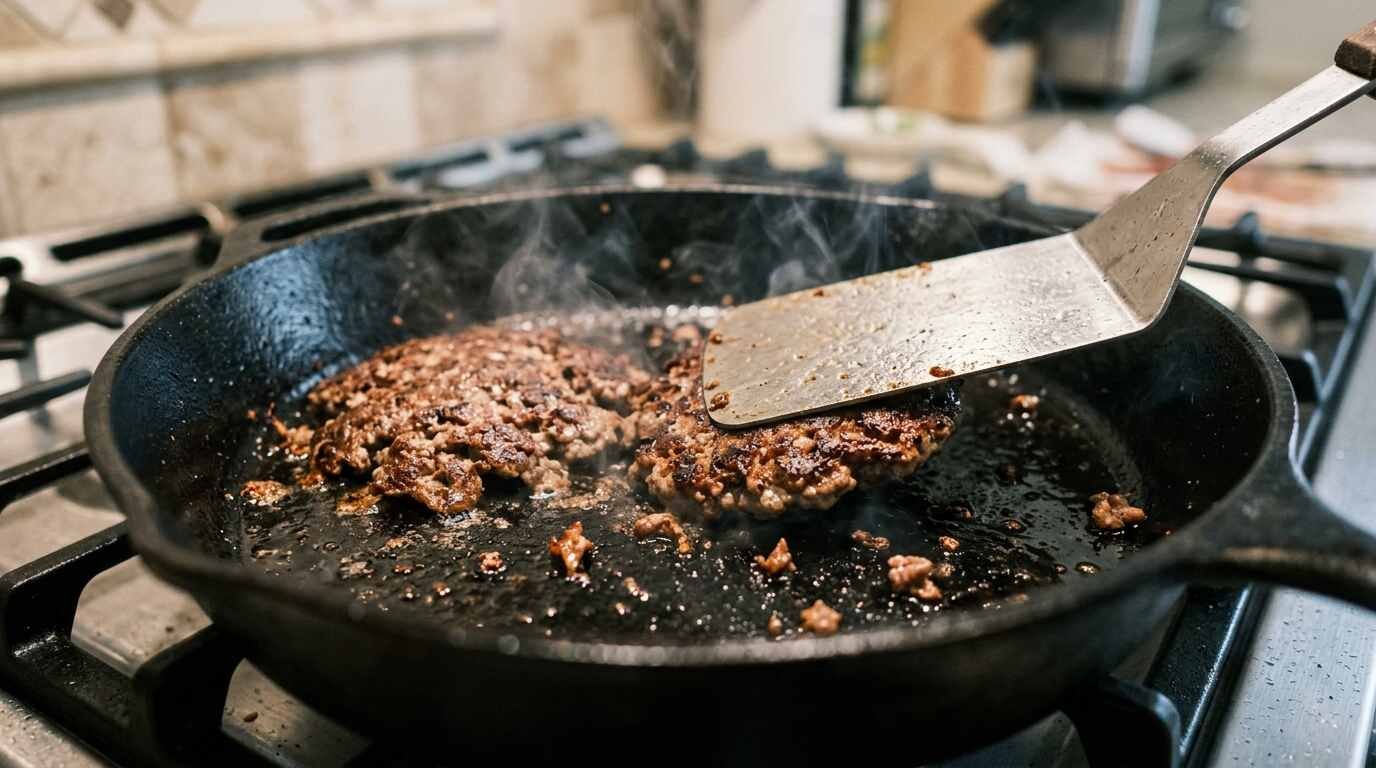
Thick iron does one job better than thin metal: it holds its temperature when cold food hits it. A thin pan drops several degrees the moment a patty lands and then fights to recover. Iron sags less and recovers faster, which is why the same pan suits a smashed burger, a pile of diced potatoes, strips of bacon, and a buttered sandwich pressed flat with a spatula.
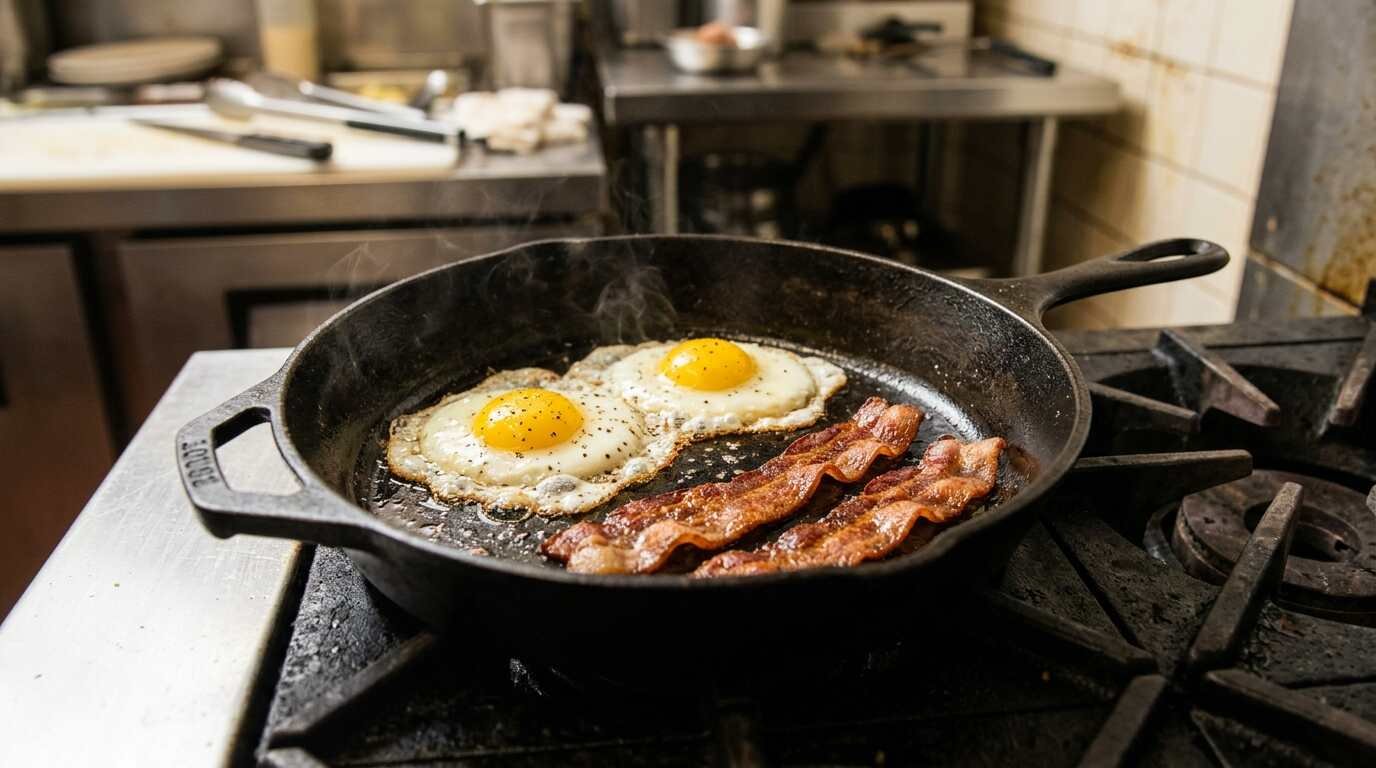
The 12-inch size matters here. It fits four strips of bacon, two diner-size patties, or a griddled sandwich with room to flip it. The helper handle makes a loaded pan manageable, and the pour spouts give hot bacon fat somewhere to go that is not the stovetop. The pan is also oven-safe, so a skillet of home fries can finish under heat the way a short-order cook would finish them at the back of the line.
Preheating is the whole technique. Set the pan over medium heat for a good five to ten minutes before any food goes in, because iron heats slowly and a pan that looks ready on the surface can still be cold at the edges. A smashed burger depends on that patience: the patty goes down on a hot, lightly oiled surface, gets pressed flat with a stiff spatula in the first few seconds, and is left alone until a dark crust forms. Home fries follow the same logic, since potatoes that hit a lukewarm pan steam in their own moisture and never brown.
The honest limit is scale. A commercial flat-top has a cooking surface measured in feet and heat zones that keep a hot side, a warm side, and a holding side going at once. A single skillet is one zone and one batch. Cooking for four means cooking in rounds, with the pan reheated between them. For cooking style, the diner comparison runs to texture and crust, not capacity.
The Trade-Offs: Weight, a Rough Start, and a Hot Handle
Three things come with this pan, and anyone buying it should know them before the box arrives.
First, the weight. At over 8 pounds, it is heavy enough that flipping or tilting it one-handed takes real wrist strength, and moving a full pan from burner to oven is a two-hand job (the helper handle exists for exactly this reason).
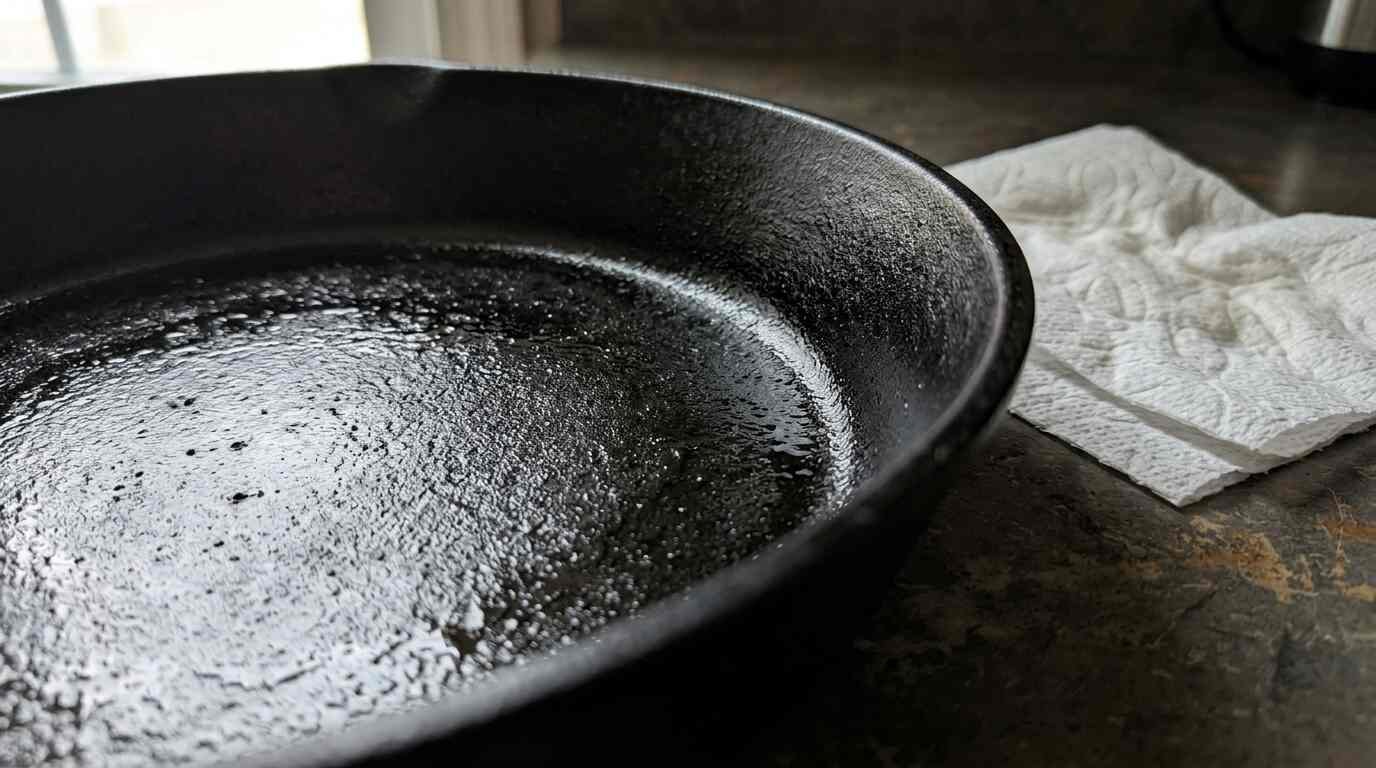
Second, the surface. America’s Test Kitchen found that the Lodge began with a rougher, slightly pebbly surface than the expensive artisan pans, and that eggs stuck while it was new. With repeated use the seasoning built up and the pan became close to nonstick. The pre-seasoning gets the pan started; it does not finish the job. The earlier guide to seasoning cast iron on this site covers how that layer forms and why a little soap will not undo it.
The rough start has a practical workaround: feed the pan fat early. Bacon, burgers, and fried potatoes lay down seasoning faster than lean or delicate foods do, so the first few weeks go better with those on the menu and the eggs held back until the surface has smoothed out. Long simmers of acidic foods, such as a pot of tomato sauce, are generally better left to another pan until the seasoning is well established, since acid can dull a young finish.
Third, the handle. It is iron, it conducts heat, and after time on a burner or in an oven it will burn a bare hand. A towel, a mitt, or a silicone sleeve belongs next to the stove from the first use.
What the Professional Testers Found
In its cast iron skillet testing, America’s Test Kitchen named the Lodge 12-inch a Best Buy and placed it in the highly recommended tier next to the Smithey No. 12, the pricier artisan pan that took the top spot. Their verdict on the comparison was that the Lodge “offers equivalent performance at a bargain price.” The testers also credited the heavy build for steady heat and good browning, and reported that after seasoning built up the pan released food and cleaned easily.
That finding fits a theme that runs through the debate over where to spend money on iron. The Lodge vs. Le Creuset comparison and the guide to where carbon steel, cast iron, and stainless each win both reach a similar place: for the work a skillet actually does, price tracks finish and weight more than it tracks results.
The Verdict: Pros, Cons, and Who It Suits
Pros
- Holds heat well, which suits searing, smashing, and browning
- Pre-seasoned and usable on arrival
- The 12-inch size fits diner-scale portions
- Helper handle and pour spouts make a heavy pan easier to manage
- Works on gas, electric, induction, in the oven, and over a fire
- Made in the USA, with a limited lifetime warranty
Cons
- Heavy, at over 8 pounds
- The surface starts out rougher than premium pans, and eggs may stick at first
- Hand wash only, with seasoning to maintain
- The handle gets hot
- Heats slowly and, on a smaller burner, unevenly (a common trait of cast iron, so preheat for several minutes)
Who it suits: home cooks who want a diner-style crust on burgers, potatoes, and bacon; anyone who wants one durable pan for the stovetop, oven, and grill; and buyers who would rather spend on groceries than on a luxury finish.
It also suits anyone willing to treat a pan as something that improves with use, since the seasoning, the surface, and the results all get better over months instead of arriving finished in the box.
Who should skip it: cooks who want a smooth, nonstick-feeling surface on day one, anyone who cannot comfortably lift a heavy pan, and households that want something to toss in the dishwasher.
Where to Buy It
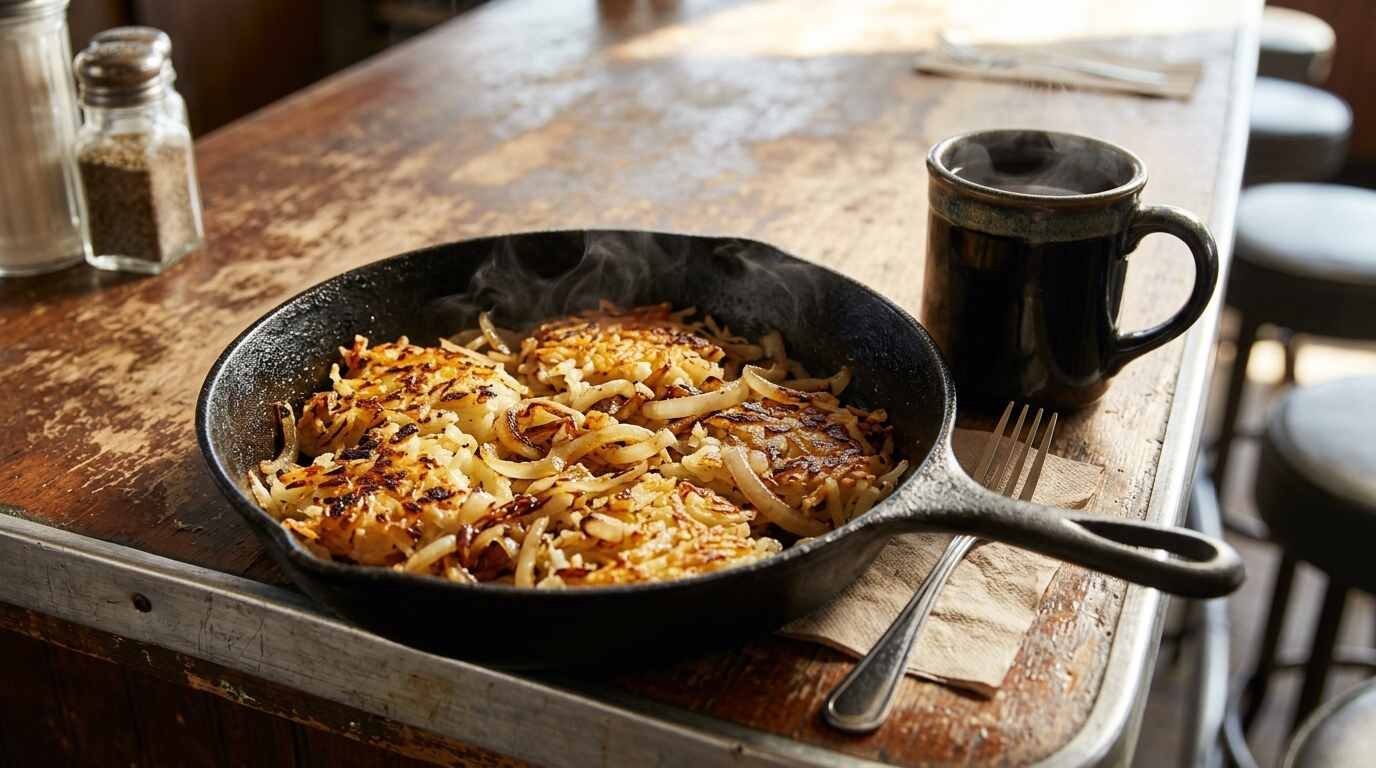
The pan reviewed here is the Lodge 12-inch pre-seasoned cast iron skillet.
The Lodge 12-Inch Pre-Seasoned Cast Iron Skillet is a heavy, USA-made pan built for searing, smashing, and baking. See it on Amazon (affiliate link)
As an Amazon Associate I earn from qualifying purchases. A commission may be earned if you buy through this link, at no extra cost to you.