 275 Route 25A, Mt Sinai, NY 11766



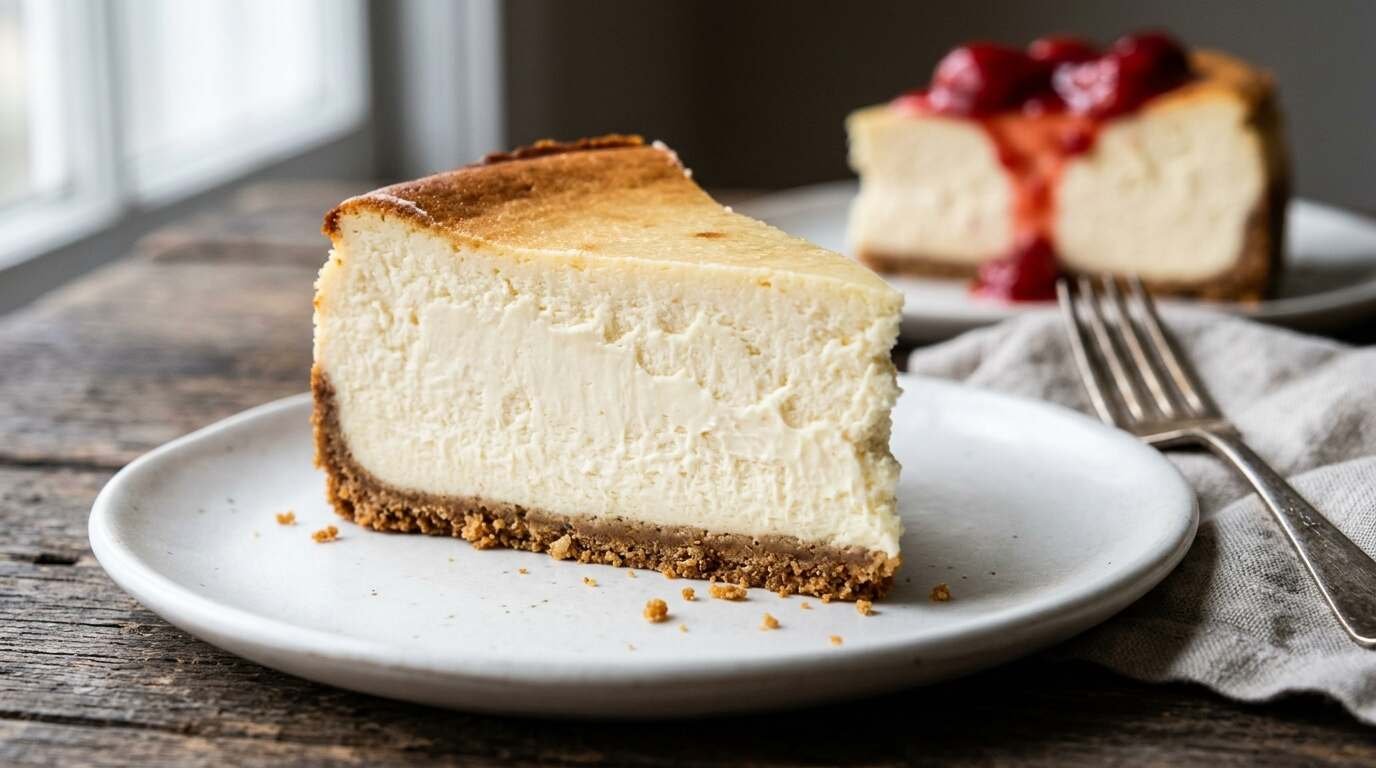
Three restaurants have a claim on the city’s cheesecake, and the record gives each one part of it.
New York cheesecake is a cream cheese cake, dense and baked, and it has three restaurant names attached to its origin. Arnold Reuben’s, Lindy’s and Junior’s each appear in the standard accounts. They overlap in time, they share a rumor or two, and none of them closes the question alone.
The cheese came first
The cake depends on an ingredient, and the ingredient has its own history. The Forward writes that in 1872 a dairyman named William Lawrence of Chester, New York, accidentally invented cream cheese while trying to make French Neufchâtel. Tori Avey, publishing a history by food historian Gil Marks, gives the same year and place.
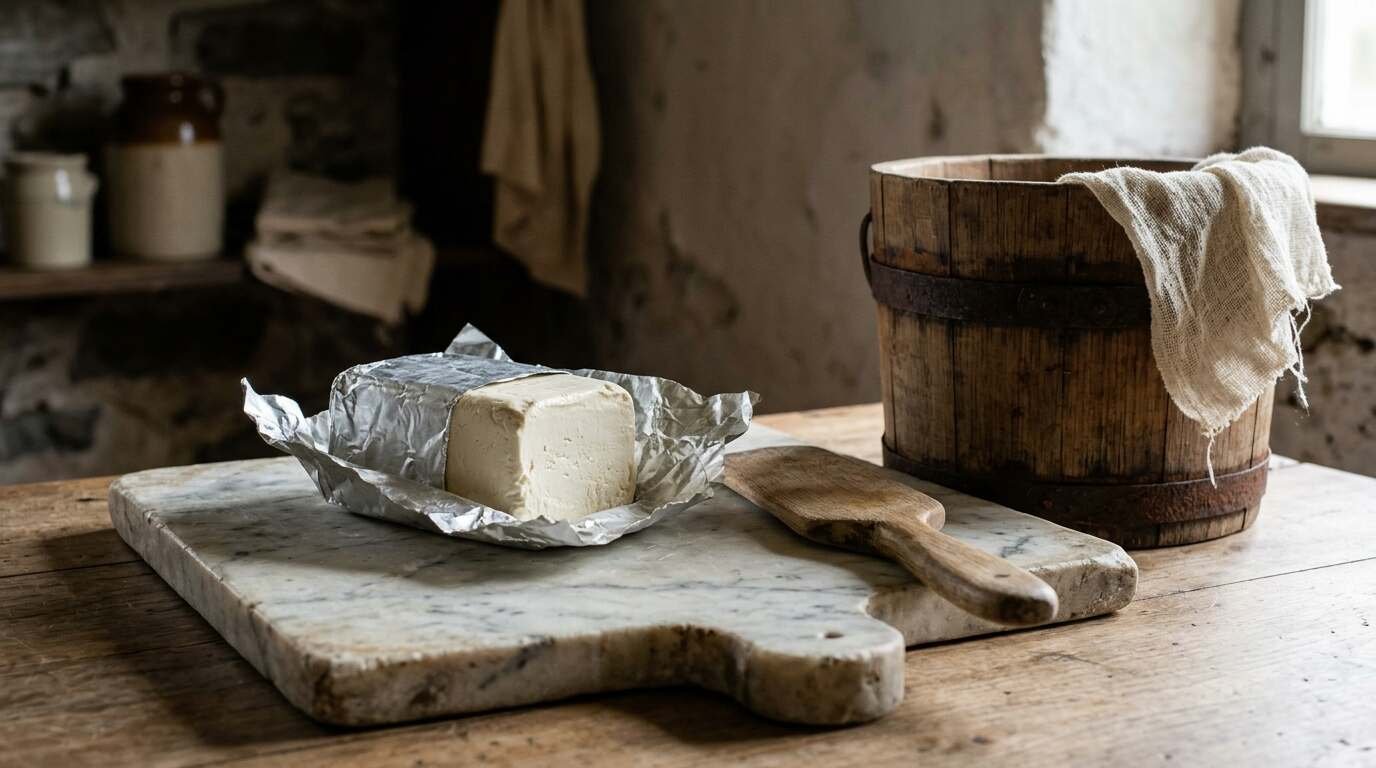
The Forward’s own correction runs against the legend. A separate piece, The Origins of Cream Cheese, says cream cheese was not accidentally invented in 1872: directions for making it appear in a Pennsylvania newspaper as early as 1769 and in many American books and cookbooks in the early 1800s. Lawrence was, however, the first to manufacture it in large quantities, beginning with Neufchâtel in 1872 and adding cream by about 1875 after the New York grocery firm Park & Tilford asked for a richer cheese. A distributor, Alvah L. Reynolds, sold it as Philadelphia Cream Cheese.
Older cheesecakes used curd cheese. According to Marks, most Americans kept preferring curd-cheese cakes until cream cheese versions became the rage of New York City in the early 1930s. The Forward adds that by the 1930s the city’s Jews were substituting the readily available cream cheese for traditional curd cheese. Barry Popik’s cheesecake page collects a quotation in the same direction: that the cream-cheese cake was introduced largely by Jewish delicatessens in New York, and that German immigrants had brought cheesecake to the city earlier.
Arnold Reuben and a cheese pie from 1929
In a history written by Marks and published on Junior’s own blog, Arnold Reuben is credited with introducing New York cheesecake. Reuben was a German-Jewish immigrant who owned a series of Manhattan restaurants. He said that after tasting a cheese pie at a 1929 dinner party he got the recipe from the hostess and swapped cream cheese in for the curds. His cheesecake went to high-profile customers in the 1930s and was widely imitated by rival delis. The same article notes that Reuben also claimed to have created the Reuben sandwich in 1914.
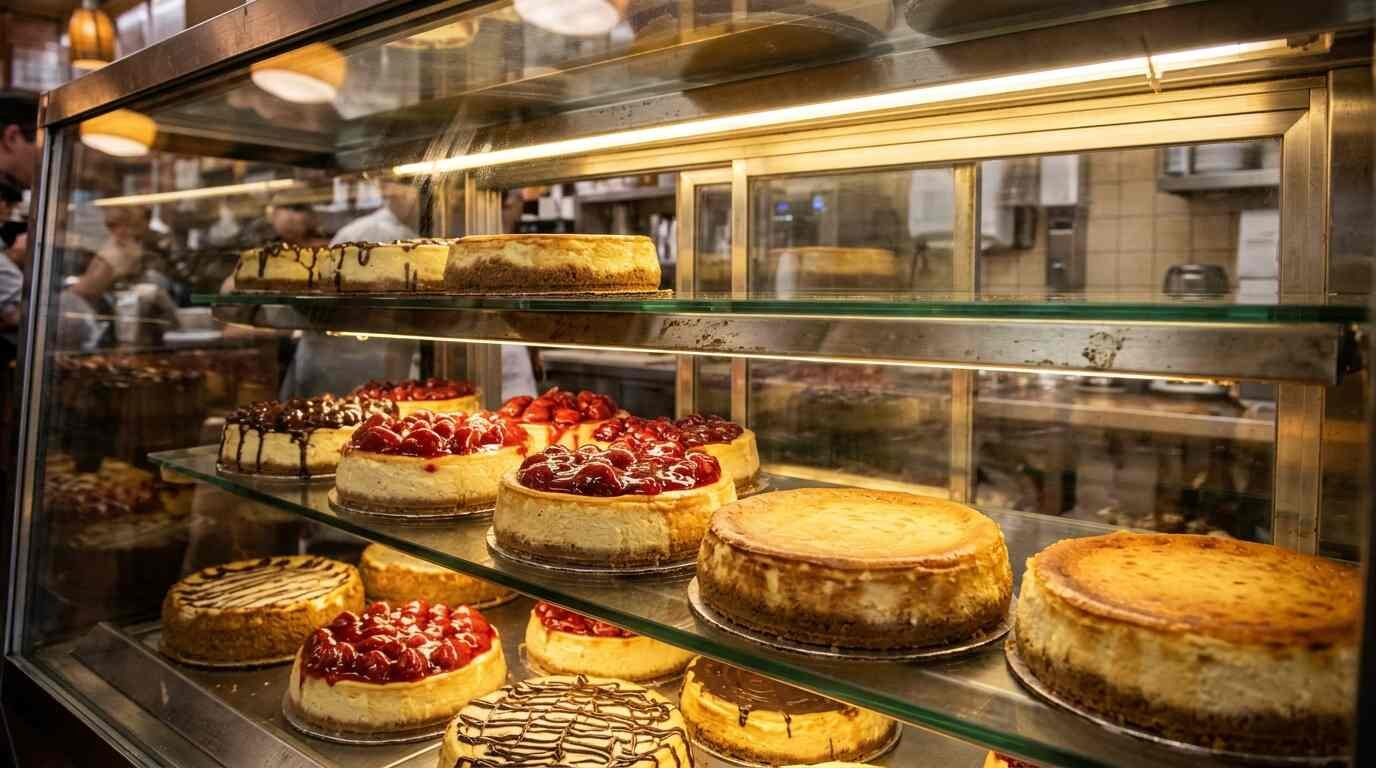
A separate account in Rockefeller University’s Selections places Reuben’s cheesecake at his Turf Restaurant on 49th Street and Broadway in the 1930s.
Lindy’s, Broadway, 1921
Leo “Lindy” Lindemann and his wife Clara opened Lindy’s in August 1921 on Broadway near 50th Street. Its cheesecake was creamy and topped with strawberries in a gel, according to Marks. A rumor says Lindy hired Reuben’s baker to get the recipe, though Marks writes that the two cakes were not identical. The Rockefeller account has the cheesecake reaching Lindy’s in the 1940s and repeats the same tale.
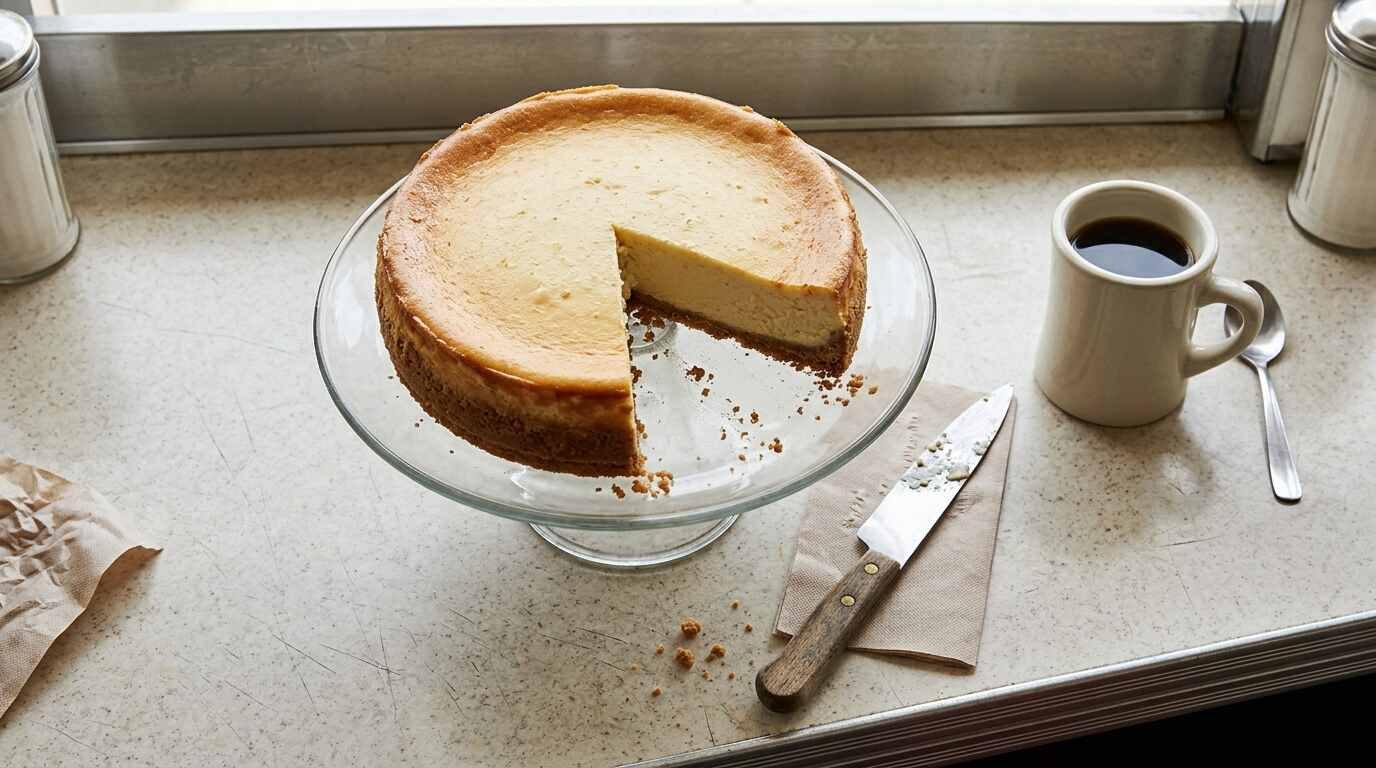
The newspaper record is earlier than the Rockefeller account. Popik’s page quotes columnist Ed Sullivan in the Washington Post on November 22, 1935, remarking that “Cheesecake Ike” had surely eaten more cheesecake at Lindy’s than any five New Yorkers. Sullivan mentions the restaurant’s cheesecake again on February 27 and August 17, 1936. Popik also lists a Syracuse Herald listing for “New York Cheese Cake” at a local pastry shop on October 6, 1931, which shows the name already traveling.
The best surviving Lindy’s recipe is dated. Clementine Paddleford published a version from chef Paul Landry in the Los Angeles Times on October 3, 1948, built on cream cheese and heavy cream in a “cookie dough” crust. Marks calls it the most reliable of the Lindy’s recipes in print. Marks says Lindy’s cheesecake was immortalized in Guys and Dolls, where Nathan Detroit tries to entice Sky Masterson into a wager on whether Mindy’s sells more cheesecake or apple strudel.
Junior’s, Flatbush Avenue
Junior’s tells a Brooklyn story. Per Rockefeller University’s account, Harry Rosen ran the Enduro Cafe at the flagship site on Flatbush Avenue starting in 1929 and renamed it Junior’s in 1950, honoring his two sons. His son Marvin said his father shipped home cheesecakes he tasted while traveling, and Rosen worked with baker Eigel Petersen to develop the cake still sold there. The restaurant’s own Secrets of Junior’s page agrees on the period: it places the cheesecake’s perfection in 1950.
The recipe has a defined shape. The Forward’s food writer describes the original New York cheesecake as it was served at Junior’s, perched on a thin sponge cake base, with graham cracker crusts becoming more common over time. Rockefeller’s summary describes the New York style as based on cream cheese, with a crushed graham cracker base, served plain without flavorings or toppings.
The 1973 contest
The Brooklyn claim has one dated, third-party endorsement. In 1973, Village Voice journalist Ron Rosenblum wrote that there would never be a better cheesecake than the one at Junior’s on Flatbush Avenue. The same year, Junior’s won a best-cheesecake contest run by New York Magazine, according to Rockefeller’s summary. Junior’s own site refers to a “Cheesecake Olympics” in 1973 as well.
That timing matters. A 1973 contest result tells readers which cake was best in 1973. It says nothing about which was first.
National cheesecake
New York’s cream cheese cake left the city. Aish reports that the first item Sara Lee produced was a New York Jewish-style cheesecake made with cream cheese, and a second Aish piece says the style went national in the 1950s. The Forward, for its part, observes that the New York of the 21st century is hardly the cheesecake mecca it was in the 20th.
What the dates support
The cheese comes first: Lawrence’s manufactured product dates to the 1870s, and cream cheese cakes were already circulating in New York in the early 1930s. Reuben’s account places a cream cheese cheesecake in Manhattan in the 1930s, from a 1929 recipe. Lindy’s has a restaurant open since 1921, a column mention in 1935 and a published recipe in 1948. Junior’s has a Flatbush address from 1929, a rename in 1950 and a 1973 prize. Each date proves something different, and the order in which the cakes appeared on menus is not settled by any of them.
Related dessert-case reading from the diner: why the pie case rotates and stovetop rice pudding for the dessert case.
Sources
- Gil Marks, The History of Cheesecake, Junior’s Cheesecake blog (July 27, 2016): https://www.juniorscheesecake.com/blog/2016/07/27/the-history-of-cheesecake
- Rockefeller University, Selections, And for Dessert: https://selections.rockefeller.edu/?p=4675
- Junior’s Cheesecake, Secrets of Junior’s Restaurant: https://www.juniorscheesecake.com/blog/2016/10/29/secrets-of-juniors-restaurant/
- The Forward, Deconstructing Cheesecake: https://forward.com/life/138267/deconstructing-cheesecake/
- The Forward, The Origins of Cream Cheese: https://forward.com/articles/139003/the-origins-of-cream-cheese
- Tori Avey, New York Cheesecake (history by Gil Marks): https://toriavey.com/new-york-cheesecake/
- Barry Popik, Cheesecake: https://barrypopik.com/blog/cheesecake
- Aish, Cheesecake: A History: https://aish.com/cheesecake-a-history/
- Aish, Jerusalem: Compass of the Diaspora Jew: https://aish.com/?p=144374
- CBS New York, Iconic Junior’s Cheesecake restaurant turns 75 years old: https://www.youtube.com/watch?v=HDVcH4vt3mM
Leave a Reply