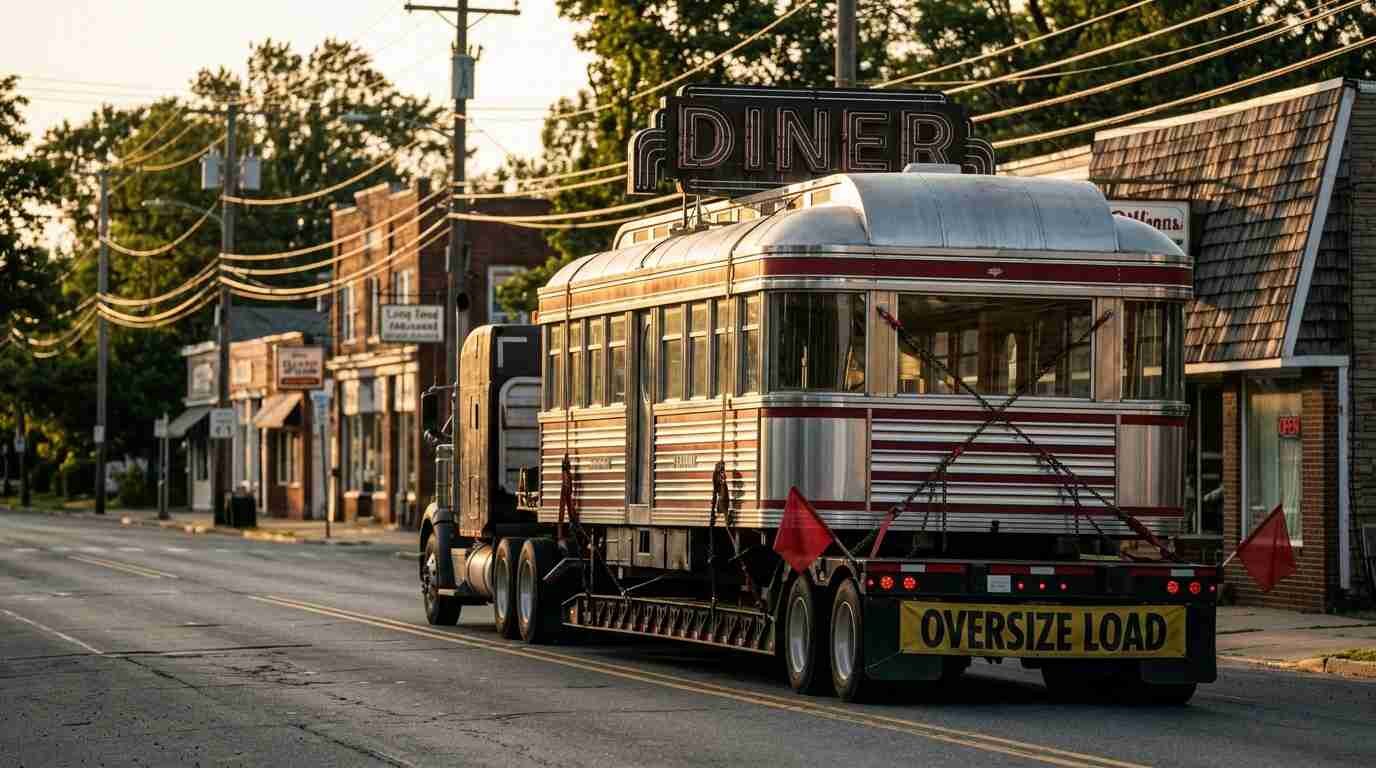
A building that fits on a flatbed truck is an odd thing to call a landmark. Landmarks are supposed to stay put. Yet the American diner, a form that now stands for permanence, comfort and the same stool every morning, began as a business on wheels and was engineered for most of its life to leave the factory by road. That single design decision explains the stainless steel, the narrow footprint, the Long Island diners that arrived by truck, and why a Brooklyn diner could be lifted off its corner in December 2025 and driven to a movie studio a mile away.
A Horse, a Wagon, and Hungry Newspapermen
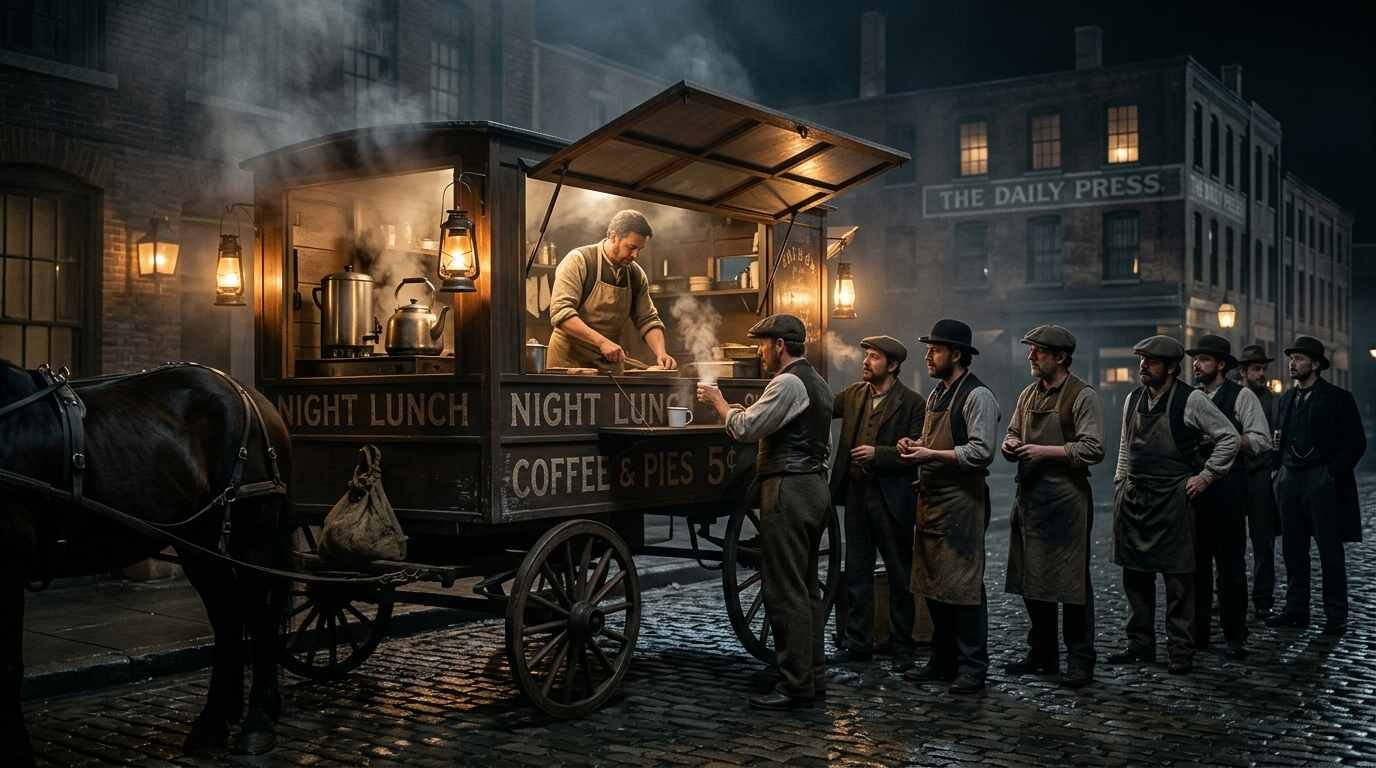
The story starts with a wagon, not a building. In 1872 in Providence, Rhode Island, Walter Scott began selling food from a horse-drawn wagon to employees of the Providence Journal. Wikipedia’s account of the form says his wagon can be considered the first diner with walk-up service. Customers no longer needed a seat in a dining room or a table cloth; they needed a window and a few coins.
That was the whole idea, and it was a radical one. A wagon went to where the workers were, parked, fed them, and left. Mobility was the product.
The Factory Takes Over
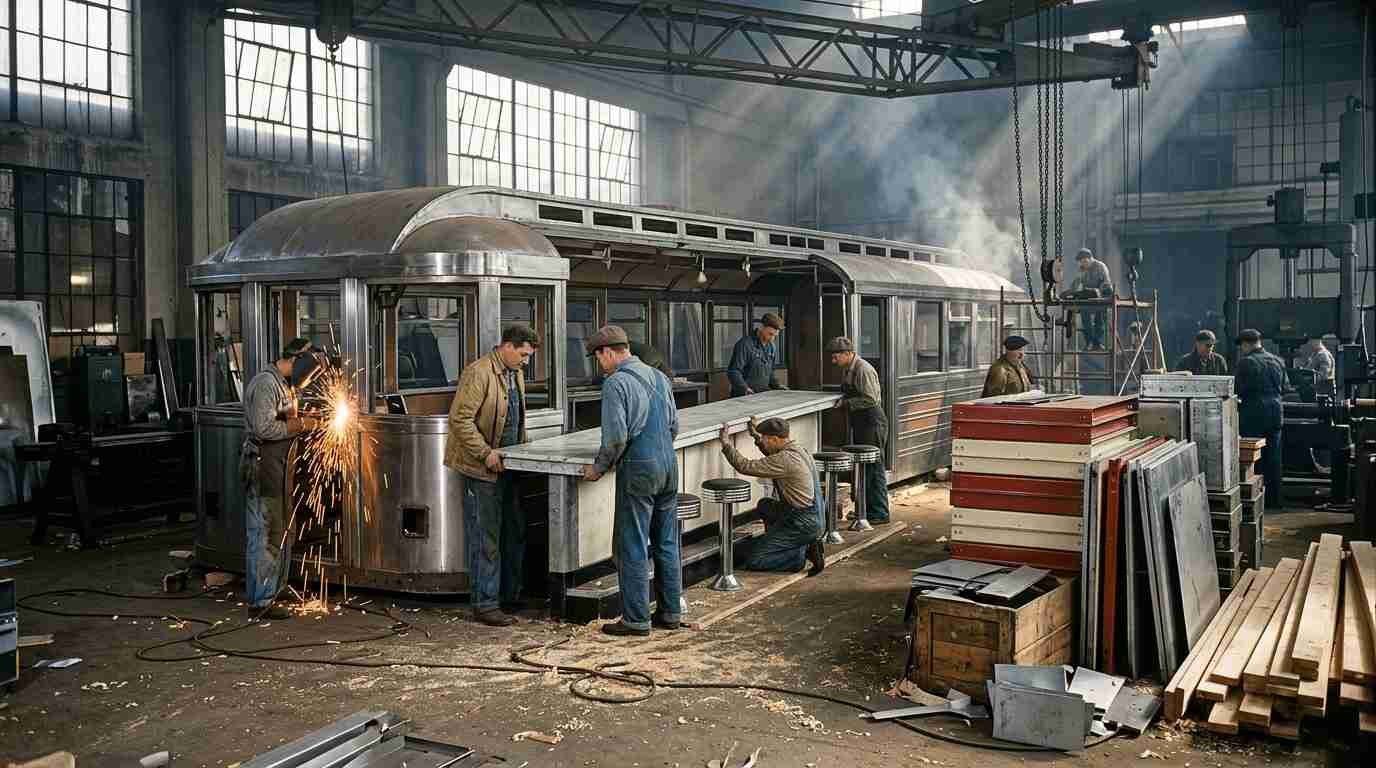
Hand-built wagons did not stay a craft for long. Thomas Buckley began commercial production of lunch wagons in Worcester, Massachusetts, in 1887, and Worcester became a manufacturing center for the type. Another account credits the Worcester Lunch Car and Carriage Manufacturing Company, established there in 1906 by Philip H. Duprey and Grenville Stoddard, as one possible origin of the diner proper.
New Jersey then took the idea and ran with it. The O’Mahony Diner Company of Elizabeth produced some 2,000 diners between 1917 and 1952, according to the same Wikipedia entry. Kullman, another New Jersey builder, turned out units that now sit on the National Register of Historic Places, including Poirier’s Diner and the Munson Diner.
Think of these builders as the Sears catalog of restaurants. A diner was assembled indoors, under a roof, by people who did that one job all day, then sealed, loaded and shipped to a prepared foundation. The customer in Suffolk County or the Catskills got a finished kitchen, counter and stools in one delivery. The buyer needed little more than a lot, a utility hookup and a coffee order.
Stainless Steel and the Streamliner Look
By the late 1930s the diner had picked up the glamour of the railroad. Roland Stickney’s Sterling Streamliner of 1939, built by J. B. Judkins, borrowed its curves from the fast trains of the day. Art Deco and Streamline Moderne details became common in diners of the 1920s through the 1940s, and by the 1950s stainless steel panels were the standard coat.
The look sold speed. Underneath it sat a plainer fact: a building that ships from a factory has to arrive in one piece, and a shell of steel and enamel is built for that kind of handling.
Cutchogue: A Diner Delivered to the North Fork
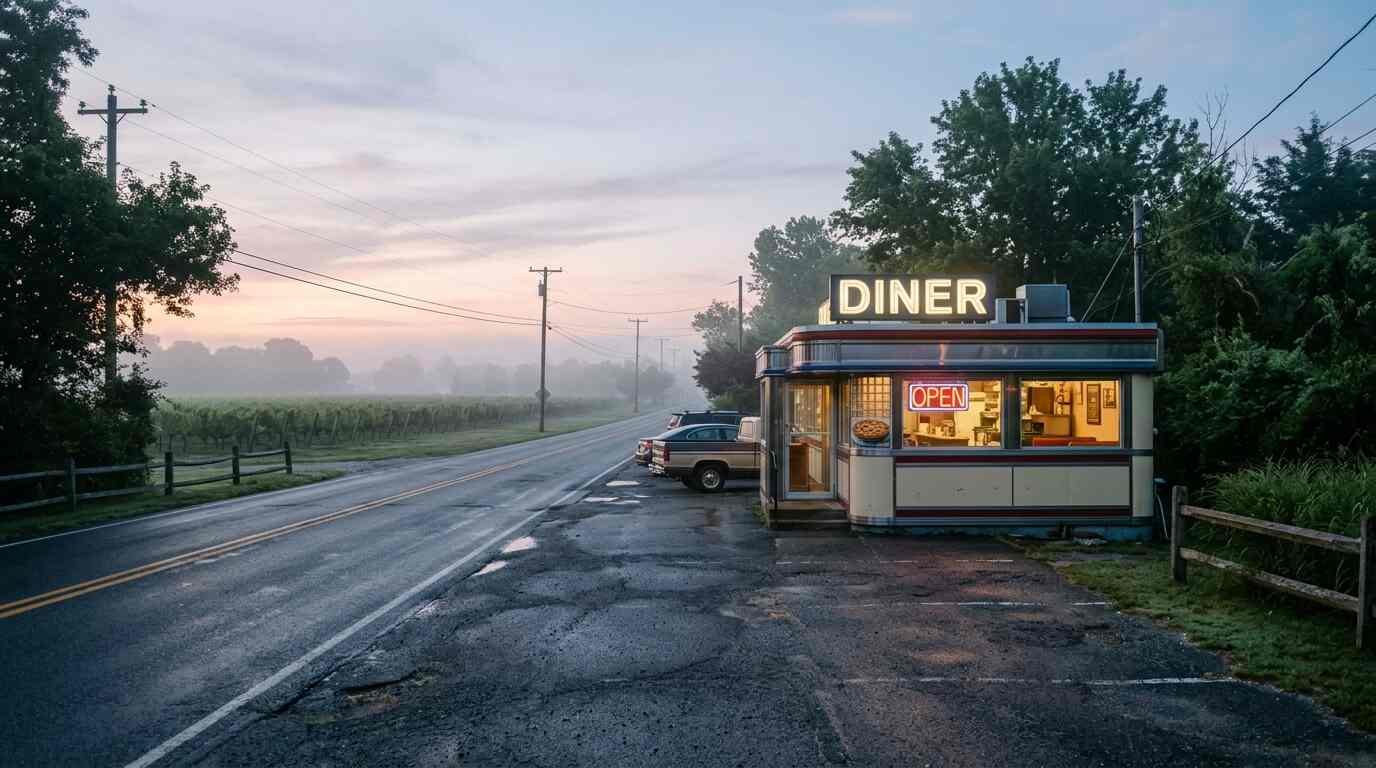
Long Island’s clearest example sits on Main Road in Cutchogue. The Cutchogue Diner opened in 1941 as Glover’s restaurant, according to North Forker’s profile of the diner. Kullman built it, delivered it on a flatbed truck, and constructed the foundation on site. One diner registry, Dinerville, lists the building as a 1940 Kullman, so the exact year is worth treating loosely; the delivery method is not in dispute.
John Touhey bought the diner in 1987 from Dave DeFriest. He remembers the sign that nudged him: “Get more out of life. Own a diner.” He kept the 1940s floor and stools, and his wife, Patty Lowry, handwrote the menu and logo.
The building’s second story is a kitchen story. Fernando Rodriguez came from Guatemala to Greenport at 18, finished high school through BOCES, and started at the diner as a dishwasher. He became its chef and manager, and now runs the daily operation, baking the pies himself after about 30 years. Several of his cousins work there too. That is the diner as a ladder, a pattern with deep roots on Long Island; the earlier story of the Greek diner owners of Long Island tells how that ownership took shape.
When the Flatbed Goes the Other Way

A diner built to arrive can also be built to depart, and that has produced some of the region’s saddest and strangest recent news.
The Shalimar Diner in Rego Park, Queens, was a Kullman, delivered to its site by flatbed in 1974, according to Untapped Cities. It closed in November 2018, and in 2019 preservationists organized a campaign to move it. The asking price was zero; a buyer had only to pay for transport. Attorney Ronald Hariri lined up a plan to take it to his property in the Riverhead area, but his architect found the zoning there barred it. Hariri told QNS, “We had the people lined up, we just couldn’t save it.” Demolition began on Wednesday, July 10, 2019. The building was designed to be moved. A zoning code written for a different kind of structure stopped it.
Compare the outcome on a Saturday in early December 2025, when a Williamsburg, Brooklyn diner was set on a flatbed truck and driven roughly a mile to a movie studio. CBS New York’s report with video shows the move in real time. Same design, opposite ending.
The most famous relocation belongs to the Munson Diner. Kullman built it in 1945 for West 49th Street and 11th Avenue in Manhattan’s Hell’s Kitchen. It was moved in 2005 to Liberty, New York, and was placed on the National Register of Historic Places on April 12, 2006. Television gave it a second career: it stood in for “Reggie’s Diner,” the rival to Monk’s Cafe, in Seinfeld episodes including “The Soup” and “The Bizarro Jerry,” as Wikipedia’s entry on the Munson Diner records.
Why Portability Still Matters
Because a diner can be moved, it can be saved, sold, filmed, rebuilt and renamed. A brick restaurant has one fate; a steel one has several. The Shalimar shows what happens when the road is blocked. The Munson and the Brooklyn diner show what happens when it is open.
Even the character of the place follows from the design. A diner is compact because it was made to travel, and compact buildings keep the cook, the counter and the customer within arm’s reach. The same volume-first thinking shows up in the cup, as the post on diner coffee and urn brewing explains.
Sources
- Diner — Wikipedia
- Munson Diner — Wikipedia
- Order Up: Cutchogue Diner Is a Family Biz in More Ways Than One — North Forker
- Cutchogue Diner — Dinerville
- Iconic Shalimar Diner to Be Moved from NYC to Long Island — Untapped Cities
- Developer Begins Tearing Down Rego Park’s Shalimar Diner — QNS
- Brooklyn Diner Placed on Flatbed Truck, Moved to Movie Studio — CBS New York