Six generations of Foster family hands have worked the Bridgehampton Loam of Sagaponack—a soil type so fertile, so particular to this sliver of the South Fork, that agricultural scientists have studied it the way sommeliers study grand cru terroir. When Marilee Foster and her brother Dean looked out over their remaining 40 acres in the early 2010s, they confronted a hard truth that so many generational farming families have faced on Long Island’s East End: the billionaires were buying, the developers were building, and potato farming alone could no longer sustain what a century of labor had grown. What they did next is one of the most compelling stories of American craft distilling in the last decade.
From Farmstead to Distillery: The Foster Family Legacy
The Foster family has farmed Sagaponack since the 19th century. At their peak, the family controlled more than 800 acres of potato fields—a figure that slowly eroded as Sagaponack transformed into one of the most expensive zip codes in the United States. By 2015, Forbes ranked Sagaponack as the second most expensive zip code in the country, a designation that signaled, plainly, that the economics of small-scale agriculture in this village were no longer viable (Forbes, 2015).
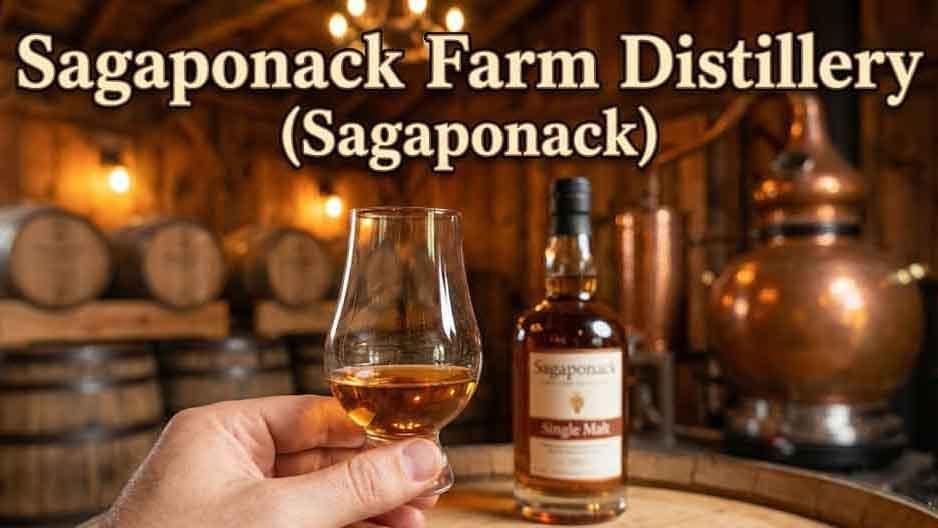
Rather than surrender to subdivision, Marilee and Dean Foster made a pivotal decision: they would distill. Their remaining 40 acres of estate farmland would become the foundation for a seed-to-glass spirits operation, one where every ingredient—from the Katahdin potatoes to the estate-grown wheat, rye, and heirloom corn—would originate on Foster soil. In 2012, Sagaponack Farm Distillery was formally established, becoming one of the first two Hamptons farm distilleries alongside Wölffer Estate Vineyards (Cottages & Gardens, 2020).
The property itself carries architectural and historical weight. The converted 1930s farmstead that serves as the distillery and tasting room was preserved specifically to avoid becoming a subdivision. Marilee made that case directly to the Town of Southampton’s Landmarks & Historic Districts board. The tasting room—a former dairy barn—retains its exposed wooden beams, a bar top cut from an elm that fell to Dutch elm disease on nearby Parsonage Lane in the 1980s, and a footrest fashioned from a historic Bridgehampton-Sag Harbor railroad tie (Cottages & Gardens, 2020).
The Distiller’s Hand: Matt Beamer and the Science of Seed-to-Glass
Behind every great spirit is a person of obsessive patience. For Sagaponack Farm Distillery, that person is Head Distiller Matt Beamer—a Michigan native, Michigan State University graduate, and former craft brewer who spent years at Utah’s Uinta Brewing Company before his palate led him from fermentation to distillation. Married to a Foster cousin, Beamer brought both kinship and craft to the operation.
His primary tool is a 1,200-liter hybrid pot and double column Bavarian Holstein still—a German-engineered instrument that would not look out of place in a Willy Wonka fever dream—all gleaming pipes, copper canals, and interlocking metal channels where heat and vapor negotiate the alchemy of proof (The East Hampton Star, 2022). Beamer operates this machinery with the focus of a craftsman who understands that the still is only as good as what goes into it.
The crown jewel of his potato work is the Katahdin variety—a round, white-skinned spud native to Maine but well-adapted to Sagaponack’s coastal wind and sandy loam—which produces a vodka that is, in Beamer’s own framing, dense, rich, and smooth, a direct expression of the soil that grew it. The wheat vodka, grown a half mile from the Atlantic Ocean, earned a Double Gold and Best of Class distinction from the American Distilling Institute’s International Spirit Competition in 2018, along with New York Vodka Distiller of the Year from the Finger Lakes International Wine & Spirits Competition that same year (Sagaponack Farm Distillery, 2018).
The Spirits Portfolio: A Farmer’s Breadth, A Craftsman’s Depth
What distinguishes Sagaponack Farm Distillery from the proliferation of boutique spirits operations that have emerged across the Northeast is the genuine commitment to estate-grown sourcing. The motto—From Seed to Glass, 100% Sagaponack—is not marketing language. It is an operational constraint the Fosters chose to impose on themselves, and it shapes every release.
The vodka lineup includes the flagship potato vodka, an estate wheat vodka, a hand-harvested cucumber vodka, and the remarkable Single Spud series—three separate expressions made from red, white, and blue potato varieties respectively, each barrel-aged in new American oak in a manner more reminiscent of whiskey production than traditional vodka craft. The aquavit, distilled with estate-grown caraway, dill, cilantro, and fennel, represents one of the more unusual and accomplished expressions of that Scandinavian-rooted category produced on American soil.
The distillery’s most significant recent milestone was the December 2022 release of its first bourbon—a 94-proof, estate-grown straight bourbon whiskey built from 76% Silvermine heirloom corn, a variety dating to the late 19th century, with Foster-grown rye and malted barley completing the mash bill. Aged four years in 18 new American white oak barrels, it became Long Island’s first estate-grown bourbon whiskey (The South Forker, 2022). Subsequent releases have included a 5-year Sagaponack rye whiskey finished in a used oak barrel that previously aged Long Island Cabernet Sauvignon, and a 5-year bourbon finished in a Spanish sherry barrel—a refinement that suggests Beamer is as interested in finishing as he is in distilling.
The Tasting Room: A Cocktail Lounge at the Edge of the Atlantic
Marilee Foster’s vision for the tasting room was specific: not a gift shop attached to a production facility, not a weekend hobby experience, but a genuine cocktail lounge—a place of conversation, craft, and atmosphere. The result, built within that former dairy barn and overlooking open farmland, achieves something rare in the Hamptons experience economy. It feels earned rather than designed.
Events throughout the year include live music, food truck collaborations, and educational programming where visitors meet Beamer and learn about the agricultural decisions that precede every bottle. Collaborations with local operators—Springs Brewery, Chef Juliana White of Plate in Progress, and farmers from the broader East End community—reflect Marilee’s philosophy that the distillery exists within a network of South Fork makers rather than above it (Hamptons.com, 2022).
The tasting room is available for private events, corporate gatherings, and weddings. The patio overlooks working farmland and provides an outdoor context that few event venues—regardless of price—can replicate.
Art, Identity, and the Labels That Tell the Story
One dimension of Sagaponack Farm Distillery that goes largely unexamined in broader coverage is the role of Marilee Foster as a visual artist. She designs all the distillery’s bottle labels by hand, creating original artwork that functions as a graphic archive of the farm’s history and character. The Single Spud label bears her pencil rendering of one of the family’s antique tractors—a machine that still lives on the property. The cucumber vodka label traces vine and flower in careful botanical detail.
This integration of hand-drawn art into a commercial spirits product reflects a sensibility that resists the templated aesthetics of the modern craft beverage industry. Each label is an argument for specificity, for the irreplaceable quality of objects made with individual attention. In that regard, Marilee Foster is doing for her bottles what the best artisan producers do for any handmade good—making the container itself worth pausing over.
Land Stewardship and the Long Game
Sagaponack Farm Distillery is not, at its core, a beverage company. It is a land stewardship operation that happens to produce award-winning spirits. The Foster family’s decision to convert farming acreage into a distilling operation rather than sell to developers preserved working agricultural land in one of the most development-pressured markets in the United States. That decision carries implications that extend far beyond the tasting room.
The American Farmland Trust has long documented the accelerating loss of agricultural land to development in the Northeast, with Long Island’s East End among the highest-risk regions given land values and proximity to New York City (American Farmland Trust, 2023). What the Fosters built at 369 Sagg Road is a model—imperfect, evolving, particular to their circumstances—for how generational farming families can maintain their relationship to the land while adapting to an economy that has, in many ways, moved past them.
The spirits are the medium. The land is the message.
Visiting Sagaponack Farm Distillery
Sagaponack Farm Distillery operates year-round with seasonal hours. The tasting room is open Thursdays through Saturdays from 1–8pm and Sundays from 1–6pm, with bottle sales available seven days a week by appointment or during office hours. The property is family-friendly with supervised children welcome; dogs are not permitted on the premises. Large party reservations and case purchases require advance coordination.
Spirits are available on-site and distributed to a distinguished list of East End establishments including Nick & Toni’s, Topping Rose House, Gurney’s Star Island Resort, and Gramercy Tavern in New York City, among others.
Address: 369 Sagg Road, Sagaponack, NY 11962 Phone: 631-537-7300 Website: sagaponackfarmdistillery.com Instagram: @sagaponackfarmdistillery Hours: Thursday–Saturday 1–8pm | Sunday 1–6pm | Bottle Sales 7 days (call ahead) Events: Private parties, weddings, corporate gatherings — call for reservations