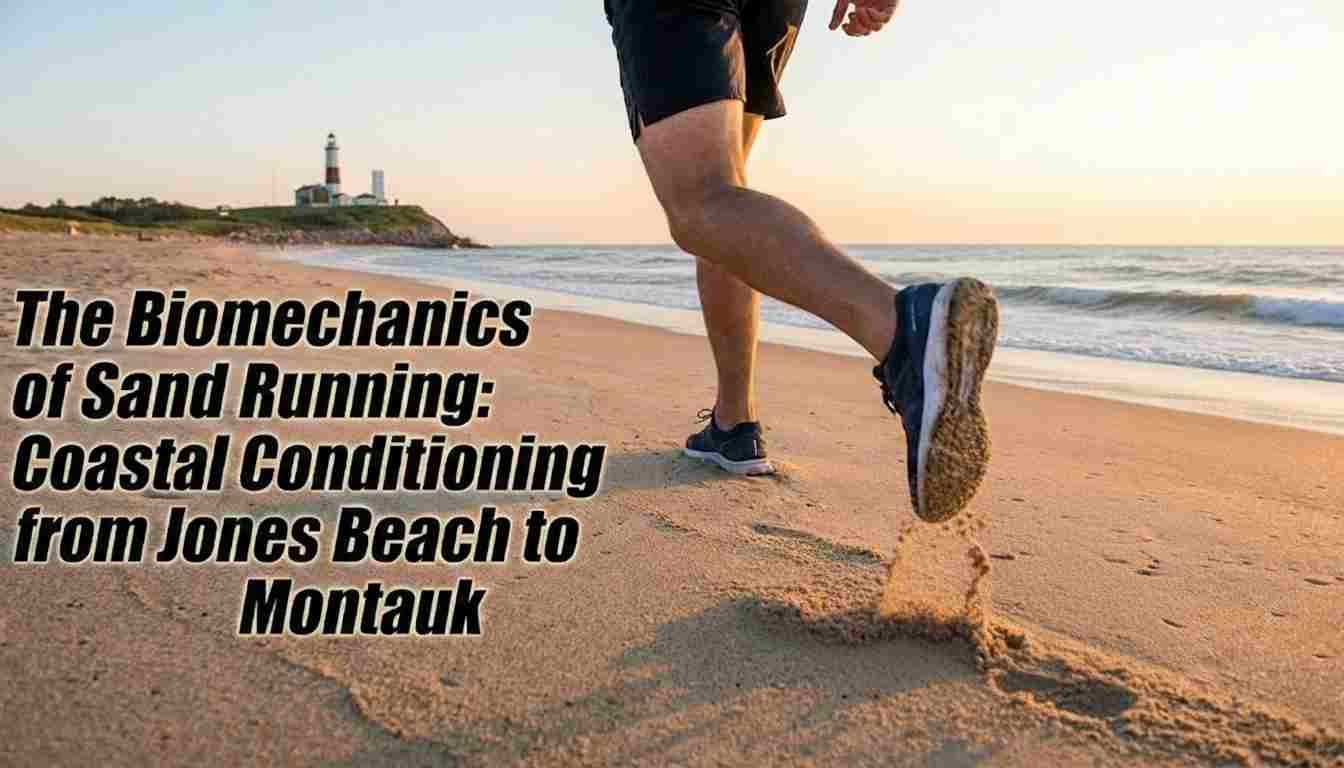
Sixty yards into a barefoot run on dry sand at Jones Beach, something in your body shifts — and not in the way you expected. The stride you’ve logged ten thousand times on pavement, the familiar rhythm of heel-strike, push-off, repeat, simply doesn’t work here. The ground moves. It gives, absorbs, and redistributes force in ways that concrete never will, and your neuromuscular system, with all its unconscious intelligence, begins immediately recalibrating. This is the moment most runners either discover something profound about their own bodies or quit and walk back to the boardwalk for a hot dog. The ones who stay learn something that no treadmill or track can teach.
Long Island’s coastal corridor — from the six-mile Atlantic face of Jones Beach in Nassau County, east through the barrier beaches of Fire Island, through the Hamptons dune breaks, and all the way to the dramatic terminal moraines of Montauk Point — offers one of the most varied and physiologically demanding sand running environments on the Eastern Seaboard. The terrain changes character dramatically as you move east: compact, wet surf-line sand gives way to deep, dry mid-beach, then to firmer dune paths packed with beach grass root systems, and finally to Montauk’s rocky, wind-sculpted transitions where sand meets stone. Each surface demands a different body.
What the Ground Takes and What It Gives Back
Running biomechanics begins with ground reaction force — the force the earth pushes back against your body with every footfall. On asphalt, that force is nearly instantaneous; the pavement doesn’t yield, so the energy returns directly through your skeletal system. This is efficient, and it is also why pavement running accumulates injury load at the rate it does. The tibia, the knee meniscus, the hip joint, and the lumbar spine absorb what the road refuses to.
Sand refuses nothing. Dry sand at the high-tide line, the kind you encounter mid-beach at Jones Beach or along the dune edge at Cooper’s Beach in Southampton, has a ground reaction force return of roughly 40–50% compared to pavement’s near-total energy return (Journal of Sports Sciences, 2013). That missing energy isn’t lost — it’s absorbed into the sand matrix, dissipated as the grains shift and compress beneath your foot. What this means for the runner is simultaneously good news and bad news. The good news: your joints are spared the percussive load that accumulates into shin splints, stress fractures, and knee deterioration. The bad news: your muscles must supply the energy the ground no longer returns. You are, in effect, running in a substrate that constantly takes a percentage of every stride’s investment.
Research published in the Journal of Experimental Biology found that running on dry sand increases the metabolic energy cost of locomotion by 1.6 times compared to running at the same pace on firm surfaces. Translate that into practical terms: a five-mile run on deep dry sand at Jones Beach demands the physiological output of an eight-mile road run. The long Island Greenbelt trail system, which our regulars at the Heritage Diner know well from the Mount Sinai area, offers hard-pack trail as a useful recovery contrast — firm enough to return energy efficiently, but forgiving enough to reduce impact load. Sand, by comparison, is another discipline entirely.
The Muscle Chains That Coastal Running Activates
The kinetic chain adjustments that sand demands reveal compensation patterns that years of road running have quietly installed. On firm ground, the gluteal complex — gluteus maximus, medius, and minimus — can afford some complacency. The body finds efficient shortcuts. On sand, those shortcuts disappear. The unstable substrate forces true hip stabilization with every single footfall, activating the gluteus medius in particular, which is responsible for preventing the lateral pelvic drop (Trendelenburg pattern) that underlies so many knee and IT band injuries in road runners.
The Achilles tendon and calf complex tell a more complicated story. Barefoot or minimally-shod sand running naturally encourages a forefoot or midfoot strike, removing the heel-strike pattern that cushioned running shoes incentivize. This shifts mechanical load from the knee extensor chain onto the ankle plantarflexor chain — from the quads and patellar tendon toward the soleus and Achilles. The adaptation is beneficial for many runners, particularly those with anterior knee pain histories. But it arrives with its own transition cost. The Achilles, if not progressively loaded, is vulnerable. Achilles tendinopathy among runners who transition too quickly from pavement to barefoot sand work is a well-documented clinical pattern (British Journal of Sports Medicine, 2015).
The core musculature receives perhaps its most honest assessment on deep sand. Rotational control — the ability to resist unwanted trunk twist as each leg drives through an unstable surface — demands constant activation of the transverse abdominis and oblique system. Watch an experienced sand runner from behind and the spine stays remarkably quiet: no lateral sway, no excessive arm crossing, no hip-drop. Watch a novice and you see the truth of their core strength in real time, every wobble and compensation written into the stride.
The Long Island Corridor: Surface Conditions Mile by Mile
Jones Beach presents the ideal laboratory for understanding sand gradients because it offers every major surface type within a half-mile cross-section. The wet sand at the water’s edge — where the last wave saturated the grains and surface tension still holds them compact — behaves almost like a firm trail surface. Ground reaction force return is significantly higher than mid-beach, stride length can approximate road running, and pace will reflect it. Many serious runners use this zone for tempo work: the cardiovascular and muscular demand of even this firmest sand still exceeds road running, but allows for meaningful speed development.
Move thirty yards inland to the mid-beach transition zone and the surface softens dramatically. This is training sand — high neuromuscular demand, significant metabolic cost, ideal for building the hip stabilizer and ankle complex strength that prevents lateral injuries. Pace management here is non-negotiable; perceived effort will chronically underestimate actual physiological load.
The dune-side path, where beach grass and root networks have bound the sand into something firmer but still giving, offers a middle ground that serious trail runners find particularly useful. The footing is unpredictable in a sophisticated way — firm patches interrupted by soft pockets — which demands the kind of rapid stride adjustment that builds proprioceptive intelligence more effectively than any balance board or stability exercise.
Moving east toward the Hamptons and eventually Montauk, the character of the coastline itself shifts. The Southampton and East Hampton beach corridor carries wider, deeper sand on average, and the dune structures are more dramatic. Montauk’s beaches, particularly at Ditch Plains where the surfing community has made the town famous, often feature cobble and pebble intrusions along the water’s edge — a surface that demands genuine technical attention. The last miles before Montauk Point, where the South Shore’s sandy Atlantic face gives way to the rocky terminal moraine geology, present a transition that rewards only runners who have built the full neuromuscular toolkit that sand training develops over months.
The Craft of Barefoot Progression
No piece on sand running biomechanics would be complete without addressing the transition protocol that separates sustainable conditioning from injury. There is a parallel in leather craftsmanship that I find exact: you cannot rush the break-in of a new English bridle leather briefcase. The hide needs time, the stitching needs stress under controlled conditions, and the structure needs to adapt to its specific load before it can be trusted with full use. The foot, after years of cushioned shoe dependency, is in precisely the same situation.
The standard clinical recommendation for transitioning to sand running begins at no more than 10–15 minutes of barefoot exposure in the first two weeks, prioritizing wet, compact sand at the water’s edge before introducing mid-beach work. The Achilles and plantar fascia need progressive tensile loading, not sudden demand. Joint mobility in the ankle — particularly dorsiflexion range, which cushioned heels have artificially limited in most adult runners — needs concurrent development through deliberate daily mobilization.
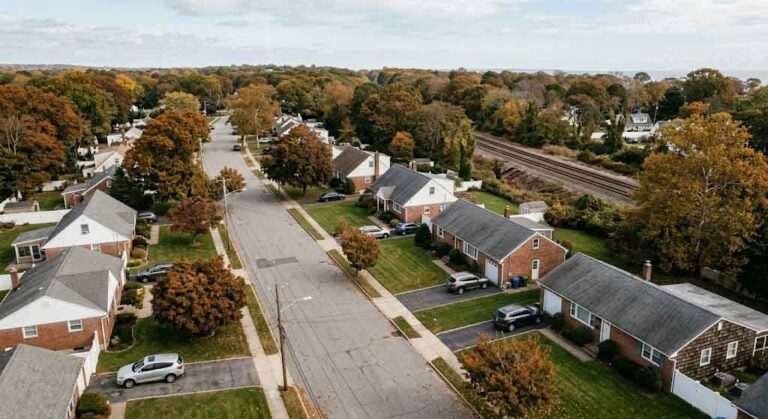
For runners based along the North Shore, where our sourdough bread customers at the Heritage Diner tend to live, the geography presents a useful progression ladder. Begin at Wildwood State Park in Wading River, where the beach is accessible and the crowds light enough for focused work without the Jones Beach summer chaos. The sand quality there is mid-grade — not the finest-grain South Shore Atlantic sand, but workable and progressively available year-round. Progress east in the off-season when the Hamptons corridor empties: October through April on those beaches is some of the finest athletic training terrain on the Eastern Seaboard, with the added benefit of cold salt air that physiologists note improves respiratory efficiency and hemoglobin affinity for oxygen at moderate intensities.
Cold Season Sand Running: What the Off-Season Reveals
The runners who train year-round on Long Island’s coast discover something the summer crowd never will: that winter sand, compacted by cold and coastal storm saturation, runs differently than July sand. The moisture content of the sand substrate changes its mechanical properties significantly. Rain-saturated or tide-compacted sand approaches a near-firm surface, particularly after overnight temperatures freeze the upper layer, and the resulting stride feels almost like packed trail. This is not a shortcut; it is a different training stimulus. The cold-season firm-sand run at dawn on an empty Montauk beach is, for those who have experienced it, as close to perfect athletic conditions as this coast offers.
The physiological data supports what the experience confirms: colder ambient temperatures reduce cardiac output requirements at equivalent workloads, meaning the cardiovascular system can sustain higher mechanical effort for longer durations before reaching threshold. Runners who maintain coastal training through Long Island winters routinely return to spring road races with measurably superior force production and ankle stability compared to those who retreated to treadmills for four months. The machine can replicate pace. It cannot replicate ground.
The Community That Runs at the Edge of the Water
Twenty-five years of watching people come through the Heritage Diner on Route 25A has given me an unscientific but deeply reliable window into how communities structure their physical culture. The runners who come in after North Shore trail runs from the greenbelt systems above Mount Sinai carry a different quality of tiredness than those I know to be weekend warriors at the gym. And the small but devoted community of coastline runners — the ones who drive down to the Sound beaches off the North Shore or take the parkway south to Jones Beach — bring something else again: a satisfaction that comes from having negotiated with an environment that didn’t make it easy.
Sand running is not a trend, despite whatever social media has made of it in recent cycles. It is, in fact, one of the oldest forms of athletic conditioning on record — Pacific Islander cultures have trained on beach terrain for millennia, and the modern rediscovery of barefoot biomechanics is largely a return to what pre-industrial human movement always understood. The body becomes more itself when the ground demands that it work. Joints find their true alignment. Muscles that were borrowed against for years of shortcut movement get their accounting.
From Jones Beach to Montauk, Long Island’s coastal corridor is one of the finest extended running environments in the Northeast. The surface variety, the distance available, the seasonal transformation, and the physiological demand it creates across multiple training modalities make it genuinely irreplaceable. The runners who know this — who build their seasons around the beach in October, who run the Ditch Plains surf break in February, who drive the full South Shore corridor from Nassau to the East End over a summer of progressive training — are building something that road miles alone cannot provide.
The sand takes something with every stride. That is the point. What it builds in exchange is the kind of conditioning that holds up not just through a race season, but across years of athletic life.
Peter has operated The Heritage Diner at 275 Route 25A, Mount Sinai, NY since 2000. He is the founder of Marcellino NY, a bespoke English bridle leather atelier, and is preparing to launch Maison Pawli, a boutique North Shore real estate venture, with his wife Paola in 2026. Read more at heritagediner.com/blog.