New York State is producing some of the best rye, gin, and fruit brandies in the country. And most of it’s happening within a four-hour drive of Mount Sinai.
That’s not marketing copy. It’s a geological fact dressed up as a road trip. The Finger Lakes — eleven glacially carved trenches filled with cold, deep water — sit atop alternating layers of Devonian-era limestone, shale, and siltstone that took 400 million years to form when central New York was a shallow sea. That limestone filters the groundwater that feeds the farms, the farms grow the grain and fruit, and the grain and fruit go into stills run by people who actually understand what they’re working with. The result is a spirits scene that, ten years ago, barely existed — and today, rivals anything coming out of Vermont or the Pacific Northwest.
This is a three-day route. It’s built around four distilleries and two base camps, and it can be done any season, though late September through October is when the valley roads turn amber and the tasting rooms are still fully staffed.
Day One: Seneca Lake — The Flagship Stop
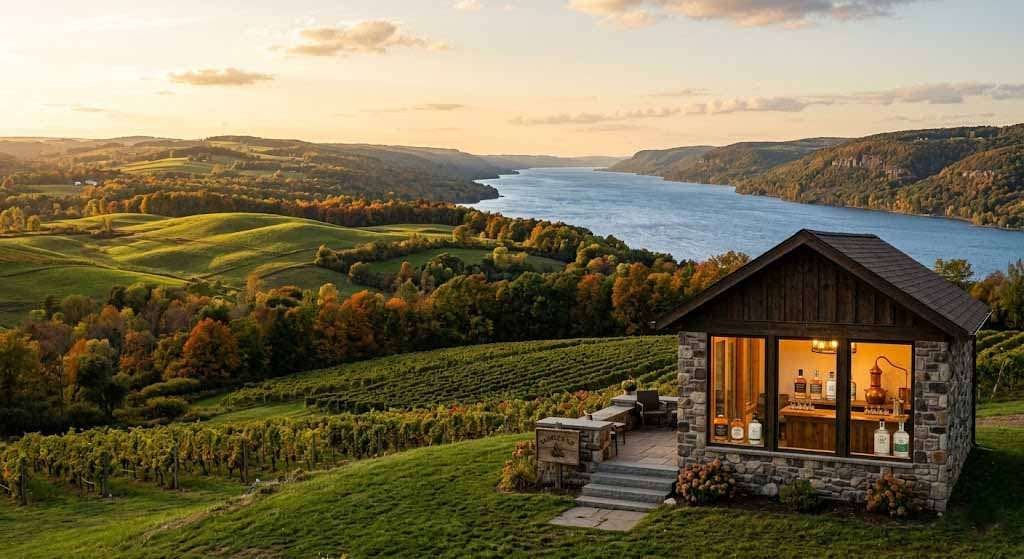
The drive from Long Island to Watkins Glen is just under four hours via I-84 to Route 17. Do it in the morning. By early afternoon you’re descending into a landscape that still surprises people who’ve never been: miles of vineyard rows stitched between deep blue water and low hills that roll south toward Pennsylvania. The light here on a clear day has the quality of an old photograph.
Finger Lakes Distilling in Burdett (4676 State Route 414) is the anchor of any serious spirits itinerary in this region. It was the first standalone distillery in the Finger Lakes — before the wave, before the trend — and it still sets the standard. The tasting room overlooks Seneca Lake directly, and the stills are visible from the floor so you can watch the process while you drink the product. Their flagship line covers McKenzie Bourbon and McKenzie Rye, both made from locally grown grains and aged on-site. The rye is the one to focus on: spicy and clean on the nose, with a grain sweetness underneath that doesn’t disappear in the finish. They also produce a Vintners’ Vodka distilled from Finger Lakes grapes — one of those ideas that sounds like a gimmick and tastes like a revelation. The full portfolio runs from whiskey and gin to brandy and liqueurs, all built from New York-grown ingredients.
Water from Hemlock Lake, filtered through limestone, gives this region a purity that amplifies grain flavors in ways that are genuinely difficult to replicate elsewhere. That’s not terroir mythology. It’s chemistry. The limestone strips iron from the groundwater, and iron at high concentrations does bad things to distilled spirits. Here, the water is clean in a way that shows up in the glass.
Stay the night in Watkins Glen. The Watkins Glen Harbor Hotel (AAA Four Diamond, directly on the lake) is the easiest call in the region for anyone who wants panoramic water views and a solid bar program. Guests have access to an indoor pool, a fitness center, and on-site dining at the Blue Pointe Grille. If you’d rather something lower-key, the Hotel Laurel at Seneca in the village center works just as well and puts you walking distance from the main strip.
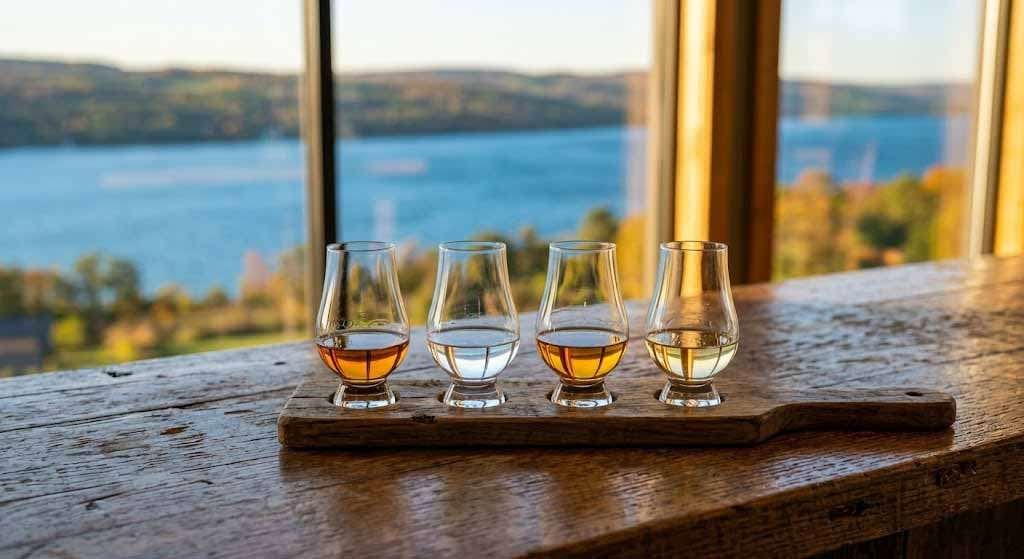
Day Two: Keuka Lake and the Farm Distilleries
Keuka Lake is the odd one — the only Y-shaped Finger Lake, branching at its southern end and catching light from two directions at once. The town of Hammondsport sits at its southern tip and has the feel of a place that hasn’t tried too hard to be anything. That’s a compliment.
Barrelhouse 6 Distillery sits above the lake in Hammondsport and takes full advantage of the elevation. The tasting room seats 75 inside, and glass accordion doors open onto an outdoor deck that looks directly over Keuka Lake. The owner and head distiller, Kara, runs the production herself — an arrangement that shows in the consistency of the product. The bourbon is the obvious starting point, rich and balanced without the cloying sweetness that sinks a lot of younger American whiskeys. The gin is unusual: floral without being perfumed, with enough botanical presence to hold up in a cocktail. This is a New York State Farm Distillery — grain sourced locally, distilled on-site, no shortcuts. Come for the spirits, stay for the view.
From Hammondsport, take Route 54 north along the east bank of Keuka, then cut over to Cayuga Lake. The drive takes about forty-five minutes and passes through some of the better farm country in this part of the state.
Myer Farm Distillers in Ovid (7350 Route 89) is the kind of place you find by knowing where to look. Brothers John and Joe Myer produce award-winning gin, whiskeys, and vodka made from estate-grown organic grain. The farm has been in the family since 1868, which means the fifth-generation commitment to agriculture isn’t a branding decision — it’s the only mode they’ve ever known. All spirits are made from organically certified grains grown on-site at Myer Farm, one of the largest and oldest operating organic farms in the Northeast. The single barrel rye is the standout. Deep, complex, with a structure you’d expect from a distillery that’s been growing its own ingredients long enough to understand what different harvest years do to the grain. The tasting room overlooks Cayuga Lake from the west side of Route 89. It’s not glamorous. It doesn’t need to be.
Day Three: Cooperstown and the Baseball Rye
Day three is a departure from the Finger Lakes proper — a ninety-minute drive east to Cooperstown, which sits on the southern shore of Otsego Lake in its own quiet county. This is James Fenimore Cooper country: dark water, hardwood hills, a certain American seriousness that doesn’t quite fit the tourist-town veneer the Baseball Hall of Fame has layered over it.
Cooperstown Distillery operates out of two locations in the village — the production facility at 11 Railroad Avenue, and the Beverage Exchange at 73 Main Street. It is the first and only distillery in Otsego County, and its spirits draw directly from the region’s history: the literature of James Fenimore Cooper, the crystal-clear waters of Otsego Lake, and Cooperstown’s tradition of honoring excellence.
The spirits are serious. Their straight rye is hand-crafted from 100% locally grown New York State grain, aged in new American oak and finished for at least a year in used Cabernet Sauvignon barrels, then bottled at cask strength. That Cabernet Sauvignon finish is the move — it adds a dry fruitiness that plays against the rye’s natural spice without softening the proof or the attitude. The bourbon has scored 95 points in Jim Murray’s Whisky Bible, which puts it in a category most small American distilleries never reach.
Tours run at the Railroad Avenue location on Saturdays, going deep into the production floor with a barrel tasting, a history of spirit production, and a guided flight of the full lineup. It’s worth timing your third day around the Saturday tour if you can.
The drive back to Mount Sinai from Cooperstown is about three hours via I-88 east to the Southern State Parkway. Stop in Albany if you need a coffee. You’ll arrive home with bottles rattling in the back seat and a clearer sense of what New York State is quietly building in its interior.
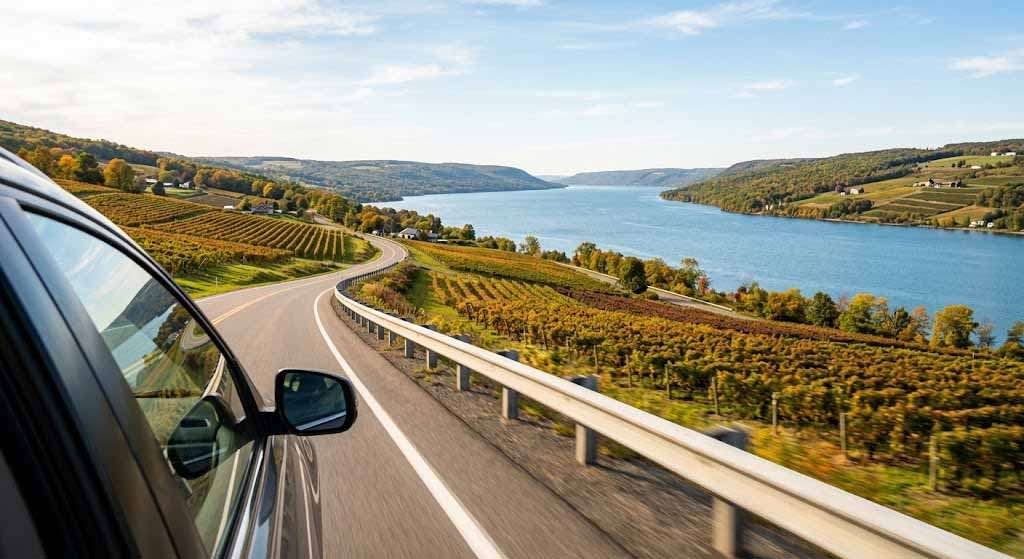
A Note on New York’s Farm Distillery Law
None of this would exist without a 2007 change to New York State law that created the Farm Distillery license — a lower-cost permit that allowed small producers to operate tasting rooms, sell directly to consumers, and use at least 50 percent New York State agricultural products. Trailblazers like Brian McKenzie of Finger Lakes Distilling and Ralph Erenzo of Tuthilltown Spirits worked directly with legislators to make craft distilling a viable business in the state. What they built opened the door for every distillery on this list. The legislation was the infrastructure. The geology did the rest.
For more on the broader New York distillery landscape, there’s been plenty worth reading on this blog — from the Brooklyn operations like Kings County Distillery and New York Distilling Company to the Hudson Valley producers like Tuthilltown Spirits and Hillrock Estate. The Finger Lakes is the next logical stop on that map — and based on what’s coming out of those stills, it won’t stay under the radar much longer.
You Might Also Like
- WhistlePig PiggyBack 6 Year Old Rye: Vermont’s Most Democratizing Drop
- Sagaponack Farm Distillery — 369 Sagg Road, Sagaponack, NY
- Tenmile Distillery — 78 Sinpatch Road, Wassaic, NY
Sources
- Finger Lakes Distilling: fingerlakesdistilling.com
- Barrelhouse 6 Distillery: barrelhouse6.com
- Myer Farm Distillers: myerfarmdistillers.com
- Cooperstown Distillery: cooperstowndistillery.com
- Watkins Glen Harbor Hotel: watkinsglenharborhotel.com
- Hotel Laurel at Seneca: thehotellaurel.com
- Black Button Distilling — The Finger Lakes Distilling Process: blackbuttondistilling.com
- Earth@Home — Geology of the Finger Lakes: earthathome.org
- New York State Distillers Guild / SpiritTrails — Myer Farm Distillers: nydistilled.com
- Finger Lakes Tourism Alliance — Distilleries: fingerlakes.org