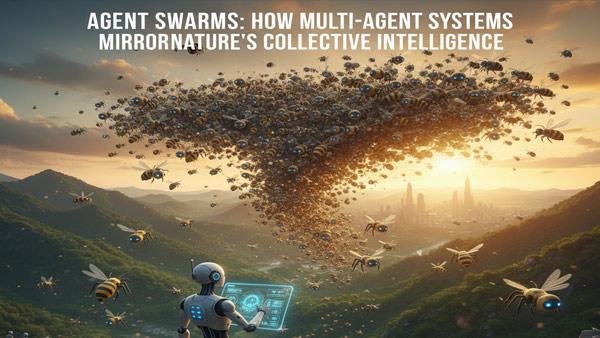
As 2025 draws to a close, the AI industry finds itself at an inflection point. Multi-agent systems have moved from research to production. Yet significant challenges remain.
The Current State
What’s Working
- Coding agents handle real software development
- Customer service agents resolve tickets autonomously
- Research systems synthesize information in minutes
- Trading agents achieved 200%+ annualized returns
What’s Not Working
- Only 15% of IT leaders deploy fully autonomous agents
- Hallucinations spread between agents
- Context loss in multi-day tasks
- Most organizations are not agent-ready
Major Challenges
The Trust Gap
Forrester predicts 75% of firms attempting to build agentic architectures alone will fail. The systems require diverse models, sophisticated RAG stacks, advanced data architectures, and niche expertise.
Security Vulnerabilities
Autonomous agents introduce new attack surfaces: prompt injection, privilege escalation, data leakage, and swarm infiltration. In November 2025, Anthropic disclosed Claude Code being used in cyberattacks.
Opportunities Ahead
Standardization and Interoperability
The Model Context Protocol and Agent-to-Agent Protocol are establishing foundational standards. These protocols enable any agent to use any tool and collaborate across platforms.
Improved Reasoning Models
Models are learning to reason longer and more deeply. OpenAI o3’s private chain of thought enables sophisticated multi-step problem solving. Cost reduction makes running sophisticated reasoning economically viable at scale.
Looking Forward
Short term (2026-2027): Widespread adoption of single-purpose agents, early multi-agent systems, standardization around MCP and A2A.
Medium term (2028-2030): Mature multi-agent orchestration, industry-specific platforms, hybrid human-AI workflows become standard.
Long term (Beyond 2030): Increasingly general agent capabilities, autonomous systems handling complex tasks, potential AGI emergence.
The organizations that succeed will thoughtfully integrate agentic AI while managing risks, building governance, and maintaining human agency. The future is being built now, one agent at a time.