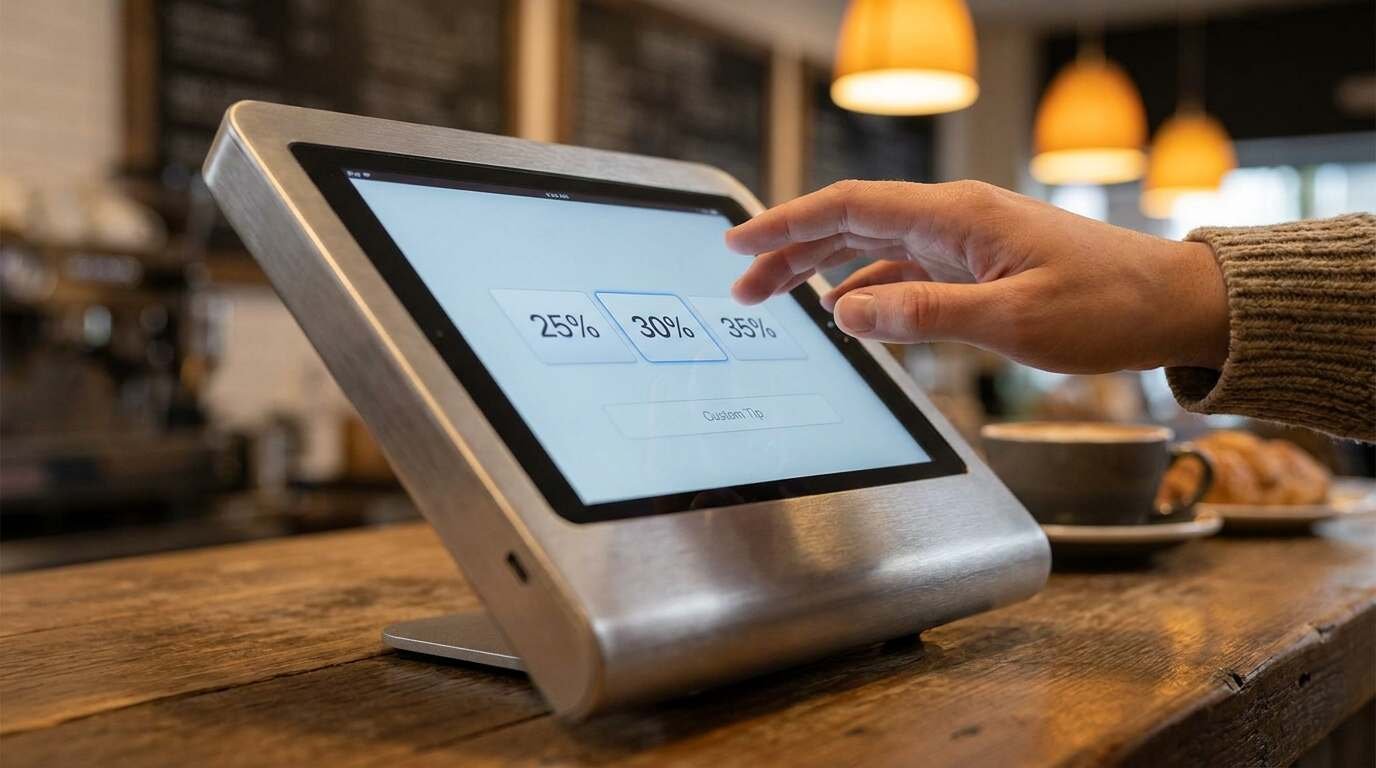
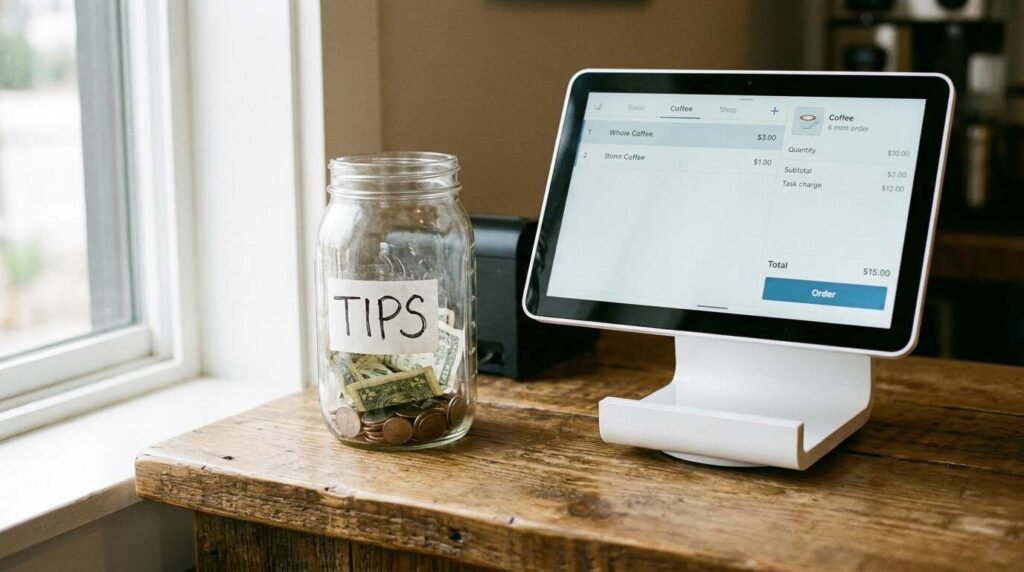
The little screen swivels toward you, and a decision that used to live in your head now lives in public. Three buttons. The leftmost one, the one labeled lowest, says 25%. To its right sit 30 and 35. Somewhere below, in smaller type the color of a hospital wall, hides a fourth option that lets you set your own number or decline entirely, but the architecture of the moment is already working on you. A person stands a few feet away. A line forms behind you. You tap the middle button because the middle button is what the design wants you to tap, and you walk out having paid a third again on a coffee you carried to your own car.
This is not a story about generosity. It is a story about software, and about how a quiet change in the default settings of a payment terminal rewrote a social custom that took a century to form. The conversation around tipping has shifted lately. For years the question was whether we should tip at all in a country that pays sub-minimum wages to tipped workers. The newer question is sharper and stranger: how did the floor get so high, and who decided?
The Anchor Nobody Voted For
Behavioral economists have a term for what those preset buttons do. They call it anchoring, and it is one of the most reliable effects in the entire field. Show a person a number before asking them to choose one, and their choice drifts toward what they saw. The number does not have to be reasonable. It does not even have to be relevant. It simply has to appear first, and the mind treats it as the gravitational center of the decision.
Point-of-sale companies understand this with the precision of a card counter. Industry guidance on tip screens openly acknowledges that higher suggested amounts raise the average tip through the anchoring effect, and that the middle option is the one most people select. Set your presets at 18, 20, and 22, and the average lands near 20. Set them at 25, 30, and 35, and the average climbs accordingly. The customer feels like they made a free choice. The terminal knows better. Some analyses estimate digital prompts lift tipping by 15 to 30 percent compared with the old glass jar by the register, which means the screen is not recording a custom so much as manufacturing one.
From Gratitude to Tax
A tip, in its original logic, was a signal. It carried information. A large tip said the service was excellent; a small one registered displeasure; the absence of one delivered a message the server could not miss. The whole system depended on the gesture being voluntary, because a payment you cannot refuse communicates nothing at all. The moment the floor rises to 25 percent and the act of declining requires you to hunt for a hidden button while a human being watches, the signal collapses. You are no longer rewarding service. You are paying a surcharge with a guilt mechanism stapled to it.
Consider where the prompts now appear. The hardware does not care whether anyone served you. A self-checkout asks. A vending kiosk asks. The counter where you grabbed a muffin and poured your own coffee asks, and asks at 20 percent, and the worker who rang you up had no more to do with your experience than the person who restocked the napkins. When the request detaches entirely from the service it once recognized, the word tip stops describing the transaction. What is left is closer to a toll, collected at the moment your hands are full and your social instincts are loudest.
The Cash That Disappeared
None of this would have been possible in a cash economy, because cash tipping was private. You folded a few bills under a plate or dropped change in a jar, and the amount was a matter between you, the worker, and possibly the tax authority you were quietly defrauding. There was no screen to perform for, no stranger watching the size of your generosity, no preset to anchor against. By 2025, roughly 15 percent of tips were given in cash, down from about 30 percent five years earlier. The shift to tapping a card or phone did more than change the medium. It moved the entire act into a lit, observed, defaulted space, and that change in venue is what made the upward creep mechanically possible.
The privacy of cash was a kind of pressure valve. It let people tip modestly without confrontation and generously without performance. Digital tipping sealed the valve. Now every decision is semi-public, semi-coerced, and pre-loaded with a number somebody else selected to maximize the average. The technology did not ask anyone whether they wanted this. It simply shipped with the defaults turned up.
The Ceiling Arrives
Here is the part the software companies did not model: there is a top to this. A 2026 survey from the restaurant-software firm Popmenu found the breaking point arriving in real numbers. The share of consumers who feel compelled to tip when a screen asks dropped to 59 percent from 66 percent a few months earlier. The portion of diners choosing a custom amount over the presets climbed to 36 percent, which is the behavioral equivalent of refusing to play the anchoring game. Around 35 percent of people reported scaling back their tipping outright, with the steepest pullback in restaurants, and the decline rippled into grocery delivery, hotel housekeeping, even auto repair.
Push a behavior past what people find tolerable and they do not negotiate. They withdraw. The same screen designed to raise the average is now training a meaningful slice of customers to distrust the average, to hit custom, to tip nothing at the counter and feel justified doing it. The anchoring effect has a shadow. Set the anchor too high and you do not raise the floor; you convince people the whole structure is rigged, and the worker who actually depends on the tip is the one left holding the loss.
Who Pays for the Design
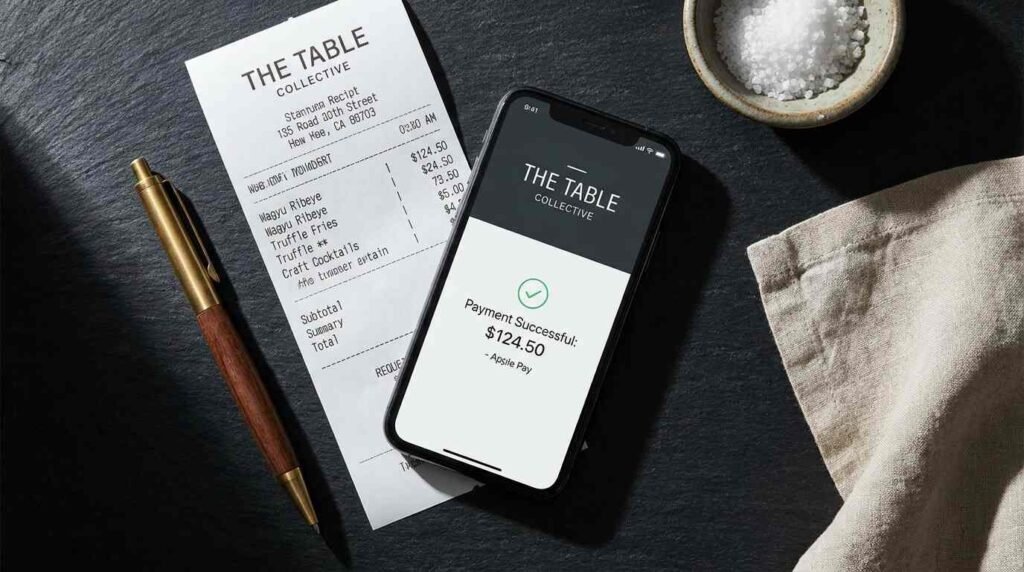
The cruel arithmetic is that the people harmed by aggressive defaults are rarely the people who set them. A server at a full-service restaurant, where tipping culture remains relatively intact at around 20 percent, did nothing to deserve the backlash brewing at the espresso counter down the street. But tip fatigue does not distinguish. It accumulates across every prompt a person encounters in a month, and the average American now faces roughly ten of them, until the exhaustion bleeds into the one setting where the tip genuinely substitutes for a wage. The barista’s overreaching screen and the waiter’s earned gratuity get lumped into a single grievance, and both workers absorb the consequence.
There is a federal wrinkle worth naming. Legislation signed in 2025 created a temporary income-tax deduction for qualified tips, capped per year, which on its surface helps tipped workers keep more of what they earn. But a tax break on tips does nothing to fix the structural problem at the screen. It treats the symptom while the disease, the slow detachment of the tip from any honest signal of service, keeps advancing one default setting at a time.
Restaurants worth their salt have always known that hospitality is a relationship, not a transaction extracted at the point of sale. I wrote about that difference in my complete guide to dining on Long Island’s North Shore, and about the honesty that separates a real kitchen from a marketed one in my piece on the farm-to-table fable. The screen will keep nudging the number upward until enough people stop tapping the middle button. Watching the 2026 figures, it looks like that moment is already here.
This is for informational purposes only — consult a licensed attorney or financial advisor for your specific situation.
You Might Also Like
- The Forum Diner of Bay Shore: 52 Years, One Closing, and What Comes Next
- The Egg Cream and the Expressway: How the LIE Killed a Diner Belt
- The Complete Guide to Dining on Long Island’s North Shore
Sources
- KTLA / Associated Press — America’s tipping culture reaches a breaking point (Popmenu 2026 survey)
- NewsNation — American tipping culture survey
- Gratuity Solutions — Average Tip Percentage and 2025 trends (cash-tipping decline)
- GlobalTill — Tip Screen Explained (anchoring effect and POS defaults)
- Toast — Restaurant Tipping and Average Tip Percentage
- Gratuity Solutions — Restaurant Tip-Out Chart 2026 (OBBB tip deduction)