When the Association of Food Journalists dissolved in 2020, its restaurant-review guidelines outlived it by default. Nobody repealed them. Nobody replaced them. The organization simply ran out of money — its revenue model had been built on print newspapers paying members’ dues and conference fees, and when the newsrooms stopped, so did the association. The rules it had written stayed in circulation the way a company’s style guide stays on a shared drive after the company is acquired.
Chief among those rules: a critic should wait at least one month after a restaurant starts serving before visiting for review.
That sentence describes a world with a clear starting gun. New York does not have one anymore.
The Rule That Outlived Its Enforcer
The AFJ guidelines were never binding. The association said so explicitly — suggestions for food journalists and their employers, not enforceable rules. Their authority was social. Reviewers followed them because other reviewers did, and because editors expected it, and because a critic who broke ranks could expect to hear about it.
The specifics were reasonable. Two or more visits are ideal for a full-length review. Reservations under an assumed name. Payment by a card that does not carry the critic’s name. Avoid grand openings and anniversary dinners. Conduct interviews by phone rather than face to face.
Read as a package, these guidelines assume something that now has to be argued rather than assumed: that a restaurant has a discrete moment at which it begins.
Previews Without a Curtain
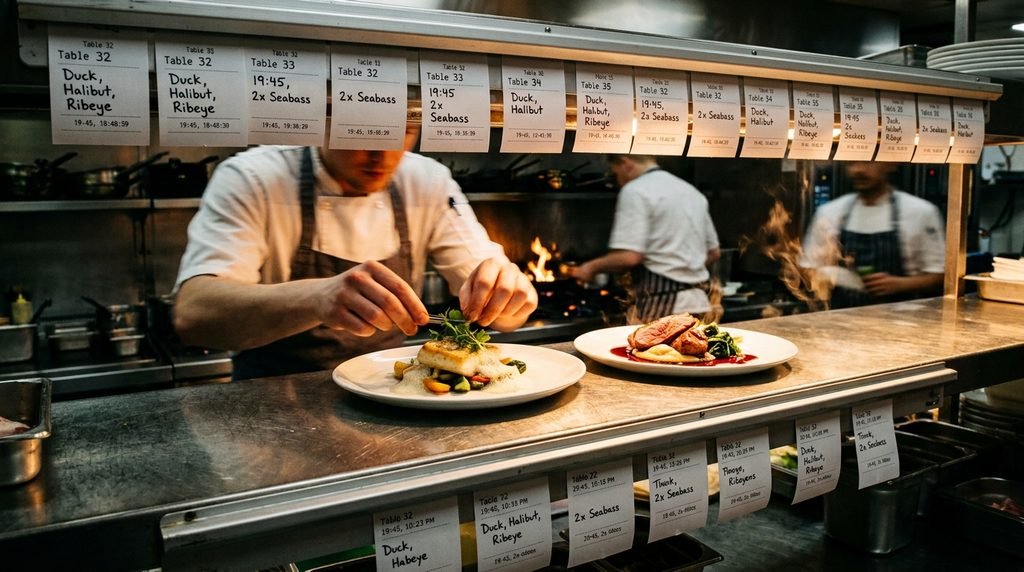
The soft opening was originally a short technical rehearsal. Industry guidance still describes it that way — a few days to two weeks, invited guests, deliberately imperfect, designed to surface the problems that a training week cannot: ticket timing, floor navigation, whether the POS handles modifications, whether the line between the kitchen and the dining room is functioning or just loud.
What has changed is not the definition. It is the duration and the audience.
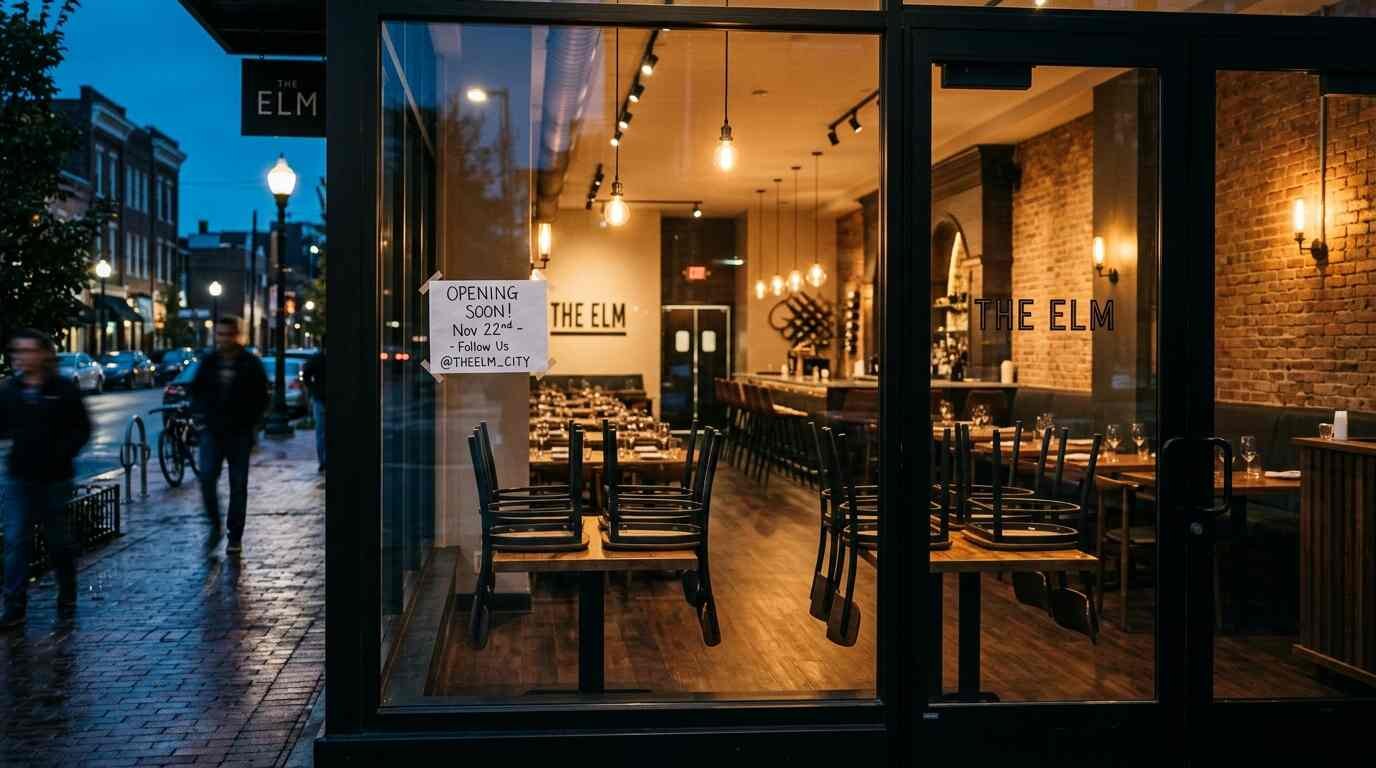
A restaurant can now run a “soft opening” that accepts public reservations, charges full menu prices, posts its hours, maintains an active social account, and does all of this for weeks or months without ever declaring itself open. There is no announcement because the announcement is the only thing being withheld. Everything else — the transaction, the expectation, the money — is fully operational.
The word “soft” is doing considerable work in that arrangement, and most of it is legal-adjacent rather than culinary.
Broadway Solved This Problem First, Badly
Theater has run this exact experiment, and the results are documented.
Broadway previews exist for the same reason soft openings do: shows need to be tested in front of real audiences before critics arrive. Historically that meant a few weeks at reduced prices, followed by an opening night that critics attended and reviewed. Most productions get thirty to forty preview performances.
Then came *Spider-Man: Turn Off the Dark*. Previews began in November 2010. The opening was scheduled and rescheduled roughly half a dozen times while the production absorbed injuries, technical failures, rewrites, and the eventual removal of its director. By the time it officially opened on June 14, 2011, it had played 182 preview performances — the longest preview run in Broadway history, and a record built substantially on the fact that a show that never opens can never be reviewed.
Critics broke the convention in February 2011 and reviewed a preview anyway. They did it explicitly because they had stopped believing an opening night would arrive.
The parallel to restaurants is not decorative. It is the same incentive structure producing the same behavior: when the reviewing convention is keyed to a self-declared date, the party controlling that date controls the review.
The Critic Problem, Restated
The debate over review timing is older than the current situation, and both sides have real arguments.
The traditional case is straightforward: a kitchen needs weeks to find its rhythm, staff turnover in the first month is brutal, and lessons about a full dining room can only be learned in a full dining room. Reviewing week one produces patterns that are not patterns — just a restaurant finding its feet.
The counter-case has been made repeatedly and has gotten stronger. If a room is charging full price to the public, a diner walking in on a Tuesday is paying the same money as a diner walking in six months later, and that diner is the person a review is supposed to serve. The grace period, on this reading, protects the operator and the investors rather than the reader.
Compression made the argument urgent. Longtime Village Voice critic Robert Sietsema noted years ago that print criticism had shifted from appearing three to six months after a debut to one to two months — because readers now expect coverage at web speed. The window narrowed while the definition of “open” was expanding. Those two trends pull in opposite directions, and the gap between them is where the extended soft opening lives.
When the Standard-Bearer Changed Its Own Rules
In June 2025, the New York Times named Ligaya Mishan and Tejal Rao as co-chief restaurant critics, the first time the paper had formally installed more than one person in the role. The announcement did two structurally significant things at once.
It made the role plural, splitting coverage between New York and the rest of the country and expanding the volume of starred reviews. And it ended the anonymity policy that had governed the position for decades. The paper’s reasoning was blunt: maintaining that level of concealment is no longer possible, and a restaurant watching for a critic will spot one regardless. Mishan and Rao still book under aliases and the Times still pays for every meal, but the faces are public now.
Set that beside the AFJ’s dissolution and a pattern emerges. Two of the load-bearing conventions of restaurant criticism — the waiting period and the anonymous critic — have both been abandoned or hollowed out within five years of each other. Meanwhile the individual standards persist wherever a working critic chooses to hold them. One newsletter critic recently described her personal rules as three visits minimum, no review inside the first month, no soft openings, no media dinners, no comps — and described leaving a paper that would not apply them consistently across its reviewers.
The norms did not collapse. They privatized.
Early Customers Are Doing Unpaid QA
Software shipped in perpetual beta made a bargain with its users, and the bargain was explicit: you get access early and cheap, and in exchange your crashes become bug reports.
Restaurants running extended soft openings have adopted the structure and dropped the discount. A guest at week three is absorbing a kitchen’s calibration errors, a floor team’s unfamiliarity with the room, and a menu that may be substantially different by week ten — at full price, with the implicit understanding that complaining would be unsporting because the place isn’t *really* open yet.
That understanding is not a contract. It was never negotiated. It exists because “soft opening” sounds like an apology and functions like a waiver.
To be fair to operators, the pressures behind it are genuine. Construction delays, permitting timelines, and staffing shortages are not manufactured problems, and a hard opening date that arrives before the kitchen is ready produces exactly the disaster everyone is trying to avoid. The extended preview is often a rational response to conditions nobody chose. The point is not that restaurateurs are acting in bad faith. The point is that a rational individual choice, made at scale, has quietly transferred risk onto the guest.
What the Old Model Still Gets Right
Not everything about the previous arrangement deserves its obituary.
The waiting period encoded a real insight about how kitchens work, and the wave of neighborhood closures makes the fragility argument concrete — when an established room goes down, the failure is rarely about a single bad night. Operations that endure tend to be operations that were given room to stabilize. And there are still restaurants running the old playbook successfully, scaling volume that would embarrass a mid-size hotel without any of this ambiguity about whether they are open.
The useful reform is probably not restoring the grace period. It is retiring the euphemism.
A restaurant taking public reservations at full price is open. It can be new, it can be adjusting, it can ask for patience — and a fair review can say all of that in the first paragraph. What it cannot reasonably do is collect the revenue of an open restaurant while claiming the immunity of a closed one. The distinction that used to matter was between rehearsal and performance. The distinction that matters now is between honest framing and a marketing term wearing a lab coat.
Everything else — the pacing of the coverage, the timing of the visits, the question of who gets reviewed at all — was always going to be argued. The pace at which formats now rise and fall guarantees that argument will keep accelerating.
You Might Also Like
- Tipping Past the Breaking Point
- Empire Diner: When the Chrome Tarnishes Upward
- The Forum Diner of Bay Shore: 52 Years, One Closing, and What Comes Next
Sources
- Association of Food Journalists — Food Critic Guidelines (archived text)
- The Association of Food Journalists folded a year ago. Its ethics code remains as its proud legacy. — Poynter
- The Association Of Food Journalists Is Dissolving — The Takeout
- Association of Food Journalists Updates Critic Guidelines — Portland Food and Drink
- The New York Times names new chief restaurant critics — Editor & Publisher
- How long should a restaurant critic wait before reviewing a new restaurant? — Slate
- Yes, I Wait a Month to Review a Restaurant. But Not for the Reasons You Think — LA Weekly
- How Soon is Too Soon? How Long Should a Critic Wait to Review a New Restaurant? — Scott Joseph’s Food & Travel
- Spider-Man: Turn Off The Dark Five Years Later — New York Theater
- Spider-Man to End Broadway Run — The Hollywood Reporter
- Restaurant Soft Opening: How to Plan One That Works — 7shifts