Spanakopita is more than just a recipe; it’s a standard. This iconic Greek Spinach Pie is a masterpiece of rustic elegance—a delicate, flaky, golden-brown crust yielding to a vibrant, aromatic, moist spinach and feta filling. While it is found in tavernas across Greece, today we are presenting a premium, high-detail version designed to be the centerpiece of a sophisticated table. We’ll guide you through achieving that impossibly light, multi-layered filo crunch and a perfectly balanced, savory filling.
This process prioritizes texture. From the fragile nature of raw filo to the moisture control of sautéed greens, every step matters. For this recipe, we sourced the finest organic spinach and authentic, aged Greek feta. Let’s begin.
The Ingredients: Texture and Purity
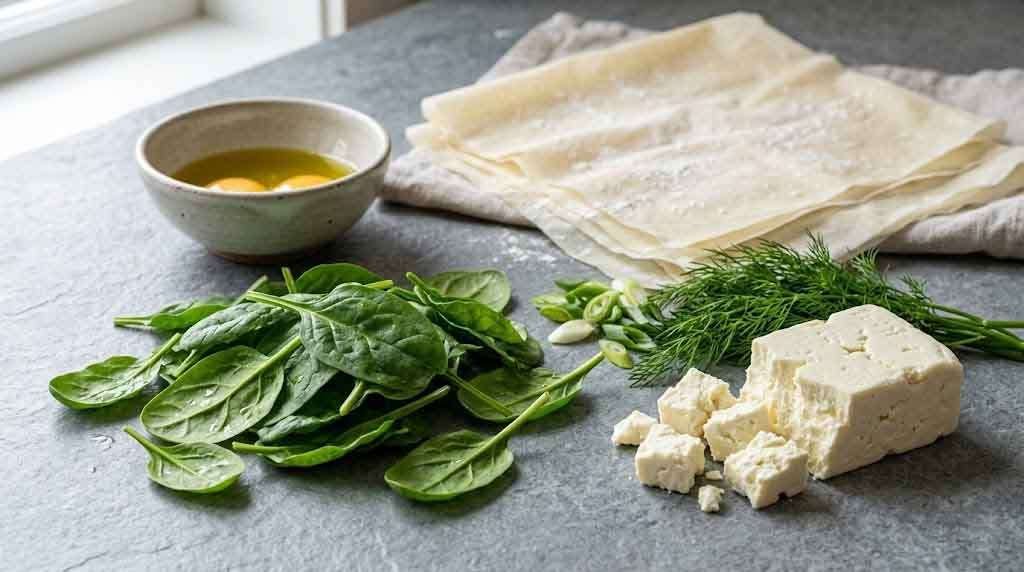
The visual journey of Spanakopita starts with raw, high-quality ingredients. To ensure consistency across all five culinary stages, we are working under natural, soft light streaming from the left, highlighting the distinct textures of our components. Look for organic, leafy spinach, the rustic crags of a whole block of aged feta, and the impossibly translucent, gossamer sheets of fresh filo pastry.
In our ingredient staging area, you can practically feel the fragile nature of the stacked filo sheets next to the robust green and white contrast.
Ingredients
The Fillo Crust
- 16 oz (1 lb, 454g) Fresh Filo Pastry (Check dimensions to ensure they fit your baking dish)
- ¾ cup (170g) European-style Butter, melted (High-fat, rich, for flavor and browning)
- ¼ cup (60ml) Premium Extra Virgin Olive Oil, plus more for the filling and garnish
The Spinach and Feta Filling
- 2 lbs (907g) Fresh, Mature Organic Spinach, large stems removed, washed
- 1 Large Yellow Onion, finely chopped
- 3-4 Green Onions (Scallions), white and light green parts, thinly sliced
- ½ cup (a generous bundle) Fresh Dill, finely chopped
- 12 oz (340g) Authentic Greek Feta Cheese, crumbled into rough chunks (as seen above)
- 3 Large Eggs, beaten (as shown above)
- ¼ tsp Nutmeg, freshly grated (optional, but premium flavor)
- ½ tsp Kosher Salt (Start light, the feta is salty)
- ½ tsp Freshly Ground Black Pepper
- Boiling water, if needed for consistency
Stage 1: Wilting the Filling (Moisture and Flavor)
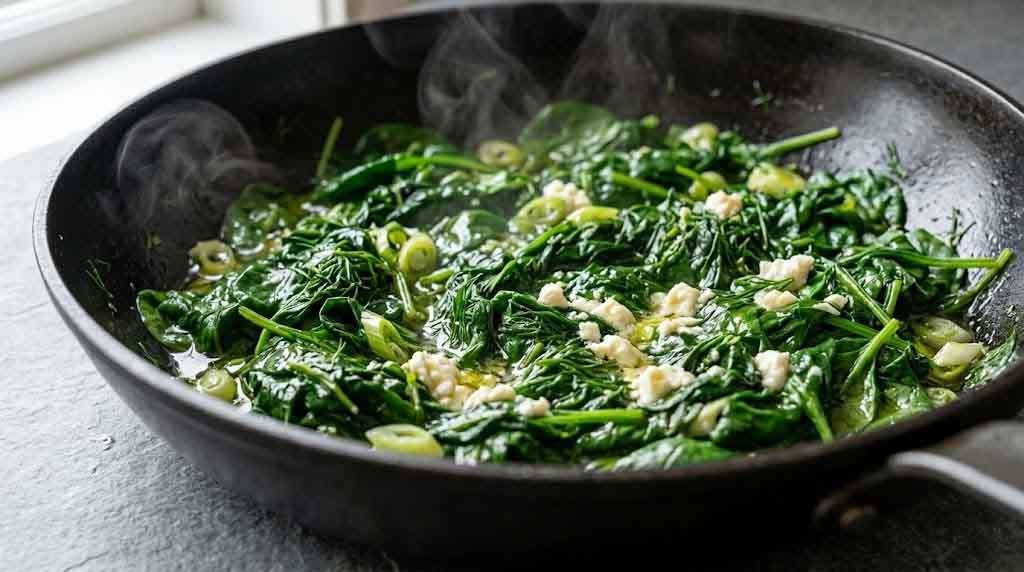
The filling is the heart of the pie. The challenge is extracting moisture from the spinach while concentrating its flavor and vibrancy. We will follow the transition from raw brightness to rich, emerald-green depth. This step, and all subsequent steps, utilize the same natural light established in our ingredient shot, which now catches the fragrant steam.
We recommend a large, heavy-bottomed, dark pan (like cast iron or carbon steel) for this, as it allows for rapid moisture evaporation. Watch for the dramatic change: the vibrant green spinach collapses into a moist, dark emerald mixture.
Instructions: Sautéing the Greens
- Wilt the Greens: Place the large organic spinach leaves from our ingredients (above) into a large, heavy dark pan over high heat. Add just enough water, by the tablespoon, if needed to prevent sticking. Cook, tossing frequently, until the spinach is fully collapsed and vibrant dark green—a moist, steaming emerald mixture. (Note the texture shift shown in our pan: this is exactly what you are aiming for).
- Sauté Aromatics: Drain the spinach thoroughly and set aside. In the same large pan, now on medium heat, add 1 tbsp of olive oil. Add the finely chopped yellow onion and the sliced green onions, cooking for 5-7 minutes until soft.
- Incorporate and Drain: Add the sautéed onions, the dill (seen raw earlier) and the drained spinach to a large bowl. Mix well, then transfer the entire mixture to a mesh sieve over a bowl and press firmly to extract every bit of liquid. (Don’t skip this: an overly moist filling is the enemy of a flaky crust).
- Finish the Filling: To the compressed, cooled greens, add the nutmeg, salt, black pepper, and 3 beaten eggs (shown earlier), plus the rough-craggy chunks of authentic Greek feta. Gently mix just until combined. At this stage, you should have a dense, moist, vibrant green-and-white mixture, ready for layering.
Stage 2: Layering the Gossamer sheets (Precision and Structure)
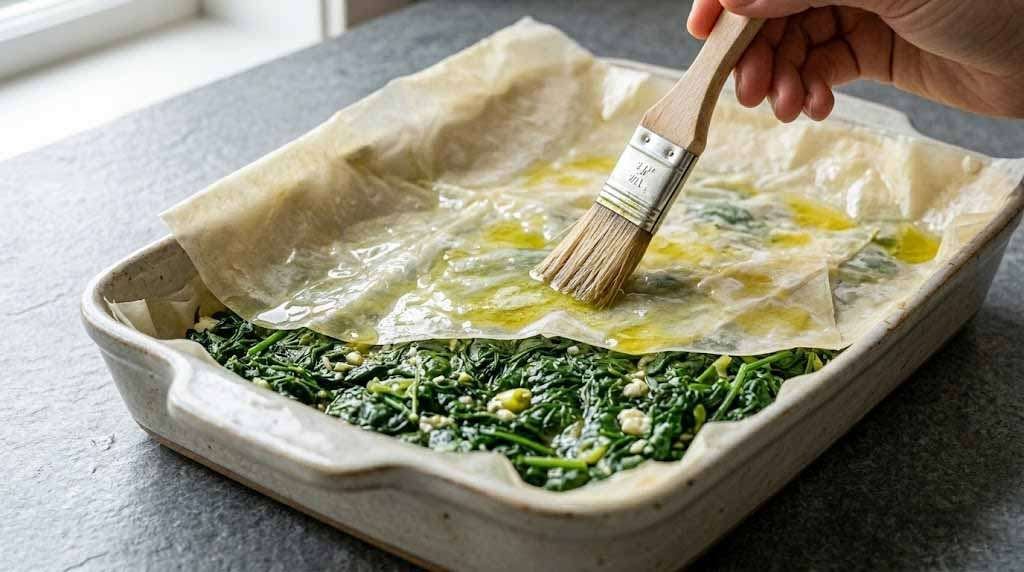
Assembly is a critical step focusing on the fragile filo pastry. This is a manual process requiring precise technique. We must reference the same ingredients, particularly the translucent filo sheets and the golden-green oil seen raw in our first step, and the same lighting established earlier (from the left). We will demonstrate the hand brush and the overlapping sheets.
Instructions: Assembly and Layering
- Prep the Pan: Lightly brush a rustic, rectangular ceramic baking dish with the European-style melted butter/olive oil mixture (using the golden-green EVOO and high-fat butter from our ingredients, seen earlier).
- Layer the Bottom (16 sheets): Lay one sheet of the fragile filo pastry (originally stacked raw) across the bottom and up the sides. Important: You must have a light, even layer of melted butter/oil mixture brushed onto every single sheet of filo. The key is to avoid saturating any individual layer. (Check the brush work in our example). Brush another sheet and place it slightly overlapping the first to cover the bottom entirely. Continue until you have 16 layers, brushing each layer of filo gently before adding the next. (This forms the robust bottom crust that will support the heavy, moist filling seen raw in our earlier ingredients).
- Spread the Filling: Once the bottom crust is layered, spread the dense, vibrant spinach-and-feta filling (from the previous pan stage) over the center, pushing it gently to within 1 inch (2.5 cm) of the edges. Ensure a uniform, moist texture, identical to the mixture prepared earlier. (Note how the moist greens are integrated).
- Layer the Top (24-30 sheets): Repeat the layering process, brushing each sheet of filo with the melted butter/oil mixture (derived from the original golden-green EVOO seen raw earlier), then laying it delicately over the spinach-and-feta filling, overlapping to cover. For a truly premium, multi-layered filo crunch (which will be seen later), we recommend using 24 to 30 sheets of filo for the top.
Stage 3: The Golden Crust (Baked Texture and Crispness)
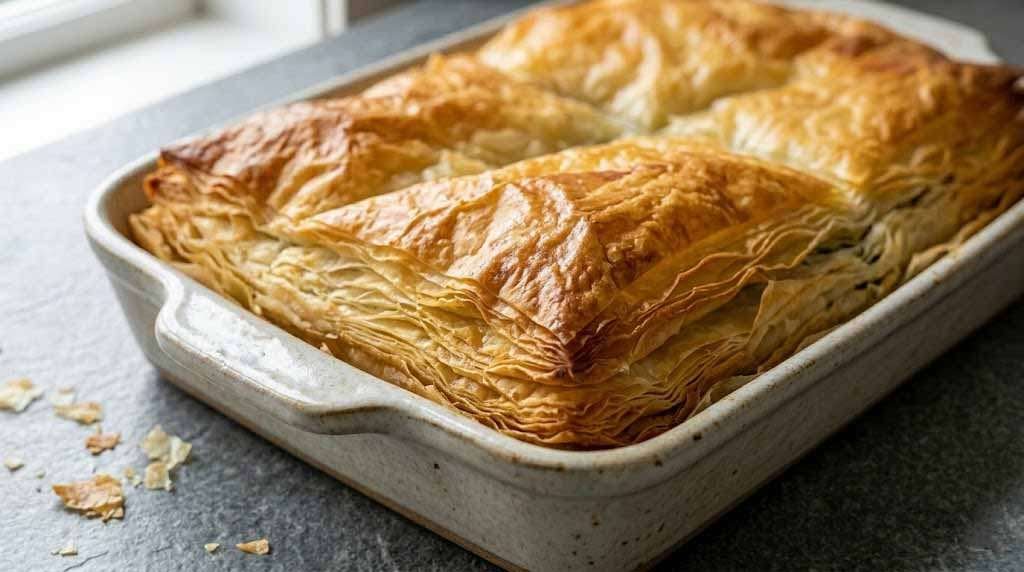
This is the definitive stage: the dramatic transformation of the raw filo layers into the impossibly delicate, flaky, golden-brown structure of the baked pie. It needs to be a dramatic close-up, focusing on texture and crispness. We will follow the dramatic change from raw (above) to cooked.
Instructions: Baking and Crisping
- Score and Bake: With a very sharp knife (as shown earlier), score the top layers of the Spanakopita (which was raw previously) into the desired serving pieces (squares, diamonds, etc.). Do not cut all the way through; cut only halfway down.
- Bake the Pie: Pre-heat your oven to 375°F (190°C). Bake the scored Spanakopita (which was raw above) for 50-60 minutes, or until the top and sides are dramatically golden-brown, flaky, and puffed. Check for the deep, complex browning seen here—this visual indicator of the delicate, multi-layered filo crunch is exactly what you are after. (We recommend a specific baking dish for this texture).
- Cool: Let the Spanakopita (which was raw previously) cool on a wire rack for at least 30 minutes before cutting and serving. This allows the flaky filo to set. (We suggest cooling on a specific wire rack to maintain the golden browning seen in our example).
Stage 4: Plating the Perfect Slice
With the icing set and the cookies complete, you’ve mastered the art of the Perfect Diner Classic. The contrasting textures, the precise center line, and the rich, Dutch-process chocolate all come together for the perfect bite. For the ultimate visual presentation, serve a single, perfectly finished giant cookie on a modern, dark charcoal ceramic plate, on that same textured concrete counter, as shown in our premium final composition. A simple glass of cold milk and a linen napkin provide the perfect context. Enjoy the beautiful symmetry and the authentic, soft, cake-like texture you’ve created.
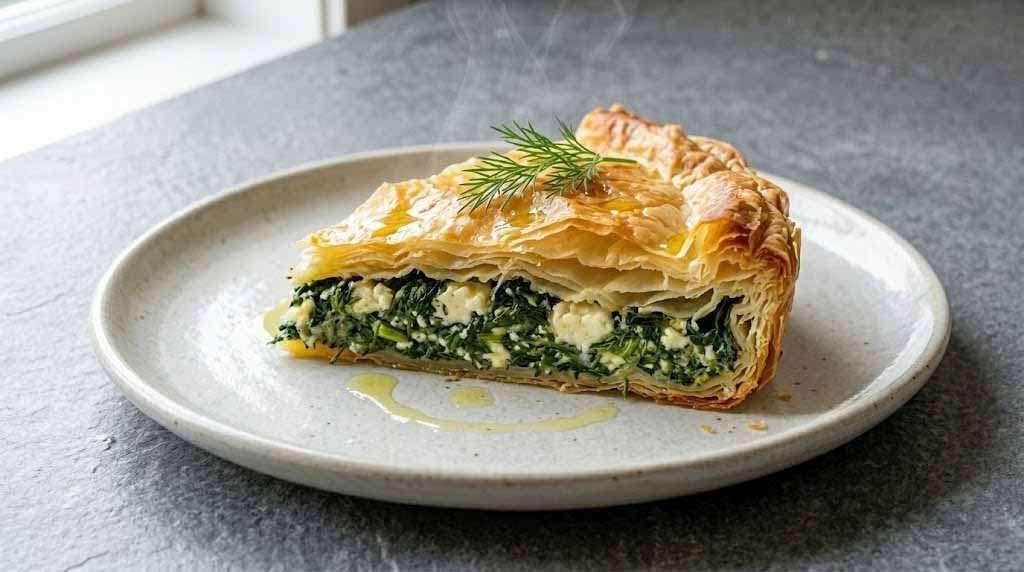
For the ultimate visual presentation, serve a single, warm slice of the Spanakopita from the baking dish (seen above). The cut side of the slice reveals the incredibly complex internal contrast: countless golden, flaky filo layers yielding to the dense, vibrant moist spinach, dill, and green onion and melted feta mixture (derived from the original raw ingredient textures). (We suggestion minimalist off-white ceramic to emphasize this contrast).