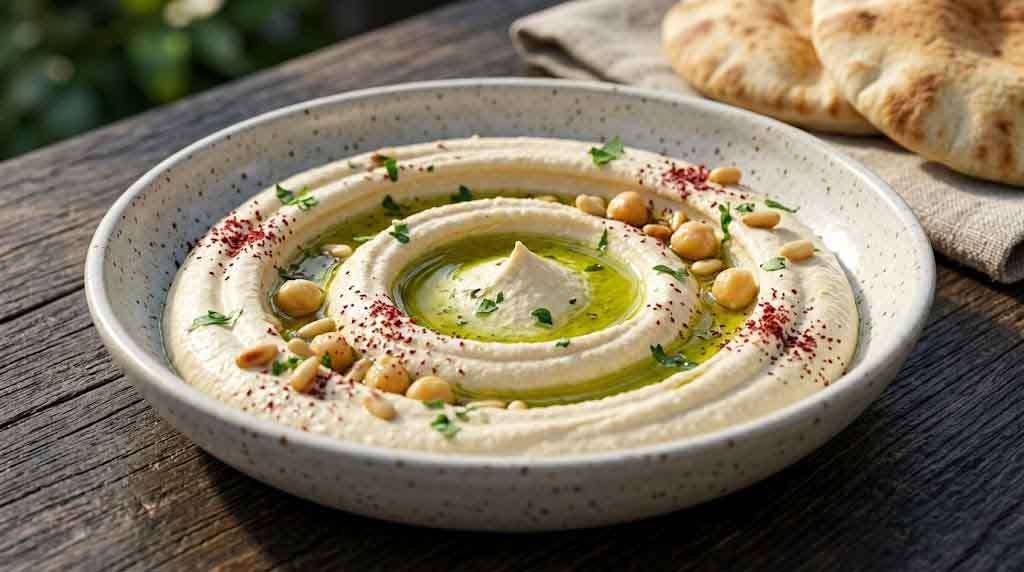
A bowl of truly exceptional hummus shouldn’t be a dense paste. When you are hosting guests on the patio of your North Shore estate, the appetizers you serve set the baseline for the evening. The difference between store-bought filler and a silk-like, restaurant-caliber puree comes down to straightforward kitchen chemistry: manipulating pH levels and mastering temperature-controlled emulsions. This technique bypasses shortcut home methods in favor of technical precision.
In the commercial kitchen at The Heritage Diner, we know that raw ingredients require specific structural interventions. Chickpeas are encased in fibrous skins held together by pectin. If you simply blend them as-is, those skins create a gritty texture that no amount of olive oil can mask. The solution is introducing an alkaline environment to break down the structural barrier.
The key to this method isn’t just adding more olive oil. We must leverage alkalinity to dissolve the fibrous pectin holding the chickpeas together, transforming them from starchy legumes into a foundation that can hold a high-fat emulsion.
The Chemistry of the Chickpea: Why Baking Soda is Essential
- The Alkaline Soak:Begin the night before. Soak dried chickpeas in a solution of water and one teaspoon of baking soda. This elevates the water’s pH, initiating the breakdown of the legumes’ structural integrity before heat is even applied. The texture change is critical.
- The Radical Boil:After draining and rinsing the chickpeas, place them in a pot with fresh water and another teaspoon of baking soda. Boil the chickpeas aggressively. Do not be afraid of them falling apart; that is the objective. The baking soda accelerates the dissolution of the pectin and the softening of the skins until they are completely translucent and yielding. A cooked chickpea must give no resistance when pinched.
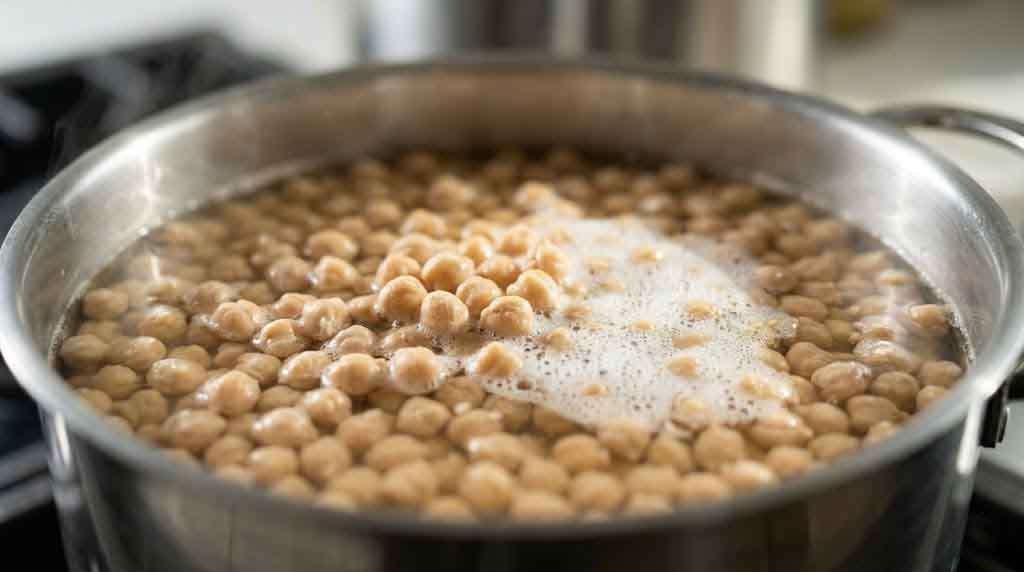
Once fully cooked, drain the chickpeas and proceed while they are still hot, as the heat assists the subsequent emulsion with high-speed blending.
The Emulsion Equation: Tahini and Thermal Shock
- Sourcing the Sesame Base:High-quality tahini is non-negotiable for the correct fat ratio and flavor profile. A premium, single-origin brand like Soom Foods Pure Ground Tahini provides the essential roasted, nutty foundation without the bitter aftertaste found in lower-tier brands.
- Controlling the Friction:The friction from a high-speed food processor creates significant heat, which can cause the oil in the tahini to separate and break the emulsion. To counteract this, introduce ice-cold water—literally water with ice cubes in it—very slowly. This thermal shock forces the fat and water molecules to bind securely, aerating the mixture into a pale, whipped cloud rather than a heavy sludge. Season assertively with fresh lemon juice and Diamond Crystal Kosher Salt to taste.
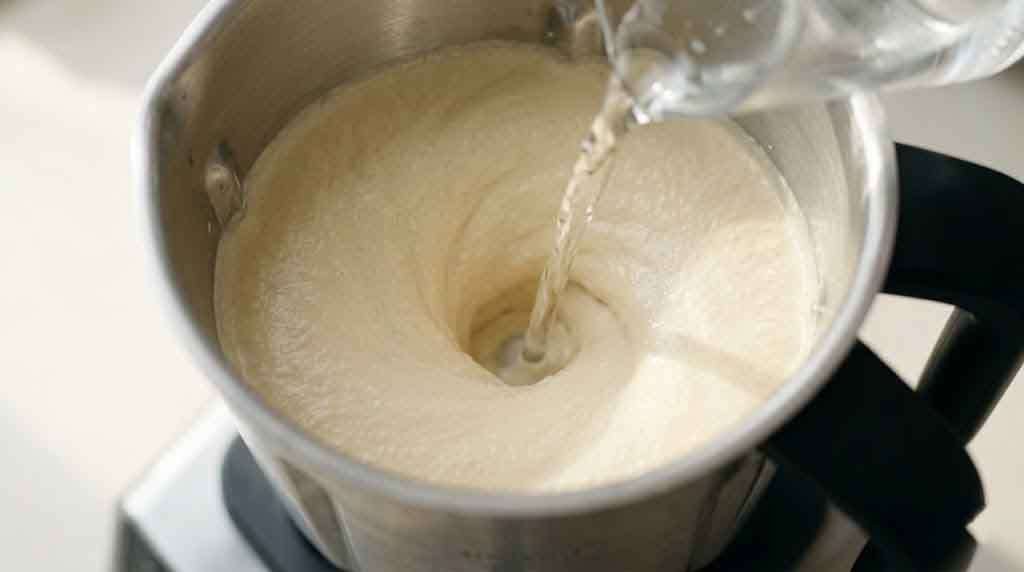
The result should be an ultra-smooth, aerated pale cloud. It is ready for the final, technical plating step.
Plating for maximum utility: Finishing with Precision
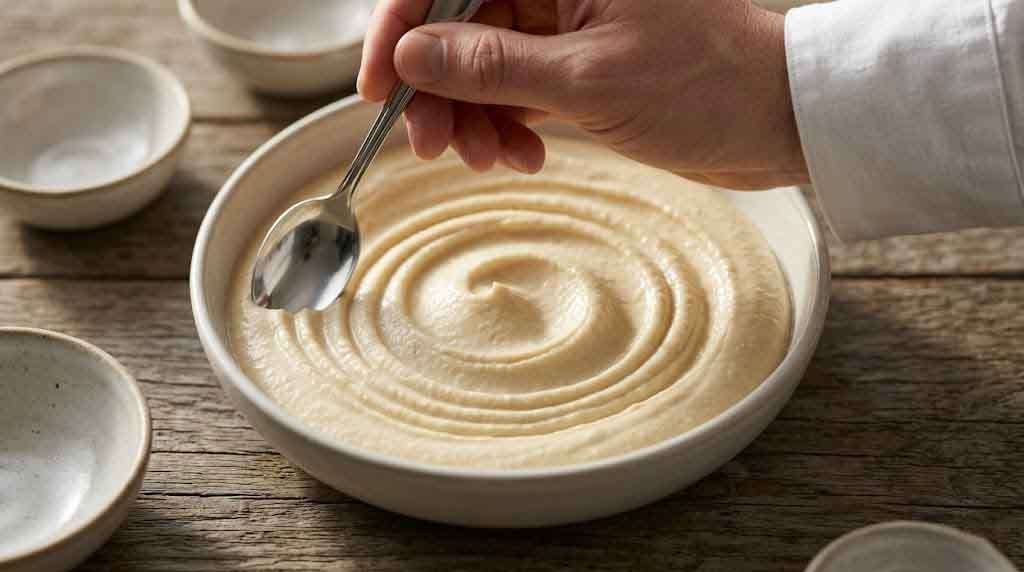
- The Shallow Swoosh:Spread the finished hummus in a wide, shallow ceramic bowl. Use the back of a simple silver spoon to create deep, concentric ridges. These channels are engineered to hold a heavy pool of cold-pressed, high-polyphenol extra virgin olive oil, a dusting of sumac, whole chickpeas, and toasted pine nuts. Serve immediately with warm, wood-fired pita.