Serves 4 | Prep: 20 min | Cook: 25 min | Rest: 30 min
Ingredients
The Chicken
- 2 bone-in, skin-on chicken breasts (about 1.5 lbs total)
- 4 cups cold water or light chicken stock
- 1 bay leaf
- 4 black peppercorns
- 1 celery stalk (for poaching)
- ½ tsp kosher salt
The Salad
- ½ cup walnuts, roughly chopped and toasted
- ⅓ cup golden raisins (soaked in warm water 10 min, drained)
- 2 celery stalks, thinly sliced
- 3 tbsp red onion, finely diced
- 2 tbsp flat-leaf parsley, chopped
The Dressing
- ½ cup good-quality mayonnaise
- 1 tsp Dijon mustard
- 1½ tbsp fresh lemon juice
- 1 tsp honey
- ½ tsp kosher salt
- ½ tsp freshly cracked black pepper
Instructions
Step 1 — Poach the Chicken
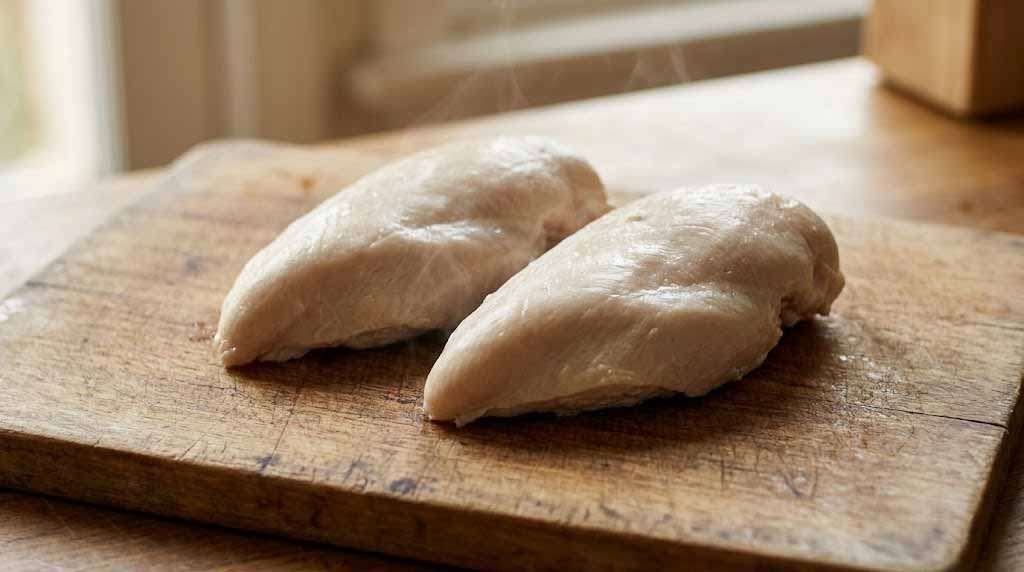
Place the chicken breasts in a pot just large enough to hold them. Cover with cold water or stock. Add the bay leaf, peppercorns, celery stalk, and salt. Bring to a gentle simmer over medium heat — do not boil. Once simmering, reduce heat to low and cook for 18–22 minutes, until the chicken is just cooked through with no pink at the thickest point. Remove from the liquid and let cool completely at room temperature — at least 30 minutes. Remove skin and bones, then shred the meat by hand into generous pieces.
Step 2 — Toast the Walnuts
While the chicken cools, add the roughly chopped walnuts to a dry skillet over medium heat. Toast, stirring frequently, for 3–4 minutes until fragrant and lightly golden. Remove immediately to a plate to cool. Do not walk away — they go from toasted to burned quickly.
Step 3 — Build the Dressing
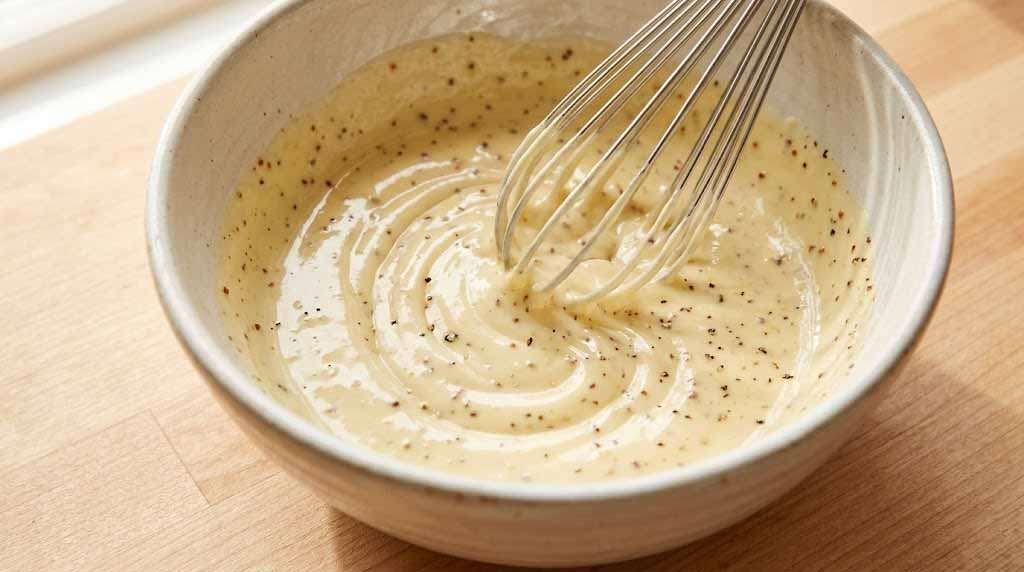
In a large mixing bowl, whisk together the mayonnaise, Dijon, lemon juice, honey, salt, and black pepper. Taste and adjust — it should be bright, creamy, and slightly tangy. This is the moment to get the seasoning right before everything else goes in.
Step 4 — Combine
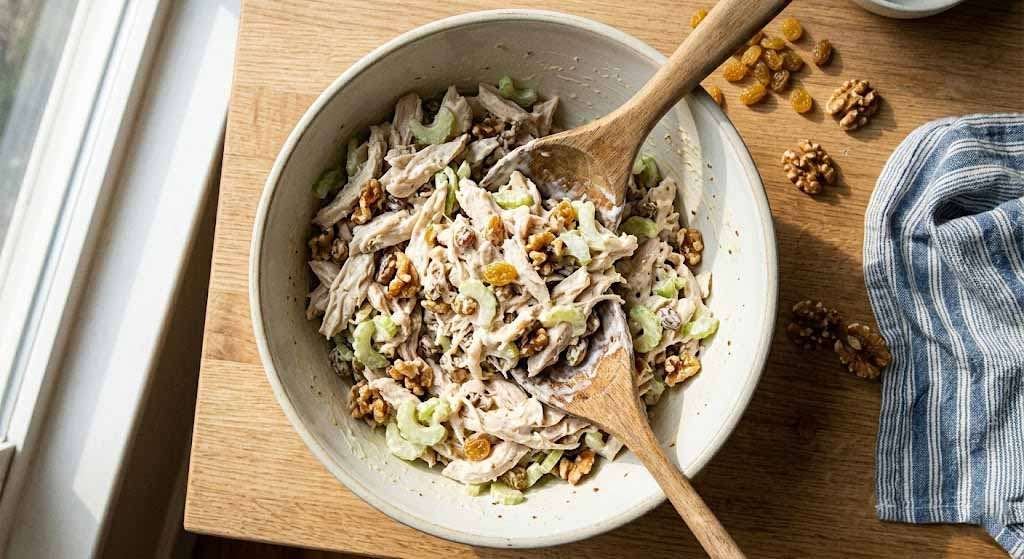
Add the shredded chicken to the dressing and fold gently to coat — don’t stir aggressively or the chicken will break down too fine. Add the toasted walnuts, drained golden raisins, sliced celery, red onion, and parsley. Fold again until evenly combined. Taste one more time and adjust salt and lemon as needed.
Step 5 — Serve
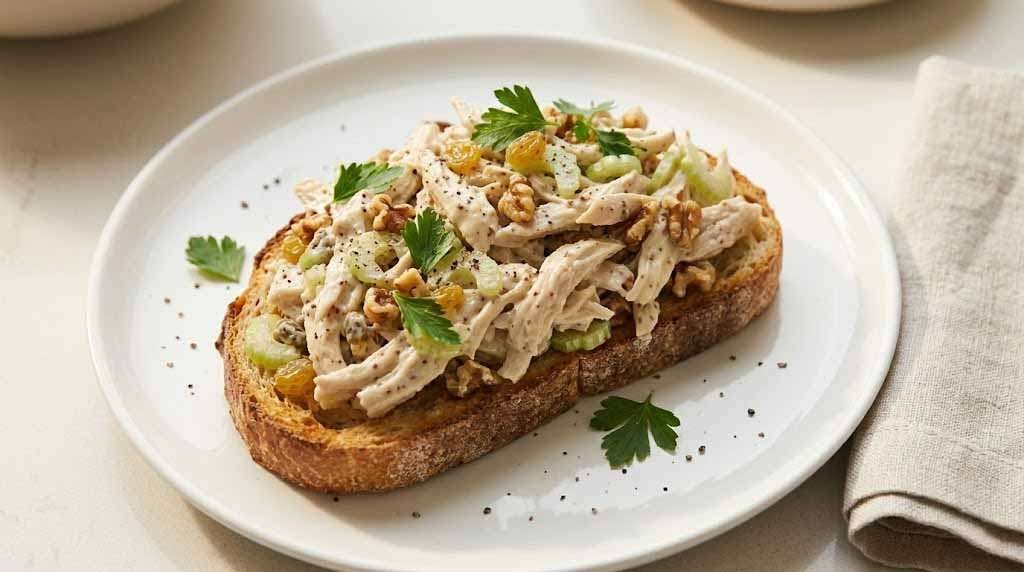
Serve immediately on toasted sourdough, over arugula or butter lettuce, or stuffed into a halved avocado. A crack of black pepper and a few extra parsley leaves over the top before serving.
Notes
The chicken must be fully cooled before shredding and combining — warm chicken releases moisture and breaks down the dressing. Soaking the golden raisins plumps them considerably and is worth the ten minutes. This salad holds well refrigerated for up to two days; the flavor actually deepens overnight as the dressing works its way further into the chicken. If it tightens up in the fridge, loosen with a small squeeze of fresh lemon and a spoonful of mayo before serving.
Walnut Raisin Chicken Salad: The Classic That Never Goes Out of Style
Chicken salad is one of those dishes that people either dismiss or defend with surprising conviction. The dismissers see it as cafeteria food — pale, overdressed, forgettable. The defenders know something the dismissers haven’t figured out yet: a properly made chicken salad is one of the most satisfying things you can put on a plate, and the difference between a good one and a bad one comes down almost entirely to what goes into it and how the chicken is cooked.
This version leans into the contrast that makes it work. Toasted walnuts for crunch and a faint bitterness. Golden raisins for sweetness that isn’t sugary. Celery and red onion for bite. A dressing that’s creamy but not heavy, brightened with lemon and a touch of Dijon. The result is something balanced in a way that flat chicken salads never are — every forkful has something to say.
Start With the Chicken
The single most important decision in any chicken salad is how the chicken is cooked. Boiling produces rubbery, waterlogged meat that shreds into mush. Roasting produces dry edges that don’t play well with dressing. The right move is poaching — a low, gentle simmer in seasoned water or stock until the chicken is just cooked through, then rested and cooled before shredding.
Poached chicken is tender, moist, and mild enough to absorb the dressing without competing with it. It also shreds cleanly into long, substantial pieces rather than the fine crumbles you get from overworked or overcooked breast meat. Bone-in, skin-on breasts are preferred here — the bones and skin add flavor to the poaching liquid, which you can save and use as a light stock.
Don’t rush the cool-down. Chicken torn apart while still warm releases moisture into the bowl and dilutes everything around it. Let it rest, let it cool, then shred.
The Walnut Question
Walnuts need to be toasted. This is not optional and it is not a small thing. Raw walnuts in a chicken salad taste bitter and flat, their oil still locked inside. Three minutes in a dry pan over medium heat — just until fragrant and lightly colored — opens up a nuttiness that changes the character of the whole dish. They become something you notice, something that adds dimension rather than just texture.
Chop them rough. Not fine, not whole — somewhere in between, so you get a piece of walnut in most bites without it dominating.
Raisins: Golden, Not Dark
Golden raisins are the right call here, and the reason is subtlety. Dark raisins bring a molasses-heavy sweetness that can overwhelm a savory dressing. Golden raisins are lighter, slightly tangy, and don’t stain the bowl. They add sweetness without announcing themselves, which is exactly what you want in a salad that’s already managing several competing flavors.
If you want to take it a step further, soak the raisins in warm water for ten minutes before adding them. They plump up, soften, and turn almost jammy — a small step that makes a noticeable difference.
The Dressing
Mayonnaise is the base. Good mayonnaise — not light, not flavored — just quality full-fat mayo that can carry everything else. Dijon mustard adds a sharp edge that keeps the dressing from going flat. Fresh lemon juice is non-negotiable; it lifts the whole bowl and ties the sweetness of the raisins to the savory of the chicken. A small amount of honey balances without tipping into sweet territory.
Season generously with salt and cracked black pepper. Taste it before the chicken goes in. The dressing should be slightly over-seasoned on its own because the chicken will absorb a portion of it.
How to Serve It
On toasted Heritage sourdough, this becomes a proper lunch. The tang and chew of the bread works against the creaminess of the dressing in exactly the right way — for more on why that bread earns its place at the table, the post When the CEO Can’t Finish His Own Burger — And What That Tells You About Real Food gets at something real about ingredients that pull their weight.
Over a bed of arugula or butter lettuce, it works as a plated salad. Stuffed into a halved avocado, it becomes something lighter and cleaner. All three options are legitimate. None of them require anything more than what’s already in the bowl.
Browse more recipes in our Food Recipes section and more food culture and kitchen craft in Food & Culture.