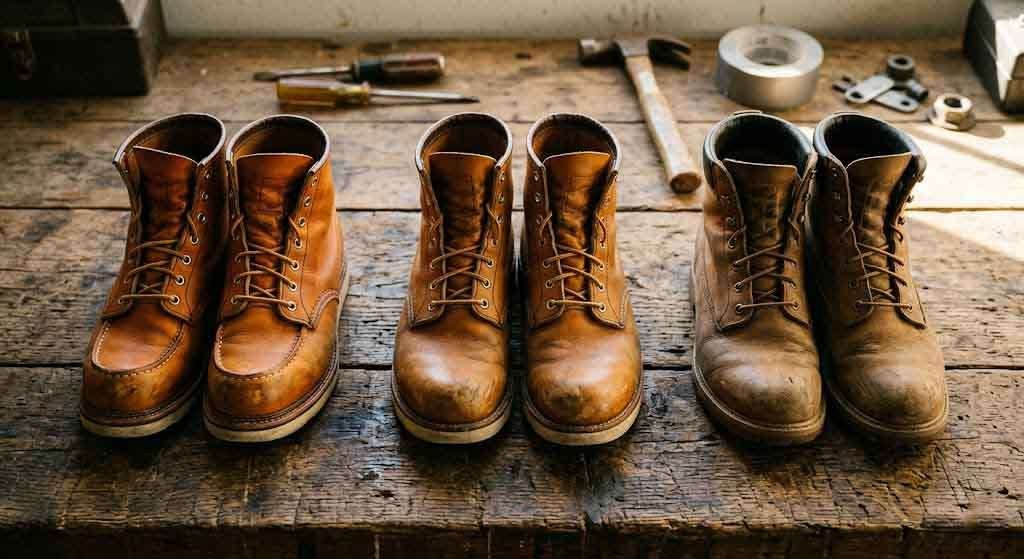
Boots tell you something about a man’s relationship with time. Not the calendar kind — the other kind. The kind that shows up in cracked leather, worn heels, and the slight asymmetry that develops when a boot finally learns the shape of your foot. Most people never get there. They buy cheap, they replace cheap, they repeat the whole thing. It’s expensive to be poor.
I’ve spent twenty-five years on my feet inside a diner. That’s not a figure of speech. From open to close, the floor is yours — the kitchen tiles, the rubber mats behind the counter, the quarter-inch lip on the threshold to the walk-in. You learn quickly what a boot can do and what it can’t, because your lower back is keeping score. The right boot isn’t an accessory. It’s the difference between going home tired and going home destroyed.
Three names come up constantly when someone asks about American work boots done right: Red Wing, Timberland, and Thorogood. They are not equals. They don’t belong in the same sentence without qualification. And nobody seems willing to say that plainly, so here we are.
What “American Made” Actually Means — and Why It Already Disqualifies One of These Brands
Let’s get this out of the way first, because it matters more than anything else in the comparison.
Red Wing is made in Red Wing, Minnesota. The Heritage line — the Iron Ranger, the Moc Toe, the Blacksmith — is built in an American factory from hides tanned at Red Wing’s own S.B. Foot Tannery, which has operated since 1872. That’s vertical integration in the old sense: they raise the supply chain the way you raise a wall, course by course, and they control it.
Thorogood is made in Merrill and Marshfield, Wisconsin, by Weinbrenner Shoe Company — employee-owned, union shop, operating since 1892. Their hides are sourced domestically. Final construction happens in those Wisconsin plants by workers represented by the United Food and Commercial Workers International Union. This is American manufacturing with skin in the game.
Timberland was founded in Boston. It is now owned by VF Corporation and manufactures the overwhelming majority of its footwear overseas — Vietnam, China, Bangladesh, Cambodia, the Dominican Republic. Analysis of their product pages has found over 98% of their boots labeled as imported. The iconic yellow boot, the one that launched a thousand construction site wardrobes and a thousand more rap videos, is not made here. The brand is American. The boots are not.
That’s not a moral judgment. It’s a manufacturing fact. If you’re buying Timberland because you believe you’re supporting American workers, you’re not. If you’re buying it because it’s comfortable and priced reasonably and works for you, that’s a different conversation. But it cannot sit in a comparison of American work boot makers and pretend otherwise. So from this point forward, Timberland is in this conversation as a market reference point — not as a domestic peer.
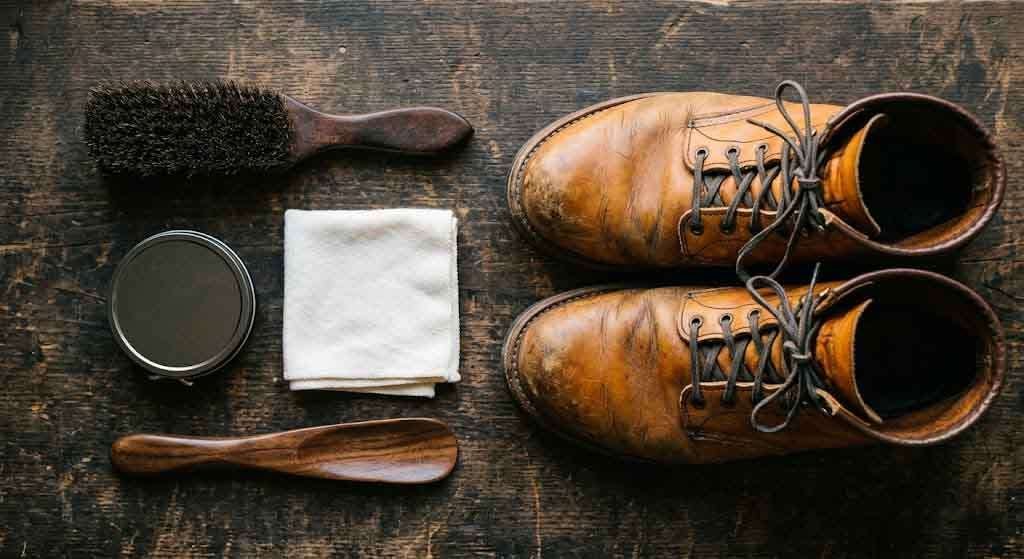
Construction: How a Boot Stays Together When Things Get Serious
The Goodyear welt is the benchmark. Not because it’s old, but because of what it makes possible: the upper, insole, and welt are stitched together into a structure that can be disassembled. That means the sole can be replaced. The upper can live on. The boot can outlast multiple sets of outsoles rather than dying with them.
Red Wing uses Goodyear welt construction across its Heritage line, with a cork midsole that compresses and conforms to your foot over time. The result is a boot that takes weeks to break in and then — once it’s yours — fits with an intimacy that a fresh pair never will. Red Wing’s Iron Ranger, for instance, is built on a last that dates to the 1950s. The 23 last. They still use it. There’s something worth noting in that — a company that hasn’t needed to reinvent the geometry of the foot.
Thorogood uses the Goodyear storm welt on most of its Heritage and American Union lines. The storm welt is a variation that creates a tighter seal between upper and midsole — better waterproofing, more structural integrity against water infiltration at the welt seam. Thorogood pairs this with a Poron foam footbed that’s removable and, unlike cork, doesn’t compress to nothing over years of hard use. Out of the box, a Thorogood is comfortable with almost no break-in. That’s not a small thing when you’re standing on concrete for twelve hours.
Timberland’s PRO line includes some Goodyear-welted styles — the Gridworks is one — but much of the line uses direct-attach construction, where the sole is chemically bonded to the upper during formation. Direct-attach is lighter, marginally more flexible, and considerably cheaper to manufacture at scale. It also cannot be resoled. When the sole goes, the boot goes with it.
This is the fork in the road. Everything downstream — cost of ownership, longevity, relationship with the boot — flows from this one construction decision.
Leather: The Material That Either Rewards You or Doesn’t
I’ve written about leather grain and tanning before. Full grain, top grain, genuine leather — they are not equivalent materials despite the shared word. Work boots are where this distinction stops being theoretical and becomes something you feel in the arch of your foot at the end of the day.
Red Wing sources its primary leathers in-house. Oro Legacy, Oro Russet, Copper Rough and Tough — these are proprietary finishes applied to hides tanned at S.B. Foot Tannery using a combination of vegetable and oil-tanning processes. The leather is thick. It resists abrasion. It develops patina in the way that only full-grain leather can — not a surface treatment but a structural change in the fiber itself, a darkening and tightening that happens with use and care. A pair of Red Wings that have been worn for five years and treated properly look nothing like they did new. They look better.
Thorogood uses domestically sourced full-grain hides, including their Crazyhorse leather — a pull-up leather with a wax finish that shows wear in the distressed, character-building way rather than the degrading way. Like Red Wing, their uppers are built to age rather than simply endure.
Timberland PRO uses full-grain leather in some of their work-focused lines — the Helix HD, for example, markets “rugged, waterproof leather” — but the sourcing is less transparent. What is documented is that the leather across much of the line is finished for weather resistance from the factory rather than tanned for inherent durability. It’s leather treated for conditions rather than leather built for longevity.
The distinction matters if you’re buying boots with a ten-year horizon. It doesn’t matter as much if you’re replacing them every two.
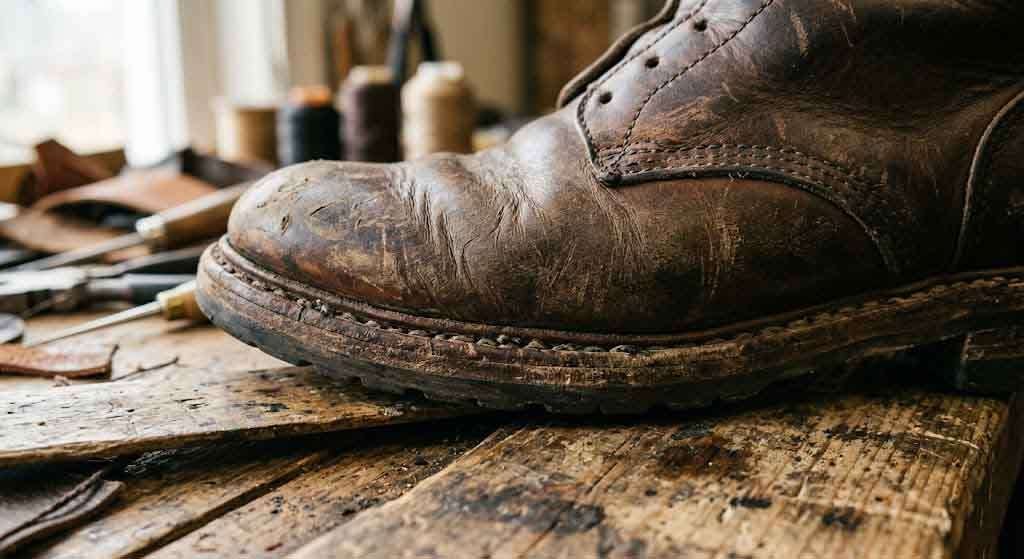
The Resolability Question: Ten Years of Math
Here’s where the argument for investing in a Goodyear-welted boot becomes arithmetic.
A pair of Red Wing Iron Rangers runs around $360. A resole from a cobbler costs roughly $80 to $150, depending on the sole chosen and where you live. Done twice over ten years, you’ve spent roughly $550 to $660 total. That’s one boot that has been on your feet for a decade, broken in to your specific anatomy, with leather that has developed to match your use pattern.
A Thorogood Heritage in the $250 to $280 range with equivalent resoles over the same period lands you at approximately the same total cost. The boot comes out of the box more comfortable but develops somewhat less character over time. Different trade.
A pair of Timberland PRO Pitboss 6-inch boots — a popular choice for actual job sites — runs around $185 to $220. When the sole fails, you replace the boot. On a hard-use job site, that might happen every eighteen months to two years. Over ten years: five to six pairs. At $200 a pair, you’re looking at $1,000 to $1,200 — spent on boots that never fit you as well as a broken-in pair would, never developed the structural integrity that comes with quality leather aging, and contributed zero continuity of craft.
The math on cheap boots is always expensive.
Comfort vs. Character: The Real Philosophical Split
Red Wing and Thorogood represent different theories of what a work boot is supposed to be.
Red Wing asks you to invest time. The break-in is real. The cork footbed takes weeks to mold, and the stiff leather upper needs consistent wear before it relaxes. People complain about this. They’re not wrong — the first month is an adjustment. But what they’re getting in exchange is a boot that, once broken in, exists nowhere else on earth. It fits exactly one person. Yours.
Thorogood’s philosophy is different. Their lasts — particularly the 7261 last used on the American Heritage line — are engineered for out-of-the-box comfort. The Poron footbed absorbs shock immediately. A union ironworker doesn’t have two weeks to break in a boot on a job site. Thorogood was designed around that reality. The boots are job-fitted in the original Weinbrenner sense: built for the specific demands of working people who cannot afford an adjustment period.
Neither is wrong. They’re answering different questions.
What Timberland answers is a third question entirely: how do you sell a boot to someone who needs it to work, look acceptable, and not cost too much? That is a legitimate question. The Anti-Fatigue Technology in the Timberland PRO line is genuinely effective at returning energy from each step — it uses a hexagonal geometry that reduces material while maintaining cushion. It’s clever engineering. But it is engineering aimed at mass-market wearers, not at the ironworker or pipefitter who needs a boot that can survive both the job site and the cobbler’s bench ten years from now.
What The Guy Who Runs a Diner Thinks About All of This
When you own a place on 275 Route 25A that’s been open since 2000, you develop opinions about what holds up and what doesn’t. Floors, equipment, relationships. Boots. I’ve tried most of them. The boots that I’ve gone back to — the ones that made it through the kitchen and the service floor and the years — have always been the ones built on a welt. Every time I strayed toward comfort-first, I paid for it later.
I also spend time working leather. The craft of building bespoke briefcases at Marcellino NY has given me a different set of eyes on the material itself. You learn to read leather the way a carpenter reads grain — not just the surface, but the structure underneath. Red Wing’s S.B. Foot leathers are genuinely excellent. The tanning process builds density into the fiber bundle in a way that a chrome-tanned hide simply cannot replicate. If you want to understand why one piece of leather ages into something beautiful and another just gets ugly, read about the difference between vegetable tanning and chrome tanning. The short answer is time, and whether the manufacturer was willing to spend it.
The Verdict, Without Hedging
Red Wing wins on leather quality, heritage authenticity, and the ten-year relationship a boot can develop with its wearer. The break-in is real. So is the payoff.
Thorogood wins on out-of-the-box comfort, union-made credibility, and the practical question of fit for workers who need immediate performance. The boots are cheaper, they resole well, and the storm welt construction is arguably more waterproof than a standard Goodyear. If someone told me they needed a work boot that would perform from day one and last a decade with proper care, I’d point them toward Thorogood without hesitation.
Timberland wins on brand recognition, retail availability, and comfort technology that works. It is not a bad boot. It is not an American-made boot. If that distinction matters to you — and I’d argue it should — then the choice was already made before we started.
Three boots. Three philosophies. Only two of them belong in the same sentence when the conversation is about American manufacturing. And of those two, the right answer depends entirely on what you’re willing to spend — not in money, but in time.
Sources
- Red Wing Shoe Company — Heritage Line
- Thorogood About — Weinbrenner Shoe Company
- Timberland PRO Construction Line
- Timberland Manufacturing Transparency — Overlook Boots
- Timberland USA-Made Analysis — AllAmerican.org
- Isthmus: Thorogood Boots Made in Wisconsin
- Gear Patrol: Red Wing Heritage Boots