
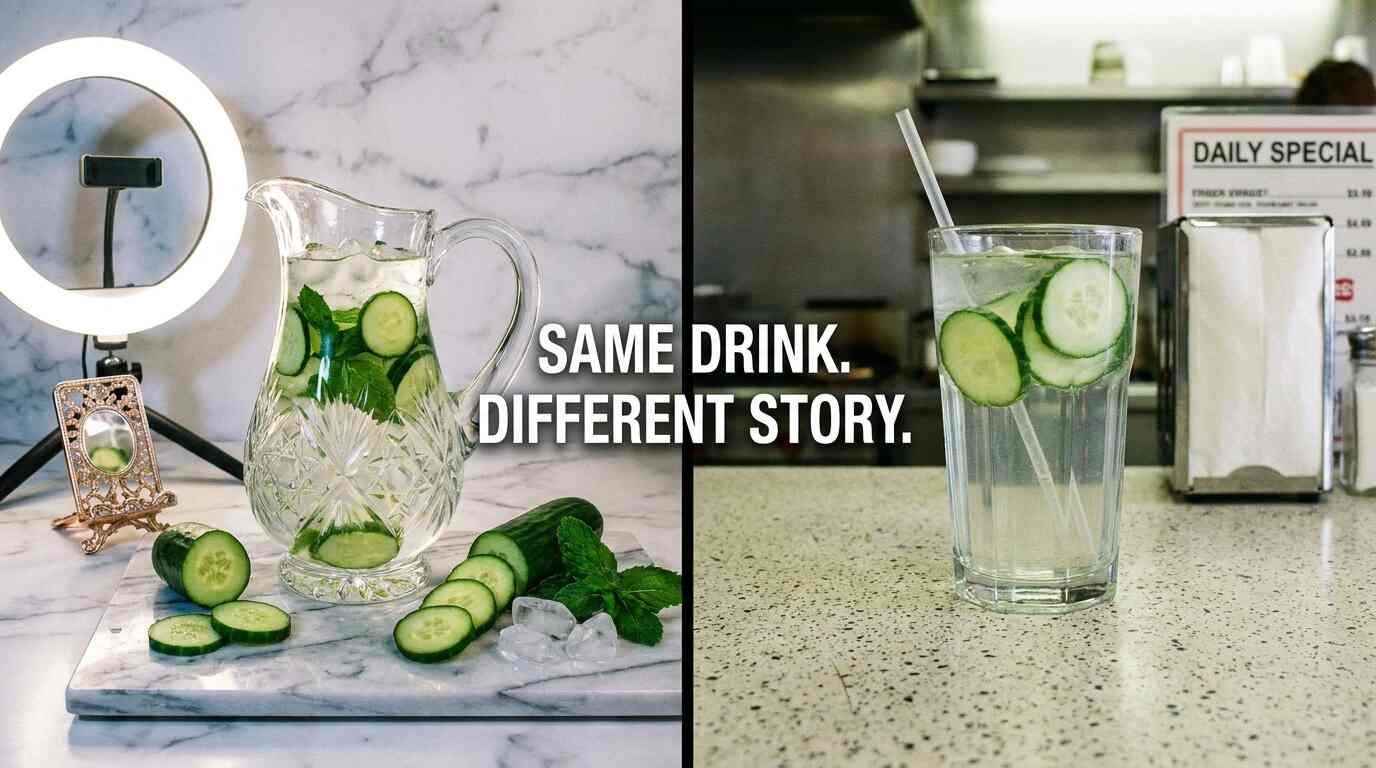
TikTok just went wild for cucumber water. My counter has had a pitcher of it since Clinton’s first term.
That’s the joke. But the joke contains the whole story, and the story is worth telling properly.
What TikTok Thinks It Discovered
Sometime in early spring 2026, the algorithm decided cucumber water was a revelation. Videos piled up. The framing was consistent: a “clean girl” placing sliced cucumber into a glass pitcher, filling it with filtered water, letting it sit overnight, presenting it the next morning like she’d just unearthed the Ark. The aesthetic is clinical, aspirational, softly lit. The language around it is wellness — detox, glow, reset, ritual. On Noom’s blog, which published a guide to cucumber water in April 2026, the drink is characterized as part of “a bigger trend of wellness waters” promising big results. The guide is thorough. The science it cites is appropriately cautious — most of the studied benefits are from cucumber juice or extract, not infused water. The hydration benefit, they note, is real but straightforward: if flavored water makes you drink more water, you’re better hydrated. That’s the whole mechanism.
No one is lying. The water is fine. The cucumber is fine. Hydration is genuinely good.
What’s getting lost is that none of this is new. Not even a little.
We’ve Been Putting Cucumber in Water Since Before Your Phone Had a Camera
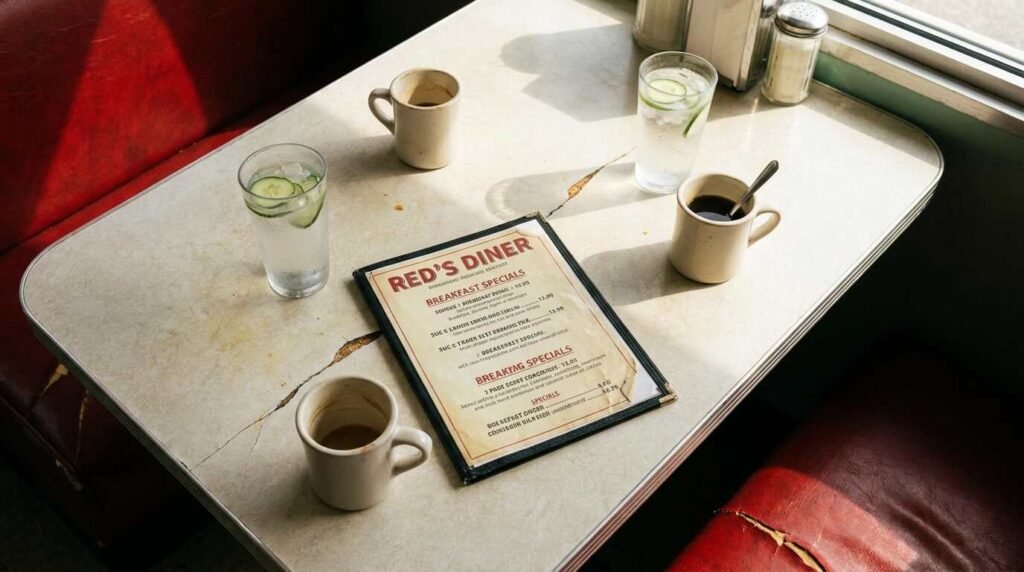
I opened Heritage Diner on Mount Sinai’s North Shore in 2000 with my father, who came to this country from Greece and understood hospitality the way you understand gravity — it wasn’t a theory, it was just how things worked. One of the first decisions we made was about the water. You put something in the water. You didn’t hand someone a glass of chlorinated tap water and call it service. Cucumber. Lemon. Mint when we had it. This was a diner, not a spa, but we weren’t running a gas station either.
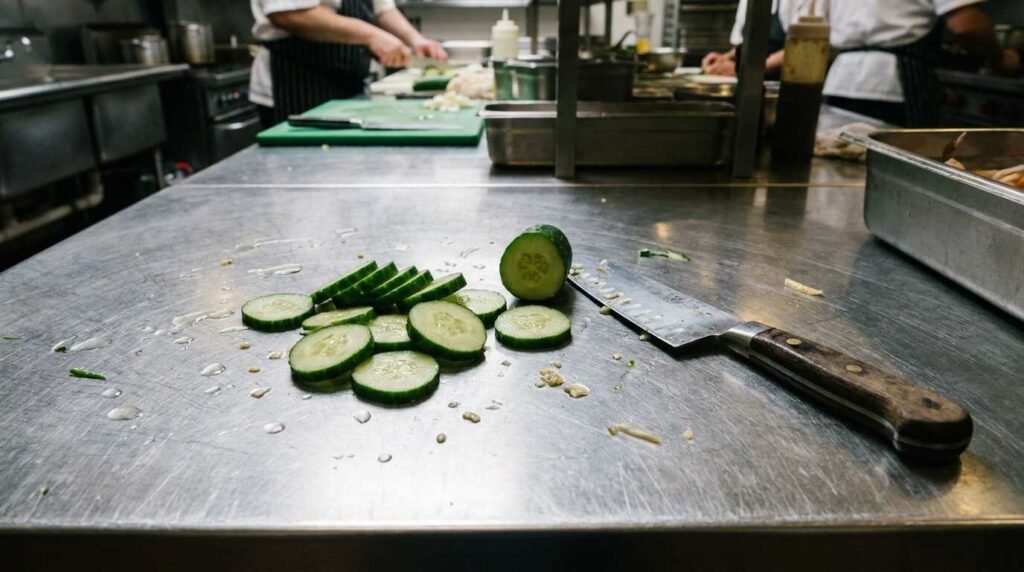
The spa angle is worth examining. The beauty-heroes.com website, which publishes spa water recipes sourced from high-end retreat properties, describes cucumber water as “a refreshing spa classic designed to soothe digestion and reduce bloating.” The Spa at Bardessono serves a basil-cucumber variant. The Renaissance Lodge at Sonoma has its own version. These are $400-a-night properties presenting the same vegetable we slice over a stainless prep surface every morning at 6 AM.
The cucumber’s resume is long. It originated in India over 3,000 years ago. Greek and Roman food culture embraced it. The phrase “cool as a cucumber” predates the internet by about three centuries. Every Greek immigrant who opened a diner on Long Island — and there were many, stretching from Nassau to the North Fork — understood instinctively that cucumbers belonged near water, near food, near people. This wasn’t wellness philosophy. It was common sense with roots going back to the Aegean.
Why the Internet Always Finds the Diner Last
There’s a pattern here that anyone who has run a working-class food establishment for twenty-five years recognizes immediately. The internet discovers something, reframes it as an innovation or a luxury ritual, and the people who have been doing it quietly for decades watch from a distance without comment. They’re busy. They have food to prep.
Lcartefood.com, a WordPress food blog that runs honest, unpretentious recipes, describes cucumber lime water as “the perfect way to stay refreshed, hydrated, and energized” — and then adds that it brings “spa energy” to a brunch. The phrase “spa energy” is doing a lot of work in that sentence. What it means, stripped down, is: this makes you feel good and costs almost nothing. That’s the whole pitch for diner hospitality too. The spa gets credit because the spa has a marketing budget and a photographer. The diner gets credit from regulars who’ve been coming in on Saturdays for fifteen years.
None of this is resentment. It’s observation. The internet is a discovery engine that operates on a delay. What working people know practically, the content economy eventually finds and rebottles. The rebottled version is sometimes better-photographed. It is never more real.
What Actually Makes a Drink Refreshing (Hint: It’s Not the Algorithm)
Cucumbers are 96 percent water by weight. That’s a documented fact that predates TikTok by the entire span of human agriculture. When you slice a cucumber and submerge it, you’re getting trace amounts of vitamin C, vitamin K, and potassium migrating into the water over time. You’re also getting flavor — mild, clean, faintly vegetal — that breaks the monotony of plain water in a way most people find pleasant. The science is not complicated and the benefits are real but modest. The major benefit is that it makes people drink more water. People who drink more water function better. That’s the loop.
The Heritage Diner’s sourdough bread — we bake a three-pound loaf every morning — took years to refine. The cucumber water took no time at all. You don’t need a formula. You need a cucumber, a knife, a pitcher, and cold water. The elegance is in the simplicity. That’s what the “clean girl” aesthetic is actually reaching for, even if it can’t quite articulate it without the ring light: simplicity tastes better than complexity most of the time.
I’ve written before about the chemistry of what happens to flavor over time — if you want the longer version, my piece on what over-extracted coffee does to the compounds in a third cup gets into the science. The principle applies here too. Steeping extracts flavor, but the window is short. Past 48 hours, the cucumber starts to degrade. Get it cold, drink it the next day. Done.
The Glow-Up Nobody in My Kitchen Asked For
Here’s what I actually think is happening, past the jokes.
The “clean girl” trend — and cucumber water is firmly inside it — is a response to years of maximalism. Overloaded content, overloaded plates, overloaded schedules. People are reaching for something that feels stripped down and intentional. A cucumber in water is legible. It asks nothing of you. It doesn’t require a subscription or an app or a 47-step morning routine. You can see exactly what’s in it.
Diners understood this a long time ago, not as a philosophy but as a practical proposition. The menu covers the basics. The water is cold and has something in it. The coffee is refilled without asking. These aren’t innovations. They’re decisions made once and kept, because they work. The working-class instinct toward practical hospitality has a name now — “wellness” — and a demographic — “Gen Z with a ring light” — and a platform — “TikTok” — but the thing itself is older than any of that.
The diner didn’t need a glow-up. It was already up. The algorithm just found the address.
You Might Also Like: The Egg Cream Has No Egg and No Cream: How a Brooklyn Soda Fountain Lie Became Long Island’s Most Contested Diner Beverage | Eric Hoffer’s Longshoreman Logic Maps Perfectly onto the Counter Stool Economy
Sources
- Noom — Cucumber Water: Weight Loss Benefits, Recipe, and How to Make It at Home (April 1, 2026): https://www.noom.com/blog/weight-management/cucumber-water/
- Beauty Heroes — Top Spas Spill Their Spa Water Recipes (February 16, 2026): https://www.beauty-heroes.com/blog/spa-water-recipes/
- Lcartefood — Refreshing Cucumber Lime Water (June 2025): https://lcartefood.com/refreshing-cucumber-lime-water-detox-hydrating-recipe/
- The Skinny Fork — Detox Spa Water: https://theskinnyfork.com/blog/detox-spa-water
- iamafoodblog.com — The Viral TikTok Cucumber Salad (April 3, 2026): https://iamafoodblog.com/tiktok-cucumber-salad/
- Wikipedia — Cucumber: https://en.wikipedia.org/wiki/Cucumber