Content creators are filming themselves in diner booths like they found a sacred relic. I’ve been refilling coffee across from one for twenty-five years.
Why the Algorithm Fell in Love with My Booth
https://www.tiktok.com/tag/dineraesthetic
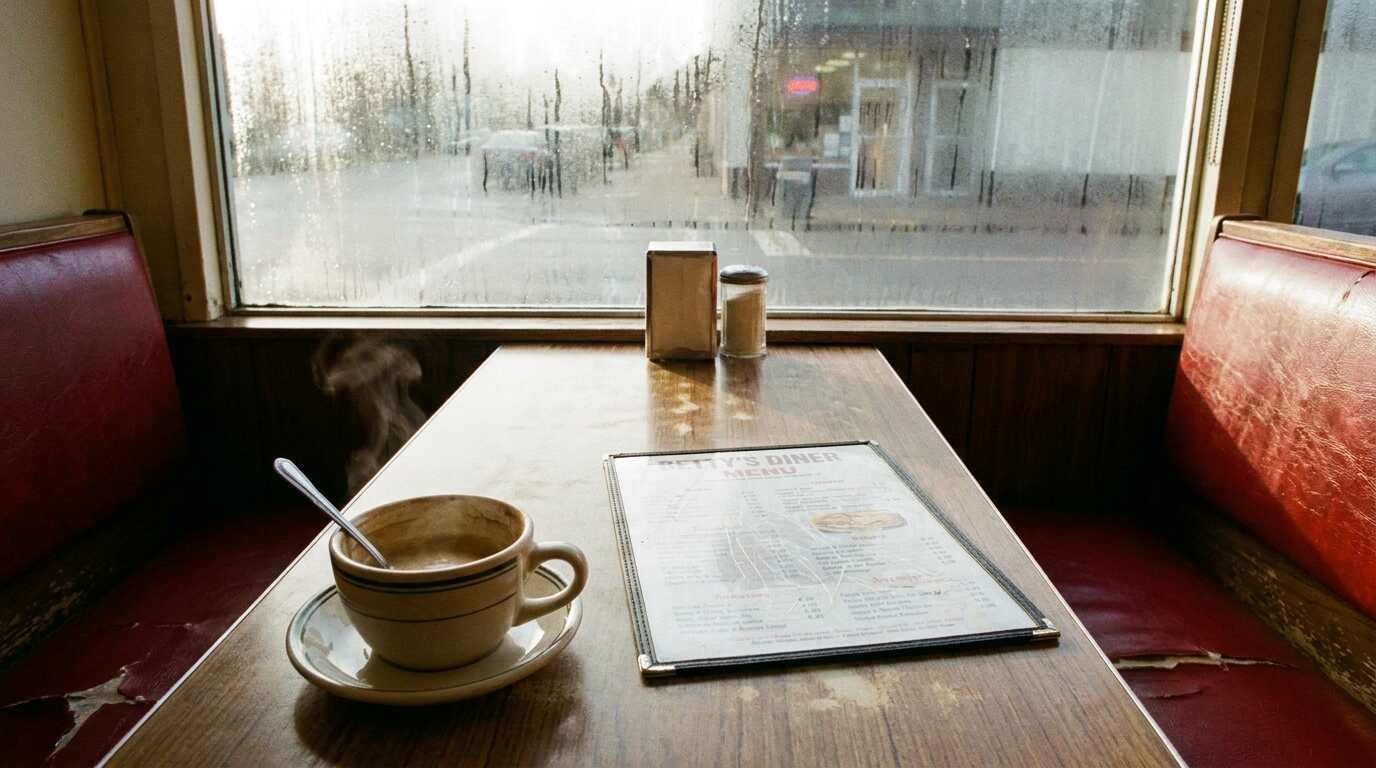
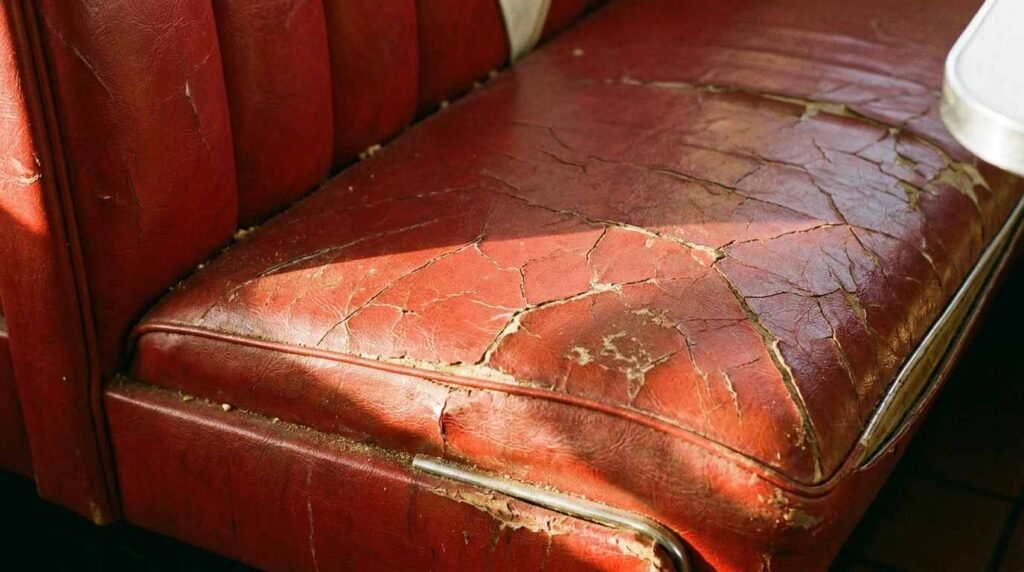
Spring 2026, TikTok and Instagram are flooded with a very specific kind of diner content. Not restaurant reviews. Not food shots. Atmosphere shots. A window booth, late afternoon light cutting across a laminated menu. A coffee cup with lipstick on the rim. Cracked vinyl in close-up, shot like it’s architectural detail from a cathedral. The #dineraesthetic tag running into millions of views. These aren’t food videos — they’re mood videos. The subject is the room. The subject is the seat.
The Library of Congress, which published a piece this April on diner photography from its own collections, described diners as places that offer “Americana in its most reassuring form” — the coffee, the hearty meals, the casual decor, all of it flowing together into something that feels like it predates your current anxiety and will survive it. That framing — the diner as a container of the stable and the known — is exactly what the TikTok content is reaching for. The creators aren’t mocking the diner. They’re not ironic about it. They’re genuinely looking for something in that booth, and the camera is their way of trying to keep it.
That impulse deserves to be taken seriously, not explained away.
What You’re Actually Looking For When You Slide Into That Seat
The diner booth has engineering behind it. This is worth understanding before we get into what it means.
The booth was designed, over decades of iteration, for maximum utility in a minimum footprint. The bench seats face each other across a fixed table, which means no one can pull the table away, no one can push you out with their chair, no one can accidentally bump you from behind. You are enclosed on three sides. The wall is behind you. The table is in front of you. The world has a boundary. This is not an accident of design — it’s the reason booths became the preferred seat for everyone from families to lonesome regulars to, as the Tarantino mythology would have it, the kind of men who sit with their backs to walls.
There is a psychological term for this: prospect-refuge theory. The human animal prefers positions where it can see without being seen, where it has cover. The diner booth is one of the few pieces of furniture in modern American life that was built, without anyone ever calling it that, around prospect-refuge principles. You have a view of the room. You have cover from behind. You can see the door.
I’ve written before about the specific materials that built these booths — the Naugahyde that replaced leather after the war, the Formica that replaced wood on the tables, all of it engineered to be washable and cheap and indefinitely replaceable. If you want the full material history, my piece on the Naugahyde story covers how a fictional animal’s fake hide became the seating material of Long Island’s working-class diners and what that actually reveals about postwar American economics. And separately, the Formica counter piece is worth reading alongside it.
The booth wasn’t designed to be photographed. It was designed to work. That it photographs so well is a side effect of honest utility.
The Booth Was Always the Best Seat. We Didn’t Need a Hashtag to Know It.
Anthony Bourdain said — and I think about this line — “Diners are a place where you can be anonymous, you can be yourself, you can be sad, you can be happy, you can be whatever you want to be.” He got the essential thing right. The diner doesn’t require you to perform. You can be whoever walked through the door. The booth holds that neutrality. It asks nothing of you except to sit down and decide whether you want the eggs scrambled or over easy.
That neutrality is scarce. Most public spaces in 2026 have been optimized for transaction — the coffee shop where you buy a seat by the hour, the restaurant where the table turns twice a night and you feel it, the co-working space designed to look like a café without the café’s actual tolerance for people who sit too long. The diner booth has not been optimized in this way. The regulars know it. They’ve known it for decades. They take the same booth every Saturday morning and the counterman doesn’t ask why because the counterman already knows.
What TikTok is doing — and I mean this without irony — is noticing something real. The “diner aesthetic” content is, underneath its cinematic framing, a document of longing for a space that still operates on human scale. The booth is popular on the algorithm because it represents something the algorithm can’t provide: a place where the point is not the content.
Comfort Has a Blueprint — and It Was Built in Vinyl and Formica
The specific look of the diner booth — the cracked vinyl, the Formica, the laminated menu that’s been laminated so many times the plastic is starting to delaminate at the corners — reads as nostalgia on camera. It isn’t, really. It’s just durability. The vinyl cracked because it was sat on for forty years. The Formica is still smooth because Formica is designed to be smooth forever. The menu is laminated because menus get touched by wet hands all day and a laminated menu costs nothing to wipe down.
These are not aesthetic choices. They are material choices made under conditions of economic constraint and practical necessity. The fact that they now read as character is a product of contrast: the rest of the dining landscape has been so thoroughly redesigned for trendiness that a surface that simply does its job looks radical.
New Atlantis published a piece in late 2025 about what they called the “dinergoth” condition — the way diner culture and alternative aesthetics have converged in economically left-behind American communities. Their argument is that the diner has become, paradoxically, countercultural — a space that resists the homogenizing efficiency of national chains by simply remaining what it was. I’d push back slightly on the framing — my diner was never trying to be countercultural, it was just trying to make a good cup of coffee — but the underlying observation is right. The diner’s refusal to update is what makes it interesting to a generation that was born into a world of constant updates.
When Nostalgia Goes Viral, Someone Somewhere Is Still Living It
Here’s the thing about all this diner booth content flooding the internet in spring 2026: none of it is wrong.
The people filming themselves in booths are not faking the feeling they’re documenting. They feel something real when they slide into that seat. The booth delivers. It has always delivered. The warmth, the enclosure, the specific pleasure of a hot ceramic coffee cup and the knowledge that it will be refilled without a scene — these are real experiences, not aestheticized fictions.
What’s interesting is the gap between the experience and the mediation. The booth is on TikTok because someone thought to bring a camera. The booth was in the diner before the camera, and the booth will be in the diner after the content cycle moves on. The people who know the booth best have never posted about it. They just come back on Saturday.
My father opened this diner in 2000 with the understanding that what people need, at bottom, is somewhere to sit that doesn’t cost them anything to stay. That wasn’t a business model observation — it was a moral one. The booth was always a piece of that. The internet found it eventually. I’m glad. I just wouldn’t want anyone to confuse the documentation with the thing itself.
Slide in. Order something. Put the phone down.
You Might Also Like: The Diner That Survived on Train Time: Ronkonkoma Station and the Breakfast Economy | The Philosopher Who Ate at Diners: Eric Hoffer and the Counter Stool Economy
Sources
- Library of Congress Picture This Blog — The Classic American Diner (April 2026): https://blogs.loc.gov/picturethis/2026/04/the-classic-american-diner/
- The New Atlantis — American Diner Gothic (November 2025): https://www.thenewatlantis.com/publications/american-diner-gothic
- Luma — The Evolution of American Diners: A 2024 Perspective: https://lumapetaluma.com/the-evolution-of-american-diners-a-2024-perspective.html
- Wikipedia — Diner: https://en.wikipedia.org/wiki/Diner
- Ed Debevic’s — The Impact of Iconic Diner Scenes in Film and TV on American Culture: https://www.eddebevics.com/blog/how-iconic-diner-scenes-in-film-and-tv-shaped-americas-love-affair-with-diners