The James Beard Foundation announces its nominees every spring. Most working cooks watch from a distance. That distance is worth examining.
The 2026 nominee list dropped on March 31. Winners get announced at the Lyric Opera of Chicago on June 15. Between now and then, there’s a lot of noise — coverage on Eater, Time Out, amNewYork, everyone parsing the list for surprises and snubs. The foundation itself marked the moment by noting this year represents four decades of the awards, calling it a chance to “celebrate and champion the people driving American food culture forward.”
Fine. I’ll give them that framing. And then I’ll tell you what I actually see.
Who Gets Nominated and Who Gets Overlooked
The 2026 Best Chef: New York State nominees are a sharp group. Fidel Caballero of Corima. Giovanni Cervantes of Carnitas Ramirez. Hooni Kim of Meju. Ayesha Nurdjaja of Shukette. Joshua Pinsky of Claud. These are not vanity picks. These are chefs running serious rooms.
Rasheeda Purdie of Ramen By Rā in the East Village made the Emerging Chef cut. Paul Carmichael’s Kabawa made the Best New Restaurant list. Brooklyn’s Four Horsemen — the natural wine bar that’s been one of the most intellectually consistent restaurants in the city for years — picked up an Outstanding Restaurant nomination. Via Carota was in the semifinalist pool.
So the list is good. Smart, diverse, real kitchens. Nothing in it that looks like it was handed to a publicist.
What the list doesn’t contain — and never contains — is a single mention of anything east of the city limits on Long Island. That’s not a new observation. But it’s a persistent one, and the persistence is data.
The Gap Between Award Culture and Working Kitchens
Here’s the structural problem with prestige awards in any industry: they reward visibility. And visibility costs money.
Getting to a James Beard nomination is not a cooking competition. It’s a campaign. You need critics to visit. You need press. You need a PR person who knows how to get your name into the semifinalist conversation. You need the right investors, ideally — the ones who come with media relationships attached. The Emerging Chef category is supposed to find the most talented new voices in the industry. What it actually finds is the most talented new voices who also have the backing to be heard.
I’ve been cooking since before some of these nominees were born. I know what good food costs to produce and what good food costs to promote. Those are two completely different budget lines.
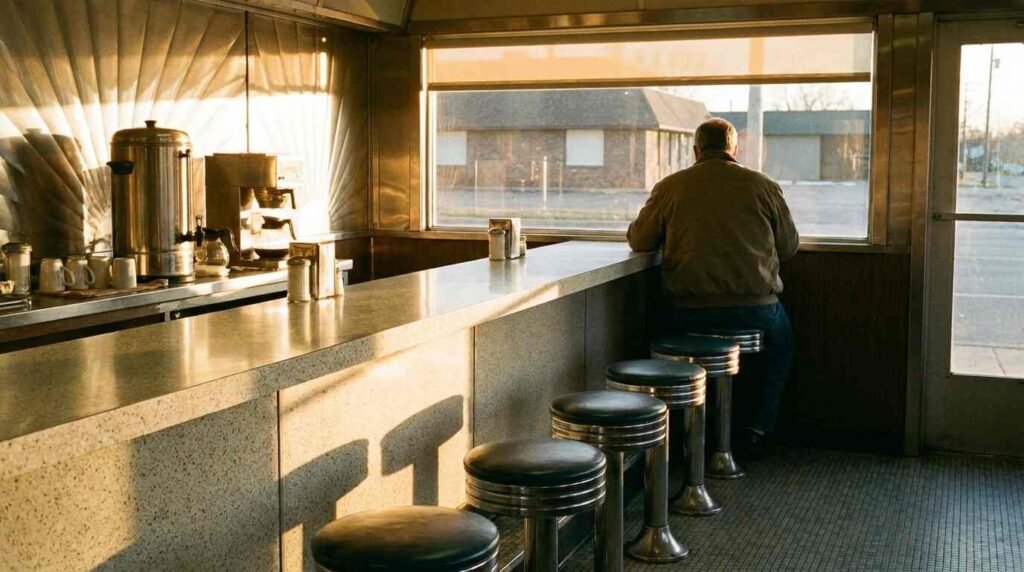
The Patch piece on Long Island diner closures quoted a diner owner named Kevin Denis, who ran his place in Kings Park for decades, saying he wouldn’t go into the food business today. Not because the cooking got harder. Because the costs — rent, food, insurance, labor — left no margin. No margin means no PR. No PR means no awards conversation.
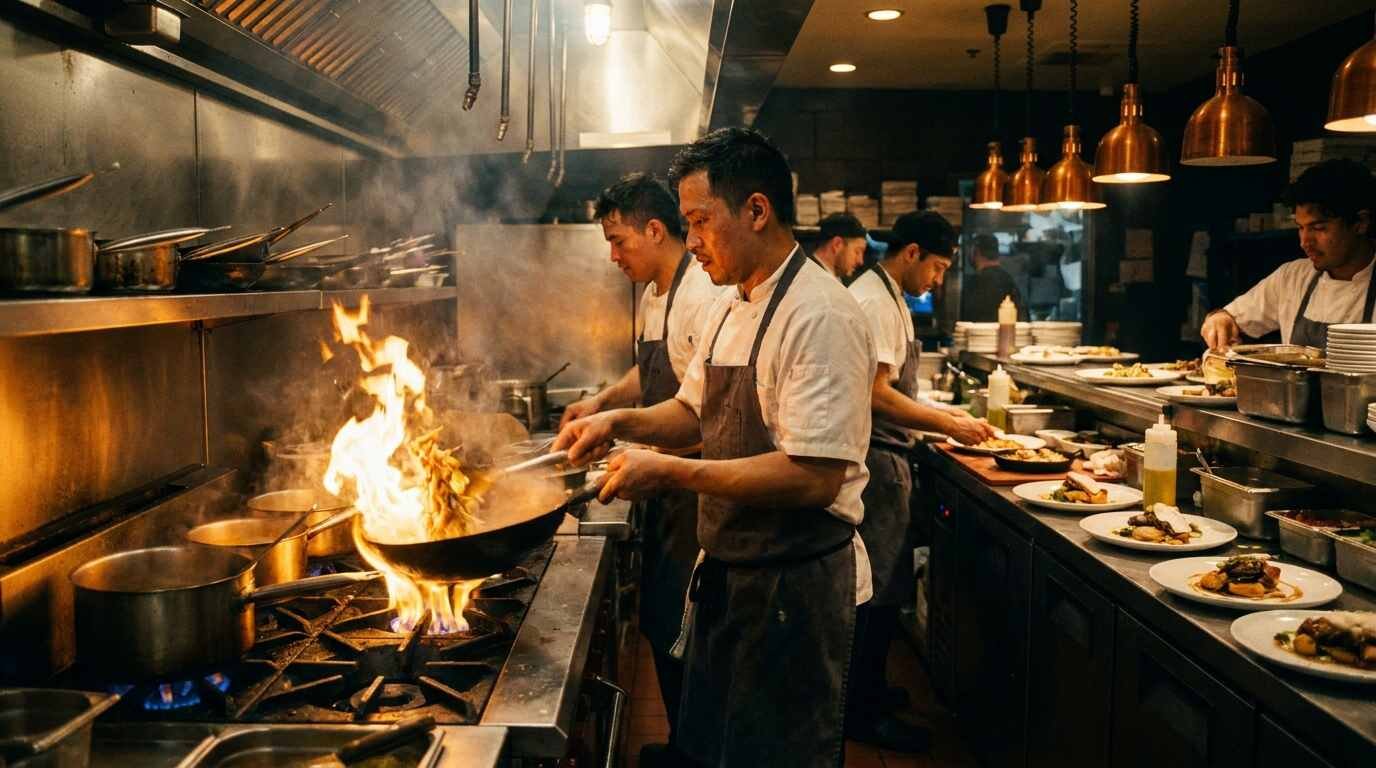
The working kitchens — the ones operating on real margins, feeding real neighborhoods — are invisible to this process by design. Not by malice. By design. The awards measure what gets seen. The conditions that determine what gets seen are not random.
Long Island’s Spot in the New York Restaurant Conversation
When the foundation’s CEO Clare Reichenbach said the 2026 awards recognize “the talent, leadership, and care that make food such a powerful force,” she is right in the abstract. The awards do capture something real.
What they don’t capture is geography.
The New York restaurant conversation, as understood by the awards and the press that feeds them, ends at the city line. Long Island — a region with more than three million people, a coastline, a farm system that supplies half the city’s restaurants, and a food culture that predates most of the nominees’ careers — functions as scenery, not subject.
There are Long Island restaurants doing serious work. The wine scene in Huntington Village — I wrote about that here — is as sophisticated as anything happening in Carroll Gardens. The North Shore dining culture has its own depth, its own regulars, its own standards. The Greenport smokehouse history I traced in Smoked and Disputed goes back to the whaling era. None of that has ever come close to the awards conversation.
The reason isn’t quality. The reason is the media infrastructure that mediates between quality and recognition. It lives in Brooklyn. Full stop.
What ‘Outstanding’ Actually Means to Someone Paying Food Costs
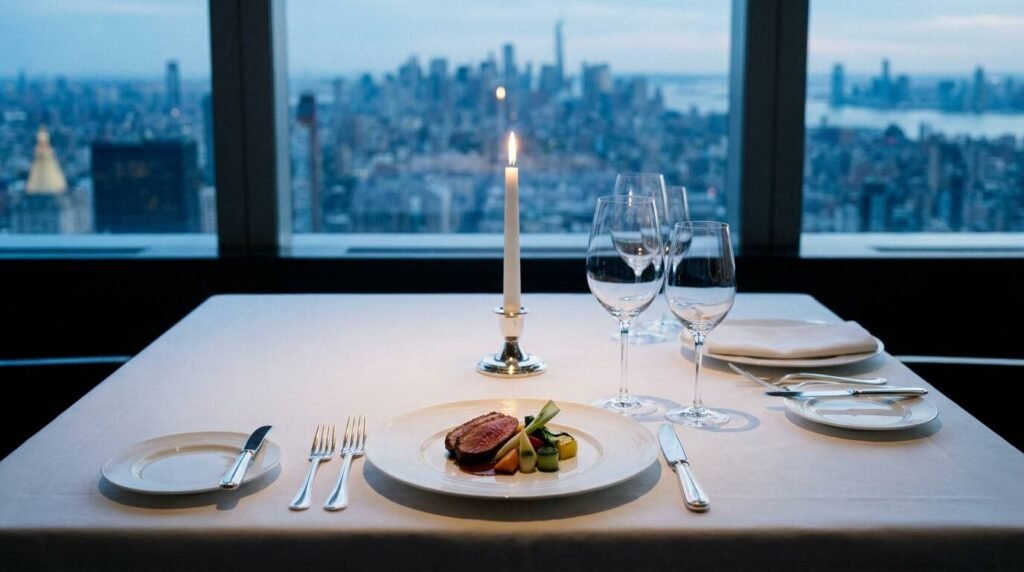
“Outstanding Restaurant” is the category that stops me every year. It implies a total experience — food, service, consistency, contribution to the community. The places that earn that nomination are genuinely good. I’m not arguing otherwise.
But I want to sit with the word “outstanding” for a second.
Outstanding relative to what? To other restaurants that operate in a media-saturated environment with high-end investors and a clientele that reviews on Yelp and Instagram and knows who the chef is? Outstanding relative to a place in East Setauket that’s been feeding the same families for thirty years on a menu that hasn’t needed a consultant?
What the awards call “outstanding” and what I’d call outstanding are sometimes the same thing. Sometimes they’re not. The difference isn’t about the cooking. It’s about the audience.
The LIRR dining car history I traced in Gravy Boats and No Boats tells you something about how food quality and food prestige have always operated on separate tracks. The dining car served decent food to a captive audience while the city restaurants got the reviews. Same island. Different visibility.
Why These Awards Matter Even If They’re Not For Us
None of this means the James Beard Awards don’t matter. They do.
They matter because the chefs who win get visibility, which leads to press, which leads to financial backing, which leads to the ability to operate at a level that draws more visibility. The cycle is self-reinforcing, but it creates real restaurants with real chefs doing real work. That’s not nothing.
They matter because they set a benchmark. A national conversation about what good food looks like is better than no conversation. The 2026 New York nominees — Corima, Carnitas Ramirez, Four Horsemen — are giving people a reason to cross a borough for dinner. That’s good for the whole industry, including the parts of the industry that will never make the list.
And they matter because they make the gap visible, if you’re looking for it. A list this good, covering this many genuine talents, and still finding no room for a single Long Island restaurant — that’s information. Not about the quality of Long Island cooking. About the geography of recognition.
I watch the awards the way I watch anything that tells me where the attention in my industry flows. Not to chase it. To understand it. Twenty-five years of running a diner teaches you that the most important thing to know about power is where it’s concentrated and where it’s not.
The Beard list tells me exactly that. Every year.
You Might Also Like: – The Wine Scene Nobody Wrote About: How Huntington Village Became One of Long Island’s Most Serious Wine Destinations – The Philosopher Who Ate at Diners: How Eric Hoffer’s Longshoreman Logic Maps onto the Counter Stool Economy – Gravy Boats and No Boats: How the Long Island Railroad’s Dining Car Service Created a Captive Diner Economy
Sources
– “Ladies and gentlemen, here are New York’s 2026 James Beard Award nominees.” Time Out New York, March 31, 2026. https://www.timeout.com/newyork/news/here-are-new-yorks-2026-james-beard-award-nominees-033126 – “The 2026 James Beard Award Nominees.” James Beard Foundation. https://www.jamesbeard.org/stories/james-beard-awards-restaurant-and-chef-nominees-2026 – “Dish it out! NYC restaurants and chefs nominated for prestigious James Beard Awards.” amNewYork, April 1, 2026. https://www.amny.com/news/nyc-james-beard-awards-nominees-restaurants-2026/ – “Here Are the 2026 James Beard Awards Restaurant and Chef Semifinalists for NYC.” Time Out New York, January 21, 2026. https://www.timeout.com/newyork/news/here-are-the-2026-james-beard-awards-restaurant-and-chef-semifinalists-for-nyc-012126 – “The Resy Guide to the 2026 James Beard Awards Nominees.” Resy Blog, April 2026. https://blog.resy.com/2026/01/2026-james-beard-nominees/