Every October, the same ritual plays out across social media: a wave of posts declaring candy corn the worst candy ever manufactured, followed immediately by a counter-wave of people defending it, followed by the actual sales data proving that both sides are, in some sense, wrong — because candy corn keeps selling roughly 35 million pounds a year regardless of how loudly the internet claims to despise it. Few foods occupy this exact position: simultaneously a punchline and a genuine commercial staple, hated in the aggregate and bought anyway, year after year, by enough individual people to keep a 19th-century recipe in continuous production longer than almost any other candy in the American market.
An Agricultural Candy for an Agricultural Country
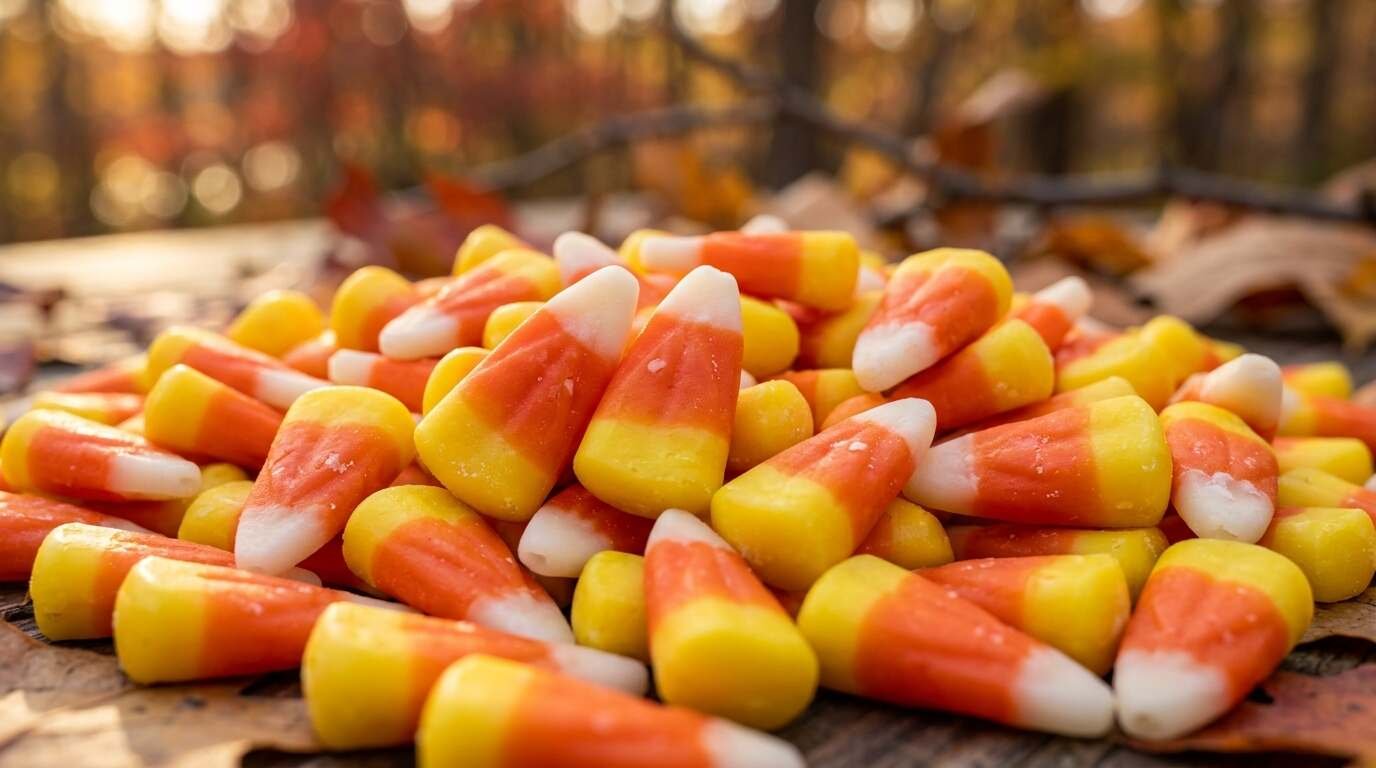
Candy corn’s origin traces to the 1880s, when confectioner George Renninger developed the tri-color kernel shape at the Wunderle Candy Company in Philadelphia, designing it specifically to look like a kernel of corn at a moment when the United States was still overwhelmingly agrarian and corn was the crop that defined entire regional economies. Historical accounts place the candy’s wider commercial launch with the Goelitz Confectionery Company — now Jelly Belly — in the 1890s, where it was originally marketed under the far less appetizing name “Chicken Feed,” complete with a rooster on the box, because the candy was pitched directly at a farming population that would recognize the shape instantly and find the joke genuinely funny rather than strange.
That agricultural branding mattered because candy corn wasn’t initially a Halloween candy at all — it was a general autumn harvest-season treat, sold whenever corn itself was being harvested, and its association with Halloween specifically developed gradually over the following decades as trick-or-treating became a mainstream American tradition and candy companies looked for products that visually matched the season rather than requiring a costume-specific design.
The Manufacturing Process Has Barely Changed in a Century
What makes candy corn a genuinely unusual case study in food manufacturing is how little the production method has evolved since the 1900s. The candy is made through a process called “corn starch molding” or sometimes “mogul casting,” where trays of corn starch are pressed to create kernel-shaped impressions, and warm liquid sugar syrup — slightly different colored batches for each of the three layers — gets piped into those impressions in sequence, one color at a time, allowed to set before the next color goes in. The result is a candy built in literal layers, each one a separate production pass, which is part of why candy corn remained comparatively labor-intensive and expensive to produce relative to simpler extruded candies for most of its history, even as it became a mass-market staple.
The three-color design itself was intentional engineering, not decoration for its own sake: the broad yellow base, narrower orange middle, and white tip were built to mimic the way an actual corn kernel’s color gradient looks, and the layered construction happens to produce a genuinely distinct textural experience depending on which part of the kernel a person bites first — a detail that confectionery historians note as unusually sophisticated for a candy marketed, at the time, primarily to children and farm families rather than as a premium product.
The Numbers Behind the Hatred
Despite decades of being voted “worst Halloween candy” in informal surveys and online polls, candy corn’s actual sales performance tells a more complicated story than the internet consensus suggests. The National Confectioners Association has tracked candy corn as one of the top-selling Halloween-season candies by volume for years running, and the National Candy Corn Day phenomenon — October 30th, officially recognized — generates its own annual spike in search interest and retail promotion that wouldn’t exist for a product genuinely despised by the market rather than merely mocked by it online.
The disconnect between online sentiment and purchase behavior is itself a useful case study in how badly social media noise can misrepresent actual consumer demand. Candy corn haters are vocal, visible, and consistent every October; candy corn buyers are quiet, numerous, and apparently unmoved by the annual public shaming, which is precisely the pattern researchers studying online sentiment versus sales data point to when warning against mistaking the loudest opinions for the most common ones.
Why the Hatred Might Be the Point
There’s a reasonable argument, made by several food writers and candy historians, that candy corn’s reputation as a divisive, even reviled candy has become part of its marketing rather than a threat to it. A candy nobody felt strongly about wouldn’t generate the annual wave of listicles, debates, and “worst candy” rankings that keep candy corn’s name in front of consumers every single October at zero marketing cost to the manufacturers — the controversy functions as free, recurring, perfectly seasonal advertising. Few other discontinued-by-public-demand candidates get this treatment; the ones people truly stop buying simply vanish from shelves quietly, the way countless failed 20th-century candy bars have. Candy corn’s persistent unpopularity, paired with its persistent sales, suggests the “hatred” is closer to an inside joke the culture keeps telling about itself than a genuine market rejection.
A Diner’s Honest Relationship With a Seasonal Candy
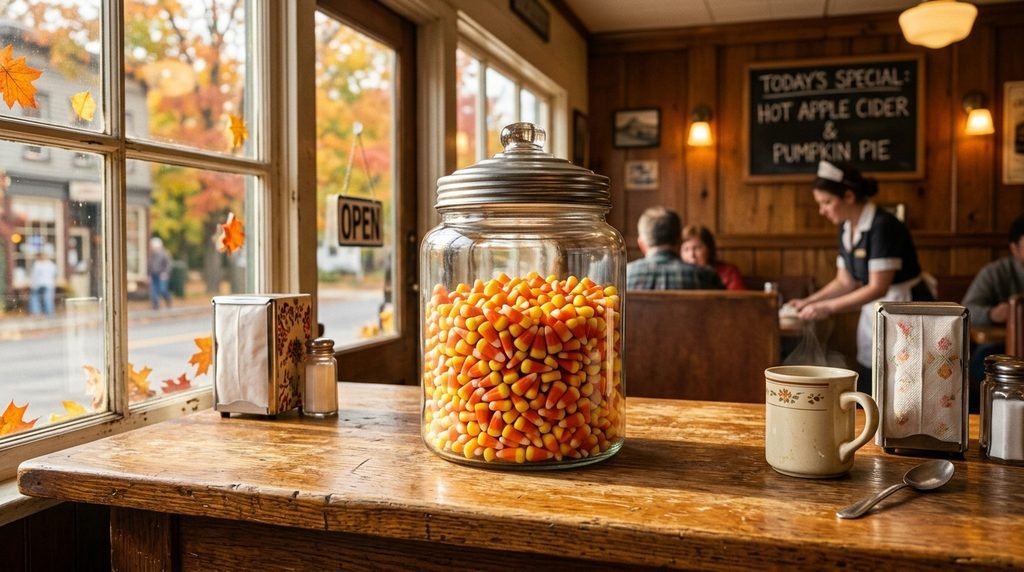
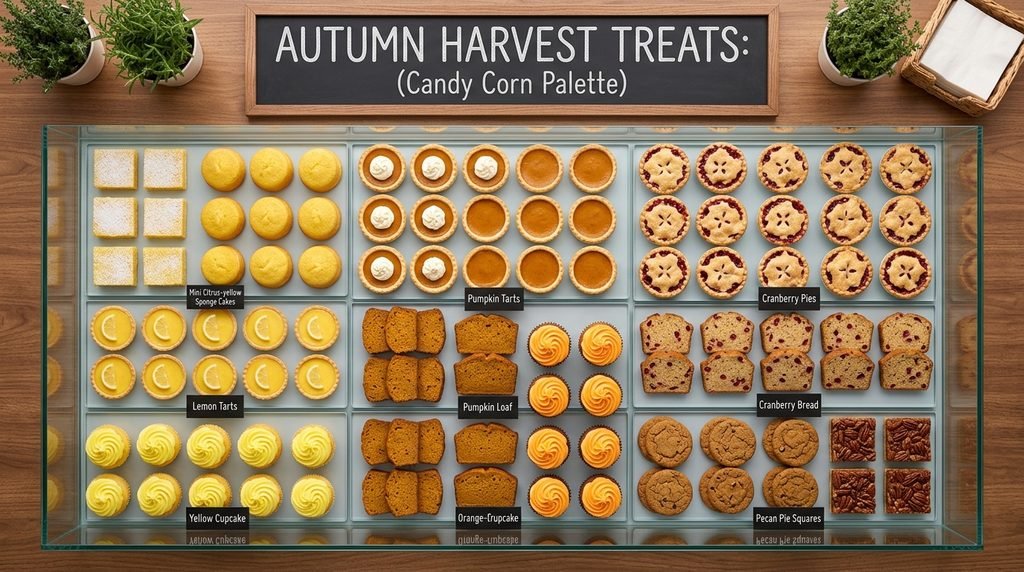
For a restaurant that doesn’t sell packaged candy, candy corn’s real relevance isn’t the kernel itself — it’s the color palette and the harvest-season signal it represents, which shows up legitimately in seasonal baking long before any Halloween costume gets involved. The same tri-color logic that made candy corn visually readable as “autumn” in the 1890s is the same instinct behind layering a dessert case with pumpkin, cranberry, and spice-toned offerings every October: it’s a decades-old visual shorthand for the season that predates the candy itself and will outlast every internet debate about whether the candy belongs in a trick-or-treat bowl at all.