Two tablespoons of semolina, the coarse durum flour that usually ends up in pasta dough, are the whole story behind a French toast technique making the rounds again this fall. Lindsay Parrill of Taste of Home wrote on September 30, 2026 that she spotted the trick in a Milk Street Instagram video, tried it, and ended up with the “best French toast I’ve ever eaten.” The promise is simple: a crisper exterior, and a center that stays soft and custardy instead of going limp.
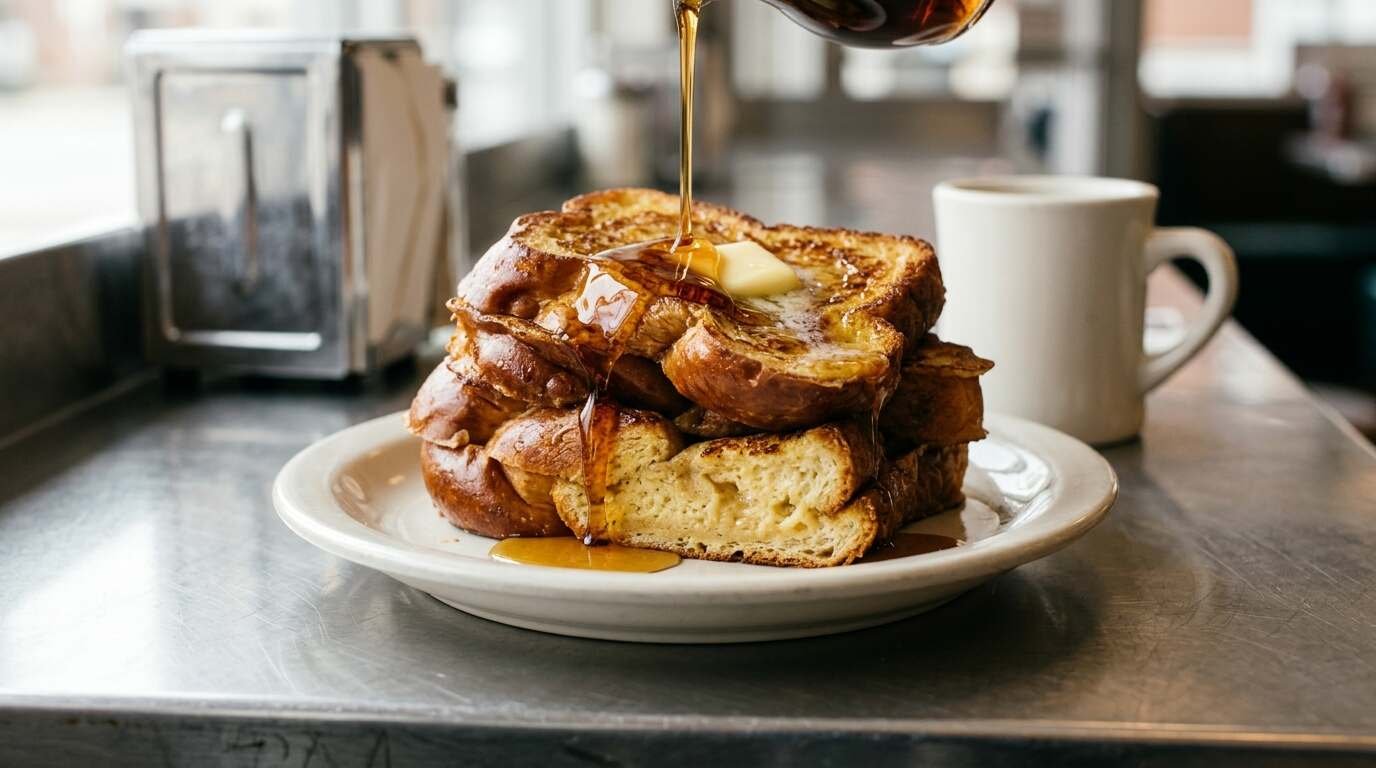
Thick-cut slices, a golden griddled crust, a pat of butter sliding off the top. That is the diner plate this guide is built to produce. The methods below come from published test-kitchen work, not from any one restaurant’s kitchen, and each step names its source.
Where the Trick Came From
Milk Street published its recipe, “French Toast, Perfected,” on April 8, 2025, and its own write-up by Willow Montana explains the logic. Semolina is milled more coarsely than white flour and holds up to more liquid, so the slice drinks in more custard while the inside stays creamy and the outside browns. The kitchen reported the same effect in waffles and pancakes. The recipe headnote puts it in five words: “The surprise ingredient is semolina.”
Picture each coarse grain as a tiny sponge suspended in the custard, soaking up liquid so the bread has less to absorb on its own. The kitchen’s own video, embedded below, shows the technique on camera.
Milk Street’s full ingredient amounts sit behind a membership page, so the custard amounts in this guide come from Taste of Home’s published version of the technique, cross-checked against the Milk Street headnote and story. Milk Street’s own account is on its Instagram page.
Put a date on the calendar, too. National French Toast Day lands on Saturday, November 28 this year, which leaves a few weekends of practice.
Pick the Loaf, Then Take the Moisture Out
Bread is the structure, and the sources agree on its character: rich, soft and sturdy. Milk Street recommends challah, or a rustic batard-style Italian loaf for a heartier bite. Food Network Kitchen ranks pain de mie first for its neutral flavor and spongy texture, with brioche (richer) and challah (a good all-purpose pick) behind it. This blog’s challah French toast post covers one way to build on a loaf like that, and the old-fashioned white bread version shows the plainer route.
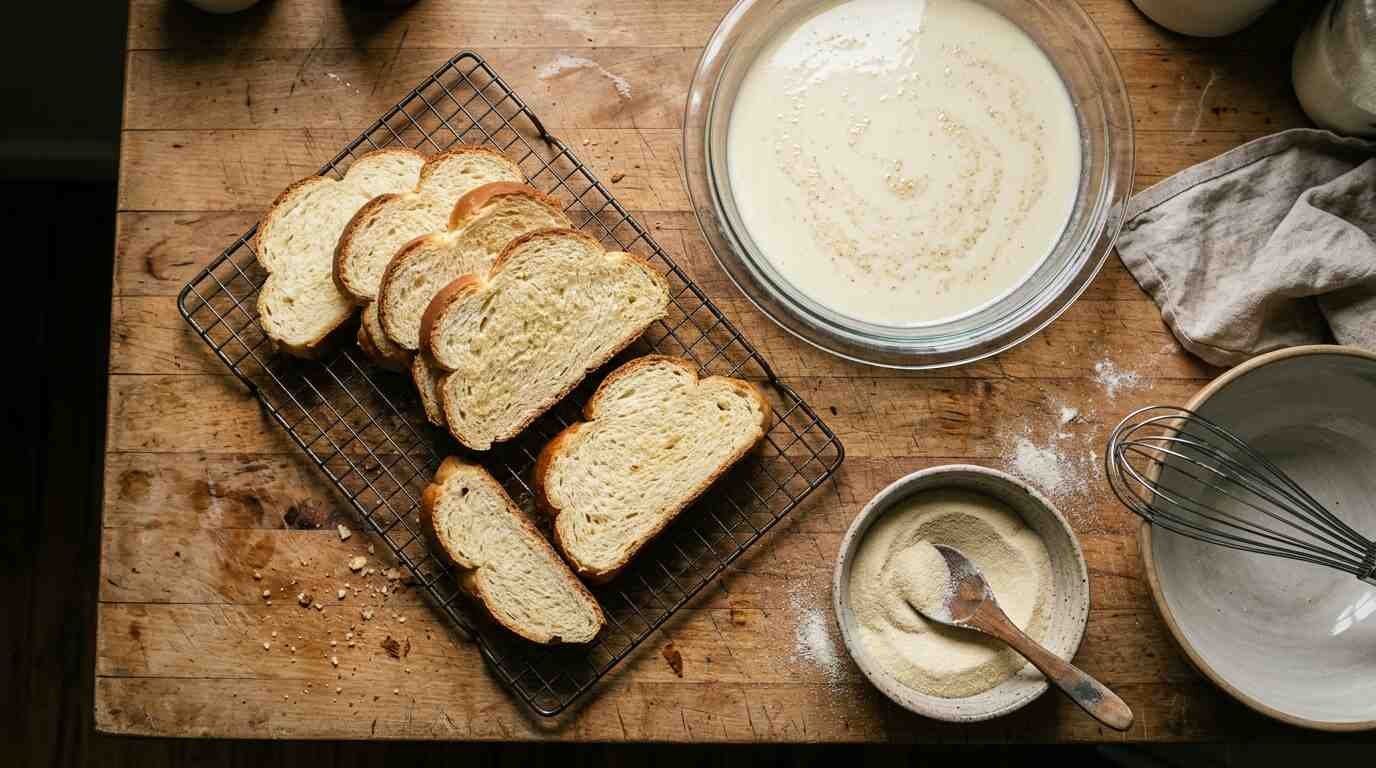
Slice thickness comes next. Milk Street asks for 1-inch slices cut from the center of the loaf. Food Network Kitchen cuts about ¾ inch. Either works; the thicker cut leaves more custardy middle to protect.
Then dry the slices, and here the two kitchens split. Milk Street says to lightly toast the slices until the surface is dry without browning, or let them air-dry overnight on a rack. Food Network Kitchen prefers fresh bread over stale, and toasts it in a 300°F oven for about 12 minutes, flipping halfway, until very lightly golden. The goal is identical in both cases: a slice that can take on custard without collapsing.
Mix the Custard and Let It Sit
Taste of Home’s version of the semolina custard uses 1 cup of half-and-half, 2 eggs, ¼ cup of sugar, 2 tablespoons of semolina flour and a generous splash of vanilla. Whisk it, then walk away for about 10 minutes. Milk Street gives the same advice, for two reasons: the semolina needs time to hydrate, and the sugar needs time to dissolve.
The table sets the two published methods side by side.
| Step | Milk Street / Taste of Home (semolina) | Food Network Kitchen |
|---|---|---|
| Bread prep | Dried slices, lightly toasted or air-dried | Fresh bread, toasted at 300°F about 12 minutes |
| Custard | 1 cup half-and-half, 2 eggs, ¼ cup sugar, 2 Tbsp semolina, vanilla (Taste of Home amounts) | 10 eggs, 2 cups half-and-half, ¼ cup light brown sugar, vanilla, cinnamon, salt, nutmeg (for 8 slices) |
| Rest before soaking | About 10 minutes | Not part of the method |
| Soak | About 10 minutes, flipping halfway (Milk Street: about 15 for Italian bread) | About 1 minute per side |
| Pan | Buttered skillet until golden brown | Nonstick skillet, medium-low heat, 4 to 5 minutes per side |
| Keep warm | Not stated | Rimmed baking sheet in a 200°F oven |
Notice the soak times. A dried, sturdy slice can sit in custard for ten minutes and come out intact. A fresh slice toasted lightly needs about a minute a side. Soaking is where most of the guesswork lives, and the drying step decides which clock to follow.
Cook It on Medium-Low and Hold the Batch Warm
Milk Street and Taste of Home both call for sprinkling a little extra sugar on each side of the soaked slice just before it hits the pan; Milk Street says the dusting helps browning. Taste of Home gives no heat setting, so the pan guidance here comes from Food Network Kitchen: melt a tablespoon of butter over medium-low heat and cook two slices at a time for 4 to 5 minutes per side, adjusting between medium and medium-low as needed, until the toast is deep golden and set through.
Keep a rimmed baking sheet in a 200°F oven and park each finished pair there while the next goes in. The bread will hold its crust, and the whole table can eat at once. A heavy skillet helps with steady heat, and this blog’s guide to carbon steel, cast iron and stainless skillets weighs the choices. For a full plate around the toast, the diner breakfast platter assembly guide covers the sequencing.
Serve with butter, maple syrup, and fresh berries or confectioners’ sugar; the sources name all of them.
The Full Recipe: Diner-Style Semolina French Toast
Makes: about 4 thick slices as a starting point (the Taste of Home article gives no slice count, so scale the custard to your dish)
Custard rest: 10 minutes
Soak: about 10 minutes
Cook: 4 to 5 minutes per side
Difficulty: Easy
Ingredients
- 4 thick slices challah, pain de mie or rustic Italian bread (¾ to 1 inch)
- 1 cup half-and-half
- 2 large eggs
- ¼ cup sugar, plus a little extra for dusting
- 2 tablespoons semolina flour
- A generous splash of vanilla extract
- Unsalted butter, for the pan and for serving
- Maple syrup, berries or confectioners’ sugar, for serving
Instructions
- Dry the bread. Toast the slices in a 300°F oven for about 12 minutes, flipping halfway, until very lightly golden and dry on the surface, or air-dry them overnight on a rack.
- Whisk the half-and-half, eggs, ¼ cup sugar, semolina and vanilla. Let the mixture stand about 10 minutes.
- Heat the oven to 200°F and set a rimmed baking sheet inside.
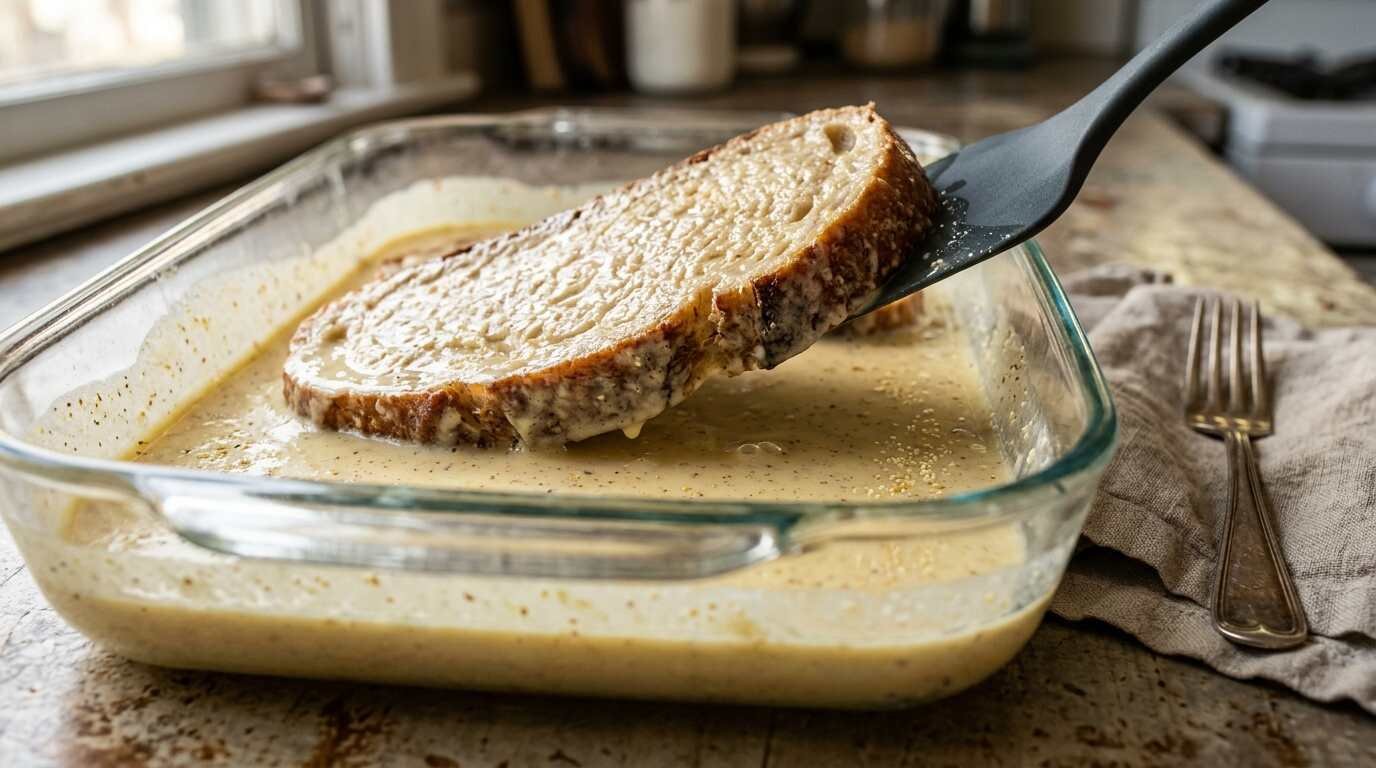
- Pour the custard into a shallow dish. Lay the slices in, soak about 10 minutes, and flip halfway. Very little liquid should remain.
- Sprinkle a little sugar on both sides of each slice.
- Melt a tablespoon of butter in a large skillet over medium-low heat. Cook two slices at a time, 4 to 5 minutes per side, until deep golden brown. Move to the baking sheet in the oven.
- Repeat with the remaining slices and butter. Serve hot with butter and syrup.
Notes
- This is a combined version: the custard and soak come from Taste of Home and Milk Street, the oven drying, pan heat and keep-warm step from Food Network Kitchen.
- Semolina is the named ingredient in both semolina sources. No substitute is offered by either one.
- Watch the first batch and adjust the heat; sugar on the surface browns quickly.
Tools Worth Having at the Stove
- A 10.25-inch cast iron skillet holds the steady medium-low heat a 4-to-5-minute sear depends on. See it on Amazon (affiliate link)
- A rimmed aluminum half sheet pan handles both jobs, toasting the bread first and keeping finished slices warm in the oven. See it on Amazon (affiliate link)
- A 3-quart oblong glass baking dish gives the slices room to lie flat in the custard. See it on Amazon (affiliate link)
- A small silicone flexible turner slides under a soaked slice without tearing the crust. See it on Amazon (affiliate link)
As an Amazon Associate I earn from qualifying purchases. A commission may be earned if you buy through this link, at no extra cost to you.
Questions People Ask
Why does semolina make French toast crisper?
According to Milk Street, semolina is coarser than white flour and holds more liquid, so the slice absorbs more custard while the inside stays creamy and the outside crisps in the pan.

Should the bread be fresh or stale?
The sources disagree. Milk Street dries the slices (lightly toasted or air-dried overnight), while Food Network Kitchen prefers fresh bread that is lightly toasted in the oven first. Both end at a dry-surfaced slice.
How long should the slices soak?
For dried slices in the semolina custard, Taste of Home says about 10 minutes, flipping halfway, and Milk Street says about 10 for challah and 15 for Italian bread. Food Network Kitchen’s lightly toasted slices need about a minute per side.
Why half-and-half instead of milk?
Both Taste of Home and Food Network Kitchen use it, which is why this guide does too. Neither explains the choice.
When is National French Toast Day in 2026?
Saturday, November 28, according to National Today.
Sources
- Taste of Home: This Unexpected Ingredient Makes the Perfect French Toast (Sept. 30, 2026)
- Milk Street: French Toast, Perfected
- Milk Street: Semolina Is the Secret to the Best French Toast
- Christopher Kimball’s Milk Street on YouTube: We FINALLY Figured Out…French Toast
- Milk Street on Instagram
- Food Network Kitchen: The Best French Toast
- National Today: National French Toast Day