By the Associated Press’s count, Waffle House operates more than 1,900 restaurants, and whether the lights are on at any one of them can tell emergency managers something a forecast cannot: what a storm actually did to the street outside. The AP revisited that unofficial gauge, known as the Waffle House Index, in an explainer published October 8, 2026.
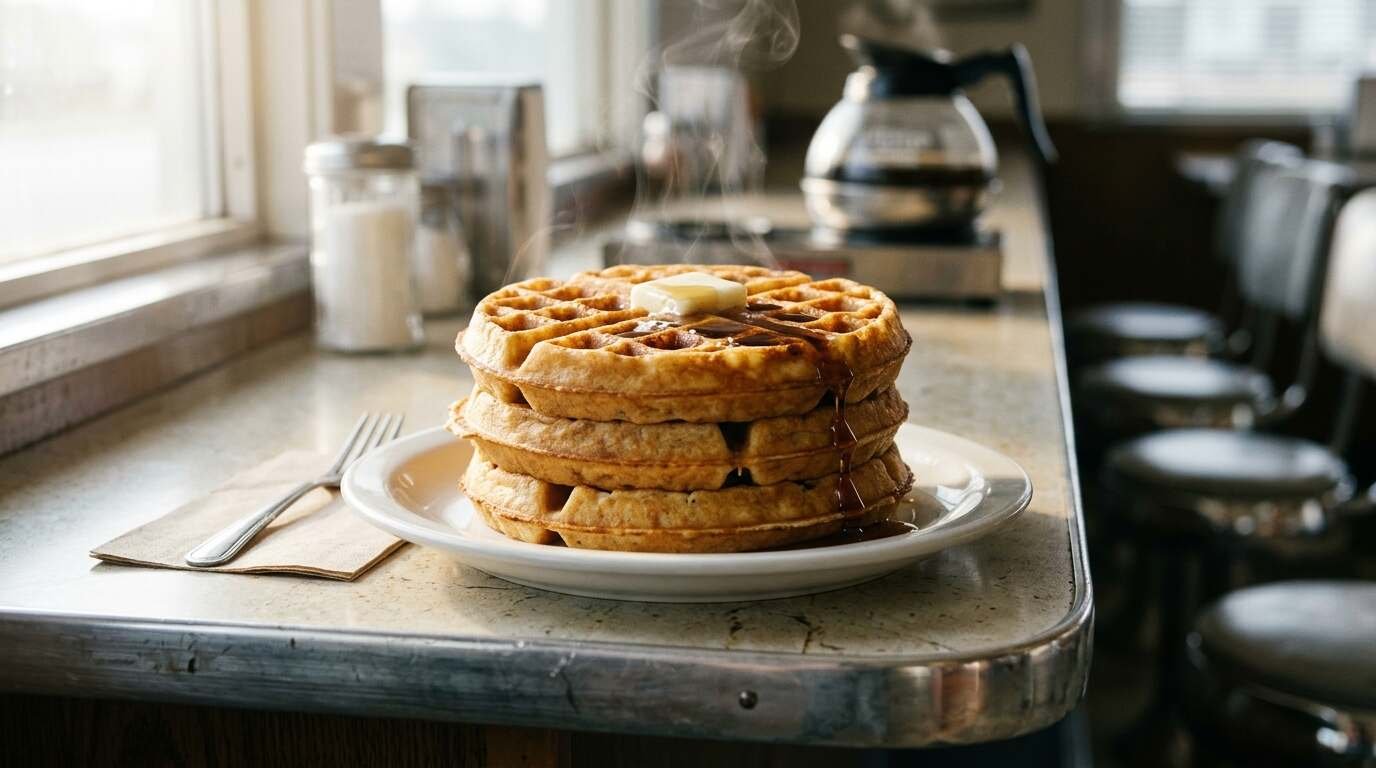
A waffle makes an odd emblem for resilience, yet the logic holds. A restaurant that can still hand you breakfast usually has power, water and a working supply line. The question at a home counter is smaller, and a good deal tastier: how do you pull a waffle off the iron with a crust that shatters instead of sagging?
The answer has three parts, each drawn from published test-kitchen and food-media work: a starch swap in the dry mix, whipped egg whites, and a few seconds of steam management once the lid opens. The full recipe sits below.
How a Breakfast Chain Became a Storm Gauge
Craig Fugate, later the head of FEMA, is credited with the idea. According to the AP, he came up with the index in 2004 while running Florida’s emergency management agency, after he had trouble finding food while surveying damage from Hurricane Charley.
The scale has three colors. Green means a restaurant is serving its full menu, a sign of limited damage nearby. Yellow means a reduced menu, often cooked on generator power with thin food stocks. Red means the doors are shut, which points to severe damage or unsafe conditions. Fugate’s verdict on that last case, as Grist reported in 2011, was blunt: “That’s really bad. That’s where you go to work.”
History gives the scale its weight. The AP notes that during Hurricane Katrina in 2005, seven locations were destroyed and about 100 more closed, while both Waffle Houses in Joplin, Missouri, reportedly kept serving after the 2011 tornado. Going by the AP’s reading of the company’s website, the chain has invested in portable generators and a mobile command center, trained staff on what can be served without electricity, and runs its own storm center.
The company has used the index’s hashtag itself. After Hurricane Helene in 2024, it posted a map of restaurant status in affected areas.
Georgia Governor Brian Kemp posted about a visit to that storm center in October 2024, during the Helene recovery and ahead of Hurricane Milton.
Fugate has discussed the index in a number of interviews. One conversation on the index and disaster response, from the MYD Global channel, is embedded below.
Why Waffles Go Soft, and What Stops It
A waffle iron cooks batter inside a closed pocket, so water in the batter turns to steam with nowhere to go. Steam is crispness’s natural enemy. Every fix that follows either removes moisture, builds a sturdier crumb, or gives that steam a way out.
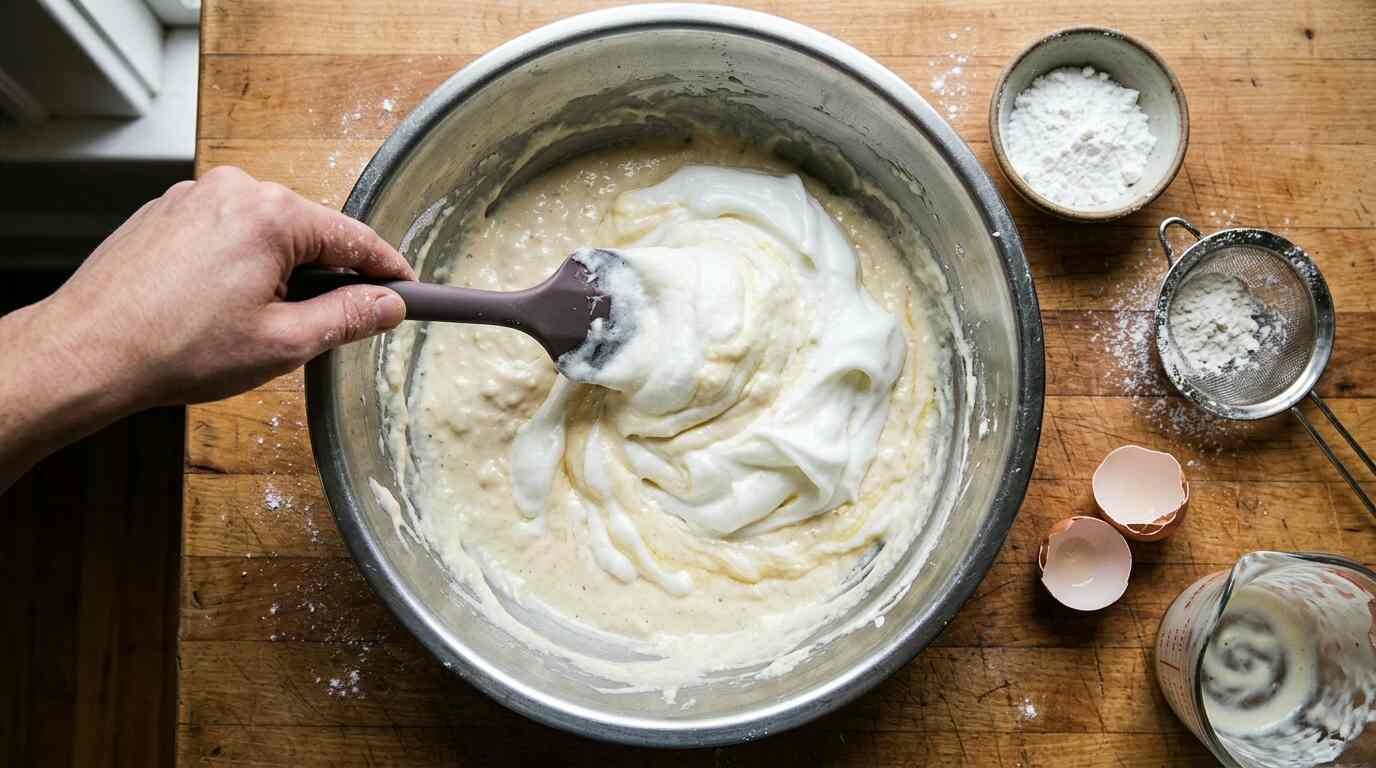
Cornstarch is the best-documented fix. Autumn Swiers of Tasting Table explains that its granules soak up liquid in the batter and swell to several times their size as they heat, adding structure while softening the tougher proteins in flour. The article’s suggested ratio is one-quarter cup of cornstarch to three-quarters cup of flour, with more cornstarch for extra crunch. Fifteen Spatulas lands on the same proportion by weight: 7.5 ounces of flour to 2.5 ounces of cornstarch.
Air is the second lever. Fifteen Spatulas whips the egg whites with 3 tablespoons of sugar to stiff peaks and folds them in at the end, then keeps the batter slightly lumpy. It also calls for whole buttermilk over a vinegar-soured substitute, mainly for flavor. Food Republic’s roundup of waffle tips agrees that whipped whites give a lighter interior.
Heat matters as much as the batter. Food Republic’s tips suggest preheating the iron for ten minutes and, for deeper browning, swapping the butter for oil.
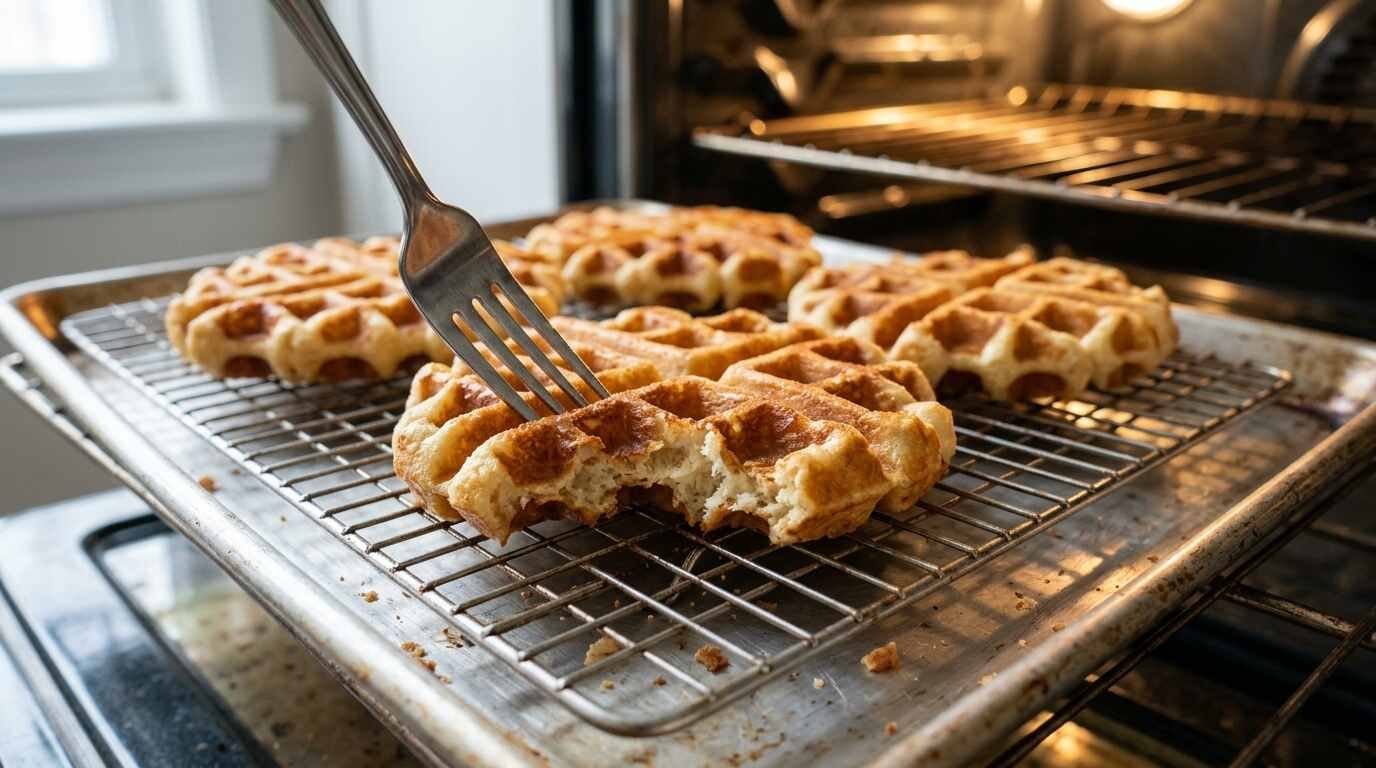
Then comes the step most home cooks skip. On May 26, 2023, Food Republic’s Carly Weaver wrote up a TikTok demonstration from Martha Stewart: the instant a golden waffle leaves the iron, toss it back and forth between your hands so steam escapes and the edges keep their crunch. The caption read, “Soggy waffles no more!” A fresh waffle can burn bare fingers, so tongs and a fork do the same job.
The same physics governs the griddle. The guide to fluffy buttermilk pancakes with crispy butter edges covers that branch of the family.
Gear for Crisp Waffles
A few tools make the method easier to repeat. Each item below is a real product listed on Amazon.
- Cuisinart WAF-F20P1 Double Belgian Waffle Maker: A round iron that cooks two Belgian waffles at once and is listed with extra-deep one-inch pockets. See it on Amazon (affiliate link)
- Presto 03510 Ceramic FlipSide Belgian Waffle Maker: A flip-style Belgian iron, a natural fit for the pour-then-flip step in the method below. See it on Amazon (affiliate link)
- Nordic Ware Half Sheet with Oven Safe Nonstick Grid: A pan-and-rack pair for holding finished waffles in a 250°F oven so steam escapes from underneath. See it on Amazon (affiliate link)
- Bob’s Red Mill Corn Starch, 18 oz: The starch behind the three-to-one flour ratio in the recipe. See it on Amazon (affiliate link)
As an Amazon Associate I earn from qualifying purchases. A commission may be earned if you buy through this link, at no extra cost to you.
How to Make Crispy Waffles, Step by Step
The proportions below follow the flour-to-cornstarch ratio described above and the batter method from Fifteen Spatulas. Yield depends on the size and shape of the iron.

Ingredients
- 2 large eggs, separated
- 2 cups whole buttermilk
- 1/3 cup melted butter or neutral oil
- 1 teaspoon vanilla extract
- 1 1/2 cups all-purpose flour (about 7.5 ounces)
- 1/2 cup cornstarch (about 2.5 ounces)
- 1 tablespoon baking powder
- 1/2 teaspoon salt
- 3 tablespoons sugar
Method
- Set the oven to 250°F and slide in a wire rack set over a sheet pan. Plug in the waffle iron and let it come fully to temperature; ten minutes is a safe margin.
- Whisk the flour, cornstarch, baking powder and salt together in a large bowl.
- In a second bowl, whisk the egg yolks with the buttermilk, melted butter (or oil) and vanilla.
- In a clean, dry bowl, beat the egg whites with the sugar until they hold stiff peaks.
- Pour the wet mixture into the dry and stir only until combined. A few lumps are fine. Fold in the whites in two additions, keeping as much air as you can.
- Pour batter onto the hot iron, lightly greased if the plates call for it, without overfilling. Close the lid and, if the iron flips, flip it so the batter spreads evenly.
- Cook for about three to four minutes, until the steam slows and the waffle turns deep gold. Timing varies from iron to iron.
- Lift the waffle out and release the steam right away, either by passing it between your hands as in the demonstration above or by shifting it between tongs and a fork if it is too hot to handle.
- Set the waffle on the rack in the oven. Five to ten minutes at 250°F keeps it crisp while the rest of the batch cooks. Never stack waffles; they steam each other soft.
Anyone who would rather watch than read can follow along with a home cook’s video on the same subject.
How the 1964 World’s Fair Taught America to Order a Belgian Waffle
The deep-pocketed Belgian waffle owes much of its American fame to Queens. Maurice and Rose Vermersch sold their version from the Belgium pavilion at the 1964 New York World’s Fair in Flushing Meadows–Corona Park, as Chris Sands reported for Tasting Table in 2023. They called them Bel-Gems, a name chosen because many Americans could not place Belgium on a map. Each cost 99 cents, and their daughter, MariePaule, recalled selling about 2,500 a day.
Bill Cotter, co-author of a book on the fair, summed up the demand in four words: “It was a tidal wave.”
Six decades on, the waffle has moved well past the dessert stand. Related reading on this site includes a chicken Caesar salad sandwich pressed between crisp waffles and a mint chocolate buttercrème waffle, and the diner breakfast platter guide shows where a waffle fits on a full plate.
Crispy Waffle Questions, Answered
Why are my waffles soggy?
Trapped steam is the usual cause. Release it the moment the waffle leaves the iron, then hold finished waffles on a wire rack in a 250°F oven instead of stacking them on a plate.
Does cornstarch really make a difference?
Both Tasting Table and Fifteen Spatulas rely on it. The ratio is one part cornstarch to three parts flour, and Tasting Table suggests going higher for extra crunch.
Do I have to whip the egg whites?
No, though whipped whites are the step the sources above credit for a lighter interior. Without them, expect a denser center.
Butter or oil?
Butter adds flavor. Food Republic’s tips point to oil when the goal is deeper browning.
How do I reheat leftover waffles?
A toaster or a hot oven brings back crunch better than a microwave, which adds the very steam this method works to remove.
What do the Waffle House Index colors mean?
Green is a full menu and limited damage nearby. Yellow is a reduced menu, often on generator power. Red is closed, which signals severe damage or unsafe conditions.
Sources
- News4JAX / Associated Press: The Waffle House Index helps Southerners, and FEMA, gauge a storm’s severity (Oct. 8, 2026)
- ABC News / Associated Press: The Waffle House Index helps Southerners, and FEMA, gauge a storm’s severity
- Grist: How to assess hurricane damage using waffles (2011)
- Fifteen Spatulas: Crispy Waffles
- Tasting Table: The Essential Ingredient For Waffles That Are Soft On The Inside And Crispy On The Outside
- Food Republic: Martha Stewart’s Hand-Tossing Method For Extra Crispy Waffles
- Tasting Table: How The 1964 World’s Fair Helped Popularize The Belgian Waffle
- Waffle House on X: Hurricane Helene unit status map
- Governor Brian Kemp on X: Waffle House Storm Center visit
- MYD Global on YouTube: Craig Fugate on the Waffle House Index and Disaster Response
- Martha Stewart on TikTok: waffle-tossing demonstration
- Storya Land on YouTube: How To Make Crispy Waffles At Home