Some links in this post are Amazon affiliate links. As an Amazon Associate, Heritage Diner earns from qualifying purchases at no extra cost to you.
Some breakfasts demand a flip. This one demands nothing but a hot pan and the discipline to leave the oven door shut. A Dutch baby goes from a thin pour of batter to a bowl-shaped, brown-edged puff in about twenty minutes, and it looks far more impressive than the effort behind it.
We make something like it when a table of four wants breakfast together and the griddle is already crowded. At home the logic is the same. One skillet, one batter, one timer, and everybody gets a wedge at the same moment.
What a Dutch baby actually is
Think of it as a popover and a crepe sharing a pan. The batter is nearly all eggs and milk with a modest amount of flour, so it is thin enough to pour. There is no baking powder or soda in it. The lift comes from steam: water in the milk and eggs turns to vapor in a very hot pan, and the egg proteins set around the bubbles before they can escape.
That is the whole trick, and it explains every rule that follows. Hot pan, hot oven, warm batter, closed door. Break any one of them and you lose height.
The ratio to start from. A reliable starting point for a ten- to twelve-inch skillet is three large eggs, three-quarters of a cup of milk, three-quarters of a cup of all-purpose flour, a pinch of salt and about three tablespoons of butter. A teaspoon of sugar and a splash of vanilla are optional. Treat that as a place to begin, not scripture; skillets and ovens vary.
Whole milk gives the best flavor and browning. Lower-fat milk works but the edges come out paler. Bring the eggs and milk to room temperature if you can, which takes about thirty minutes on the counter for the eggs. A cold batter hits the hot pan and loses some of its early burst.
- Eggs: 3 large
- Milk: 3/4 cup
- All-purpose flour: 3/4 cup
- Butter: about 3 tablespoons, in the pan
- Salt: a pinch; sugar and vanilla if you like
Why the oven matters more than the recipe
Everyone fusses over the batter, yet the oven does the heavy lifting. A Dutch baby needs a sudden, intense hit of heat so the outer layer sets while the inside is still expanding. If your oven runs cool, the pancake will puff politely and then slump.
An inexpensive oven thermometer hung from the rack tells you the truth. Many home ovens read off by twenty or thirty degrees, and a Dutch baby is a fast way to discover it. Adjust the dial and you will fix more than breakfast.
Position matters, too. A rack in the lower-middle gives the pan enough headroom for the rise without scorching the edges against the top element.
Pick the right pan. Cast iron is the classic, because it holds a huge amount of heat and passes it into the batter the instant it lands. A heavy oven-safe stainless skillet or a thick ceramic baking dish will work, though the puff tends to be a little shorter. Avoid thin nonstick unless the maker rates it for high oven heat; check the label.
If you are shopping, a ten-inch cast-iron skillet covers this recipe and half the rest of your cooking. A pair of silicone handle covers and a good oven mitt matter more than they sound, since the handle will be at oven temperature when you pull it.
Make the batter, then heat the pan
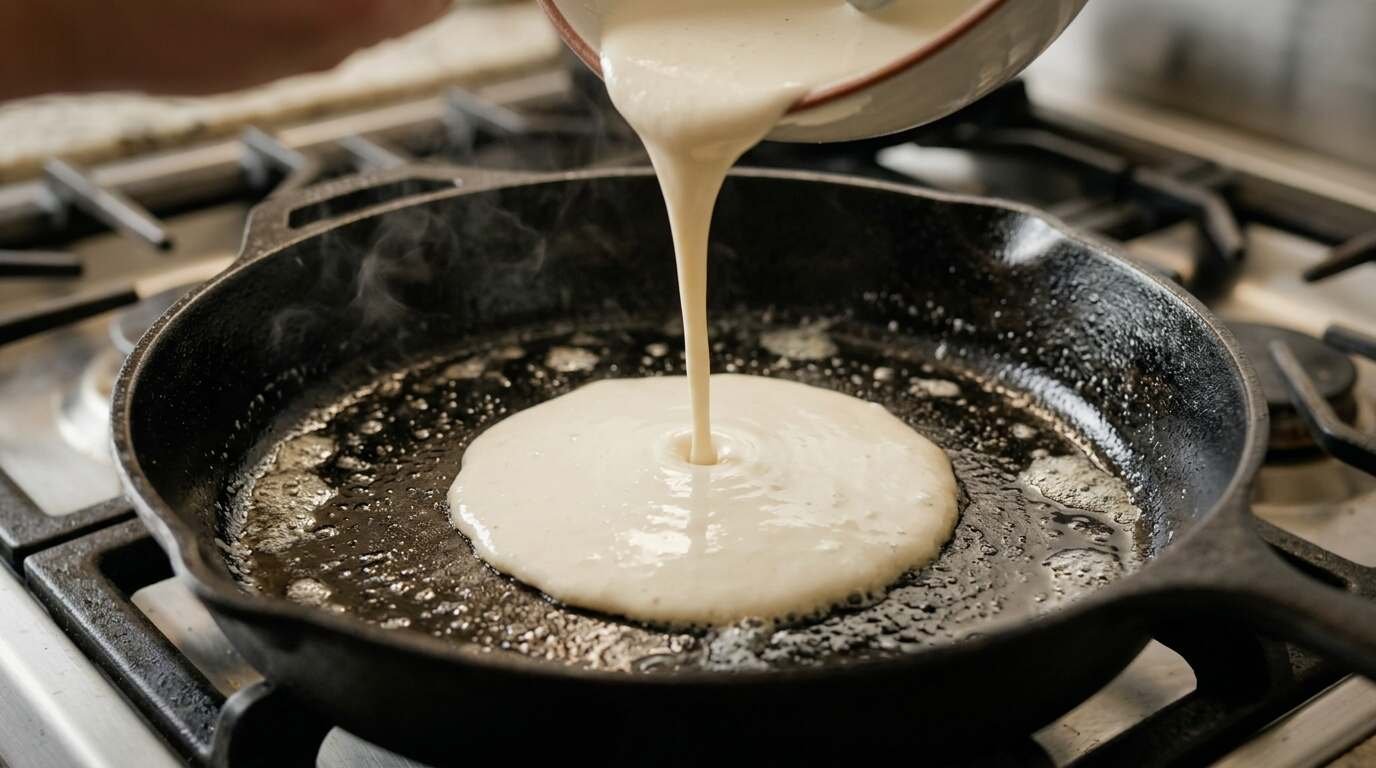
Set a rack in the lower-middle of the oven and put the empty skillet on it. Heat the oven to 425 degrees F. Give the pan a full ten to fifteen minutes in there after the oven reads ready, because a pan that merely feels warm will not do the job.
While it heats, blend the eggs, milk, flour, salt and any sugar or vanilla until smooth. A blender makes this nearly effortless; a whisk and a bowl will do if you take out the lumps. Let the batter rest on the counter while the pan finishes heating. Resting lets the flour hydrate and takes some of the toughness out.
Then comes the one moment that matters. Pull the skillet out with a mitt, drop in the butter, swirl it as it melts and foams, and pour the batter in at once. Slide the pan straight back into the oven. Fifteen seconds of dithering costs you heat.
A small-batch and a big-batch note
The ratio above suits one skillet and about two to four hungry people. To feed fewer, make the same batter in a smaller six- or eight-inch pan, trim the butter a little, and watch the clock; smaller pans finish sooner. For more, bake two separate pans instead of doubling into one. A crowded, deep batter never gets the thin, hot start it needs.
If you are working in a big kitchen with two ovens, that is easy. If you have just one, bake them in sequence and keep the first warm on a baking sheet in a low oven. Warm is fine. Covered tightly, it steams and loses its crunch.
Bake, and resist the door
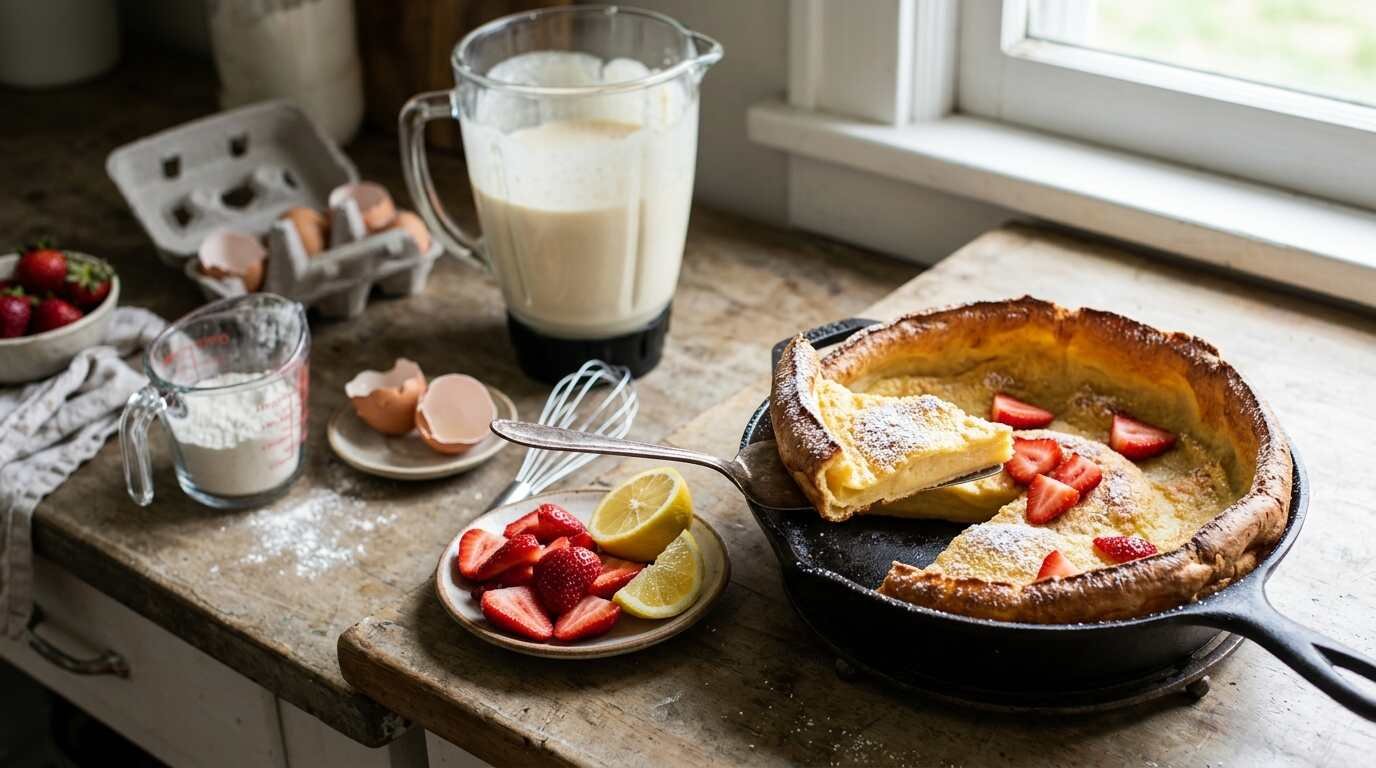
Bake for roughly eighteen to twenty-two minutes. The sides will climb the pan and curl inward, the edges will go deep golden, and the center will stay lower and slightly soft. Opening the oven early lets out the heat and steam that hold the walls up, so use the oven light instead.
Because the dish is mostly egg, make sure it is cooked through. The USDA advises cooking egg dishes to 160 degrees F, and a center that still looks wet or jiggly is not there yet. Give it a couple more minutes if so.
Bring it to the table right away. A Dutch baby begins to sink within a minute or two of leaving the heat, which is normal and does not hurt the taste. Think of it as a showpiece with a short curtain call.
Toppings that earn their place. Plain butter, powdered sugar and a squeeze of lemon is the old guard, and it is hard to beat. Sliced fruit, a little maple syrup, or a spoon of jam also works. For a savory plate, skip the sugar and vanilla, and top with a fried egg, a few shavings of hard cheese and black pepper.
Serve it from the pan in wedges, using a spatula and a sharp knife. The center will be softer than the rim, so give each person a bit of both.

Common mistakes
- It stays flat. The pan or oven was not hot enough, the batter was very cold, or the door was opened early.
- It tastes eggy. Add the salt, and try a little vanilla or a teaspoon of sugar to round it.
- The bottom is soggy. The butter was not hot and foaming when the batter went in, or the pan was too thin to hold heat.
- It sticks. Use enough butter, and loosen the edges with a thin spatula before lifting.
A fallen Dutch baby is still a perfectly good breakfast. Eat it anyway and adjust the next round.
Make it ahead, sort of. You can blend the batter the night before and keep it covered in the refrigerator. Let it sit out for half an hour so it takes the chill off, and whisk it briefly. The baked pancake itself does not keep or reheat well, so plan to bake it fresh.
Leftover wedges, if there are any, can be wrapped and refrigerated and eaten within a few days. They will be dense. Treat them as a snack, not a repeat performance.