
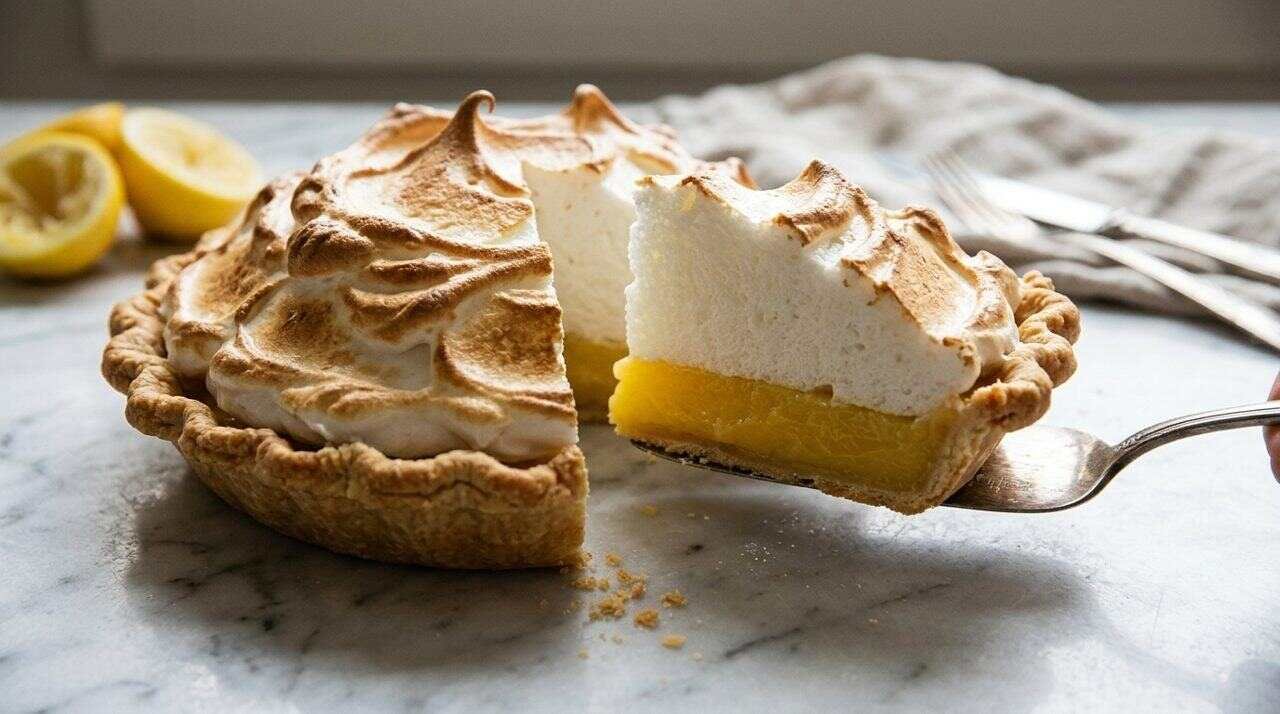
Two different liquids ruin a lemon meringue pie, and they are often confused. One pools in a clear, sugary layer between the meringue and the filling. The other sits on top, in amber droplets that cling to the browned peaks. Pie makers call the first weeping and the second beading, though the words slip back and forth in print, and the published explanations disagree about which mistake produces which. Sorting out the disagreement turns out to be the quickest way to understand what a meringue is doing in the oven.
A meringue is a foam: egg-white proteins stretched into thin films around air bubbles, with sugar dissolved in the water between them. Everything that follows is a story of that water going where it should not.
Weeping: the layer under the meringue
Sunset magazine’s meringue guide puts the blame on timing. When meringue goes onto a filling that has already cooled, steam from reheating the filling cannot escape through the meringue and condenses as the pie cools, forming a sweet puddle under the topping. Spreading the meringue over a hot filling lets the steam pass through the baking foam instead of collecting at the seam.
Ricardo’s food-chemistry column, written by a nutrition scientist who has taught food science at the Université de Montréal for more than 30 years, reaches a compatible conclusion from a different direction. A water layer under the meringue comes from underbaking: the underside of the foam never gets hot enough for its proteins to set. A hot filling helps here too, because it bakes the meringue from below as well as from above. The column recommends spreading the meringue right after the hot filling goes into the crust, and advises against browning under the broiler, which cooks only the top and leaves the wet layer underneath.
Nigella’s website makes the same recommendation and adds a detail about the edge: the meringue should go right up to the crust, because contact with the crust seals it in place and keeps it from slipping.
Beading: the droplets on top
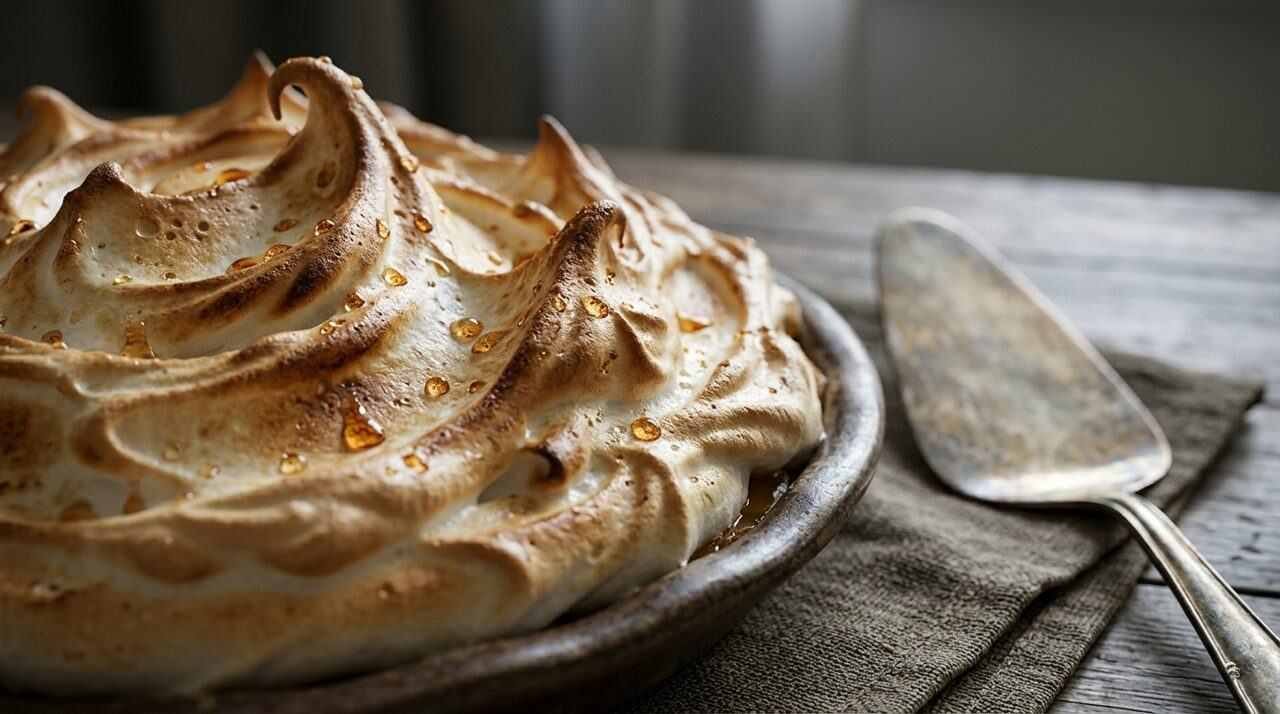
Here the sources split. Sunset ascribes beading to the meringue contracting slightly as it cools, which pushes moisture to the surface as, in its words, “tiny golden brown droplets, or beads.” Humid weather and chilling the pie speed the process.
Ricardo’s column blames overbaking instead. The proteins on the surface coagulate too tightly and squeeze out the water they were holding, which gathers into beads. Nigella’s site, for its part, attributes both weeping and beading to a meringue baked too briefly, so the sugar absorbs moisture and turns into syrup that leaks out, and then concedes that overcooking can cause it as well.
Two causes, one oven
These accounts are less contradictory than they look. A meringue spread thick over a pie can plausibly be overbaked at the peaks and underbaked at the base in the same oven, since the tips dry and brown well before heat reaches the center. A pie can therefore weep underneath and bead on top at once. The cure in each case is an even bake, which is why the same few fixes keep recurring.
Baking does more than brown the surface. Food Crumbles lists heat and drying among the things that make a foam stable: cooking the proteins and evaporating moisture leaves a more solid structure. A meringue pulled early is still a wet foam, and a wet foam keeps draining. One pulled late has tightened past the point where it can hold its water.
Sugar, and what it does to the foam
Sugar dissolves in the water of the egg white and thickens it, which makes it harder for bubbles to merge and escape, according to the food-science site Food Crumbles. The same article notes that a small pinch does not do the job, and that dry sugar works better than syrups such as maple or agave, because syrups add water.
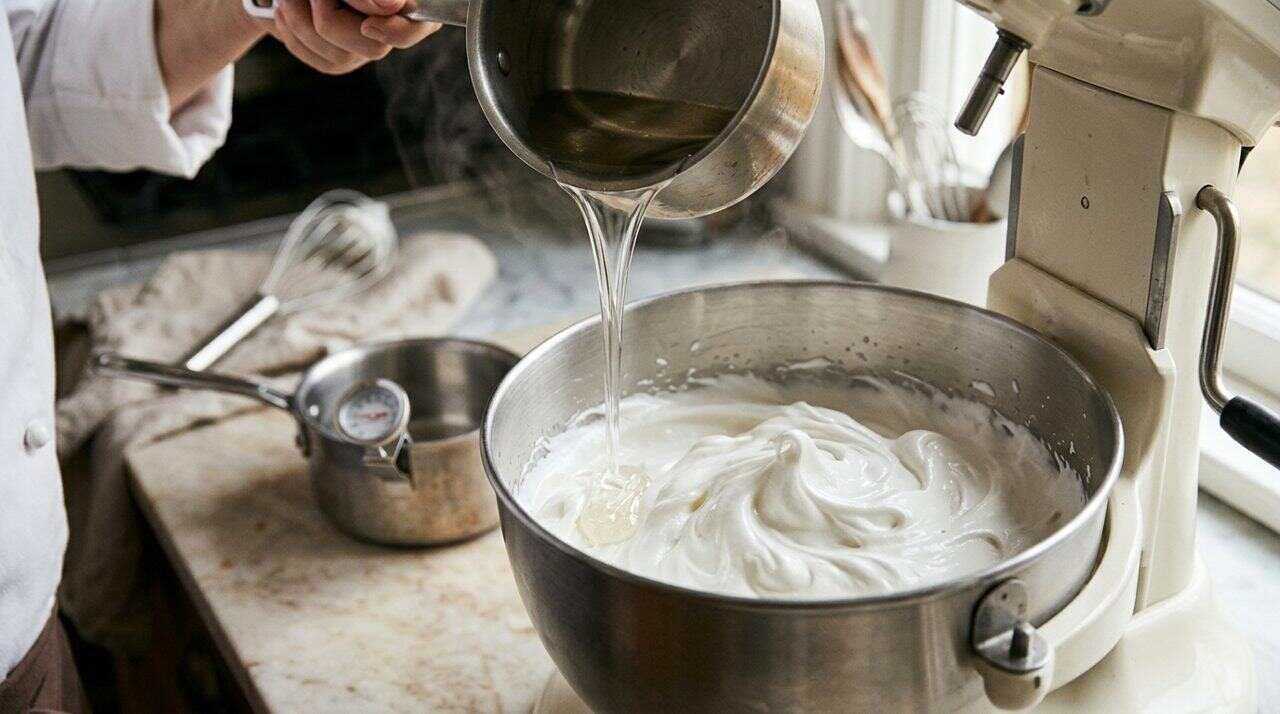
Undissolved sugar is another matter. The Baking Sense lemon meringue recipe says that sugar left undissolved in the whipped whites is what causes meringue to release water droplets, and that cooked sugar syrup solves it by dissolving every crystal. The recipe’s Italian meringue pours a syrup cooked to 235 to 240°F, the soft-ball stage, into whipping whites. Food Crumbles adds that finer sugar dissolves faster than granulated and that heating sugar in liquid speeds things along.
Acid helps as well. Lemon juice and cream of tartar lower the pH, which helps the egg-white proteins unfold and stabilizes the foam. Salt cuts the other way: an Exploratorium note on meringue says it slows beating and, added too early, weakens the protein network. Letting the whites sit at room temperature for 30 minutes first, the same page advises, lets them reach their full volume.
The filling matters too
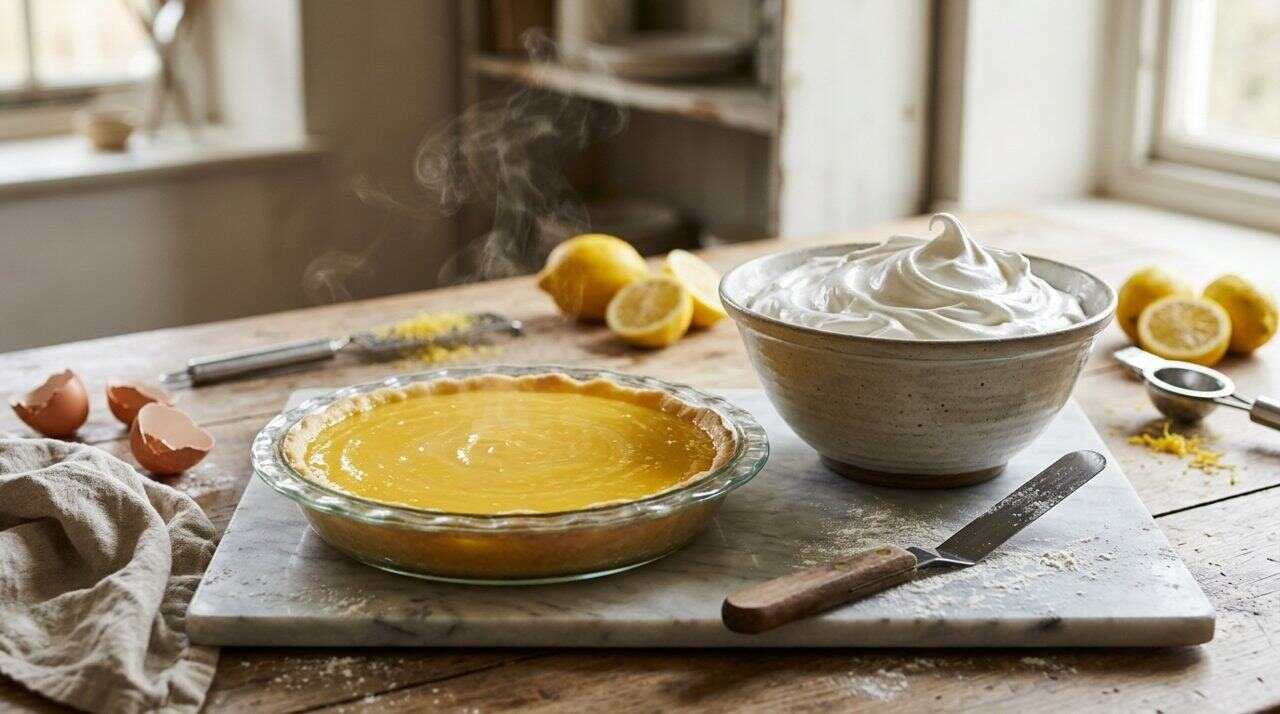
Not all liquid on a meringue pie comes from the meringue. A lemon filling thickened with cornstarch is under attack from two directions, since heat and the acid in lemon juice can weaken the starch until it stops thickening. Sunset’s guide says to add the ingredients in a particular order, cold water and then hot, because sugar and egg yolk protect the starch from the heat and acid. A thinned filling can seep into the meringue and pass for weeping even when the foam itself is sound.
The crust deserves a mention for the same reason. Baking Sense advises brushing the warm crust with raw egg white as soon as it comes out of the oven, where it sets into a waterproof barrier against sogginess. A crust built on an all-butter dough benefits as much as any other.
Fixes that bakers actually use
Bake to the egg count
The Ricardo column gives two baking regimes depending on the volume of meringue. For four or more egg whites, it recommends 325°F for 20 to 25 minutes, or until the peaks brown. For three whites or fewer, 425°F for 4 to 6 minutes does the work. The pairing reads as a matter of geometry: a tall mound needs gentle time for heat to reach the base, and a thin layer needs a quick blast before it dries out.
A cornstarch paste for the whites
Cornstarch turns up in four of the sources. The Ricardo piece explains why: its long molecules slip between the egg-white proteins and limit how tightly they coagulate in the oven, while also giving the meringue more body, so it cuts neatly. The method is to boil 1 tablespoon of cornstarch with one-third cup of water, let the paste cool, then whip it into a meringue made from four or more whites that has already reached stiff peaks. Baking Sense cooks its starch paste until it turns translucent and thick as pudding before adding it to the Italian meringue. Nigella’s site mentions the practice too, though it says its authors have not tested it.
Same-day service and a cautious chill
Nigella’s site says the pie is best served the day it is made, and that the longer it waits, especially in the refrigerator, the likelier it is to weep. Chilling pushes against another instruction: Baking Sense chills its finished pie for three to four hours, and Sunset notes that chilling hastens beading. Which advice wins likely depends on how the pie gets served. A filling set with starch needs time to firm up, while a meringue wants the opposite, so a short chill followed by prompt service looks like the sensible compromise.
Nigella’s site also mentions sprinkling cake crumbs over the filling to absorb moisture, with the caveat that some people dislike the texture.
Reading the pie to find the fault
The sources, taken together, allow a rough diagnosis. A clear pool at the seam between filling and meringue points to a cooled filling, an underbaked base or a meringue that never touched the crust. Beads on top point to a surface baked too hard, a humid room, or a pie that spent too long in the refrigerator. A gritty, syrupy leak suggests sugar that never dissolved. A runny filling beneath a perfectly good meringue is a starch problem and has nothing to do with the foam.
Each fault has a different remedy, which explains why advice that works for one pie fails for the next. A baker who changes three things at once learns nothing; changing the oven time alone, then the filling temperature, then the sugar method, sorts the cause in a few attempts.
A note on egg safety
Pastry writer Joe Pastry points out that most food authorities recommend heating anything containing eggs to at least 160°F, and that the center of some meringue pies probably will not reach that. He notes that sugar slows bacterial growth, with the roughly 50 percent sugar in an American pie meringue doing so considerably though not completely, and that pasteurized eggs lower the risk at the cost of whipping less well. His advice is to skip unpasteurized raw eggs, particularly for anyone with a weakened immune system, and he allows that an Italian meringue may or may not reach that temperature while it is being mixed.
For a pie that sits behind a counter all day, the practical rule is the one the sources already agree on: bake the meringue through, serve it soon, and keep leftovers cold.
Sources
- Ricardo: How to Keep a Meringue Pie from Weeping
- Sunset: Secrets of success with meringue
- Nigella.com: Lemon meringue pie
- Baking Sense: Classic Lemon Meringue Pie
- Food Crumbles: A blog on meringue, a literature study on ingredients
- Exploratorium: Meringue (Exploratorium Cooking)
- Joe Pastry: On Meringue Safety