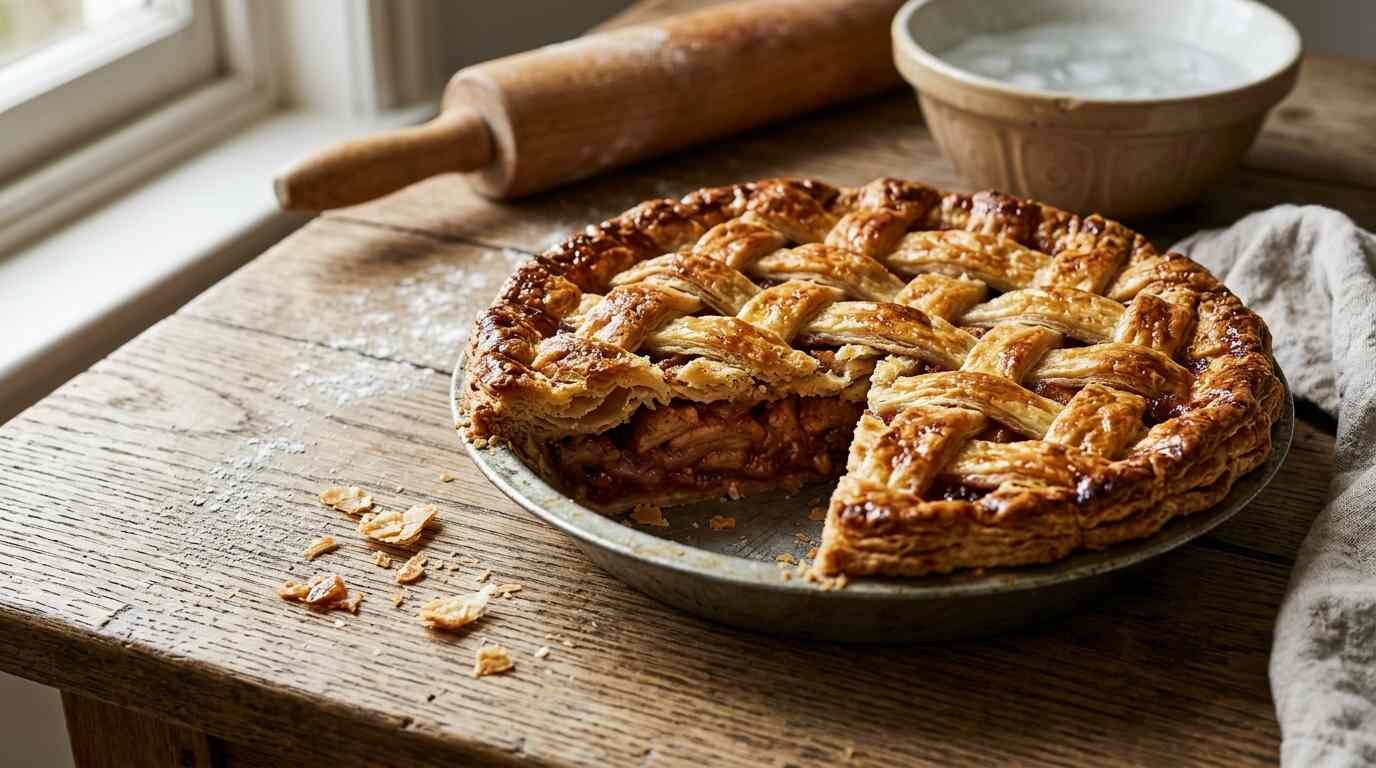
Every flaky crust begins as a pile of butter that never got the chance to melt into the flour. Protecting those pieces is the whole job, and each step below exists to keep them solid until the oven takes over.
This method makes one double crust, or two single crusts, for a 9-inch pie. Active work runs about 20 minutes. The dough then needs a chill of at least two hours.
Why an All-Butter Dough Flakes
Flour plus water makes gluten, and gluten is what turns a crust from tender into tough. Pie dough therefore walks a narrow line: it needs enough water to hold together and not so much that the flour toughens. America’s Test Kitchen frames the problem the same way in its all-butter dough, where most of the flour is worked into the butter first so that added water only wets the flour clinging to the outside of the butter-flour chunks. Gluten forms only in flour that has been hydrated, and a coating of fat keeps much of the flour dry.
Flakiness comes from the butter that stays in visible pieces. In the oven those pieces melt and leave thin pockets between sheets of dough. King Arthur Baking tells bakers to stop working the fat into the flour while the mixture still looks uneven, with “Larger, pea-sized pieces of butter will be scattered throughout the mixture.” That is a plain instruction to leave some butter alone.
The rest of the method follows from one rule. Anything that warms the butter, whether palms, a slow hand, or a hot kitchen, works against the crust.
The Dough: Ingredients and Weights
Weigh the flour. A cup of flour can swing by an ounce or more depending on how it is scooped, and a pie dough has very little room for error. The amounts below follow King Arthur Baking’s all-butter crust, with the grated-butter step borrowed from America’s Test Kitchen’s all-butter dough.
- 2½ cups (300 g) unbleached all-purpose flour
- 1 teaspoon table salt (use ½ teaspoon if the butter is salted)
- 2 tablespoons sugar, optional
- 16 tablespoons (227 g) cold unsalted butter, divided: 4 tablespoons frozen and grated, 12 tablespoons cut into ½-inch cubes and kept in the refrigerator
- 6 to 12 tablespoons ice water, added a spoonful at a time
Cold is an ingredient here. Put the water in a glass with ice cubes before starting, and move the flour bowl to the freezer for ten minutes if the kitchen runs warm.
Mixing in Two Butter Sizes
Two sizes of butter do two different jobs. The cubed butter gets worked in until part of it disappears into the flour, which gives the dough its tenderness. The frozen grated butter goes in last and stays in separate shreds, which gives the dough its flake.
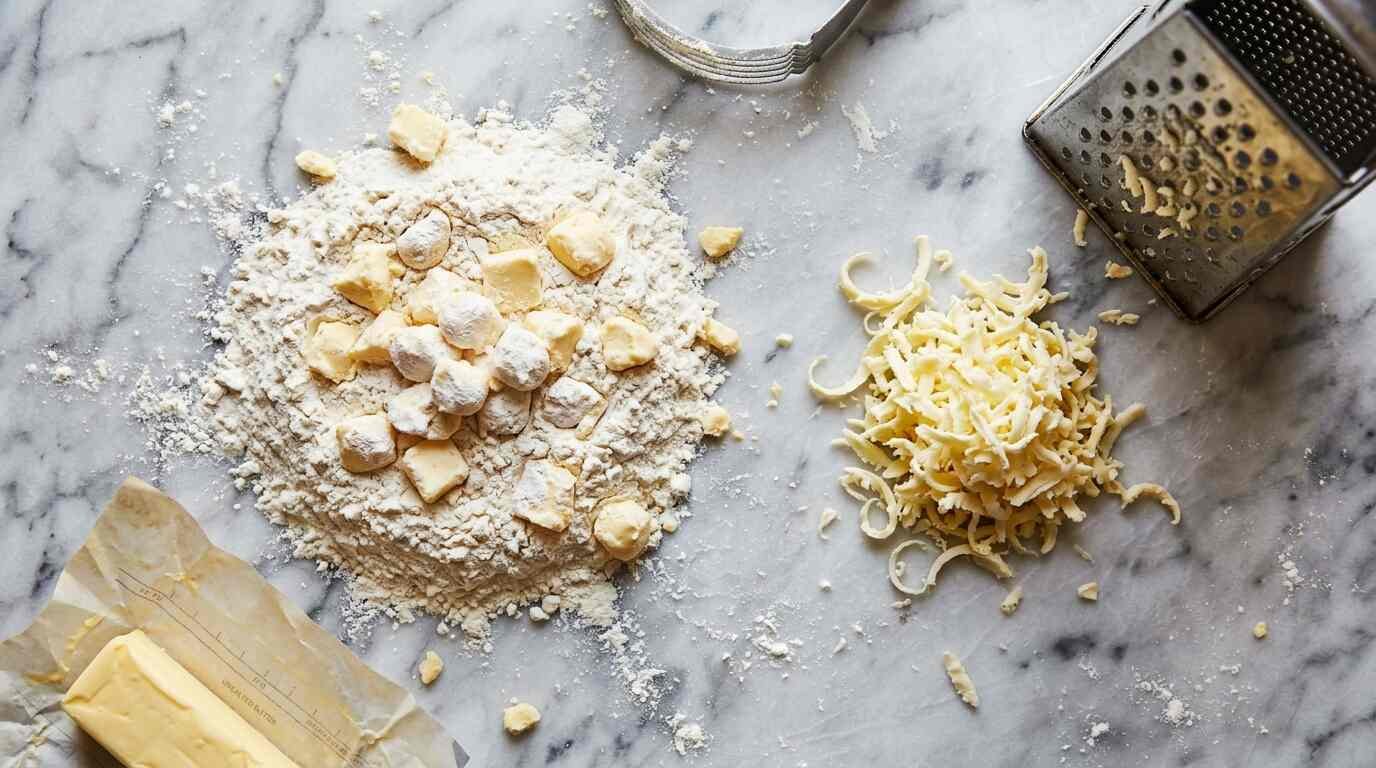
- Freeze the 4 tablespoons of butter for 30 minutes, then grate it on the large holes of a box grater and return the shreds to the freezer.
- Whisk the flour, salt, and sugar in a wide bowl.
- Add the cubed butter. Press and rub it into the flour with fingertips or a pastry cutter until much of it is blended in and the rest sits in pieces about the size of peas.
- Toss in the frozen grated butter with a fork until each shred is coated in flour.
- Drizzle in 6 tablespoons of ice water while tossing with the fork. Squeeze a handful. If it holds together without crumbling, stop. If it falls apart, add one more tablespoon and test again. King Arthur Baking notes that too little water leaves dry spots, while the dough should come together fully.
- Divide the dough in half, pat each half into a disk about 5 inches across, and wrap tightly. Seal any cracks at the edges now, because cracks reopen when the dough is rolled.
Hands warm dough quickly. If the butter starts to look greasy or shiny at any point, slide the bowl into the refrigerator for ten minutes before going on.
Water, and the Vodka Question
Plain ice water is the standard in the all-butter recipes above. A second school of thought replaces part of the water with vodka. J. Kenji López-Alt’s Foolproof Pie Dough for America’s Test Kitchen uses ¼ cup of vodka and ¼ cup of water, and the team’s reasoning is that 80-proof vodka is only about 60 percent water. The rest is alcohol, which does not hydrate flour the way water does. Cook’s Illustrated’s The Science of Good Cooking put it this way, as quoted by Scientific American: “gluten won’t form in alcohol.”
The result is a dough that is wetter and easier to roll without turning tough. Two cautions apply. That America’s Test Kitchen recipe is built on butter plus vegetable shortening, so it is not an all-butter dough, and it uses a food processor and extra flour on the counter to manage the added moisture. On flavor, the same organization measured a filled double-crust pie and reported that the alcohol left behind was “far too little for any of its flavor to be detected.”
A cook who wants to try it in the all-butter dough above can swap some of the water for cold vodka. That substitution is an adaptation, not something any of these sources tested on this exact recipe, so start by replacing a small share and judge the dough by feel.
Chilling, Rolling, and Baking
Chill the wrapped disks for at least two hours. King Arthur Baking says 30 minutes is enough for better texture, while America’s Test Kitchen holds out for two hours so the dough fully hydrates and rolls more easily. The longer rest is the safer choice. Wrapped dough keeps 2 days in the refrigerator or up to 2 months in the freezer, and frozen dough should thaw completely in the refrigerator before it goes near a rolling pin.
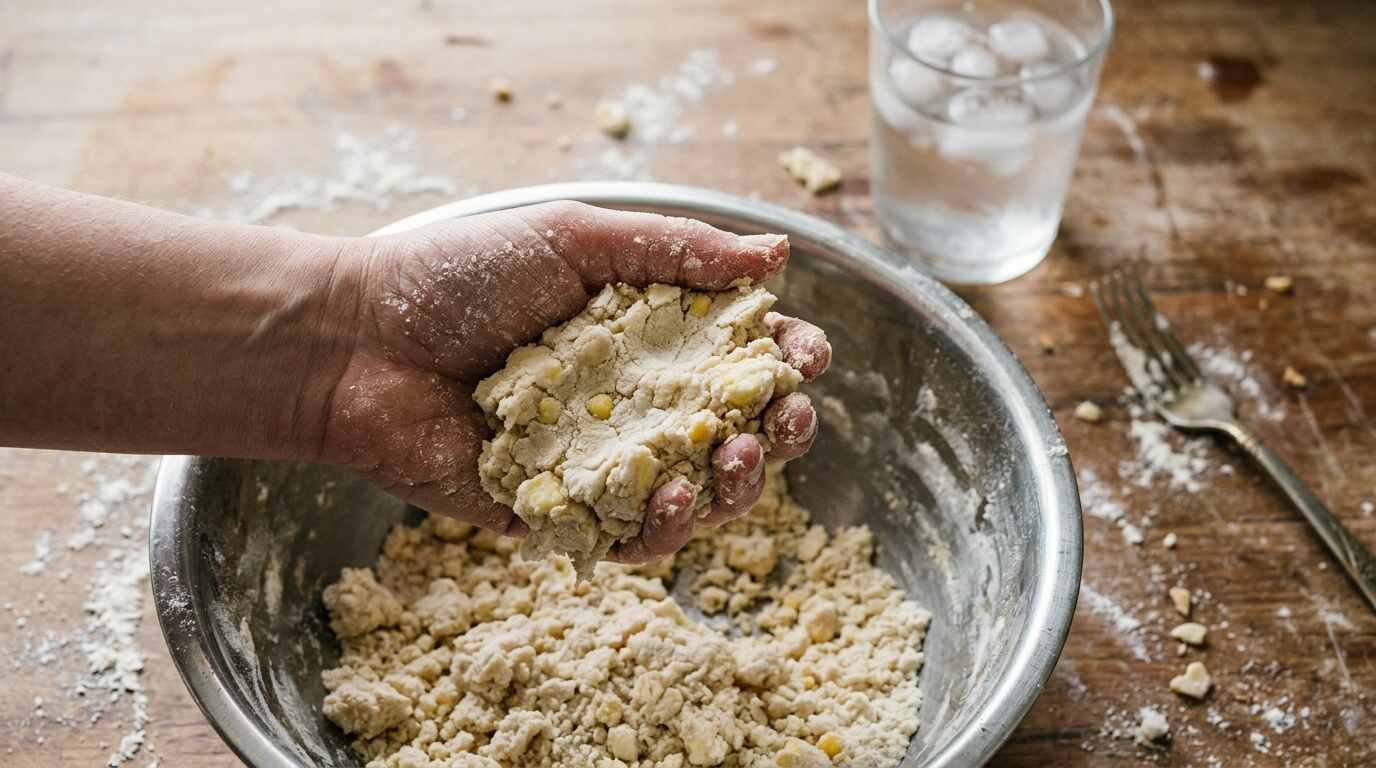
Let a chilled disk sit on the counter for 10 to 15 minutes until it gives slightly under a press. Roll on a lightly floured surface from the center outward, giving the dough a quarter turn every few passes so it does not stick. Fit it into the dish without stretching, because stretched dough snaps back in the oven. Chill the lined dish for at least 30 minutes before baking.
For a double-crust pie, bake the way the filling recipe directs, since temperature and time depend on what is inside. For a single crust that needs blind baking, Cleo Buttera’s all-butter crust gives a schedule at 350°F (180°C) on the middle rack:
- Line the chilled crust with foil and fill it with pie weights, then bake 15 to 20 minutes, until the edges are set and just turning golden.
- For a partially baked crust, remove the foil and weights and bake 10 to 15 more minutes, until lightly golden.
- For a fully baked crust, bake 15 to 20 more minutes, until deep golden and crisp.
- If the base puffs, pierce it gently with a paring knife.
Fixing the Four Usual Failures
Most crust trouble traces back to flour, warmth, or handling. Cleo Buttera’s troubleshooting notes cover the common cases.
- Shrinking: Too little flour is the usual cause, which is why weighing matters. Chilling the dough thoroughly, and chilling again after lining the dish, helps the walls hold their shape.
- Toughness: Too much flour and too much handling both build gluten. Overhandling also warms the butter and can melt the grated shreds.
- Greasy, soft dough: The butter has warmed. Chill the dough briefly, and keep ice water on hand.
- Soggy bottom: A glass dish browns the base gently and lets the baker see it, and a wet filling calls for a partially baked crust first.
Diners spent decades arguing over which fat belonged in the crust, and the story of how vegetable shortening displaced lard after World War II explains why a butter-only dough still feels like the unusual choice. The Lard Question in Diner Pie Crust follows that history. For anyone planning the full Thanksgiving dessert table, Forty-Eight Days to Pie lays out the countdown.
Gear Worth Buying
Two items directly affect this recipe.
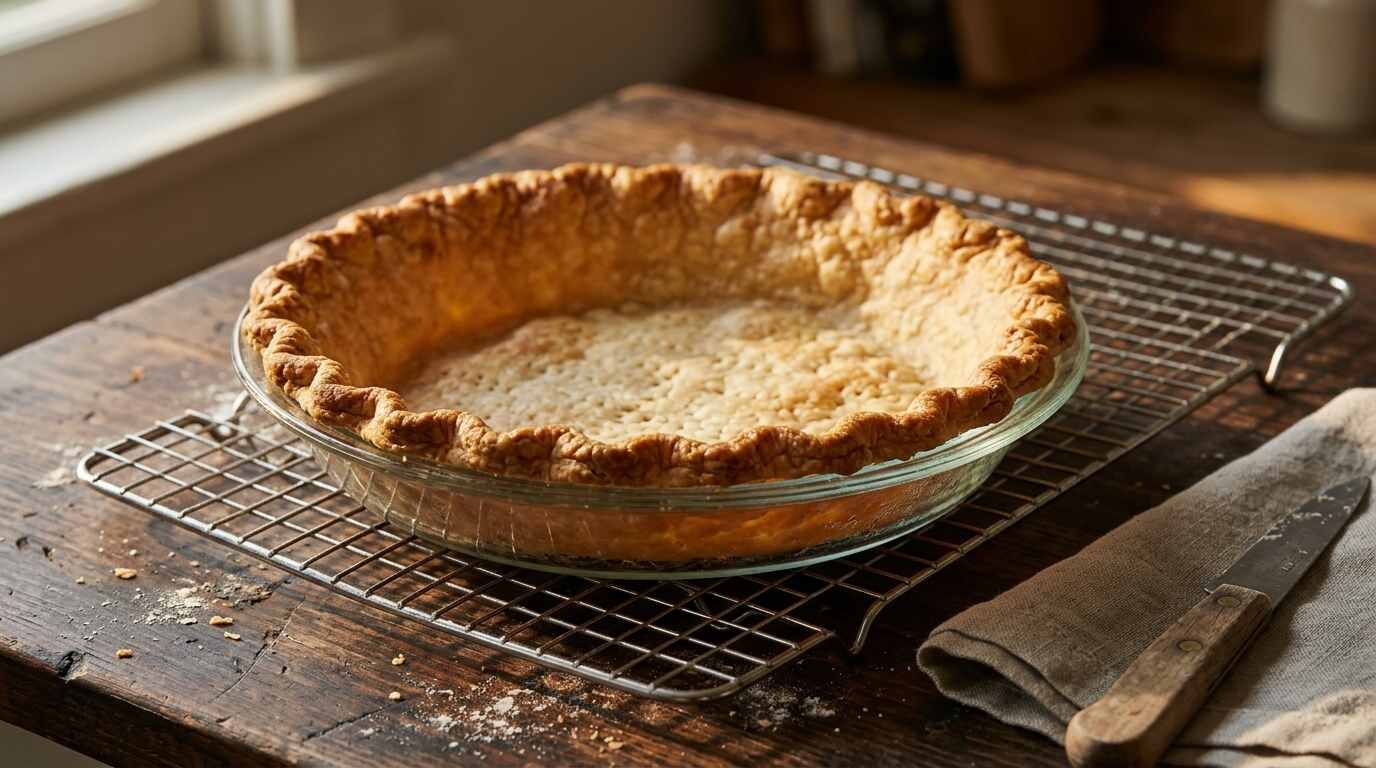
- Pyrex Easy Grab 9.5-inch glass pie plate: Clear glass shows how far the bottom crust has browned before the pie comes out. See it on Amazon (affiliate link)
- Kerrygold Pure Irish unsalted butter, 8 oz foil: Unsalted butter lets the recipe set the salt level, and the foil blocks chill quickly for grating. See it on Amazon (affiliate link)
As an Amazon Associate I earn from qualifying purchases. A commission may be earned if you buy through this link, at no extra cost to you.
Sources
- King Arthur Baking: All-Butter Pie Crust
- America’s Test Kitchen: Foolproof All-Butter Dough for Double-Crust Pie
- America’s Test Kitchen: Foolproof Pie Dough for Double-Crust Pie
- America’s Test Kitchen: Alcohol in Baking
- Scientific American: How Alcohol Makes a Flakier Pie Crust
- Cleobuttera: The Flakiest All-Butter Pie Crust